
With CBSE Board examinations becoming increasingly competency-based, students are constantly looking for study techniques that go beyond rote learning. While many rely on coaching classes and endless revision, Class 12 student Aaradhya Chaturvedi from Mayoor School, Noida, adopted a learning philosophy that dates back thousands of years.
Instead of memorising answers, Aaradhya followed the Vedic framework of Shravana–Manana–Nididhyasana, a three-step approach centred on listening, reflection, and internalisation.
In this interview, he explains how the method transformed his approach to studying and why he believes it can benefit today's CBSE students.
Q. Board exams can be stressful. What challenges were you facing?
Like most Class 12 students, I had a huge syllabus to complete. Even after spending long hours studying, I wasn't always confident that I would remember everything in the examination hall. I wanted a way to understand concepts instead of simply memorising them.
Q. How did you discover the Shravana–Manana–Nididhyasana method?
While reading about traditional Indian learning systems, I came across this ancient Vedic philosophy. It isn't just a study technique but a complete way of learning. I realised it matched what CBSE now expects—conceptual understanding, analytical thinking, and application-based learning.
Q. What is Shravana, and how did you use it during your CBSE preparation?
Shravana means listening carefully and absorbing knowledge.
I changed the way I studied NCERT textbooks. Instead of rushing through chapters, I paid complete attention during classroom lectures, listened to recorded explanations for difficult topics, and sometimes even read NCERT chapters aloud.
This helped me understand concepts properly during the first reading itself, reducing the need for repeated revision.
Q. What role did Manana play in your preparation?
Manana is about reflection and questioning what you've learned.
Instead of copying answers, I rewrote them in my own words. I solved previous years' CBSE question papers and tried to understand how examiners frame competency-based questions.
Whenever I had doubts, I kept asking questions until every concept became clear. This made my answers much more structured and logical.
Q. The third step is Nididhyasana. How is it different?
Nididhyasana is about internalising knowledge so that it becomes natural.
I practised writing answers within the actual exam time limits. I also explained difficult concepts to my classmates because teaching someone else is one of the best ways to learn.
I connected textbook concepts with real-life examples, which made them much easier to remember during examinations.
Q. Did you notice any changes after following this approach?
Absolutely.
I became more confident while writing answers. I no longer depended on last-minute memorisation because the concepts stayed with me. During mock tests, recalling information became much easier, and I also felt much less anxious before exams.
Q. How does this method fit with today's CBSE pattern?
CBSE is moving towards competency-based education where students are expected to analyse, apply, and explain concepts instead of reproducing textbook content.
This method naturally develops those skills. It improves conceptual clarity, critical thinking, answer writing, and long-term retention, all of which are essential for scoring well in board exams.
Q. What advice would you give to students preparing for the CBSE Board exams?
Don't focus only on studying for more hours. Focus on learning better.
Understand every concept before trying to memorise it. Reflect on what you've learned, solve previous years' papers, and practise writing answers regularly.
The goal isn't simply to finish the syllabus but to truly understand it.
A Timeless Lesson for Modern Students
Aaradhya Chaturvedi's experience highlights how ancient learning philosophies can still hold relevance in modern education. The Shravana–Manana–Nididhyasana approach aligns closely with CBSE's emphasis on conceptual understanding, competency-based learning, and critical thinking.
As board examinations continue to evolve, students may discover that success depends not only on the number of hours spent studying but also on adopting methods that promote deeper understanding, stronger retention, and confident application of knowledge.
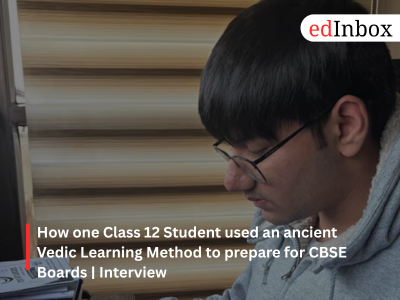
How One Class 12 Student Used an Ancient Vedic Learning Method to Prepare for CBSE Boards | Interview
Typography
- Smaller Small Medium Big Bigger
- Default Helvetica Segoe Georgia Times
- Reading Mode