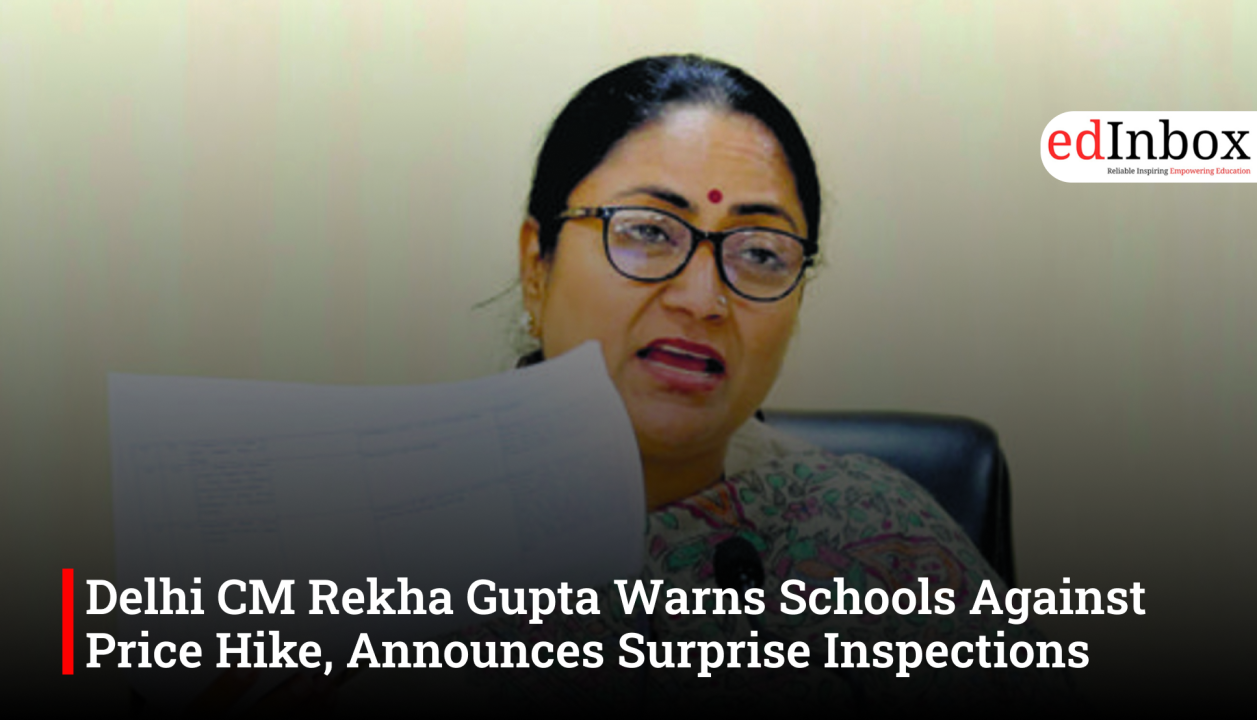
In a strong message to private schools, Rekha Gupta has warned against arbitrary price hikes in books, uniforms, and stationery, stating that strict action will be taken against institutions violating government norms.
“No Coercion, No Single Vendor”
The Chief Minister reiterated that schools cannot force parents to purchase books, uniforms, or stationery from specific vendors. She directed all institutions to clearly display—on notice boards, websites, and any school-run stores—that parents are free to buy these items from the open market.
“There will be no coercion, no captive buying, no single-vendor diktat,” Gupta stated, underlining the government’s zero-tolerance stance on practices that burden families financially.
Surprise Inspections to Ensure Compliance
Taking enforcement a step further, Gupta announced that she would conduct surprise inspections across schools in Delhi. “I can walk into any private school anytime,” she said, adding that these checks are driven by complaints received from parents.
She emphasised that the inspections are not symbolic but a part of active enforcement. Warning of strict consequences, she added that serious violations could even lead to takeover actions under the law.
Backed by Directorate of Education Orders
The move follows earlier directives issued by the Directorate of Education Delhi (DoE), which instructed private unaided recognised schools to avoid mandating purchases from designated vendors.
Under the DoE guidelines:
Schools must provide transparent, class-wise lists of books and uniform specifications
All listed items should be readily available in the open market
Procurement must align with board guidelines, including those of Central Board of Secondary Education and other recognised boards
Focus on Reducing Financial Burden
The government has stressed that such practices can place unnecessary financial strain on parents. By ensuring transparency and choice, the administration aims to make school-related expenses more fair and accessible.
A Growing Policy Push
This development reflects a broader trend of increased regulation in private school operations, particularly around fee structures and ancillary costs. With direct intervention from the Chief Minister’s office, schools are now under heightened scrutiny.
For parents, the message is clear: they have the right to choose where to buy educational essentials, and any violation of this right can now trigger swift government action.