
The Government of Delhi has approved a significant salary hike for teachers working under vocational education programmes and the Samagra Shiksha Abhiyan, with revised pay scales aimed at improving teacher retention and strengthening support for out-of-school children.
Announcing the decision, Rekha Gupta said the Delhi Cabinet approved an increase ranging from Rs 14,000 to Rs 18,000 for teachers engaged in vocational and special training programmes across the capital.
Around 1,131 vocational teachers providing skill-based education in different disciplines will now receive a monthly salary of Rs 38,100. Earlier, their salaries ranged between Rs 20,000 and Rs 23,000 per month.
Teachers working at 784 centres under the Samagra Shiksha Abhiyan will also benefit from the revision. Their salaries have been increased from Rs 21,000 to Rs 35,420 per month, bringing them at par with primary and upper primary school teachers in Delhi.
The centres under the Samagra Shiksha initiative focus on educating out-of-school children and helping them transition back into mainstream education. The revised salary structure also covers teachers working at special training centres that support children who have either dropped out or never attended school.
According to the Delhi government, the move is part of a broader effort to improve the quality of special training centres through regular monitoring, parental counselling, and stronger inter-departmental coordination.
The government said the pay revision is intended not only to provide financial relief but also to recognise the role played by teachers working in challenging conditions to reconnect vulnerable children with formal education.
Education officials believe the revised pay scales could improve teacher motivation and reduce attrition in vocational and bridge-learning programmes, sectors that have often faced staffing instability due to comparatively lower salaries.
The decision comes amid increasing emphasis on skill-based education and inclusive schooling, particularly for students at risk of dropping out of the formal education system.
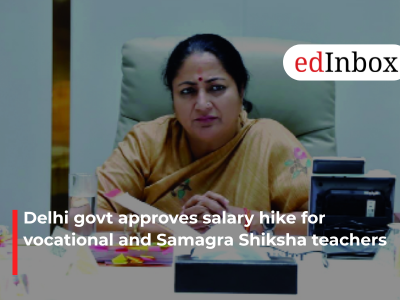
Delhi govt approves salary hike for vocational and Samagra Shiksha teachers
Typography
- Smaller Small Medium Big Bigger
- Default Helvetica Segoe Georgia Times
- Reading Mode