
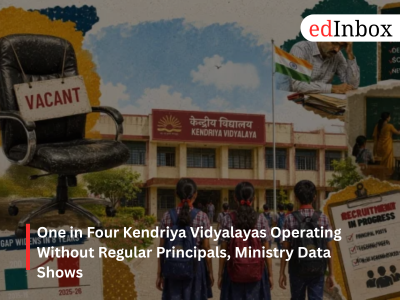
Nearly one in four Kendriya Vidyalayas (KVs) across India is functioning without a regular principal, according to data shared by the Ministry of Education in Parliament. The figures highlight persistent leadership vacancies in the country's largest network of central government schools despite recent recruitment initiatives.
According to the ministry, 1,356 Kendriya Vidyalayas are currently operational across the country. Of these, only 1,012 schools have a regular principal or Grade-II principal in place, leaving 344 schools—approximately 25% of the network—without a full-time head.
The data suggests that while the Kendriya Vidyalaya system has expanded over the years, the shortage of permanent school leaders continues to be a significant challenge.
Vacancies Persist Despite Recruitment Drive
In an effort to address staffing shortages, Kendriya Vidyalaya Sangathan issued a major recruitment notification in November 2025 for 8,714 teaching vacancies, including 161 principal posts, through direct recruitment.
As part of the recruitment process, the Tier-I examination was conducted in January 2026, followed by the Tier-II examination in March 2026. However, the latest data presented in Parliament indicates that many principal positions remain unfilled, suggesting that the recruitment process has not yet translated into appointments across all schools.
Vacancy Trend Over the Years
The figures also point to a continuing leadership gap when compared with earlier data.
Eight years ago, official records showed 200 vacant principal posts out of 1,081 sanctioned positions in the Kendriya Vidyalaya system. Although the network has grown significantly since then, the number of schools functioning without regular principals has also increased.
Education experts have long maintained that school leadership plays a crucial role in academic planning, teacher supervision, implementation of government initiatives and overall institutional development. Prolonged vacancies in principal positions can affect administrative efficiency, decision-making and the effective execution of educational programmes.
Importance of School Leadership
Principals are responsible for managing school administration, supporting teachers, overseeing student welfare and ensuring compliance with academic and administrative guidelines. In the absence of regular principals, schools are often managed by teachers or senior staff holding additional responsibilities, which can increase administrative workload and impact institutional functioning.
The Ministry's data has renewed attention on the need to expedite recruitment and appointment processes so that schools have permanent leadership in place.
As the Kendriya Vidyalaya network continues to expand to meet growing demand for quality public education, timely filling of principal vacancies will remain essential for maintaining academic standards, strengthening school governance and ensuring the effective implementation of national education policies.
One in Four Kendriya Vidyalayas Operating Without Regular Principals, Ministry Data Shows
Typography
- Smaller Small Medium Big Bigger
- Default Helvetica Segoe Georgia Times
- Reading Mode