
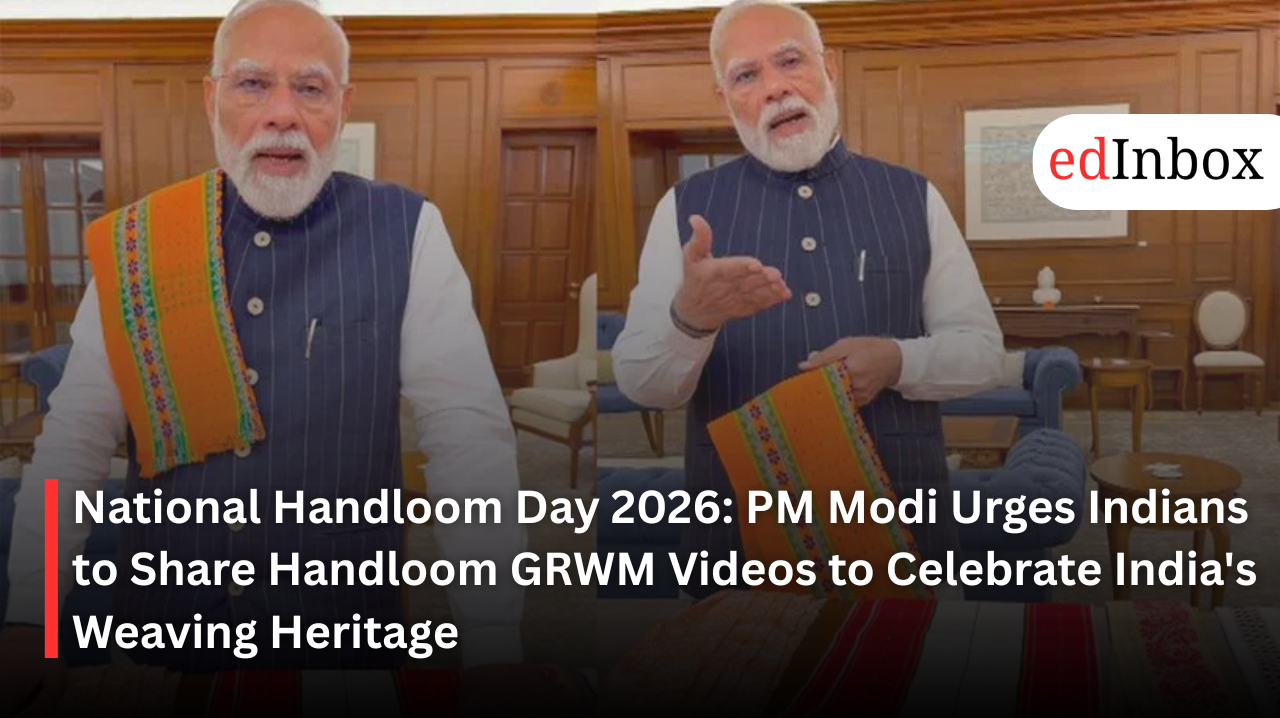
National Handloom Day 2026 will be observed on 7 August, with Prime Minister Narendra Modi calling upon citizens to celebrate India's rich handloom traditions by sharing videos and GRWM (Get Ready With Me) reels featuring their favourite handloom outfits and textiles.
The initiative is aimed at introducing India's centuries old weaving tradition to the digital realm and to make handloom artisans and their products more visible and attainable. The campaign aims to create a chain of social media where people can share their creations with the hand loom products to inspire the younger generation to look into the traditional art of hand loom and also to support the movement towards sustainable fashion.
Why is 7 August observed as National Handloom Day?
National Handloom Day is celebrated annually on 7 August to mark the beginning of the Swadeshi Movement by the promotion of indigenous items and self-reliance during the freedom movement.
The day was instituted in 2015 to honour the contribution of the handloom weavers of India and to celebrate one of India's oldest living traditions. Handlooms today have been inextricably associated with the cultural identity, their livelihoods and regional craftsmanship in rural areas of India.
PM Modi Urges Citizens to Champion Indian Handloom
Prime Minister Narendra Modi also encouraged people to celebrate the diversity of Indian textiles, sharing videos of their favourite handloom products, including popular GRWM style videos on social media, ahead of the National Handloom Day.
The campaign is expected to not only increase awareness of traditional Indian weaves but also to connect the artisans and the weaver communities with a larger audience via digital platforms.
The project is part of the social media movement to showcase India's culture and support its traditional trades by making them more visible to the public.
India's Handloom Sector Supports Millions
The handloom industry is one of the largest traditional employment sectors in India.
According to the Fourth All India Handloom Census (2019–20), India has around 35.22 lakh handloom weavers and allied workers, with more than 72% of the workforce comprising women. The sector is very significant for sustaining the livelihoods of thousands of weaving families in India, as almost nine-tenths are situated in rural areas.
Over the years, Indian handlooms have evolved from being purely traditional textiles to becoming globally recognised products that combine heritage with contemporary design.
Government support for Handloom Development
The Government has been promoting the sector by introducing various policies and programmes like the National Handloom Development Programme (NHDP) and Raw Material Supply Scheme (RMSS) that caters to infrastructure and design development, market access, skill development and financial assistance to handloom weavers.
The sector has also been given a policy boost in the Union Budget 2026-27, which has proposed to augment traditional textile clusters, promote handloom and handicrafts and boost their branding efforts and access to the world markets.
Digital platforms like Indiahandmade, Handloom Mark, India Handloom Brand and the introduction of GeM have further made it easier for the authentic handloom products to be available for the buyers across the country and abroad.
Indian Handloom Finds New Global Recognition
Traditional Indian weaves are now becoming popular in fashion shows, design collaborations as well as internationally. Fashion shows, cultural events and design exhibitions have been the platforms for showcasing Indian handlooms in recent years and the Handloom Hackathon 2026 has invited students, innovators, startups and artisans to come up with tech solutions for the sector's future. This is an attempt to preserve the traditional weaving techniques and make handloom relevant for the modern consumers.
Why the Push for National Handloom Day?
Each handmade cloth is a legacy of generations of craftsmanship, area and cultural heritage. Handloom products help retain the traditional weaving techniques that have been handed down from generation to generation in the family.
The growing consumer awareness towards sustainability and locally produced goods makes National Handloom Day a reminder to support Indian craftsmen, safeguard traditional artisanal skills, and embrace ethical fashion.
This year's campaign also demonstrates how digital platforms can play a meaningful role in preserving cultural traditions by encouraging citizens to celebrate India's weaving heritage through creative online participation.
What Citizens Should Know
National Handloom Day is not just about celebrating textiles; it's about acknowledging the efforts of millions of artisans who continue to uphold the weaving traditions of India. Citizens can be a part of sustainable livelihoods for generations to come and help preserve one of India's most valuable cultural and economic assets by choosing authentic handloom products, sharing them on social media and supporting local weavers.
National Handloom Day 2026: PM Modi Urges Indians to Share Handloom GRWM Videos to Celebrate India's Weaving Heritage
Typography
- Smaller Small Medium Big Bigger
- Default Helvetica Segoe Georgia Times
- Reading Mode