
Farm work matters more than just growing food. With India moving toward a developed nation, thinking about crops needs to shift. Not only output counts, but also how young people see farming as a job. Besides yields, caring for soil and water plays a big role. Over time, strong rural economies depend on choices made today. Looking ahead means balancing growth with lasting practices.
Farming with trees isn't just about growing food, it opens doors for students, young people in villages, and those already working in agriculture. Yet, schools must step up, teaching these methods like any core subject, or much gets lost.
Years went by, yet classrooms kept teaching field crops almost every time. Trees on farms? Usually tucked away inside forest studies, hardly ever seen as real farm work or a business path worth taking. Because schools split these ideas apart, learners missed chances to see how trees could help both money and nature thrive together.
Still, the field stretches wide. Where farming meets forest work connects soil care with weather patterns, business transport, country startups, timber uses, plus advice on long, term resource balance. Not just dropping seeds into ground, instead shaping working landscapes that earn income while handling extreme seasons. How food grows ties to roots underground and markets far away. Each choice affects profit margins alongside carbon levels in air.
Maybe treating agroforestry like a real job option will shift how farming schools train students for new country livelihoods.
Farm trees aren't just about growing plants, says Manoj Dabas of CIFOR, ICRAF India, they open doors through learning, spark jobs in villages, lift local timber supply, while quietly firming up defenses against shifting weather patterns across wide areas.
Expanding Access to Academic and Skill Development Programs
Few jobs might appear where farming meets trees inside classrooms. Training schools could start shaping skills when agriculture blends with forestry studies. Diploma courses may shift if tree, crop systems enter the curriculum. New work paths tend to follow what colleges choose to teach well.
From nursery care to handling timber flows, training focused on land, use choices builds workers ready for farm needs. Moving through carbon markets or shaping wood products, learning these paths fits people for real tasks in growing and making things. Instead of just theory, hands on know how to link forests to factories.
Farm science centers along with local farming support networks might grow this system through skill courses and official recognition for tree, crop methods that match area, specific environments. These efforts could strengthen growers while building a base of skilled helpers, guidance providers, and village, based business builders.
RURAL ENTREPRENEURSHIP
Out in the countryside, jobs that arent tied to farming get a boost from agroforestry. Training youth in how to dry timber, sort it by quality, work it into finished pieces, or build basic furniture opens new paths. Local processing means more value stays close to home. That keeps money circulating nearby while giving folks less reason to leave. Rural life holds tighter when opportunity grows right where people live.
Farming trees alongside crops might spark fresh interest when seen as a business move. Not just planting seeds but building something real could draw young people back to village life. Looking at dirt and saplings differently turns fields into futures. Instead of old routines, imagine income growing from mixed forests on farmland. A chance to earn while shaping land anew pulls energy toward soil instead of cities.
Courses and Academic Pathways in Agroforestry
Starting out in agroforestry? More colleges across India now offer clear courses that mix classroom learning with hands, on practice. Not just theory, real work matters too. Schools focused on farming and nature are opening doors. Step by step, the path gets clearer for those who want to grow into this field.
Fresh out of high school, learners might pick a BSc in Agriculture, dive into Forestry studies, or go for a BTech focused on farm machinery and systems, each path opening doors to niche topics like growing trees alongside crops, caring for soil long, term, even farming methods built for shifting weather patterns.
A step beyond undergrad, programs like MSc Agroforestry or MSc Forestry build deep expertise while weaving in real world decision making and innovation. Alongside them, MSc Climate Science and MSc Environmental Management sharpen understanding of ecological systems through practical governance lenses. Meanwhile, an MBA in Agri, Business Management blends field, specific insight with strategic planning shaped by market dynamics. Each path opens doors not just to specialization, but also to influence how land and resources are guided into the future.
In addition, diploma and certification programmes in:
- Nursery and plantation management
- Timber grading and wood technology
- Carbon accounting and climate finance
- Sustainable land-use planning
- Farm-based enterprise development
- Can equip rural youth and professionals with industry-relevant, employment-oriented skills.
Institutions such as agricultural universities, Krishi Vigyan Kendras, forestry research institutes, and skill development centres can play a critical role in formalising these pathways. Short-term certification courses in carbon credit systems, farm forestry models, and wood value chain management can further bridge the gap between theory and practice.
EDUCATION AS THE FOUNDATION OF VIKSIT BHARAT
India's agricultural successes have historically been education-led. The Green Revolution demonstrated that when scientific knowledge is systematically disseminated, transformation follows. Agroforestry requires a similar institutional push, one that integrates curriculum reform, vocational training, market literacy, and sustainability education.
If Viksit Bharat is to be economically strong, environmentally resilient, and employment-rich, agroforestry must move from the margins of policy discussions to the mainstream of career planning and academic design.
Teaching students that trees are not just environmental assets, but economic assets may well be one of the most strategic investments India can make in its rural future.
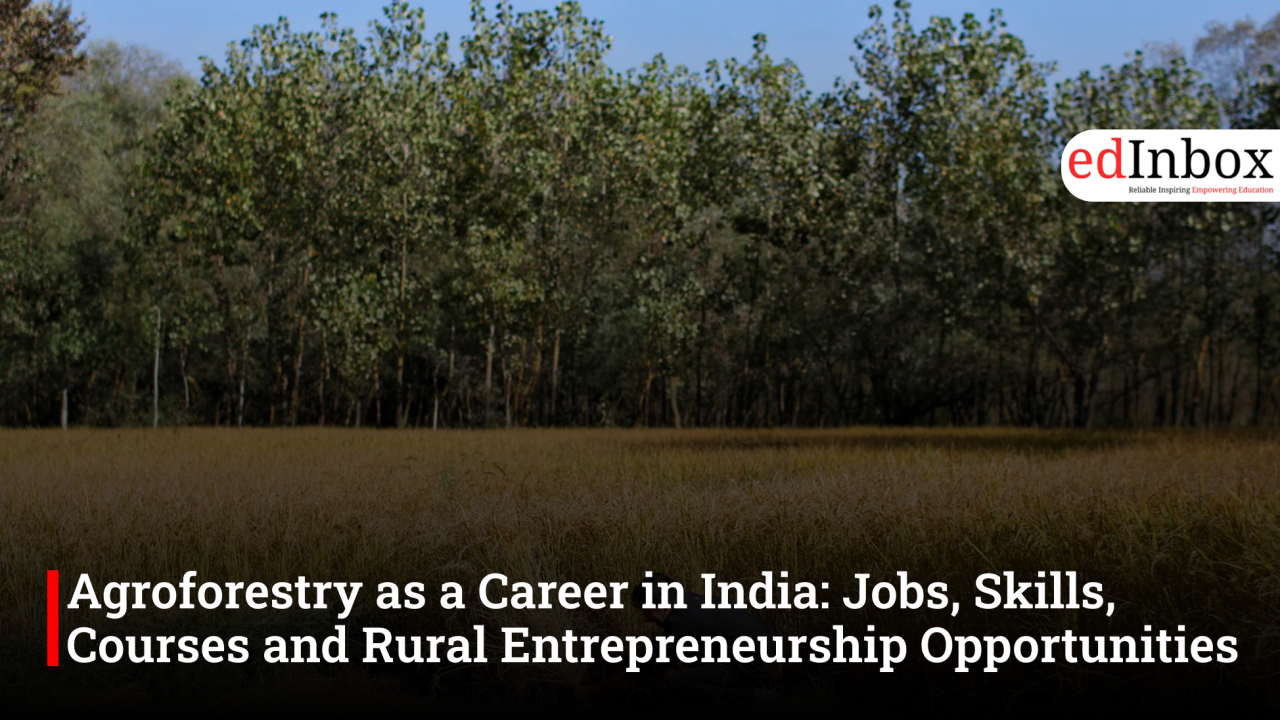
Agroforestry as a Career in India: Jobs, Skills, Courses and Rural Entrepreneurship Opportunities
Typography
- Smaller Small Medium Big Bigger
- Default Helvetica Segoe Georgia Times
- Reading Mode