
Rice in India is not only a food for millions of people; it is a habit, culture and means of survival. However, India's staple, which is the main cause of diabetes and malnutrition in the country, has been nutritionally paradoxical for a long time: it is rich in calories but poor in proteins. At CSIR-National Institute for Interdisciplinary Science and Technology, a team of scientists has made a breakthrough to change this paradox by re-engineering the grain.
Led by food technologists, the institute has developed what is now being called “designer rice”—a reconstructed grain containing over 20% protein, nearly three times that of conventional polished rice. More significantly, it carries a low Glycaemic Index (below 55), making it suitable for India’s growing diabetic population, currently estimated at over 100 million.
But the innovation goes beyond protein and sugar control. Thanks to microencapsulation techniques, scientists were able to wrap iron, folic acid, and Vitamin B12 in micro-sized shells inside the cereal. As if wrapped in protective microscopic shells, these nutrients will not be lost through washing or pressure cooking - which are traditionally the two processes by which fortified foods lose their nutrients.
The method is very straightforward and yet highly effective. Broken ricegenerally regarded as a "waste" productgets converted to flour, the flour's starch content is equalized, and finally the flour is turned by extrusion into grains that look, feel, and taste like normal rice. This product does not require any change in consumers' behaviour and at the same time provides much better nutrition.
Most importantly, it is not genetic modification. It avoids all the regulations and public objections that genetically modified crops usually face, making it a food technology innovation rather than a biotechnology one.
Technology transfer to industry players is already underway, and there is a plan to integrate the grain in Indias Public Distribution System (PDS) by 2027, so that means the implications are very large. In the event of an effective scale-up, designer rice might well turn into a major element in the fight against hidden hunger a situation when people consume enough calories yet their nutritional requirements are not met. Basically, India could have discovered a new method to add value to its
cultivated staple foodgrain in doing so not necessarily requiring its populace to change their eating patterns.
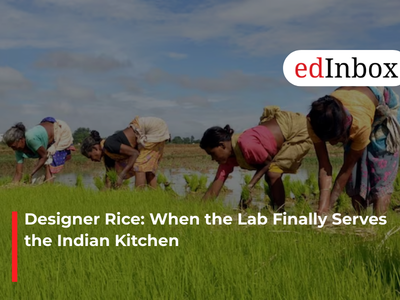
Designer Rice: When the Lab Finally Serves the Indian Kitchen
Typography
- Smaller Small Medium Big Bigger
- Default Helvetica Segoe Georgia Times
- Reading Mode