
In a country like India where agriculture is the main source of livelihood for a large percentage of the population, educating children about agriculture should be considered a national priority rather than an academic exercise. Presently, agricultural education is a necessity for developing a fresh batch of agricultural experts who not only possess the technical knowledge to collaborate with farmers but are also dedicated to rural development, energizing the rural economy, and ensuring the provision of sustainable food sources.
Indian Council of Agricultural Research (ICAR) and various agricultural universities have been leading the efforts to bring about changes in agricultural education curricula. In order to familiarise students with fieldwork, these institutions are making it mandatory to combine classroom learning with field experiences. Students are being motivated to physically visit rural communities, farms and agricultural areas to observe farming related activities.
In recent years, universities in India have sought to create a synergistic combination of research, innovation, and university, educated during their practical training. Students who take up rural internships, adopt a village or start up agri, entrepreneurship projects get a salable production time in real, world farming conditions while at the same time they contribute technological and scientific solutions.
These programmes have not only increased students competency in the practical skills of the trade and have instilled in them a deeper feeling of dedication to agriculture. More significantly, these programmes are facilitating the bridging of the age- old divide between academic education and the actual needs of farmers and rural communities.
Yet, several challenges remain. One huge problem is that quite a large number of students still treat agricultural studies chiefly as a route to get a degree, with a lesser degree of interest in it as a professional career in the long run. A handful of field trips normally do not manage to develop a strong emotional or professional bond with rural life.
Another struggle is the meager synergy between education, industry, and rural economies. Even if the students are taught the most advanced techniques in the classrooms and labs, very often, they get fewer opportunities to practice these knowledge in authentic agricultural environments. This is why sometimes graduates are at a loss how to deal with the real, life issues of agriculture like climate change, resource management and marketing.
Experts argue that agricultural education should not just give students occasional insights into rural areas but should be centered on frequent rural engagement. Universities can set up better practice oriented facilities where students will have regular contact with farmers, carry out field research and lead local development initiatives.
Moreover, working together is a must. Agricultural universities, government departments, private agri, businesses, and rural households should join hands to form a healthy ecosystem for the training of tomorrow's agricultural experts.
India can have a strong and up- to- date agricultural sector only if the first steps are taken early at school, in the village, and in the mind of the young student who is going to be the rural India in the future.
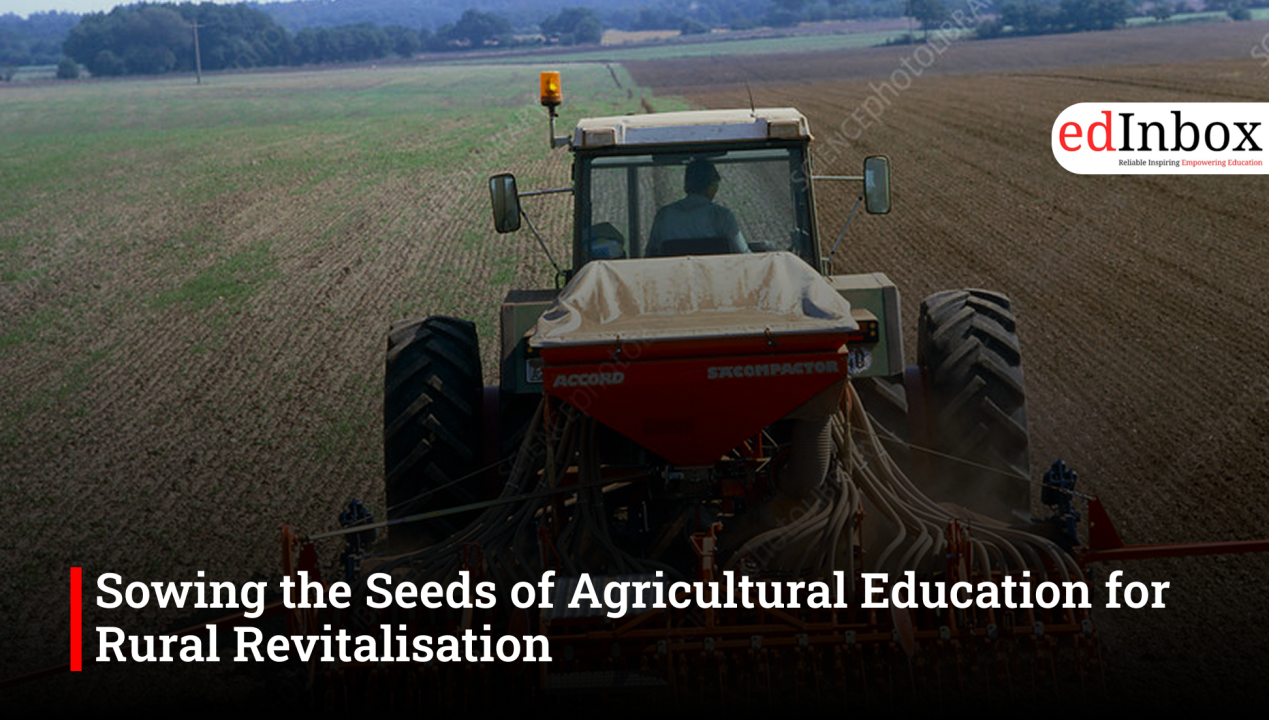
Sowing the Seeds of Agricultural Education for Rural Revitalisation
Typography
- Smaller Small Medium Big Bigger
- Default Helvetica Segoe Georgia Times
- Reading Mode