
Crop destruction, loss of livelihoods and delayed compensation highlight growing human-wildlife conflict in tribal regions
For thousands of small and marginal farmers in Jharkhand, a single night can erase months of hard work. Across the state's forested districts, increasing encounters with elephants, nilgai, wild boars and monkeys are destroying crops, damaging stored grain and threatening rural livelihoods, leaving farming families trapped in a cycle of uncertainty and loss.
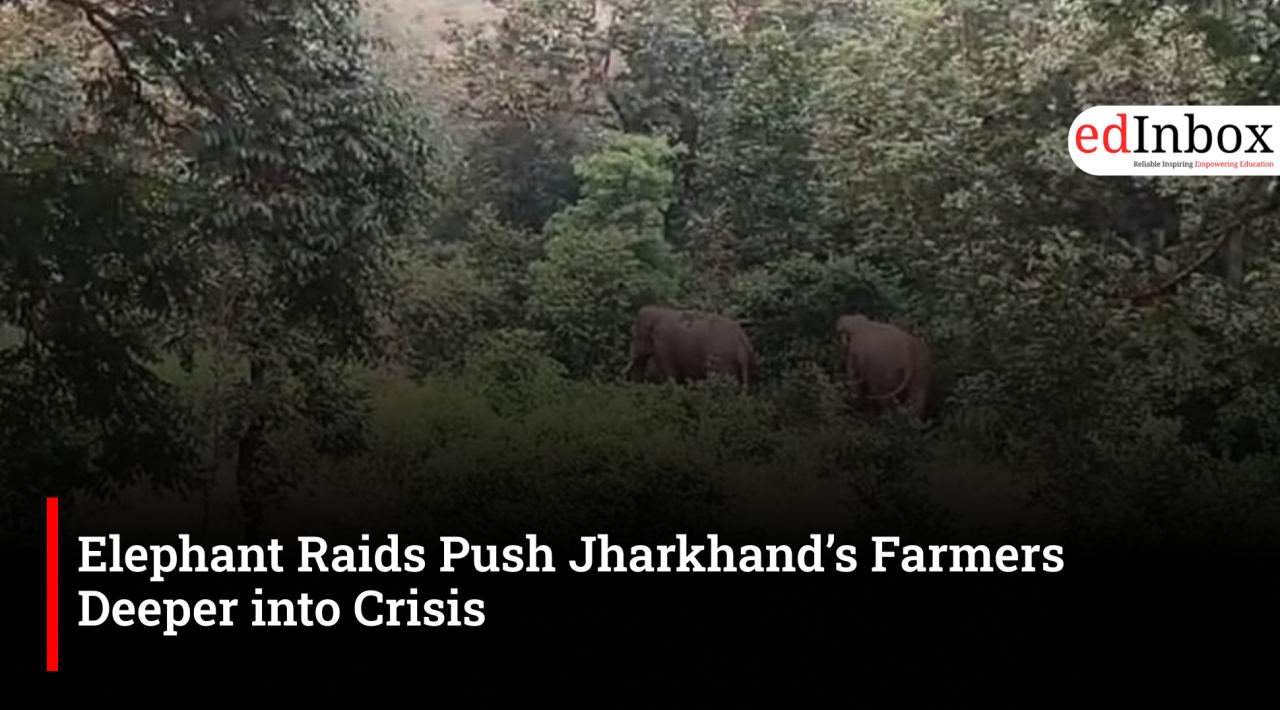
In Katai Tola village of Latehar district, a herd of 14 to 15 elephants entered the village in November 2025 and destroyed hundreds of bundles of harvested paddy stored in threshing grounds. For tribal families dependent on agriculture and daily wage labour, the attack wiped out months of effort and income.
According to state forest department data, Jharkhand records an average of 9,245 crop damage cases and 1,146 grain damage cases caused by elephants every year. The state has nearly 2.4 million small and marginal farmers, many of whom cultivate less than two hectares of land and rely heavily on seasonal harvests for survival.
The crisis extends beyond agriculture. Between 2021 and March 2025, elephants reportedly killed 397 people across the state. In the last two-and-a-half months alone, at least 15 people have lost their lives in elephant-related incidents.
Districts such as Latehar, Khunti, West Singhbhum, Gumla and Ranchi remain among the worst affected by human-elephant conflict.
Farmers say the problem is compounded by inadequate compensation. While the government provides financial assistance for crop losses, many villagers claim the process is complex, time-consuming and often inaccessible. Some report receiving only a fraction of the actual value of destroyed crops, while others are still waiting for compensation years after incidents occurred.
The challenge is not limited to elephants. In the Palamu region, nilgai have emerged as a major threat to crops such as wheat, mustard, pigeon pea, potatoes and onions. Farmers often spend winter nights guarding fields, with some abandoning cultivation altogether due to repeated losses.
Forest officials say efforts are underway to simplify compensation procedures, increase payouts and improve monitoring of elephant movement. However, experts argue that long-term solutions will require stronger crop protection measures, faster relief mechanisms and better coexistence strategies between wildlife and rural communities.
Keywords: Jharkhand elephant attacks, human wildlife conflict India, crop damage by elephants, tribal farmers Jharkhand, compensation for crop loss, Latehar elephant raid, nilgai crop destruction, wildlife conservation, rural livelihoods, agriculture crisis in Jharkhand.
Elephant Raids Push Jharkhand’s Farmers Deeper into Crisis
Typography
- Smaller Small Medium Big Bigger
- Default Helvetica Segoe Georgia Times
- Reading Mode