
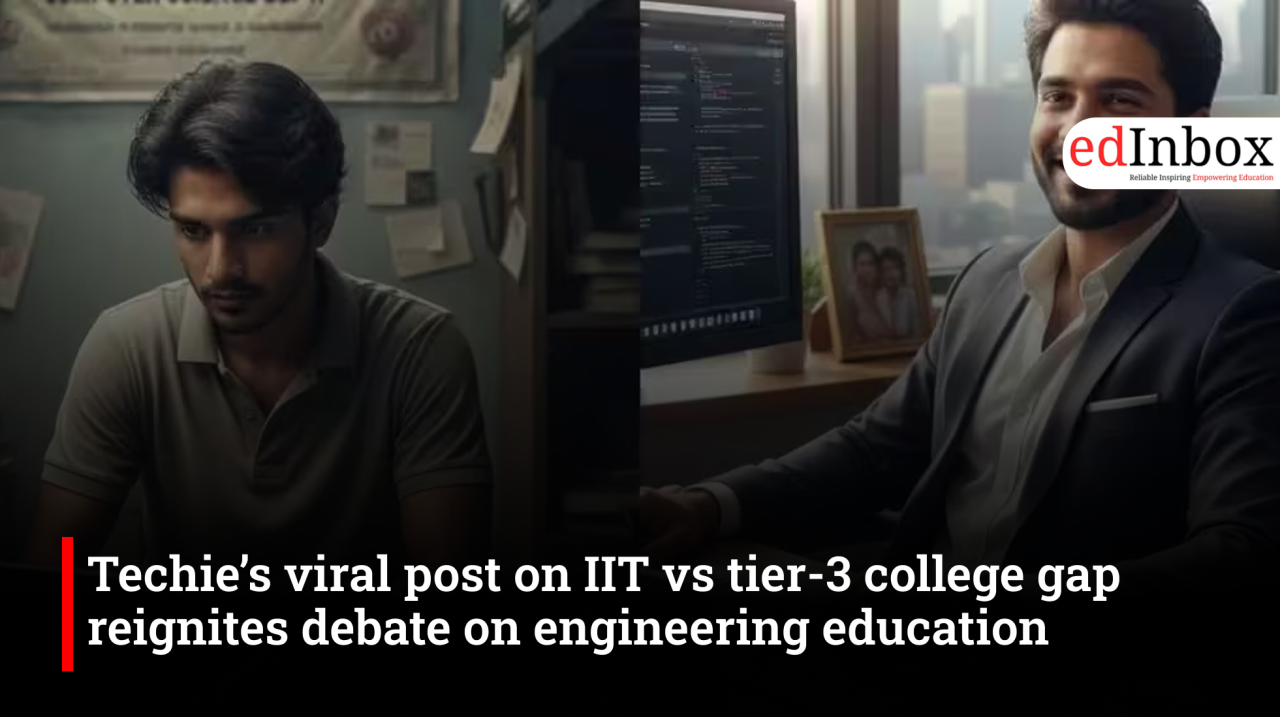
A LinkedIn post by a technology professional comparing the learning environment of IIT graduates with that of students from tier-3 engineering colleges has sparked widespread discussion on the quality of engineering education, technical exposure, and career preparedness in India. The post has renewed conversations about how institutional ecosystems shape students' skills, confidence, and employability.
The viral post, shared by Kshitij Vaze, reflected on his experience of working alongside graduates from IIT Bombay. He wrote that collaborating with IIT alumni made him realise the significant difference in exposure and opportunities available during college, admitting he had underestimated the value of the IIT ecosystem until entering the workplace.
Professionals share similar experiences
The post resonated with many engineers and professionals, who shared their own experiences of discovering advanced technical tools and collaborative practices only after joining the industry.
Several users said they first learned about platforms such as Overleaf and LaTeX, research-oriented project work, and structured peer learning through interactions with IIT graduates. Others highlighted that IIT students often gain early exposure to research, hackathons, startups, internships, and global academic opportunities that are less accessible in many lower-tier institutions.
Beyond curriculum: The role of institutional culture
The discussion shifted beyond academics to the broader role of institutional culture in shaping professional readiness.
Commenters noted that IIT students frequently build peer-learning groups from the beginning of their academic journey, encouraging collaboration, problem-solving, and continuous skill development. This environment, they argued, contributes to stronger technical capabilities and greater confidence in tackling industry challenges.
The debate also highlighted that factors such as mentorship, faculty expertise, research infrastructure, alumni networks, and industry collaborations play a crucial role in preparing graduates for competitive careers.
Calls for strengthening engineering education
The online discussion prompted wider conversations on improving engineering education across India rather than viewing the issue solely through the lens of IIT versus non-IIT institutions.
Education experts have long argued that strengthening research opportunities, modern laboratories, industry partnerships, project-based learning, and innovation ecosystems across engineering colleges can help reduce disparities in graduate outcomes.
While premier institutions such as IITs continue to perform strongly in research, employability, and global rankings, many non-IIT institutions are also expanding programmes in emerging fields such as artificial intelligence, robotics, semiconductor technology, and sustainable engineering, creating new pathways for students.
The viral discussion underscores a broader challenge facing India's higher education system: ensuring that students, regardless of the institution they attend, have access to quality mentorship, practical learning opportunities, and industry exposure needed to succeed in an increasingly technology-driven economy.
Techie’s viral post on IIT vs tier-3 college gap reignites debate on engineering education
Typography
- Smaller Small Medium Big Bigger
- Default Helvetica Segoe Georgia Times
- Reading Mode