Addressing the 93rd South Indian Music Conference and Festival organized by the Indian Fine Arts Society at Chennai on December 17, Prof. Kamakoti stated that music and engineering are very much related, especially when associated with patterns. The Indian Fine Arts Society Sabha is among the oldest and leading sabhas at Chennai, which has been acclaiming the classical musical arts.

“Music has a very solid grounding in science—especially mathematics. We’ve been extensively exploring the link between the two at IIT Madras,” said Professor Kamakoti while stressing the benefits of music education for enhancing skills required in technology and engineering.

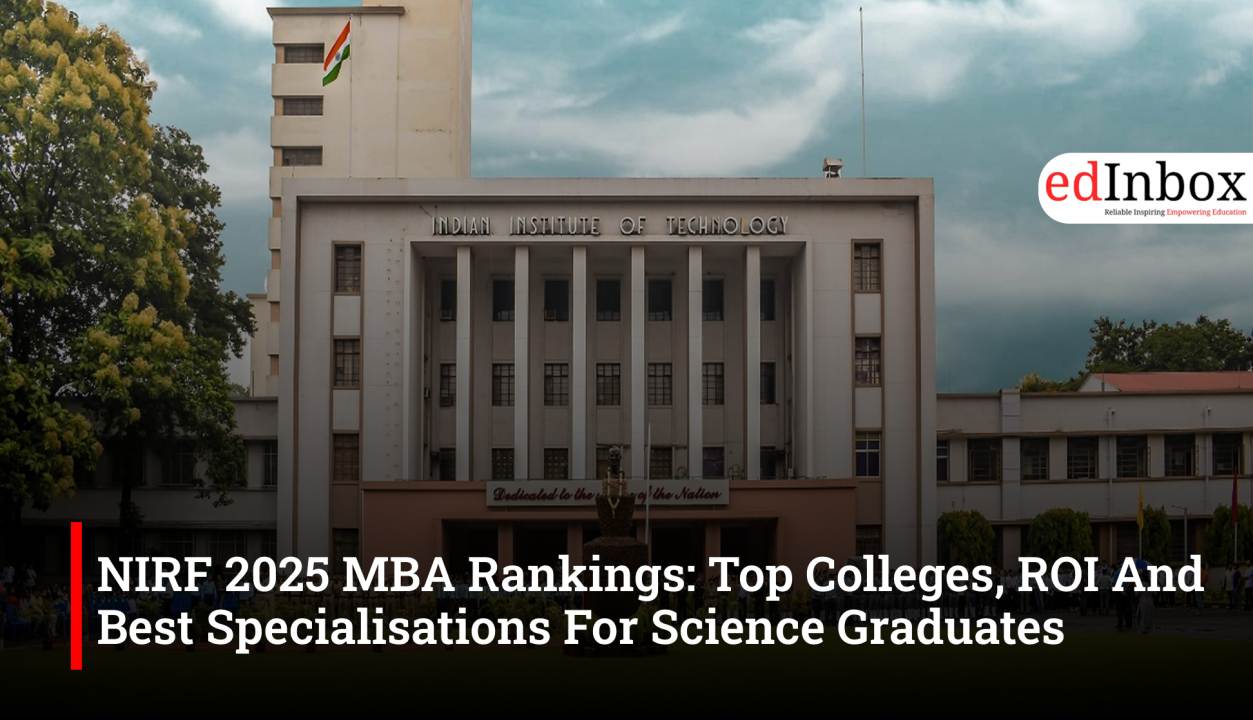
Indian Institute of Technology (IIT) Madras

Commenting on the focus of IIT Madras on inter-disciplinary education, Prof Kamakoti said, “We are creating a space where Arts, Culture, Science, and Engineering meet, and this is being achieved through forums such as this, forums such as music, and forums such as this, forums such as—” This will be achieved through the setting up of an “Audio Mic-less Bamboo Auditorium” at IIT Mad

Engineering Requires Several Disciplines

According to Prof. Kamakoti, modern engineering challenges have started requiring more inter-disciplinary work. While citing Operation Sindoor, he said that it was an example of an inter-disciplinary effort that included 10-11 different disciplines of engineering.

“We are emphasizing interdisciplinary education at IIT-M because most of these real-world problems cannot be solved by one area of engineering alone,” said Professor Ninan.

PARENTS AND STUDENTS ARE ENCOURAGED

While encouraging parents to think beyond the usual career options, Prof Kamakoti revealed that music training must not remain as something apart from academic achievement. “Our usual music education courses can actually supplement engineering courses, as they develop creativity, discipline, and problem-solving abilities,” he stated. “It’s a reflection of the shift in education in India where institutions like IIT Madras are opening up more channels that combine culture and creativity with technology.”

There is indeed a shift in the Indian education system where institutions like IIT Madras are opening up more channels that combine culture and creativity with technology.

IIM Kashipur, in association with Nulearn has commenced inviting applications for admission to its fifth batch of Executive MBA (Analytics). The two-year specialized course is targeted at working professionals, entrepreneurs, and graduates seeking to upskill themselves. The course endeavors to equip future-ready leaders to apply analytical tools to solve business problems and build efficient organizational processes.

Eligibility

The program targets those candidates with a minimum of three years of full-time relevant work experience. In this regard, the course is designed to support working professionals through a location-independent learning structure.

Course format

The program has been developed on a globally benchmarked curriculum and covers the emerging domains of Business Analytics, Artificial Intelligence, Machine Learning, Deep Learning, Management, and Strategy. Participants will be trained in developing cross-functional capabilities critical for Industry 4.0. The course will offer elective options across more than 40 courses in nine domains. Learning modes The learning model integrates campus engagement with online delivery. Participants can also create their learning through choices from an extensive elective pool. There is an option for direct interaction with the faculty members, experience simulations and industry workshops. Overview of the program The course will offer a choice between live online sessions and periodic on-campus modules. On-campus modules are to be conducted by IIM faculty and industry experts. There would be six on-campus immersions, out of which two modules are mandatory, namely, the first and the fourth. The duration of the first module is five days and the rest four days each. There will be approximately 900 contact hours, which would be offered over six terms in a two-year time. The individuals also get the option of online meetings with the faculty to discuss concepts and perspectives.

To break out of these molds, India Foundation is launching a new School of Global Leadership. This will be a one-year practice-oriented postgraduate course and will be launched on the think tank’s 15th anniversary.

With this initiative, this think tank hopes to train enthusiasts in foreign matters and launch the next generation of leaders into the global arena. As a foundation, they view this course as a ‘immersion tour into the global policy ecosystem.’ A private university in Andhra Pradesh, which is recognized under the University Grants Commission and is named B.E.S.T Innovation University or BESTIU for short, will also be participating in this course.

"SoGL (School of Global Leadership) will be a state-of-the-art institution and marks an important milestone in our commitment to foster strategic thinking, innovation in governance, and efficient leadership in overcoming the complexities of the 21st century," stated a press release from the foundation.

Instead of a series of convention seminars and coursework, SoGL emphasizes hands-on training conducted by practitioners, not professors.

The school will commence operations on 16 December 2025 in ITC Maurya, located in New Delhi, with Union education minister Dharmendra Pradhan set to launch the school.

The school governance structure springs from an existing network established by the foundation. The chair of the governance is Jayant Sinha, with ex-diplomats Gautam Bambawale and Jaideep Mazumdar being co-chairs. A ‘mentor board consisting of retired generals, ambassadors, regulators, and university heads brings added value to this initiative.’

The India Foundation was founded in 2010 by Shaurya Doval. A founding member and President of this think tank is Ram Madhav, a former National General Secretary, BJP. It was formed with an objective to serve as a think tank concerning governance, security, and position in the international system.

The names on its Board of Trustees include Surya Prakash, former Chairman Prasar Bharti, Sunaina Singh, former Vice Chancellor Nalanda University, and Chandra Wadhwa, former President of the Indian Council of World Affairs (ICWA).

Researching diplomacy from Ground Zero 

Through this project, students will be able to visit 12 countries spread over four different continents in order to learn the realities of diplomacy from Ground Zero. Such a model is common for global leadership programs.

Through this effort, the foundation has partnered with various institutions. They include the Hoover Institution at Stanford, Institution of World Politics based in Washington, Luiss Research Centre in Italy, UN University based in Brussels, Leiden University in the Netherlands, and Mohammed bin Rashid School of Government in Dubai. The India Foundation is transforming a series of conversations it organizes on foreign policy into a paid semiacademic course. Additionally, this partnership brings an international affairs course into BESTIU, which is a new addition to this institution. BESTIU was established in 2019.

IIM-Nagpur (Indian Institute of Management Nagpur), one of the rapidly growing IIMs known for the best in class education in the current era of business management, in association with TimesPro, has recently announced the commencing of the fifth batch of Post Graduate Certificate Program in Strategic Management. This program enables the concept of all-round management acumen in the learners and helps them attain a well-rounded understanding of overall management and leadership. It also enables them to deal with complex challenges faced by the top management during the transformation period.

The 12-month Post Graduate Certificate Programme in Strategic Management aims to nurture and develop professionals into effective strategists, able organisation builders, and change agents, and is heavily aligned on strategy formulation and its implementation at the business and corporate levels. The programme includes learning on many tools and techniques of data-driven decisions, offers a design thinking experience, and helps to develop general management and strategy skills to design strategies that are implementable in the functions of business.

Organizations in the fields of the healthcare industry, information technology, information technology services, financial services industry, and the manufacture of industry are relying on strategic know-how as the scope of digital transformation consulting services offered by strategy consulting firms grows. The demand for strategists is escalating in the marketplace as firms want experts in the focus on mergers and acquisitions.

India is expected to have a GDP of USD 20.7 trillion in the coming years, while the IMF predicts it will become the world’s second-largest economy by 2038 with a GDP of USD 34.2 trillion. With rising growth, the strategy consulting sector in India is undergoing a drift from its core engagements towards the adoption of innovative technologies like AI, Cloud, and data analytics.

Talking about the announcement of the fifth batch, Dr. Bhimaraya Metri, Director, IIM Nagpur, said, “At IIM Nagpur, we translate strategic insight into effective action. The Post Graduate Certificate Programme in Strategic Management challenges and refines judgment and cultivates execution fitness by employing design thinking, frameworks, chamber consulting practices, simulations, and campus immersions. Students emerge as accountable leaders to synchronize vision with results, shape change across functions, and deliver long-term value to organizations operating in increasingly complex, uncertain, and transformed digital landscapes.”

“The Executive Education Department at IIM Nagpur is dedicated to providing modern-day decision-making programmes for executives at all levels within any organization.” – Dr. Alok Kumar Singh, Dean – Executive Education, IIM Nagpur

With this programme, practitioners will be able to translate their strategic thinking into something meaningful for their organisations. Our Post Graduate Certificate Programme in Strategic Management will help students develop an ability to diagnose complex business environments and take evidence-driven and data-driven decisions to implement successful change initiatives.”

"Professionals require agile and rigorous learning that enhances and does not disturb their professional journey. With TimesPro’s Interactive Learning and Direct-to-Device model of delivery, participants get exposed to famous faculty, cases, simulations, and collaborative working. This builds analytical rigor, executional skills, fluency in areas of data, AI, and cloud – so that learners can achieve growth and optimize costs and lead transformations confidently and competently in industries operating in a volatile economy shaped by technology,” said Sridhar Nagarajachar, Business Head – Executive Education, TimesPro.

The Post Graduate Certificate Programme in Strategic Management consists of three modules, Strategy & Environmental Scanning, Strategy Formulation and Implementation, and Strategic Leadership & Sustainable Development, totalling 19 courses. The course includes a business simulation and resolution of organizational cases through projects, besides which a three-day immersion at the IIM Nagpur will take place. The participant will then be able to apply for roles in consulting, set up business support systems, devise mechanisms for generating revenue and cutting costs, and implement efficient processes for management, post completion of the programme. The programme shall be offered on TimesPro’s Interactive Learning platform and in Direct-to-Device mode. The learning method includes lecture, case discussion, simulation game, role-play, group projects, and other experiential activities. The participants shall gain alumni status on successful completion of the programme. Those applicants, who possess a bachelor's degree or a two-year master's degree, with a minimum of three years of professional experience, obtained from an identified university (UGC, AICTE, DEC, AU, State Govt.), will also be eligible to apply.

A master's degree in the US was the next logical step after Naveen Tewari acquired a degree in mechanical engineering from Indian Institute of Technology (IIT), Kanpur. A job offer was also on the table from global consulting firm McKinsey. One conversation with his father swung it for the young man.

“You will be unhappy in research. You are someone who likes to make things happen,” said the father. Tewari did not question this and said yes to McKinsey. In many ways, it was a life-changing experience—out of the three years spent there, 18 months were dedicated to what was then the Reliance Infocomm project. Remember, one is speaking of the 2001-02 phase, in a very different India, where the digital economy was still at a nascent stage.

Armed with work experience, Tiwari—now Founder & CEO, InMobi Group—decided to head to the US for an MBA. The next stop was Harvard Business School. Part of a batch of 900 students, he saw a new world.

Like him, there are several Indians who opt to go overseas for studying management and come back with a different perspective. That said, studying in a top school abroad is expensive-upwards of $2,00,000 total course fee-but there is conviction on the payback in terms of learning, global exposure, and networking.

Eureka moments A talk with those who have pursued a management degree outside India reveals a few interesting points. A diversified peer group across nationalities, a unique pedagogical experience and access to a large network standout.

The diffident Indian with a bit of trepidation about failure often has a more focused and nuanced approach. Vartika Bansal, AI Ops Partner, Elevation Capital, studied at Stanford Graduate School of Business, and according to her, risk-taking is a major facet. “The real risk is not in failing but in not trying. I realised chasing your wildest dreams and testing your potential is far more rewarding than playing safe and calculating career moves,” she says.

That 'eureka' moment in a student's life changes everything. For Ahana Gautam, Founder and CEO of healthy snacking brand Open Secret, it was at Harvard when a case study on PepsiCo got a response from one of her classmates on the ethical responsibility of companies. “The time at Harvard was about moving from a pleasure-seeking mindset to creating a meaningful impact,” she says.

One thing led to another, visiting chains such as Whole Foods Market and Trader Joe's strengthened that resolve. "It convinced me of the potential of my idea in India and a belief in the growing importance of health and fitness", says Gautam, who studied chemical engineering at IIT Bombay before heading westwards. In 2019, she set up Open Secret as an "unjunking food option." The decision to return came with an urge "to build something meaningful despite better opportunities in the US," says Gautam.

Of course, not all have signed up for the two-year deal. Take for instance Rajiv Mehta, General Partner, Athera Venture Partners, who chose to do his degree at INSEAD, being convinced that a one-year programme was all he wanted. “There was the opportunity cost part to it, plus it came with a global and diverse student body,” he says. Prior to his current assignment, Mehta headed sports company PUMA, followed by stints at apparel and lifestyle companies such as Arvind Ltd and kitchen and home appliances company Stovekraft.

I was an expectant mother at the time of being accepted. Wharton's supportive and flexible approach tilted the scale in its favour.

-Priyanka Chopra, CEO and Managing Partner at IIMA Ventures

The undergraduate degree does make a difference. In INSEAD, most students, according to Mehta, are engineers. “However, they do not restrict the proportion since this does not create diversity. Being an engineer was a plus, but having peers from other streams helped in the overall learning,” he says. The one-year programme led to more intense networking, he says. “It is counterintuitive. In a short span, and in a high-stress environment, you end up making great friends.”

Tewari underlines the famed Harvard case study approach. "There is no perfect answer, and it was dramatically different from my engineering upbringing as it was all about precision or a predictable outcome backed by high logical reasoning. This now needed a very flipped intuition". Like Bansal, he says, failure and it's acceptance were key learnings.

THE TRANSFORMATION

The choice of business school is done for a variety of factors. In Bansal's case, Stanford's location was important, by way of what she terms "proximity to innovation". 

Many students want to study at the best business schools and hence apply to a small number of schools. In the case of Priyanka Chopra, CEO & Managing Partner, IIMA Ventures and venture partner, Bharat Innovation Fund, her consideration set was limited to three-the school's reputation, diversity, and class size; quality of faculty, alumni network, industry connections-especially in technology-and finally, the placement record. "I was also an expectant mother at the time of being accepted. Wharton's supportive and flexible approach tilted the scale in its favour," she says. 

The transformation during the MBA for many took off inevitably when something that one had come in with got overturned. For Bansal, expectation of rigour eventually led to something “much deeper and more personal.” She refers to the two years as “profoundly transformative” and how they humbled her. The experience of the world included a summer in Bhutan, working with the king on development initiatives, and later with Mumbai High Court’s Chief Justice, which exposed her to public policy and governance. As one would expect, coming from a middle-class family in India, adaptation was key. Tewari values Harvard for changing him from “that Kanpur boy” to thinking about the world differently. “The environment at Harvard was people thinking and talking about changing the world, he says. The global order may shift, but it would be interesting to see if the overseas MBA would retain its sheen. Chances are that is not going to change anytime soon.

Every year, applicants to business schools try to decipher what admission committees want. One researches LinkedIn profiles of recent admits, analyzes GMAT averages of shortlisted candidates, talks to alumni from Harvard or Wharton, and tries to mimic someone else's journey. It is almost a cultural ritual-the typical Indian working professional or college senior giggling their way through the maze of "right school-right fit-right investment," often hoping that mirroring a topper's path will guarantee the same outcome.

Also Read: How Indian B-Schools are redefining leadership for new era

The idealized "perfect" applicant is analytically sharp, professionally successful, globally exposed, and socially conscious. The universally occurring fear that follows is: If I am not perfect, I won’t be chosen.

Yet, the world of management education is not looking for perfection; it seeks a purpose.

Admissions processes have not changed overnight, they are only evolving with how leadership itself is evolving. Business schools are no longer selecting only for performance or academic scores. They are selected based on clarity of direction, maturity of judgment, and the ability to connect personal growth to institutional mission.

And this is where the many Indian applicants trip.

A lot of applicants apply for an MBA simply because it is the “logical next step.” Their short-term goals sound the same; their long-term goals do not relate to something that they have experienced in life, and their reasons rarely resonate with the identity of the schools they apply to. When goals are generic, the application becomes replaceable. Admissions committees can spot this in an instant.


The Indian applicants also tend to come from the same professional ecosystems: IT services, engineering, analytics, consulting, and banking. These, per se, are strong pathways. However, when contribution patterns look identical across thousands of candidates, differentiation depends on the story alone. Where the story is missing, the application collapses.

That's why some sort of unconventional pathway may turn out to be the real strength.

Indian students are still largely from engineering or BBA/Economics. But today, candidates with non-business degrees—History, Psychology, Literature, Fine Arts—are being let in at top MBA programs in record numbers if they bring quality work experience and a coherent narrative. A gap year used on meaningful, purpose-driven work, or an engineering student who spends weekends selling premium art in a gallery, can suddenly become a potent differentiator. Schools increasingly value candidates who break templates, not follow them.

Consider any two applicants who got admitted into the same business school.

Last year, one applicant entered the Oxford MBA with a classic strong profile: competitive GMAT, structured consulting growth, and measurable business outcomes. This year, another candidate earned the same admit with a modest academic record and lower score. Her differentiator was continuity of contribution—seven years of climate resilience work in rural districts, in partnership with local governance bodies and citizen groups. Her leadership emerged from trust and responsibility, not title or scale.

Both got in. Both earned it. They took very different roads into college, and both were convincing.

Global data supports the trend. The GMAC Application Trends Report 2024 reports marked upticks in admits from non-traditional professional backgrounds. Programs across the United States, Europe, Singapore, and India are focusing on systems thinking, collaboration, and ethical leadership. According to the World Economic Forum, interdisciplinary problem-solving and stakeholder coordination top key leadership competencies for the next decade.

Business schools are not awarding past performance but selecting the talent that will determine how companies compete, how economies adapt, and how markets reorganize around new priorities. Thus, admission is no longer a question of evaluation; it is a question of designing the future.

Rejection patterns tell the same story: too many bright candidates rejected owing to lack of alignment, not lack of capability. If goals are boilerplate, motivations incoherent, or school selection a pure rank-driven exercise-not a purpose-led one-the application will read transactional. Committees do not admit profiles; they admit people.

Three qualities in particular are of most importance in such an environment:

Coherence:

Your past, present, and future should logically be connected.

Contribution

Leadership is about lifting others up, not about the responsibility you amass on yourself.

Articulation:

Those candidates who speak specifically and self-consciously distinguish themselves from those who speak in general templates. Unusual experiences help to strengthen an application when related honestly. However, if there is no story, there is no admit. There is no "perfect" profile for business school. There is only the understood profile. Purpose-not polish-is now the strategic differentiator.

The Indian Institute of Management Calcutta has started the admission process for the fifth batch in association with TimesPro for the Executive Programme in Healthcare Management.

Thus, demand for qualified healthcare management professionals has been growing rapidly, with India's healthcare spend projected to rise from 3.3 per cent to 5 per cent of GDP by 2030, while investment is accelerating across the ecosystem.

The 12-month LIVE online EPHM equips learners with contemporary managerial capabilities tailored to health care. The curriculum builds robust competencies across leadership, organizational design, strategy, marketing, managerial communication, operations, economics, human resources, finance and accounting, and information systems, thus enabling professionals to apply evidence-based management in complex clinical and non-clinical settings. It welcomes a wide range of learners from hospitals, pharmaceuticals, medical devices, diagnostics, allied services, health insurance, public health bodies, and consulting, thus preparing them for advancement as future managers, business heads, analysts, entrepreneurs, and sector leaders.

It involves strengthening peer learning and faculty engagement through two five-day campus immersions. Its design is based on three core axes: Healthcare Context, Sector-Specific and Functional Modules, deepening the understanding of regulatory and ethical frameworks, public policy, comparative health systems, hospital operations, data and digital health, health economics, entrepreneurship, and technology as a strategic enabler. Learners can translate learning to practice via cases, projects, and a capstone with immediate workplace application.

Industry analyses signal robust tailwinds: Rubix Industry Insights, September 2025, estimates the healthcare market to cross $1.5 trillion by 2030 at a CAGR of ~19%. Meanwhile, IBEF pegs the sector to need in excess of 6.3 million additional healthcare jobs by 2030, underlining the pressing need for leaders capable of scaling quality, safety, access, and efficiency across the continuum of care.

Commenting on the announcement, Ravindran Rajesh Babu, Professor and Dean (Executive Education), IIM Calcutta said, “At IIM Calcutta, EPHM integrates managerial rigour with the realities of care delivery. Learners examine policy, finance, operations and digital health, then convert insight into measurable gains in safety, access and patient experience. Through immersive pedagogy and peer learning, we equip clinicians and administrators to lead resilient, data-driven organisations and steward sustainable performance across India’s evolving healthcare ecosystem with conviction.”

Sridhar Nagarajachar, Business Head, TimesPro added, "We emphasize applied analytics, quality improvement and service redesign so that learners can create tangible value from week one. Industry engagement, mentoring, and workplace projects sharpen judgment and accelerate leadership readiness. Our focus is tangible outcomes, better decisions, smoother patient pathways and scalable operations across hospitals, life sciences, insurance and public health."

The pedagogy features highly interactive sessions, case studies, projects, and assignments led by renowned IIM Calcutta faculty and industry experts, delivered via TimesPro's Interactive Learning platform in a Direct-to-Device mode. On successful completion, learners will get a Certificate of Completion and IIM Calcutta Executive Education Alumni status, thereby getting access to a prestigious network and learning community.

Eligibility:

– MBBS/BDS/BAMS graduates with at least 3 years of healthcare experience

– Biotechnology/biomedical graduates preferred

– Candidates from other disciplines require at least 5 years of healthcare experience

– Minimum 50% marks in graduation/post-graduation

Last date to apply: November 23, 2025

More Articles ...

Page 4 of 5