
What began as a creative Earth Day outreach has quickly become a global digital sensation. The NASA has struck a chord with audiences worldwide through its interactive tool, “Your Name in Landsat,” which transforms ordinary names into stunning visual collages made entirely from real satellite imagery.
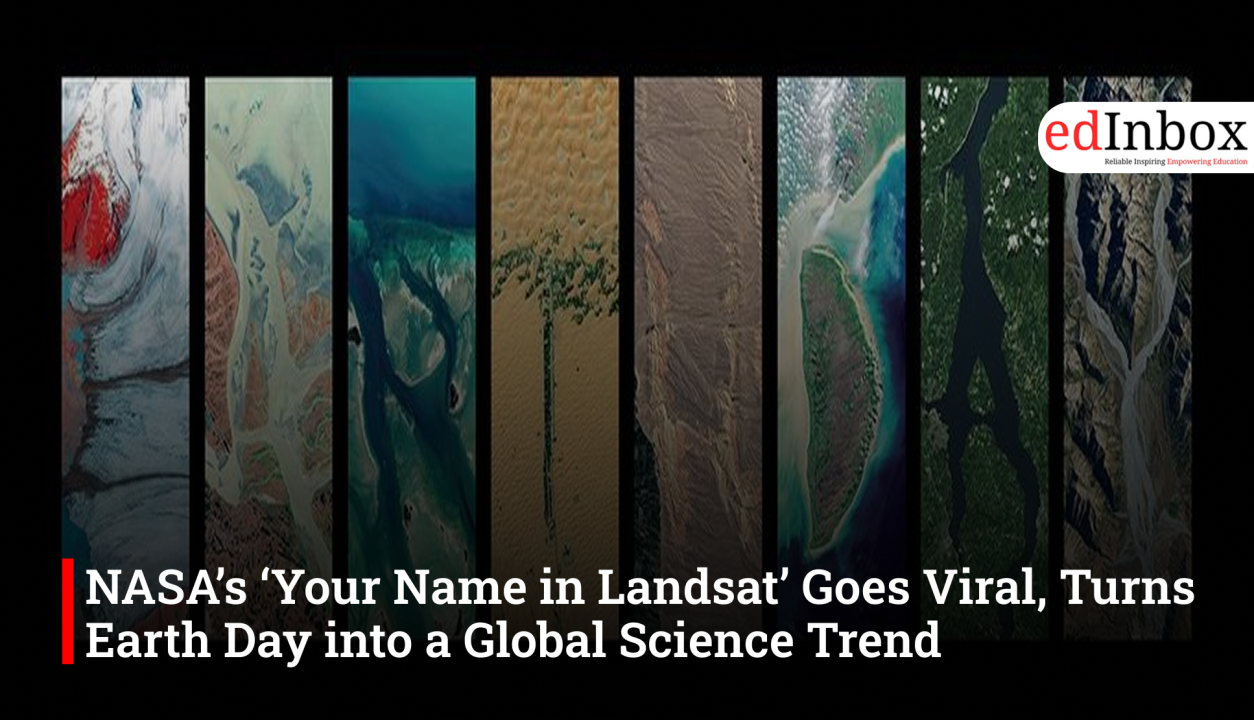
Launched on Earth Day 2026, the tool allows users to type their names and see each letter formed from natural landscapes—rivers curving into “S” shapes, coastlines outlining “C,” or desert dunes sculpting an “A.” Within days, the feature gained massive traction across platforms like Instagram and X, blending personalisation with scientific storytelling in a way that resonates with a digital-first audience.
Science Meets Creativity
At the heart of this viral trend lies the Landsat program, the world’s longest-running Earth observation mission, continuously capturing images of the planet since 1972. The tool taps into this vast archive, using advanced algorithms to match geographical formations with alphabet shapes.
Each letter generated is not a graphic imitation but a real, scientifically captured satellite image, offering users both aesthetic appeal and an authentic glimpse of Earth’s diverse terrain. From winding rivers to rugged mountain ranges, every name becomes a unique mosaic of the planet.
Why It’s More Than Just a Trend
Beyond its viral success, the tool represents a shift in how complex scientific data is communicated to the public. By turning satellite imagery into personal, shareable content, NASA has made Earth observation relatable and engaging—especially for younger audiences.
Experts say this approach helps demystify remote sensing technology while sparking curiosity about geography, climate science, and environmental monitoring. It’s a subtle yet powerful reminder that the data collected from space is not just for scientists—it belongs to everyone.
A Gateway to Climate Awareness
The Landsat programme has been instrumental in tracking long-term environmental changes, including deforestation, glacier retreat, urban expansion, and water resource shifts. While the tool itself is playful, it indirectly introduces users to the importance of decades-long planetary observation.
By linking a viral trend to such critical themes, NASA has managed to bridge the gap between science, art, and public engagement—a rare combination in today’s fast-moving digital landscape.
The Bigger Picture
“Your Name in Landsat” highlights a growing trend in science communication: making data interactive, visual, and personal. In doing so, it transforms passive audiences into active participants in understanding Earth.
As millions continue to share their personalised satellite names online, one thing is clear—NASA has not just created a tool, but a movement that turns curiosity into connection, and science into something deeply human.
NASA’s ‘Your Name in Landsat’ Goes Viral, Turns Earth Day into a Global Science Trend
Typography
- Smaller Small Medium Big Bigger
- Default Helvetica Segoe Georgia Times
- Reading Mode