
The Maharashtra government through a Government Resolution (GR) dated 17th February 2026 has officially done away with 5 per cent reservation for Muslims in government jobs, semi, government posts and educational institutions.
The move gets rid of a 2014 GR that had established a quota under the Special Backward Class, A (SBC, A) category. Officials said that the act is just a refresh of official records since the provision has been legally non-existent for a couple of years and, in fact, was never practically implemented.
Background of the quota
In July 2014, the reservation was announced by then Congress, NCP government via an ordinance just before the Assembly elections. When the BJP, Shiv Sena alliance formed the government with Chief Minister Devendra Fadnavis, the ordinance lapsed.
The Bombay High Court had given interim relief only for educational admissions, but the quota was never completely implemented. Later decisions, including those referring to the Supreme Court, imposed a 50 per cent reservation limit, basically made the facility invalid.
Why the government cancelled it
According to the new GR, all earlier circulars, certificates and claims issued under the category now stand void because the ordinance never became a permanent law. Officials kept reiterating that the decision does not take away any benefit that already existed but simply acknowledge a status that had been legally existing for more than a decade.
Political reactions
Opposition parties made strong attacks on the move. Congress leader Varsha Gaikwad accused the move of an anti, minority mentality which goes against the inclusive governance claims. AIMIM MP Imtiaz Jaleel referred to the decision as hard, hearted, while the NCP (SP) leaders doubted the timing and political messaging of the move.
On the other hand, the government stressed that an order is administrative and not political and that the main purpose is to update the documents to the legally settled situation by the court.
This whole issue is going to spark a new discussion on the reservation policies and the extent to which the constitution limits the state's social justice measures.
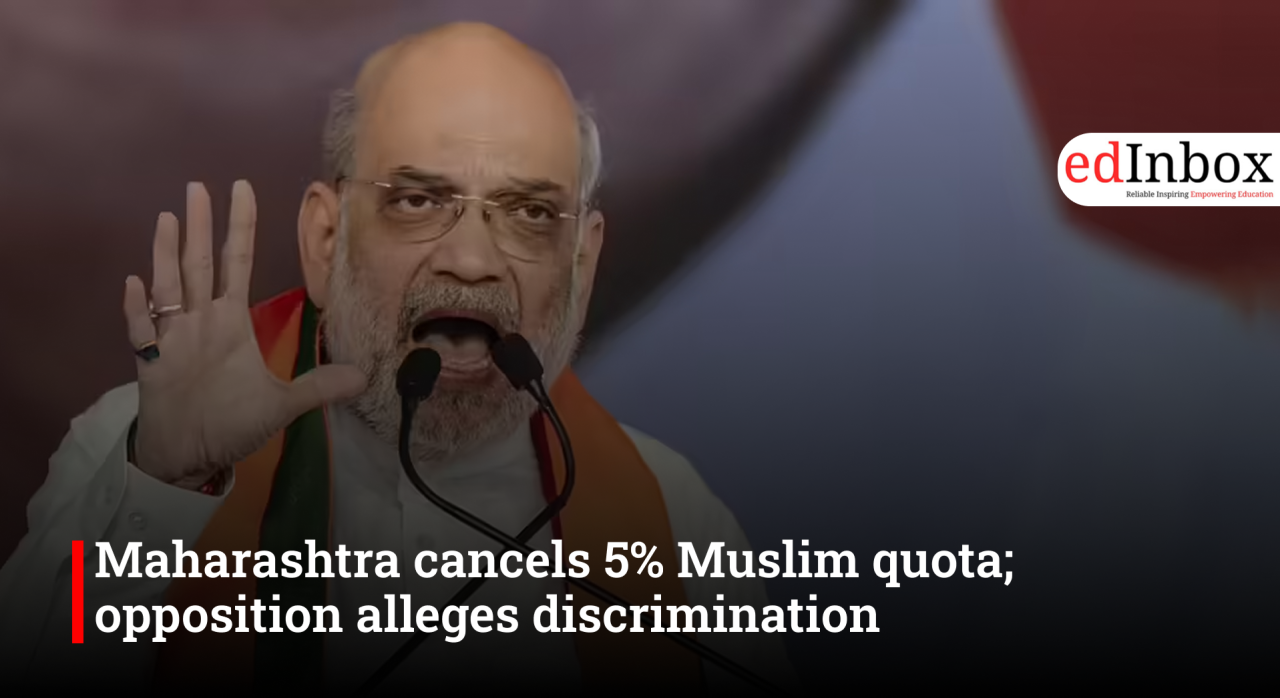
Maharashtra cancels 5% Muslim quota; opposition alleges discrimination
Typography
- Smaller Small Medium Big Bigger
- Default Helvetica Segoe Georgia Times
- Reading Mode