The Central Board of Secondary Education (CBSE) has extended the deadline for Class 12 students to apply for scanned copies of their evaluated answer sheets until May 24, 2026, following widespread complaints about technical issues on the official portal.

The latest extension comes after the Board had already moved the deadline from May 22 to May 23. The decision is expected to provide additional relief to students who were unable to complete the application process due to login failures, payment-related problems, and difficulties accessing the website.

According to CBSE, the portal has been experiencing unusually high traffic, which affected its performance. The Board also stated that there had been multiple attempts at unauthorised interference with the system, contributing to technical disruptions.

Over the past few days, several students took to social media to report issues while applying for scanned copies of their answer books. Complaints included failed logins, delayed payment confirmations, portal access problems, and difficulties downloading required documents.

The extension is aimed at ensuring that students are not disadvantaged by technical glitches while accessing an important stage of the post-result process.

Obtaining a scanned copy of the evaluated answer sheet is the first step for students who wish to review their performance and decide whether to proceed with verification of marks, answer-book rechecking, or re-evaluation.

Education experts note that access to answer sheets plays a crucial role in maintaining transparency in the evaluation process, allowing students to identify potential discrepancies before applying for further review.

CBSE has advised candidates to complete their applications through the official portal before the revised deadline and to avoid repeated submissions in cases where payment status updates are delayed.

The Board is expected to continue monitoring the portal to ensure smooth processing of applications during the extended window.

With thousands of students seeking access to their evaluated answer books, the additional time is likely to provide much-needed relief and reduce concerns among candidates navigating the re-evaluation process after the declaration of Class 12 results.
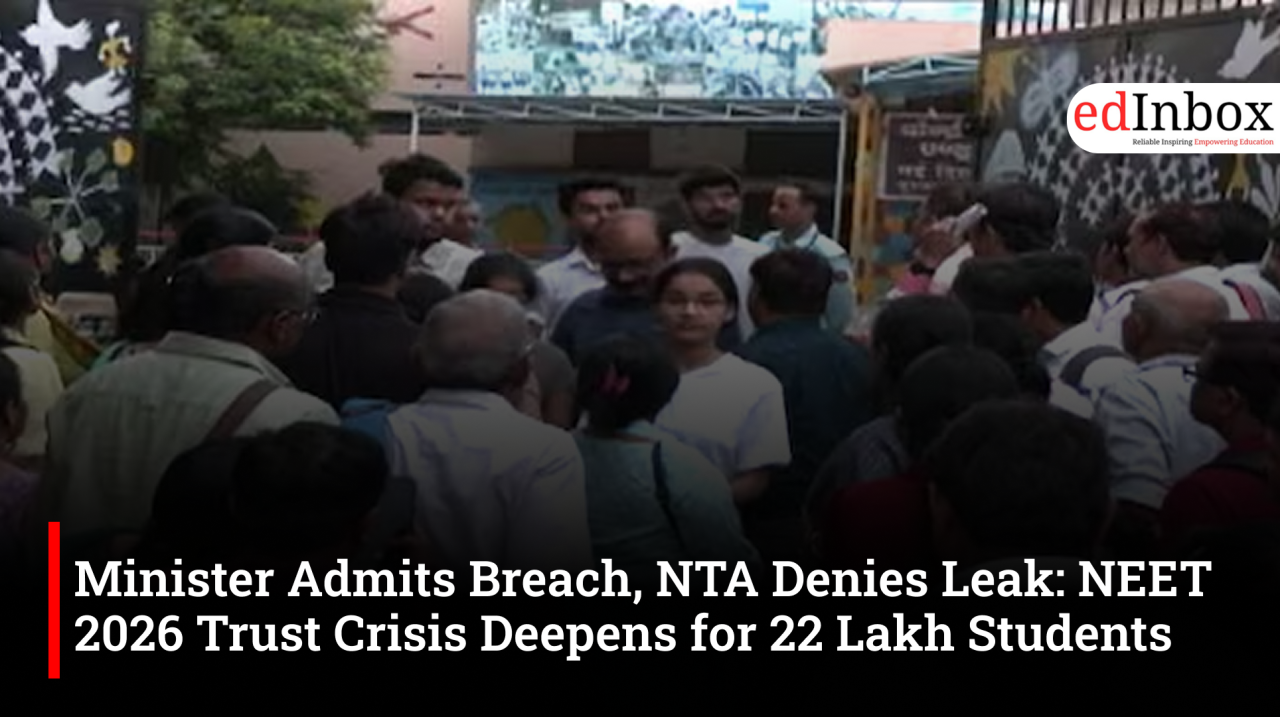
The NEET UG 2026 controversy has entered a new phase after statements from the Union Education Ministry and the National Testing Agency (NTA) appeared to offer different explanations of what went wrong with India's largest medical entrance examination. 

Days after Union Education Minister Dharmendra Pradhan admitted that “the NEET was compromised” and accepted responsibility for the mental anguish faced by students, the National Testing Agency (NTA) reportedly maintained before a Parliamentary Standing Committee that the paper was “not leaked through the system”.

The two statements may not necessarily contradict each other. One refers to a breach in the examination process, while the other focuses on whether the leak originated from NTA's internal systems. Yet for students and parents, the distinction has done little to reduce confusion.

"I take responsibility for the mental anguish faced by 22 lakh students. The NEET was compromised," Pradhan said while addressing the Jagran Bharat Education Conclave 2026.

The minister's remarks came days after the government cancelled NEET UG 2026, conducted on 3 May, following allegations that examination questions had been circulated before the test. A re-examination has now been scheduled for 21 June.

For aspirants, however, the debate is no longer about technical definitions. Across coaching hubs, student hostels and online communities, a simpler question is being asked: if the examination was compromised, how exactly did it happen?

Students who spent months preparing for one of India's most competitive entrance examinations are now facing another round of preparation, uncertainty and anxiety. Many had already begun estimating scores, discussing cut-offs and planning admission strategies before the cancellation was announced.

The controversy has also sparked wider concerns about transparency and accountability in national entrance examinations. Education experts argue that while stronger security measures can be introduced, restoring public confidence may prove more challenging.

The government has assured candidates that additional safeguards will be implemented for the June re-test and that students will not be required to pay any fresh examination fee. But as preparations resume, the issue extends beyond Biology, Physics and Chemistry. For millions of aspirants, the real question is whether confidence in India's most important medical entrance examination can be restored.

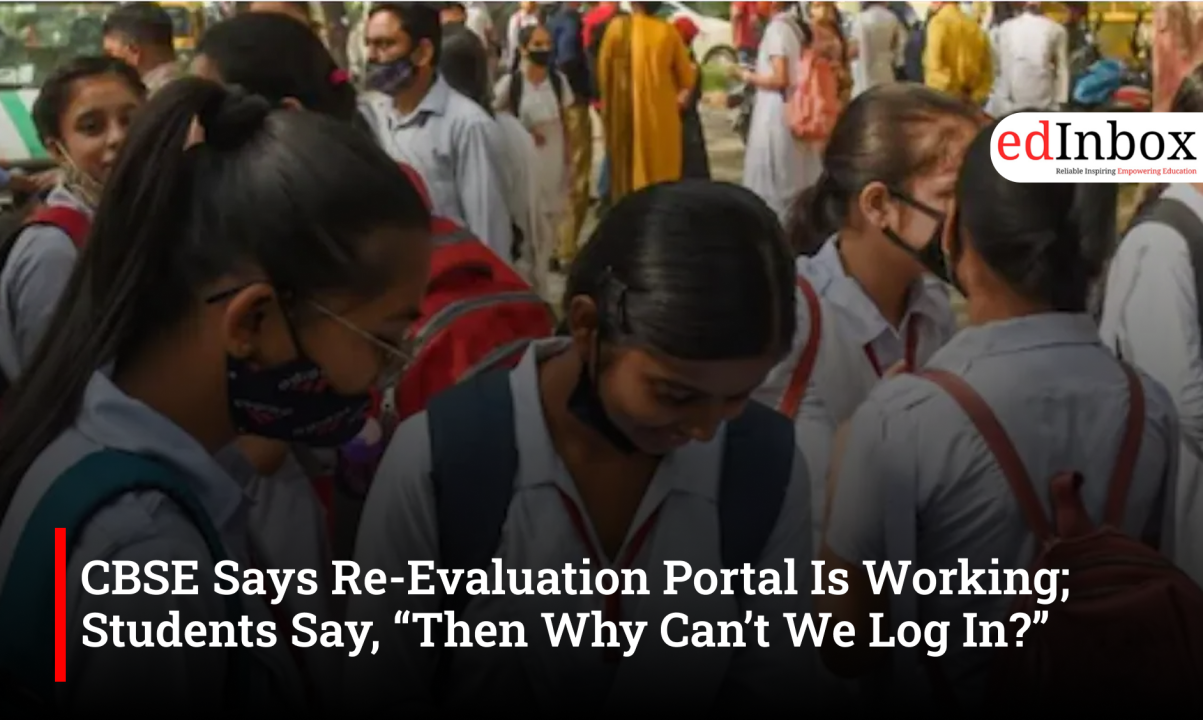
The Central Board of Secondary Education (CBSE) has confirmed that the online portal for downloading scanned answer sheets of class 12 is "fully functional", despite reports of some students facing technical issues accessing the service.

The Board has issued a clarification after complaints were received on social media about login failures, payment related issues, CAPTCHA errors and difficulties accessing the portal, News18 reports.

CBSE Re-Evaluation Portal Issue

The CBSE has announced in a post on X that the website for the scanned copies of the Class 12 answer books is "fully functional" and has appreciated the patience and cooperation of students, parents, and schools.

The Board also observed that there may be temporary delays because of a high volume of requests, especially for payment status updates.

“Students are advised that due to the high volume of requests, temporary delays may occasionally be experienced, particularly in payment status updates. In such cases, repeated submissions should be avoided,” CBSE said. But some students still had questions on social media following the clarification.

What Are Students Saying?

 Some users reported that they were having trouble with the application process, including login problems, payment processing issues, server issues, and payment confirmation update delays. Others posted screenshots and posts claiming that the payment amount has been deducted, but the portal still shows pending.

One user said the Board's statement was a “nice joke” and another said that they had tried to pay but deductions had been made from their account multiple times without them being paid. The claims have not been independently verified by CBSE.

CBSE Total Successful Applications

CBSE said that 1,27,146 applications seeking 3,87,399 scanned answer books were submitted successfully within three hours of the opening of the portal at 7:30 pm on May 20.

The numbers show that during the first application period, a significant number of students were able to access and use the service.

CBSE Scanned Answer Sheets

The official website to download scanned answer sheets is pvr.cbseit.in/pvr/

CBSE also released a fact-check on the claims made about the answer-sheet scanning and evaluation process. The Board stated that allegations of the quality of the evaluation being compromised due to insufficient preparation or time were “factually incorrect”.

CBSE said that the evaluation process was carried out in accordance with the laid down procedures with fairness, transparency and supervision at all the stages. 

Students are requested to refer to official CBSE notification and visit the portal frequently for updates on application status and other services during the re-evaluation process.

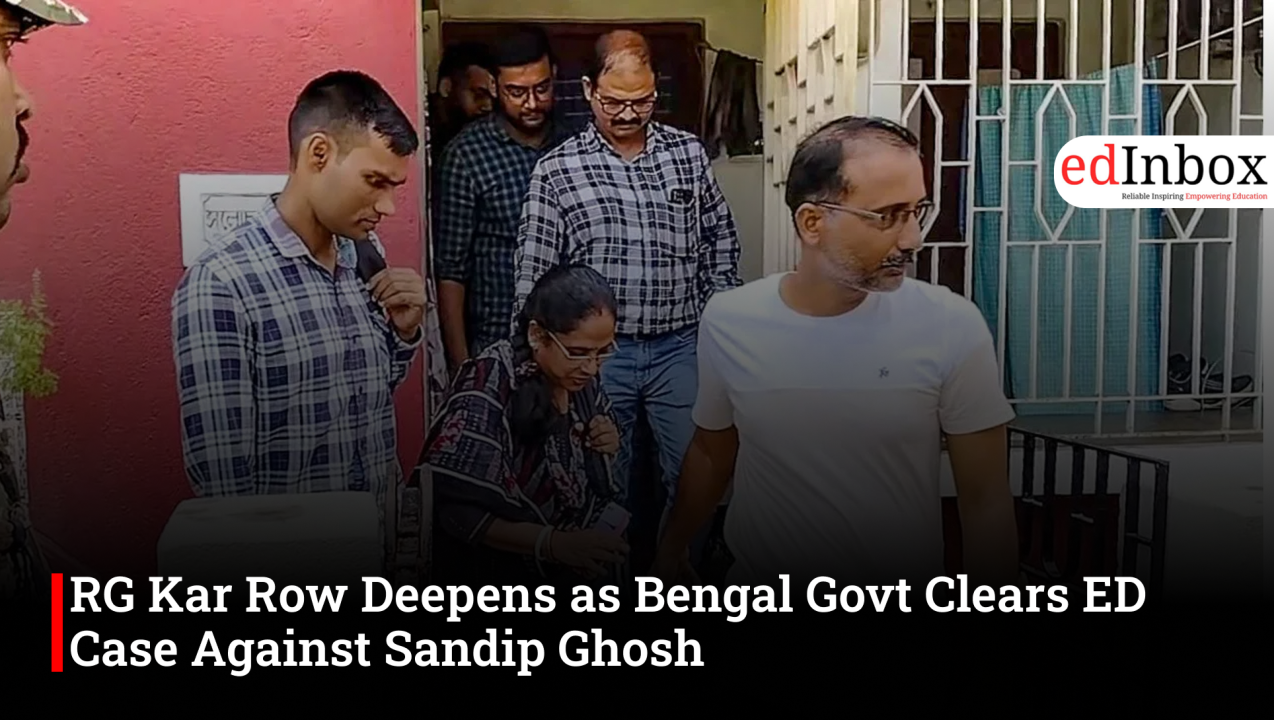
The West Bengal government has finally granted the Enforcement Directorate (ED) sanction to prosecute former RG Kar Medical College and Hospital principal Sandip Ghosh in connection with alleged financial irregularities and money laundering, a development that many student doctors and healthcare activists see as a crucial step toward accountability in one of the state’s most controversial medical institution cases.

The decision comes months after widespread outrage among junior doctors, medical students, and civil society groups following allegations of corruption and administrative misconduct linked to the functioning of RG Kar Medical College and Hospital. Protest movements led by student doctors had repeatedly accused authorities of delaying investigations and shielding influential figures within the healthcare system.

According to the official order issued by the West Bengal government on Monday, the sanction clears the legal path for the ED to proceed with prosecution against Ghosh under provisions related to money laundering and financial misconduct. The central agency has been probing alleged irregularities involving hospital funds, procurement processes, and administrative decisions during his tenure as principal.

Leader of Opposition in the West Bengal Assembly Suvendu Adhikari welcomed the move and sharply criticised the earlier handling of the matter by the ruling dispensation. Reacting to the development, Adhikari alleged that the investigation had been “forcibly and unethically stalled” for a prolonged period under the previous administrative approach. He further stated that “no one is above the law” and asserted that truth could not remain suppressed indefinitely.

The case has remained politically sensitive because it unfolded amid heightened public scrutiny of Bengal’s healthcare infrastructure and governance. Student doctors, who had organised demonstrations demanding transparency and justice, argued that the issue extended beyond an individual official and exposed deeper systemic concerns within public medical institutions.

The ED investigation reportedly focuses on suspected financial misconduct and possible laundering of illegally acquired funds. With the state government now granting sanction for prosecution, legal proceedings are expected to intensify in the coming weeks.

For many young doctors and medical students, the development is being viewed as a test of institutional accountability in India’s public healthcare education system. Several student groups have maintained that restoring trust in government-run hospitals and medical colleges requires transparent investigations, timely action, and protection for whistleblowers who raise concerns about corruption and administrative abuse.

The National Testing Agency (NTA) has begun the process of refunding NEET UG 2026 exam fees due to the cancellation of the medical entrance exam following the paper leak controversy.

Students who have already paid NEET UG 2026 exam fee will not be required to pay again for the re-exam on June 21. The refund will be done via a dedicated online portal where the candidates will have to provide their bank account information. To ensure that there are no delays in receiving the refund, NTA has requested students to fill in the details after the portal opens on May 21.

Following allegations of a paper leak, protests, investigations, and widespread concerns about the fairness of the examination process led to the cancellation of the NEET UG 2026 exam.

Union Education Minister Dharmendra Pradhan admitted that there was a fault in the examination system and that the government was taking responsibility to rectify the fault. The minister, in his address to the controversy, said that the education mafia and fraudulent candidates should not let any deserving student suffer.

He also added that the recommendations of the Radhakrishnan Committee, which were made following the irregularities in the previous exams, have been put into practice for NEET 2025 and 2026. Despite those measures, the latest controversy still took place, leading to the cancellation of the examination.

The NEET UG 21 re-exam will be held on June 21 from 2 PM to 5:15 PM in pen and paper mode at exam centres in India and abroad. The examination will be conducted in 13 languages, English, Hindi, Tamil, Telugu, Bengali, Marathi, Malayalam, Gujarati, Kannada, Punjabi, Assamese, Urdu and Oriya.

NTA has also announced that there will be an extra 15 minutes for candidates in the re-exam. The additional time will be allocated for attendance, document verification and other pre-exam formalities.

The recent changes have brought the NTA once again under the spotlight, as students and parents are calling for improved security measures and transparency in the country's largest medical entrance test.

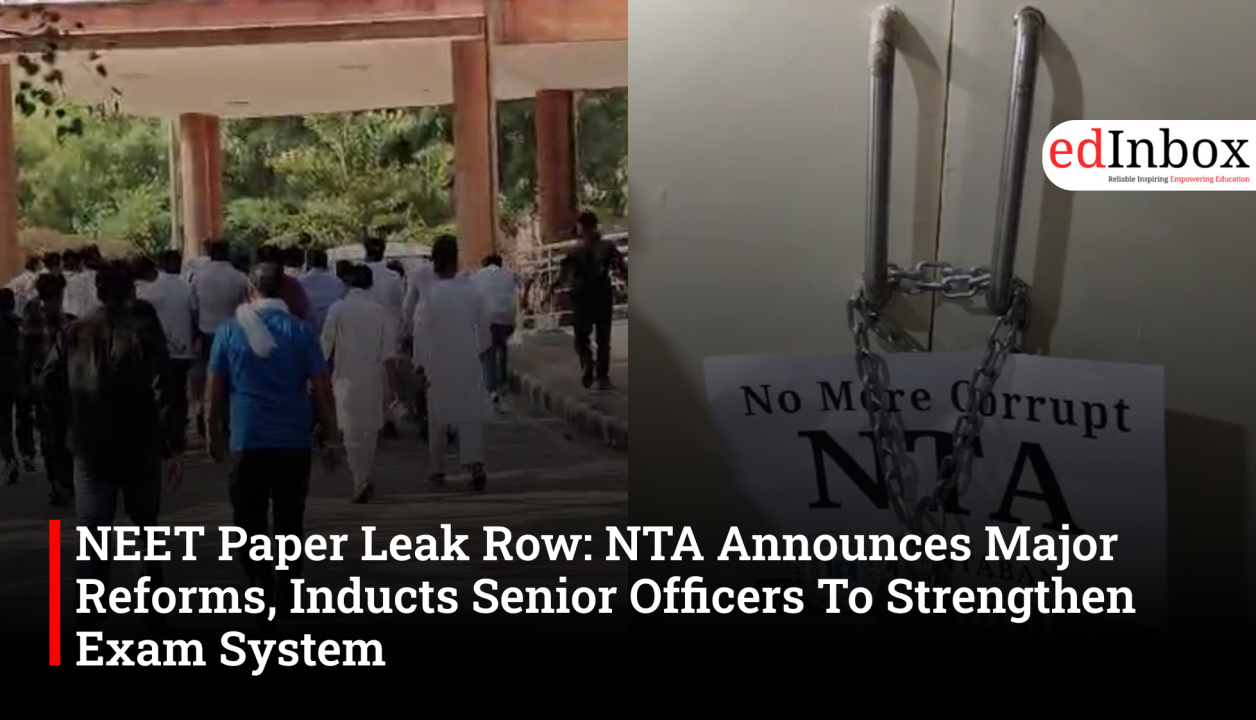
Following widespread controversy over the alleged leak of the NEET-UG 2026 question paper, the National Testing Agency has announced a series of institutional reforms aimed at improving transparency, security and operational efficiency in India’s high-stakes examination system.

The changes come after the cancellation of the NEET-UG 2026 examination triggered intense criticism from students, parents and education stakeholders across the country. Acting on recommendations made by a high-level expert committee constituted by the Government of India, the agency said the reforms are part of a “comprehensive and continuing programme” to rebuild trust in the examination ecosystem.

Senior Officers Inducted Into NTA

As part of the restructuring process, the National Testing Agency has inducted four senior government officers into key administrative positions.

The appointments include two joint secretary-level officers who will serve as additional director generals, along with two director-level officers. According to the agency, the officers bring extensive experience from central services and inter-ministerial administration, which is expected to support the NTA’s expanding responsibilities.

Specialist Leadership Positions Opened

The agency has also invited applications for three major specialist roles:

  • Chief Technology Officer (CTO)
  • Chief Finance Officer (CFO)
  • General Manager (HR)

The NTA said the CTO will oversee the entire digital examination ecosystem, including candidate-facing platforms, confidential question-paper management systems, AI-driven integrity monitoring, cyber-security measures and technological modernisation.

Meanwhile, the CFO will supervise examination-wise accounting, treasury management, statutory compliance and financial oversight, including coordination with the Comptroller and Auditor General (CAG).

The GM (HR) will focus on workforce management, professional HR policies and institutional reforms within the organisation.

Applications for the three positions can be submitted within 15 days from the publication of the advertisements on the official NTA website. Selections will reportedly be made through a formal selection committee based on qualifications, experience and demonstrated capability.

What Changes Can Students Expect?

According to the National Testing Agency, the broader reform programme will introduce major structural and technological changes in the examination process.

Key measures expected include:

  • Stronger question-paper preparation and logistics systems
  • AI- and analytics-based monitoring controls
  • Biometric authentication of candidates
  • Enhanced cyber-security systems
  • Improved coordination between stakeholders
  • Professionalisation of human resource management
  • More proactive communication with students and parents

The reforms are aimed at tightening security and reducing the chances of malpractice in competitive examinations such as NEET-UG 2026.

The developments also follow action taken in the paper leak investigation, including reports that the Pune Municipal Corporation sealed RCC Coaching Classes linked to accused Shivraj Mategonkar in connection with the case.

The latest reforms signal a major shift in how the NTA plans to conduct national-level examinations, with greater emphasis on technology-driven monitoring, accountability and institutional oversight.

Bhavya Ranjan has emerged as one of the country’s highest scorers in the CBSE Class 12 examinations, securing an exceptional 99.8% in the humanities stream and earning national attention for her near-perfect performance.

A student of Oxford Public School in Ranchi, Ranjan scored 499 out of 500 marks, missing a perfect score by just one mark in Economics. She secured full marks in English, History, Political Science, and Painting, making her achievement one of the standout performances of this year’s CBSE board examinations.

Her result drew praise from educators, fellow students, and political leaders, including Sanjay Seth, who described her success as a reflection of discipline, consistency, and determination.

A Balanced Approach To Success

Unlike the common perception that toppers rely on marathon study sessions, Bhavya Ranjan emphasized the importance of conceptual clarity, regular revision, and emotional balance in her preparation strategy.

She said her focus remained on understanding subjects deeply rather than memorising content mechanically. To avoid distractions, she limited her social media use to just 15–30 minutes a day through app timers and maintained a disciplined routine aligned with her long-term goal of preparing for the UPSC civil services examination.

Ranjan also credited her success to the support of her family, teachers, and school environment. Her preparation reportedly benefited from her school’s “Target 100” initiative and a pressure-free atmosphere at home that encouraged consistency over fear-driven competition.

CBSE Pass Percentage Drops To Lowest In Seven Years

While Bhavya Ranjan’s achievement became a highlight of the results season, the overall CBSE Class 12 results for 2026 sparked wider discussions due to a noticeable decline in pass percentages.

According to the Central Board of Secondary Education, the overall pass percentage this year stood at 85.20%, marking a drop of 3.19 percentage points compared to last year and the lowest pass rate recorded in seven years.

Girls once again outperformed boys, registering a pass percentage of 88.86%, while boys recorded 82.13%, creating a gender gap of 6.73 percentage points.

Students from the science stream particularly reported lower scores in subjects such as Physics, Chemistry, Biology, and Mathematics, leading to speculation regarding the impact of the newly introduced On-Screen Marking (OSM) system.

However, CBSE defended the digital evaluation process, stating that the OSM system improves transparency, reduces human error, maintains confidentiality, and eliminates the physical handling of answer sheets. The Board also stated that evaluators underwent specialised training to ensure accuracy and consistency during assessment.

CBSE Re-Evaluation Process Explained

For students dissatisfied with their marks, CBSE has introduced a two-stage online re-evaluation process.

Students can first apply for scanned copies of their evaluated answer sheets between May 19 and May 22 by paying Rs 700 per subject. After reviewing the scanned copies, students may apply for verification or re-evaluation from May 26 to May 29.

The Board has fixed the fee for verification at Rs 500 per answer book, while re-evaluation requests will cost Rs 100 per question.

CBSE clarified that revised marks — whether increased or decreased — will be treated as final, and updated mark sheets will be issued accordingly.

The Board reiterated that the OSM system has been designed to improve fairness and efficiency in the evaluation process while modernising examination administration across the country.

More Articles ...