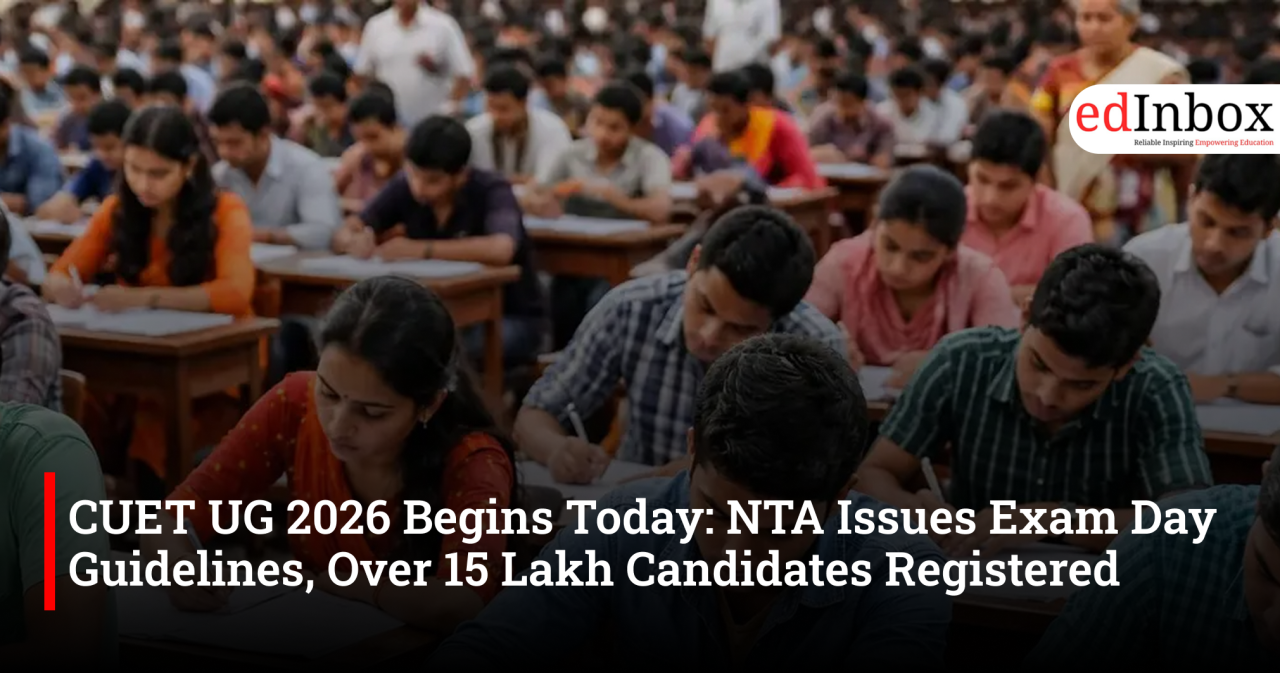
The National Testing Agency (NTA) will commence the Common University Entrance Test Undergraduate (CUET UG) 2026 from today, May 11, in Computer-Based Test (CBT) mode across India and selected international centres.

The examination will continue till May 31 and is being conducted in 300 cities across India and 14 international cities in 13 countries, including the UAE, Saudi Arabia, Qatar, Nepal, Singapore, Malaysia and the United States.

According to the NTA, a total of 15,68,866 candidates have registered for CUET UG 2026, generating nearly 67.56 lakh test instances across 12,906 subject combinations. On average, candidates opted for 4.31 subjects each. Nearly 43 per cent of registrations came from Uttar Pradesh, Bihar and Delhi.

English emerged as the most preferred subject with 12.64 lakh registrations, followed by Chemistry, Physics, General Aptitude Test, Mathematics and Biology.

Day 1 Examination Schedule

The examination on the opening day will be conducted in two shifts.

Shift 1 will see 63,247 candidates appearing across 314 centres for subjects including English, Accountancy, Business Studies, Chemistry, Economics, Geography, History and Political Science.

Shift 2 will have 60,773 candidates across 281 centres for subjects such as English, Computer Science, Sociology, Economics, History and Political Science.

In total, 1,24,020 candidates are expected to appear on the first day.

Documents Mandatory at Exam Centres

Candidates must carry:

  • Printed admit card with self-declaration form
  • Two passport-size photographs
  • Original valid photo ID proof
  • Transparent ball-point pen

Accepted ID proofs include Aadhaar card, passport, PAN card, school ID, Class 12 admit card with photograph, e-Aadhaar and bank passbook with photograph.

Items Allowed and Prohibited

Permitted items include a transparent water bottle and transparent pen. Diabetic candidates may carry sugar tablets, fruits or similar permitted eatables.

Candidates have been strictly prohibited from carrying mobile phones, smart watches, calculators, wallets, electronic gadgets or study material inside the examination hall. The NTA clarified that no storage facility will be available at centres for personal belongings.

Dress Code and Reporting Instructions

Candidates have been advised to wear light-coloured clothes and simple footwear. Those wearing religious or customary attire have been asked to report early for additional security checks.

The NTA stated that 96.6 per cent of candidates received one of their preferred exam cities, while 79 per cent were allotted their first-choice city. The agency has also set up helpline support for students facing any examination-related issues.
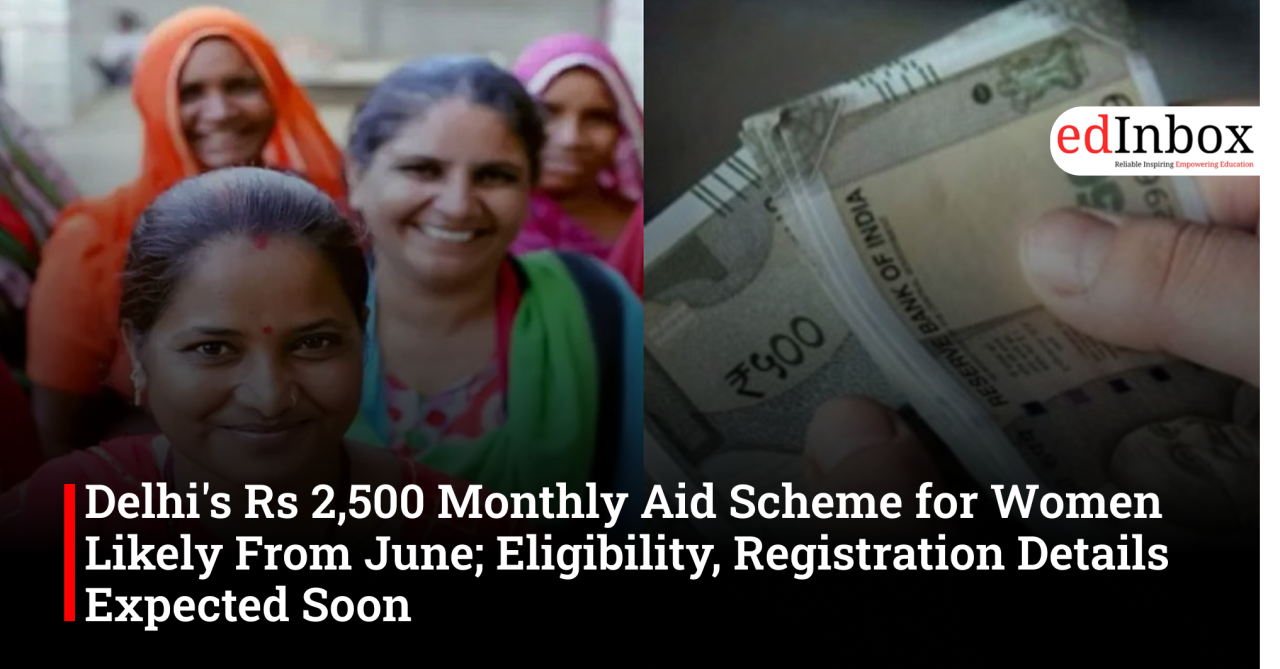

The BJP-led Delhi government is likely to begin registrations from June 2026 for its proposed monthly financial assistance scheme for women, aimed at supporting economically weaker households in the national capital.

The scheme, earlier referred to as the ‘Mahila Samridhi Yojana’, is expected to be launched under the new name ‘Delhi Laxmi Yojna’, according to official sources. Under the initiative, eligible women will receive Rs 2,500 every month directly into their bank accounts through Direct Benefit Transfer (DBT).

The scheme was one of the BJP’s key promises during the 2025 Delhi Assembly elections. To implement the programme, the Delhi government has allocated Rs 5,100 crore in the 2026–27 Budget presented by Chief Minister Rekha Gupta. Officials estimate that nearly 17 lakh women could benefit from the scheme.

Sources said the government delayed implementation earlier due to the absence of verified beneficiary data. Authorities are now working on a more streamlined and transparent system to ensure only eligible women receive the benefits.

Who Can Apply?

According to officials, only women belonging to the Below Poverty Line (BPL) category and possessing an Aadhaar card linked to a Delhi address will be eligible for the scheme. The Women and Child Development Department, headed by the chief minister, is expected to oversee the implementation process.

How to Register

The Delhi government is likely to release detailed registration guidelines and launch an online portal soon. Applicants are being advised to keep essential documents ready in advance to avoid delays during registration.

Documents Likely Required

  • Aadhaar card with a Delhi address
  • BPL certificate or proof of eligibility
  • Bank account details
  • Aadhaar-linked mobile number
  • Passport-size photograph
  • Residence proof

A high-level committee headed by Chief Minister Rekha Gupta, along with cabinet ministers and senior officials, has already been formed to monitor the rollout of the scheme.

The initiative is expected to emerge as one of Delhi’s largest welfare programmes for women, particularly amid rising living costs and inflation

The Uttar Pradesh Education Service Selection Commission successfully concluded the written examination for Lecturer Cadre recruitment across the state on Sunday, with more than 1.92 lakh candidates appearing over two days.

The examination was held in two shifts at multiple centres and was conducted under extensive AI-based surveillance to ensure transparency and prevent malpractice. Commission Chairman Prashant Kumar said the recruitment examination was carried out in a fair, cheating-free and well-organised manner.

According to the Commission, 89,766 candidates appeared for the examination on May 9, recording an attendance rate of 38.04 per cent. Female attendance stood at 34.89 per cent, while male attendance reached 42.26 per cent. On May 10, a total of 1,03,168 candidates appeared, taking the attendance figure to 45.12 per cent, including 41.92 per cent women and 48.08 per cent men. Overall, 1,92,934 candidates took the examination, with a combined attendance of 41.53 per cent.

The examination covered multiple subjects across two sessions. The morning shift included Civics, Mathematics, Economics, Sanskrit and Psychology, while the afternoon shift covered Chemistry, Geography, Hindi and Fine Arts. The first session was conducted from 9:30 am to 11:30 am and the second from 2:30 pm to 4:30 pm.

To strengthen monitoring, all centres were connected to an AI-integrated Control Command Room established by the Commission. Officials, including the chairman, commission members and examination authorities, monitored candidate activities in real time through AI-enabled cameras.

In a pilot initiative introduced at selected centres in Lucknow, OMR answer sheets were scanned immediately inside examination halls after the test concluded. The process was conducted in the presence of candidates, with data instantly secured and monitored live through the AI-based command system.

The Commission also acknowledged the cooperation of district authorities, police officials and examination staff in ensuring the smooth conduct of the recruitment process.

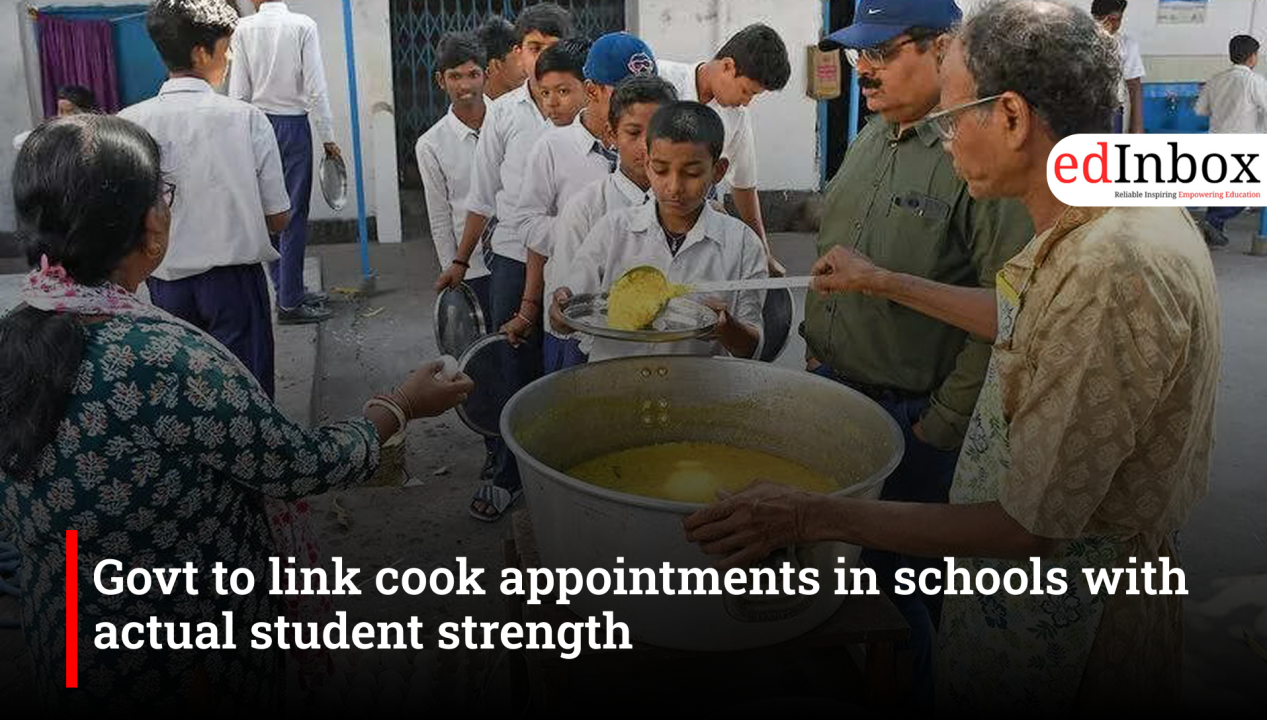
The state education department has introduced a new staffing policy for the Mid-Day Meal Scheme under which the appointment of cooks and helpers in government primary schools will now depend on the actual number of enrolled students instead of estimated enrolment figures.

The reform is aimed at improving the efficiency and continuity of meal services across nearly 71,000 primary schools covered under the scheme.

Vinayak Mishra has directed all district programme officers to upload updated student enrolment data on the e-ShikshaKosh portal. The department said the revised system will help determine staffing requirements more accurately and ensure schools have sufficient personnel to prepare and distribute meals on time.

Earlier, staffing calculations under the scheme were based on 85 per cent of total enrolment, a figure later reduced to 75 per cent. The new policy removes the use of estimated percentages and shifts entirely to real-time enrolment data.

Under the revised guidelines, vacancies created due to retirement at the age of 60, resignation, or death will no longer be filled according to previous staffing calculations. Instead, fresh appointments will be made strictly on the basis of current student strength in individual schools.

The department has instructed officials to fill all vacant cook and helper posts within one month to avoid disruption in meal services. Officials said the move is intended to ensure that no child is deprived of meals because of staffing shortages.

The new guidelines also introduce stricter accountability measures. If any cook or helper position remains vacant for more than one month, departmental action may be initiated against the concerned officials. Responsibility for delays will rest with district education programme officers.

Officials believe the system could improve transparency and resource allocation within the Mid-Day Meal Scheme by aligning staffing directly with the number of children being served.

Cooperative department gives temporary higher charge to 212 employees

In a separate administrative decision, the state cooperative department has assigned temporary higher responsibilities to 212 non-gazetted employees.

The decision was approved during a departmental screening committee meeting chaired by Rajneesh Kumar Singh on April 24.

According to the notification, 79 upper divisional clerks have been given charge as head clerks, while 54 senior audit officers have been assigned responsibilities as sub-divisional audit officers. Several other employees across clerical and extension categories have also received temporary promotions.

The department said reservation provisions for persons with disabilities were taken into account during the process. Employees assigned higher responsibilities will receive the salary and benefits attached to the upgraded posts.

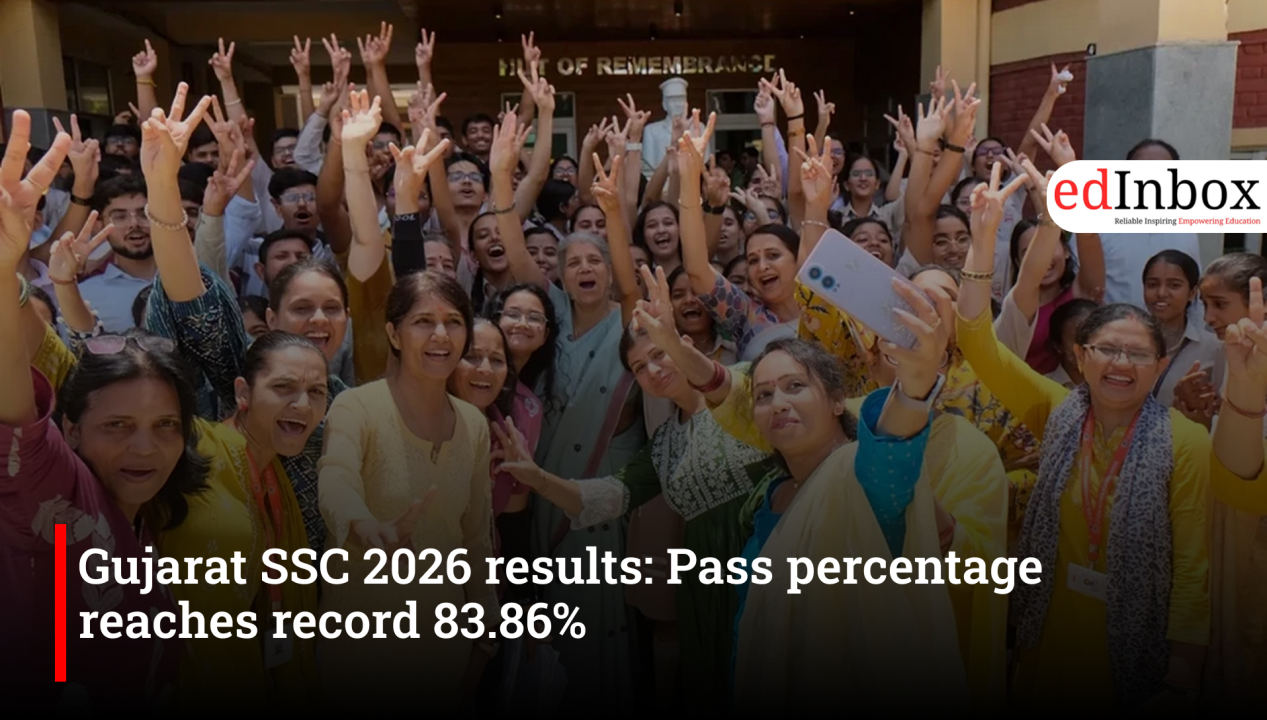
Gujarat Secondary and Higher Secondary Education Board has recorded its highest-ever Class 10 pass percentage, with 83.86 per cent of students clearing the SSC examination in 2026.

The result surpasses last year’s 83.08 per cent and continues the strong recovery trend seen after the pandemic years, when the pass percentage had dropped to 64.62 per cent in 2023.

District-wise performance improves

Among districts, Narmada emerged as the best-performing district with a pass percentage of 90.85 per cent, while Panchmahals recorded the lowest performance at 76.42 per cent.

The number of schools achieving a 100 per cent result also increased significantly to 1,697. Meanwhile, schools with pass percentages below 30 per cent declined to 164, indicating broader improvement in academic outcomes across the state.

Girls continue to outperform boys

Female students maintained their lead over male students across almost all categories of the examination.

Girls recorded an 88.28 per cent pass rate among regular candidates, compared to 80.12 per cent for boys. The trend was also visible among repeater candidates and students appearing through the Gujarat State Open School.

The gender performance gap has remained consistent over recent years, with girls outperforming boys in both 2024 and 2025 as well.

Science and Basic Maths show strong performance

Subject-wise data revealed exceptionally high scores in Science and Basic Mathematics.

A total of 8,250 students secured full marks in Science, while 3,529 students achieved perfect scores in Basic Maths.

However, Standard Mathematics continued to remain comparatively challenging. Only 91 students scored 100 marks in the subject, highlighting a sharp contrast between the two mathematics streams.

In English, the highest score recorded was 96 marks, achieved by 10 students.

Vocational subjects such as Banking & Financial Services and IT/ITES also saw a notable number of high scorers, reflecting growing student participation in skill-oriented streams.

What the trend could mean

Education analysts believe the rising pass percentages could intensify competition for admissions into higher secondary schools, especially in science and commerce streams in top-performing districts.

The continuing gap between Basic Maths and Standard Maths performance may also prompt curriculum reviews or targeted academic interventions to strengthen conceptual learning in advanced mathematics.

At the same time, the sustained academic advantage shown by female students could encourage policymakers to examine factors influencing lower performance among boys while continuing efforts to support girls’ education and retention.

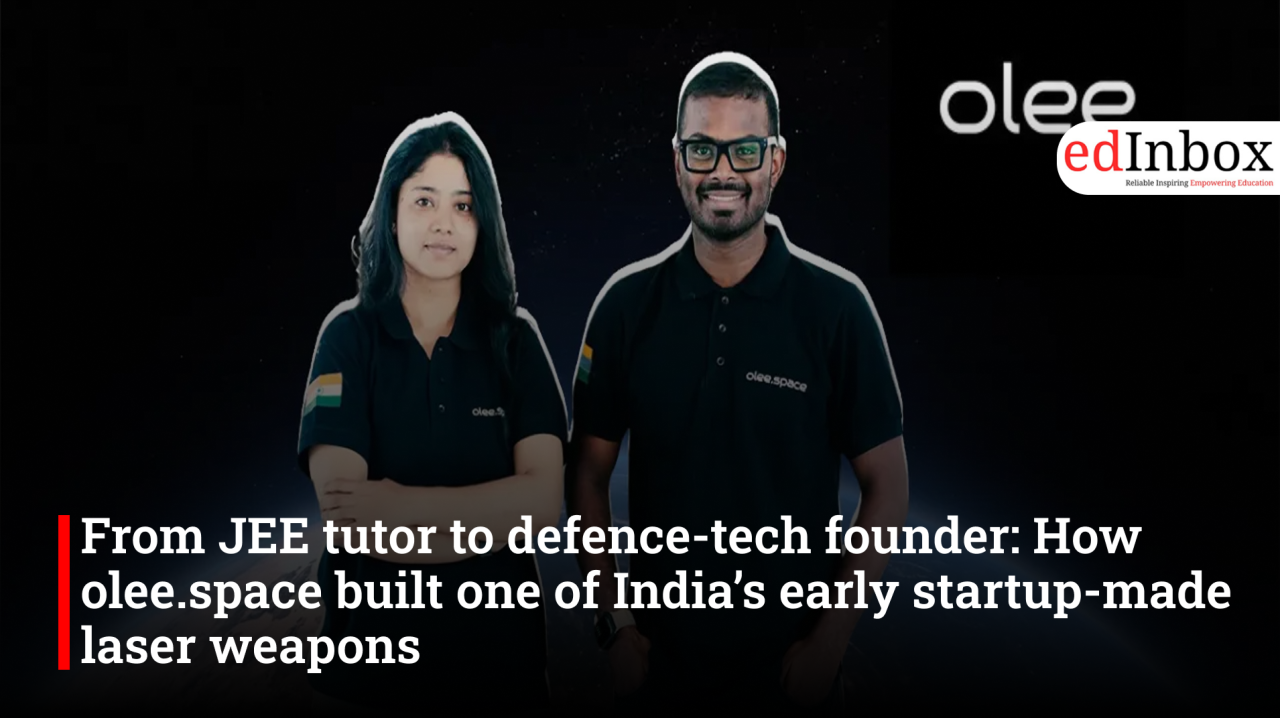
India’s deep-tech and defence innovation ecosystem is witnessing a rapid transformation, and one emerging example is olee.space, a Pune-based startup that has moved from research-stage development to live military technology demonstrations within a short span.

Founded in 2023 by James Solomon and Suman Hiremath, the company has developed laser-based communication systems and directed-energy weapon technologies aimed at strategic and defence applications.

According to Solomon, the startup commercialised two products within six months — a laser communication system and a laser-directed energy weapon. Both technologies were demonstrated during an optics symposium in Prayagraj attended by senior political and military leadership, including Yogi Adityanath and Rajnath Singh.

Laser weapons with multiple power tiers

The startup’s laser weapon platform has reportedly been designed in multiple power configurations ranging from 2 kilowatts to 50 kilowatts. According to the company, the system can engage targets in under three seconds and is compatible with existing radar networks.

Directed-energy systems such as laser weapons are increasingly being explored globally for counter-drone operations, missile interception, and battlefield air defence because they can neutralise threats at high speed with comparatively lower operational costs than traditional missile systems.

The company has also developed laser communication technology, an area gaining strategic importance due to its potential for secure, high-speed optical data transmission in military and satellite communication systems.

Building defence tech outside traditional government systems

Unlike conventional defence suppliers that depend directly on government procurement cycles, olee.space is pursuing partnerships with larger defence companies to accelerate market access and maintain revenue flow.

Solomon noted that relying solely on direct military contracts can be difficult for startups operating in capital-intensive deep-tech sectors. The company’s current defence order has reportedly been secured through collaboration with an Indian defence firm, although the partner has not been publicly named.

The startup, initially bootstrapped, has raised nearly $3 million in funding from investors including IIMA Ventures and Rockstud Capital.

From IIT Bombay to indigenous defence innovation

The journey of James Solomon reflects the changing landscape of Indian entrepreneurship in strategic technology sectors.

A materials science graduate from Indian Institute of Technology Bombay, Solomon began working on defence technologies during his college years through internships and independent technical projects.

Coming from a modest financial background, he supported himself by teaching students preparing for the Joint Entrance Examination while building expertise in advanced engineering systems.

Today, the company employs a 25-member engineering-focused team, including professionals with experience from organisations such as Defence Research and Development Organisation and Bharat Electronics Limited.

A sign of India’s changing deep-tech ecosystem

The rise of startups like olee.space highlights how private Indian firms are increasingly entering strategic sectors once dominated almost entirely by government laboratories and public-sector defence companies.

The company’s rapid progression from concept development to commercial deployment also reflects broader changes in India’s innovation ecosystem, where defence-tech, AI, robotics, aerospace, and advanced materials are emerging as key areas of startup activity.

As India pushes for greater technological self-reliance and indigenous defence manufacturing, ventures working on laser systems, optical communications, and directed-energy technologies could become increasingly important to the country’s future strategic capabilities.

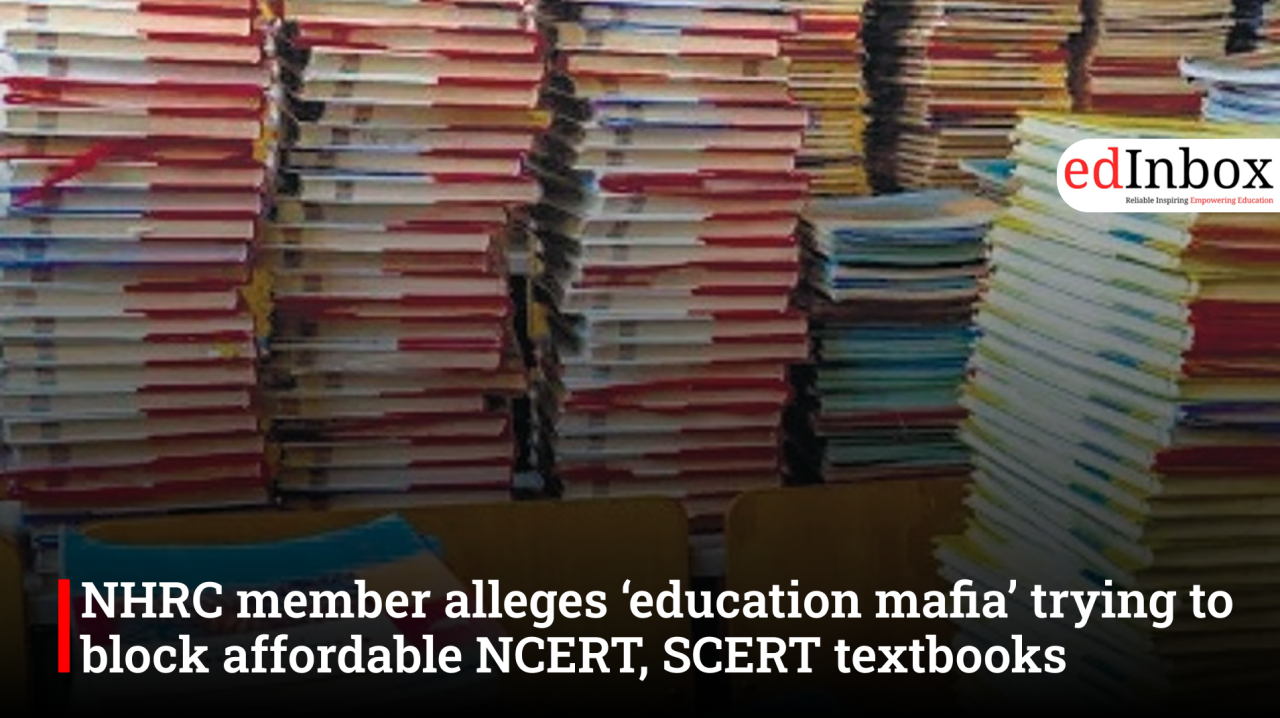
National Human Rights Commission member Priyank Kanoongo on Tuesday alleged that an “education mafia” was attempting to obstruct efforts aimed at ensuring affordable school education through the wider use of government-published textbooks.

In a post on X, Kanoongo said he had directed state governments to promote the use of National Council of Educational Research and Training and State Council of Educational Research and Training books in private schools instead of expensive textbooks published by private companies.

According to Kanoongo, the directive was issued under powers available through the Protection of Human Rights Act 1993 and within the framework of the Right of Children to Free and Compulsory Education Act 2009.

“The education mafia is employing a policy of ‘saam daam dand bhed’ to pressure and overturn my order,” Kanoongo said, adding that attempts to stay or stop the directive would not succeed.

He further stated that the effort was intended to protect economically weaker and middle-class families from excessive education-related expenses.

NHRC had earlier issued notices over the costly private books

Earlier, the National Human Rights Commission had issued notices to the Ministry of Education, the Central Board of Secondary Education, and all states and Union Territories over allegations that schools were compelling parents to purchase costly books from private publishers.

The commission had expressed concern that prescribing multiple supplementary books and workbooks imposed a heavy financial burden on families.

NHRC also noted that such practices may violate provisions of the National School Bag Policy 2020, which seeks to regulate the weight of school bags and discourage unnecessary academic materials.

Complaint alleged financial burden on families

The action reportedly followed a complaint submitted by Namo Foundation, which alleged that many schools were forcing students to buy expensive private textbooks despite the availability of subsidised NCERT materials.

The complaint argued that privately published books often cost significantly more than government textbooks, increasing educational expenses for low-income and middle-class households.

Supporters of wider NCERT and SCERT adoption argue that standardised government textbooks help reduce education costs while maintaining curriculum uniformity. Critics, however, have previously argued that some schools prefer private materials for supplementary content and customised learning approaches.

The issue has renewed debate around affordability, regulation of private schools, and the commercialisation of school education in India.

More Articles ...