During a period when broad changes are reshaping the education sector in India, The Indian University: A Critical History by Debaditya Bhattacharya poses an urgent query: Who is the university actually for? It pierces promotional statements to expose a system characterized by profound inequality, political patronage, and increasing disconnection from its public mission.

Published by Orient BlackSwan, the book’s launch at Jawahar Bhawan in Delhi sparked a timely and engaging discussion on the state of higher education in India. Scholars Zoya Hasan, Simona Sawhney, and Tanika Sarkar reflected on how the book reveals the growing influence of ideology, market forces, and historical amnesia in transforming the Indian university—steering it away from its democratic and emancipatory purpose.

For Bhattacharya, the catalyst for writing the book was the National Education Policy (NEP) 2020—a global education milestone that also put India's unsettled contradictions on display.

"I wanted to go back to a self-critique of the Indian university—not a liberal desire for elite universities or a nostalgic imagination of the university," Bhattacharya explained. "I wanted us to start from an acutely self-critical sense of what I term the fraught publicness of the Indian university, and to question: what confers upon it both its Indian-ness and universitarian identity?

The writer included that he was not concerned about complex fantasies of Nalanda and Takshashila. "I illustrate by way of historical archiving, they can't really be described as university concepts at all," he explained.

Myths of the past and the present

Bhattacharya's book leads us on a panoramic tour—from ancient Indian centers of knowledge to the colonial schools and institutions, to the contemporary public university. Along the way, he explores how education in India has always been implicated in issues of power, myth, and social inequality.

Tanika Sarkar appreciated the dual critique for demolishing two long-standing myths in the book: one, the idealisation of India's ancient universities as ipso facto splendid and inevitable; and two, the presumption that those models should inform contemporary institutions.

"He (Bhatta) dispels both of these assumptions with two pieces of myth-busting which are just marvelous," Sarkar said. She pointed out how the author uncovers the limits of the ancient centres of learning and how statistical information is usually used to misleadingly project advancements in Dalit and women empowerment.

Sarkar tracked the increasing power of the RSS, which has informed the NEP with its ideological prism.

"RSS made sophisticated plans and pedagogical strategies with great caution. NEP is partially, if not significantly, determined by its outlook," she cautioned, naming curricula filled with Hindutva ideologies, such as seeing the human form from an Ayurvedic perspective.

This blending of ideology and education is part of a broader, more troubling trend. "Religious nationalism today has a dual role to play: It ties neoliberal privatisation of higher education with a dominant ethnocentric significance." This union of market rationality and ideological control, Sarkar made the case, is remaking education into both politically and economically inflexible form.

Who is the university really for

Sawhney underscored the question of inclusiveness—or the absence thereof. Indian higher education, she averred, is filled with tension between promise and performance, particularly in the case of caste, religion, and actual equity.

She contended that "merit" remains looked at as something unadulterated and untainted, safe from any attempts to redistribute power or privilege. "All these turns toward inclusivity never succeeded in undercutting the belief that something unadulterated, something removed from worldly conditions–namely, merit–was perpetually at risk of being sullied."

However, the reference to the Kothari Commission (1964–1966), a focal point of Bhattacharya's study recognized social inequalities, it stopped short of proposing serious remedies.

Sawhney added that although the Commission advocated the eventual phasing out of tuition fees at all levels, it ended up citing scarce resources to justify the prioritisation of free schooling over free higher education. Essentially, it advocated the principle but compromised on free tuition only at the school level.

Far more disturbing was the way the Kothari Commission report defined excellence. "We have to accept that pursuing excellence demands a discriminatory policy. Equal resources for all, regardless of quality and capability, only encourages mediocrity," Sawhney read out the words of the report. "Unless it possesses a highly trained and motivated educated class, a democracy cannot thrive."

She then remembered BR Ambedkar's 1947 speech to the Maratha Mandir, in which he emphasized that real change for backward classes could only be achieved by access to elite, higher education. "The Brahmin Community is able to keep itself against all odds, against all oppositions, it is because strategic positions are occupied by Brahmins.". That being my opinion, I must say that Maratha Mandir would not be doing justice to the community if it devoted its energy to the simpler task of spreading Primary education or Secondary education. The Governments of most Provinces in India have been strategizing for the expansion of Primary education and a lot of people in India are experiencing a sense of satisfaction and even gratitude. I admit that this step towards the extension of Primary education gives me the cold shivers."  

Fragmentation and interference

Debaditya Bhattacharya's book is strongly critical of the approach of the NEP for reform, which the author identifies as fragmentary. Whereas the policy suggests greater public spending and a doubling of the Gross Enrolment Ratio (GER), it, as part of its reform plan, suggests a reduction in the number of institutions, betrays a deeper contradiction.

"Higher education policy states that universities are supposed to prepare us for endless jobs of the future. Essentially, it gets out and legitimates the gig economy and states that higher education needs to actually work and signal us into the gig economy, into an economy of job loss. And the technical name that it uses for this education is 'multidisciplinarity'," Bhattacharya said. Multidisciplinary education is actually a euphemism for multiskilling a workforce that is heading for recession, says the author.

Though Hassan concurred with Bhattacharya's criticism of NEP 2020 and increasing ideological domination, she also stood in defense of India's public universities' achievements.

None of the South Asian nations have actually succeeded in creating this framework of higher education, the public university framework. The campuses today are much more heterogeneous and inclusive compared to those of a few decades back," Hasan explained, looking back at her four decades of teaching at Jawaharlal Nehru University.

She admitted that there is a crisis but contended that it doesn't result from a defective model per se, but from "persistent political interference, chronic underfunding, and the systematic erosion of institutional autonomy."

Since 2014—and increasingly since 2019—Hasan claimed political intervention in universities has only increased. While public universities are failing, private universities now control almost 60 per cent of higher education, prioritizing technical subjects over humanities and social sciences.

Hasan dismissed the notion that India has an excess of institutions offering higher education. "The fundamental challenge of higher education in India is that we just don't have enough quality and quantity," she maintained.

For her, closing the GER gap with Europe or America will demand a large increase in public university capacity—not only in terms of numbers, but also in terms of commitment to inclusive, high-quality learning.

A major row erupted recently over a map illustration in the new NCERT Class 8 Social Science textbook, with outraged protests against its representation of historical boundaries. The map, featured in chapter "The Rise of the Marathas," shows Jaisalmer (a Rajasthan city) as belonging to the Maratha Empire, it's claimed. This sparked a controversial debate, with top leaders of the erstwhile royal dynasty of Jaisalmer terming the map "factually baseless" and "historically misleading."

Earlier this week, Chaitanya Raj Singh Bhati, a scion of the royal family lineage of Jaisalmer, used social media to call for the rectifications to be made immediately. He said that there is "no authentic historical source that suggests Maratha supremacy, invasion, tax, or control" of Jaisalmer. Singh added that not only does the map falsify historical facts but also has the potential to embarrass the heritage of the rulers of Rajasthan and impact public trust in national education.

The National Council of Educational Research and Training (NCERT) officially responded by setting up a board of senior experts to review the content of the textbook. Council officials made it clear that review committees are part of NCERT's standard procedure whenever there is substantial academic or public feedback received.

The reconstituted committee includes members from the field and professors from top institutions, led by the head of the Curriculum Department. They have been entrusted with examining all the evidence available and recommending the desired course of action at the earliest.

Michel Danino, the head of the NCERT social science curricular committee, dealt with the problem directly. He stated further research is being done to confirm if the markings on the map are wrong. In case errors are found, the map would be rectified and revised in future editions.

Danino also added that the map was drawn under expert guidance from published maps of history never heretofore objected to. He mentioned the subtleties of mapping historical empires, which had permeable frontiers and areas in tribute or temporary arrangement. Significantly, Danino explained that Jaisalmer is not explicitly discussed in the chapter or on the map.

The principal concerns are as follows:

  • Historical Accuracy: Maratha domination of Jaisalmer is not documented, argue critics, and the map may prove to be misleading to history students.
  • Public Opinion: The controversy demonstrates the sensitivity of historical portrayal, particularly when textbooks shape the worldview of millions of young minds.
  • Editorial Oversight: Unlike the Class 7 textbook, the Class 8 book did not include a disclaimer clarifying that map boundaries are approximate. Danino admitted that this caveat should have been included in the latest edition..

The row is after NCERT released new textbooks based on the lines of the National Education Policy (NEP) 2020 and National Curriculum Framework for School Education (NCFSE) 2023. The new books are part of a phased roll-out for Classes 1-8 to restructure and improve India's school curriculum.

This episode also reminds one of the issue that teachers face in portraying complex historical events in the appropriate manner, especially when regional pride and scholastic debate are involved. NCERT's decision to re-advertise and, if needed, alter the textbook is a testimony to the dynamic and evolving nature of academic publication, even at school level.

The next in the process is that all evidence and objections as per historical records and scholarly views will be examined by the committee of experts. If there have been errors, they will be corrected in later editions. NCERT asserts its receptivity to criticism, accepting revisions as a standard when positive feedback is provided.

NCERT textbook map controversy gives us a reminder of how important it is to be accurate and transparent in education. With NCERT's scrutiny, all the students, parents, and people who had criticized the mistake can look forward to having more accurate, evolved Maratha maps and other content in the future, maintaining the historical integrity and providing the right information. 

Karnataka Private Postgraduate Colleges Association (KPPGCA) has been provided the revised date to apply for the Karnataka Management Aptitude Test (KMAT) 2025 up to August 10, 2025. The new date gives the contenders a few extra days to apply for one of the state's big entrance exams for MBA, PGDM, and MCA courses. The application is being done online only through the official website: kmatindia.com.

KMAT is an entrance to over 170+ AICTE-approved B-schools affiliated to Karnataka universities and accepts students from across India. It is designed specifically to test the aptitude of students for postgraduate professional courses by differentiating between questions on areas such as logical reasoning, quantitative ability, and verbal comprehension.

To register, one has to begin with a pre-registration on the portal by providing his/her name, contact information, etc., as might be necessary. After registration, then one can complete the KMAT 2025 application form. The recent passport-size photo and signature of the documents need to be uploaded, along with a non-refundable payment of ₹873.60. Making the application process simpler is credit card, debit card, UPI, or net banking.

Step-by-step application procedure is as follows:

Login into the official KMAT website.

Choosing the "KMAT 2025 New Registration" link.

Entering the details to be entered for registration.

Submission of the final application form.

Payment of application fee.

Saving and submission of a duplicate of the final submitted application.

Students are asked to verify all details prior to submission so they are not disallowed on account of errors or incompleteness. With flexibility offered in the deadline, students who earlier lacked in the cut-off now stand a greater chance of securing admission in leading management courses.

For the updates and notifications, the aspirants are required to log in to the official website from time to time and view announcements on the exam timetable as well as the release of admit cards.

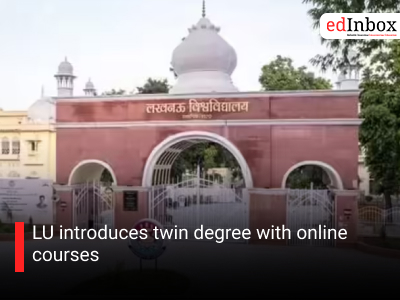
New Delhi University (DU) session began on Friday, greeting first-year students as well as those transitioning into the fourth year under the four-year undergraduate programme (FYUP), which is being offered in full for the very first time.

While orientation courses were held at numerous colleges to familiarize freshers, over 55% of the candidate students have opted to continue into the new fourth year.

DU Vice-Chancellor Yogesh Singh informed that 31,004 among the total 71,000 eligible students have opted out, i.e., over half of the eligible students have chosen to pursue the optional end of FYUP.

"Everything has been done to enable teaching and learning for the new students and first-time entrants into the fourth year," VC Singh said. He further added, "I assure our students that nobody should have any cause for concern."

Delhi University this year is offering 71,624 undergraduate seats across 79 programmes in 69 colleges. But with the introduction of the four-year undergraduate programme, students and even the teachers seem to be in disarray.

Speaking on their induction day, many of them expressed concerns about the ambiguity regarding the new structure, syllabus and academic map. "We've been told only that what was a three-year programme before is now a four-year programme. We have not been told how it works and what alterations have been made," said a fresher.

But postgraduates, particularly science postgraduates, have been suspicious. Honour physics students grumbled that DU's lab facilities are not up to the mark and become a hindrance to their research.

"The equipment in the lab is very outdated, rusty, and not research-friendly. DU must improve a lot before embracing the added burden of four-year undergraduates," opined Kriti Sharma, a fresher.

A disturbing trend is emerging for international students eyeing US college admissions in September 2025. NAFSA, an Association of International Educators and various studies suggest that America will experience an unprecedented drop of 30 to 40% in new foreign student enrollments this fall, which translates to 150,000 fewer international students in the fall- semester- or to put this in a different way, 30 percent falling short of the total number of international students who were enrolled in the fall of last year.

What Is the Cause behind a Decline in US International Student Intake in 2025?

  • A combination of several things has led to this ideal storm among the students:
  • Processing delays and pauses: US consulates put a pause on student visa interviewing between May 27 to June 18, 2025, which was the high months of processing applications. Once they restarted, the amount of appointments was still very low and resulted in an unprecedented backlog.
  • Tighter Rules and Social Media Verifications: US government came up with new social media vetting of student applicants which has slowed down the often time-consuming approval process and gives an added uncertainty. 
  • Raised Expenses and Tighter Records: Indian students who are the biggest to be going to the US are now encountering higher costs of visa payments, intensified background verification, and more rigging of proving their commitment to returning back, which is adding to the burden and emotional involvement.
  • Travel Bans: June 2025: The new US government travel restrictions have affected students of more than 19 countries, threatening further disturbances and cancellations.

The Numbers at a Glance

  1. Fall 2025 new international student admissions reduction of 30-40%.
  2. These barriers are likely to reduce the total international student enrollment by 15% relative to last year. 
  3. Loss of 7 billion dollars: The decline has the potential of costing the US economy close to 7 billion in a decrease in tuition charges, expenditures and jobs in college towns. 
  4. 60,000 jobs are threatened: 60,000 jobs at risk are likely to be involved due to the spending operations made by international students in supporting University local businesses.
  5. Indian students: They have the largest proportion of victims as it has been reported that it has declined by up to 50-70 percent the number of students enrolling in the US because of lack of visa security and delays.

What Is the Impact on Indian Students?

Indian students are experiencing even a twin blow because not only are there limited appointments available under the F-1 visa, they also have to pay more fees in taking applications and also produce more documents. Some have already had to delay education plans, book emergency visits or consider going elsewhere, including Canada, Australia, or the UK. The Indian student organizations and universities have requested US officials to hasten the visa process yet it is not clear.

Impact Economic, Academic

  • The loss of 1.5 lakh international students is not just about vacant university seats:
  • US colleges, especially smaller regional universities, depend heavily on full-fee-paying international students for their financial stability.
  • The predicted fall could result in a loss of innovation, diversity, and global competitiveness for American academia in the long run.
  • Cities and towns around campuses fear the hit to the local economy—restaurants, rental housing, transport, and college services are all likely to be affected.

So What Students Can Do Now?

Visit the appointment portals of visas on a daily basis. Get your US university to assist--several are providing letters of support and have been assisting with case escalation. It may be possible to defer, or to apply to other intake periods (e.g. Spring 2026), or consider countries in which to study. Keep up with official US embassy/student web pages and various portals regarding the most recent visa policies.

The answer to the question whether these trends will be reversed will greatly depend on how eager the US government will be to accelerate the visa approvals and simplify the new background checks. Otherwise, long held dreams of Indian students and their families to be educated by the American educational system might have to be revisited, at least in the short run

Indira Gandhi National Open University (IGNOU) has again extended the July 2025 re-registration and admission deadline. A deadline on August 15, 2025, has now been assigned to students to complete the process. The deadline is for fresh admissions and old student re-registration.

IGNOU operates courses in distance learning (ODL) and online mode, and the form must be completed on its official websites. The deadline has been extended again to give the students who took time for fee payment or submission of documents. IGNOU is said to offer flexible higher studies to lakhs of Indian and overseas students.

New deadline extended date for IGNOU registration

The new deadline of August 15 is for:

New admission to undergraduate, postgraduate, diploma, and certificate courses under ODL and Online modes

Renewal for continuing students

How to apply for IGNOU new admission

Here is how potential candidates can apply online for IGNOU admission for July 2025 session:

Go to the corresponding admission portal.

Click on "New Registration".

Input personal, educational, and contact information.

Upload documents if necessary: passport-size photo, scanned signature, marksheets, and ID proof.

Select your programme from a list of available ODL or online programmes.

Pay registration fee through UPI, debit/credit card, or net banking.

Submit and download confirmation slip for reference.

IGNOU applicants' tips

Apply early so as to get away from heavy portal traffic.

Ensure your scanned documents are of proper size and format.

50% fee concession to SC/ST students for ODL undergraduate courses, excluding already eligible for another concession.

In case there is any technical problem or fee confirmation delay, wait for maximum 24 hours and then re-try. IGNOU system rejects duplicate payments automatically.

A shocking and sad news was reported in Karnataka in Belagavi district where the drinking water tank of a government Kannada-medium primary school in Hullikatti village, Saundatti taluk was poisoned on purpose to have the Muslim headmaster of the school, Suleman Gorinaik, transferred.This deceptive act took place around mid-July 2025 which led to at least 11 students falling ill after consuming the contaminated water, resulting in their hospitalization and immersive police investigation.

How was the Water Tank Poisoned?

Police probes identified three persons, Sagar Patil, president of the Hindu right-wing group Sri Ram Sene, Savadatti taluk unit, Krishna Madar and Magangouda Patil who had plotted to add pesticide to the water tank. Their aim was to cause unrest and insecurity to the Muslim headmaster so that an authority would remove him from the school.

The accused bought the pesticide in Munavalli village from a store between July 18, 2025. In the implementation of the plan, a fifth-grade boy (a relative of Sagar Patil) was provided with a bottle that held the toxicant in the form of a soft drink bottle, ₹500, and snacks. The boy was ordered to add the pesticide to the drinking water tank of his school.

On contamination, the student threw away the pesticide bottle in the vicinity of the water tank, which later emerged as a crucial element of evidence that has led to the conviction of the accused. Police confirmed the chemical used was either a toxic pesticide or a poison, when combined with the water supply led to nausea and illness when the students drank the water.

Mapping out of Incident

The contamination came to be noticed when some students could discover the water had a bad smell and thus immediately informed the headmaster and other teachers. This prompt move averted greater tragedy. Nonetheless, 11 children were afflicted with nausea and needed hospital-based intervention where they have now recuperated.

A deeper investigation revealed that Sagar Patil and Magangouda Patil had forced Krishna Madar to be a part of the conspiracy since they threatened to reveal his inter-caste love affair to the world in case of his non-cooperation. It was during police interrogation that Krishna admitted his involvement.

Police Force and Detainment

Belagavi police acted promptly, collecting scientific evidence and statements which aided in unwinding the conspiracy. The three suspects were put into judicial custody on charges that include causing hurt by means of poison.

During the investigation, the safety of the school and the health of the children were the leading concerns, with district officials and health workers keeping a close check.

Reactions and Context

Karnataka Chief Minister Siddaramaiah described the poisoning as a "heinous act” of communal hatred and fundamentalism. Through his post, he said, "religious fundamentalism and communal hatred can lead to heinous acts, and this incident, which could have resulted in the massacre of innocent children, is a testament to that.”

Other issues that the case has highlighted are the presence of extremist groups that have contributed to heightened communal tensions in the region. Police are still patrolling the place to avoid this again.

In short, in mid-July 2025, the drinking water tank of the school in a village called Hullikatti, was intentionally contaminated with pesticide. Three suspects, Sagar Patil (Sri Ram Sene leader), Krishna Madar, and Magangouda Patil worked together to execute the poisoning so as to cause the transfer of the Muslim headmaster. The minor student was offered poison and asked to pour it into the water tank. 11 students fell sick but recovered after medical care. The accused was arrested by police after the pesticide bottle was recovered, as well as investigations carried out. The case had generated concerns over mob hating by аlling the people which would show its effect in violence to minority community members in the role of service.

This is a disturbing act that shows the alarming necessity of the constant watchfulnesses, social integration, and legal measures to guarantee security and fairness at school and in the community.  

What are your views on this? Share your thoughts with us via mail and get a chance to get your exclusive article featured on our website.

More Articles ...