
Forests are much more than ecological reserves only. Actually, they are an integral part of the ecosystem and a primary source of wild food and nutrition besides featuring as a source of livelihoods for millions of people.
Besides providing us with wild fruits, nuts, and medicinal plants, forests are highly crucial for agriculture as they promote soil fertility and the water cycle. Though there is a direct link between forests and food systems, it is hardly acknowledged.
International Day of Forests is a global celebration held on 21 March, and this year's theme is 'Forests and Foods'. By this occasion, the Food and Agriculture Organization of the United Nations (FAO) is aspiring to spotlight the crucial role that forests play in feeding the world and achieving food security.
It is possible to increase food production and at the same time protect the natural environment by scaling up agroforestry, which is a combination of agriculture and forestry, thereby making farming more resistant to climate change.
Forests and agriculture mesmerizingly work hand in hand. Forests offer a vast range of ecosystem services that are essential for both sustainable agriculture and reduction of its vulnerability to climate change. Besides providing habitat to pollinators which are essential for crop production, they also have wild crop relatives, who play a significant role in crop breeding.
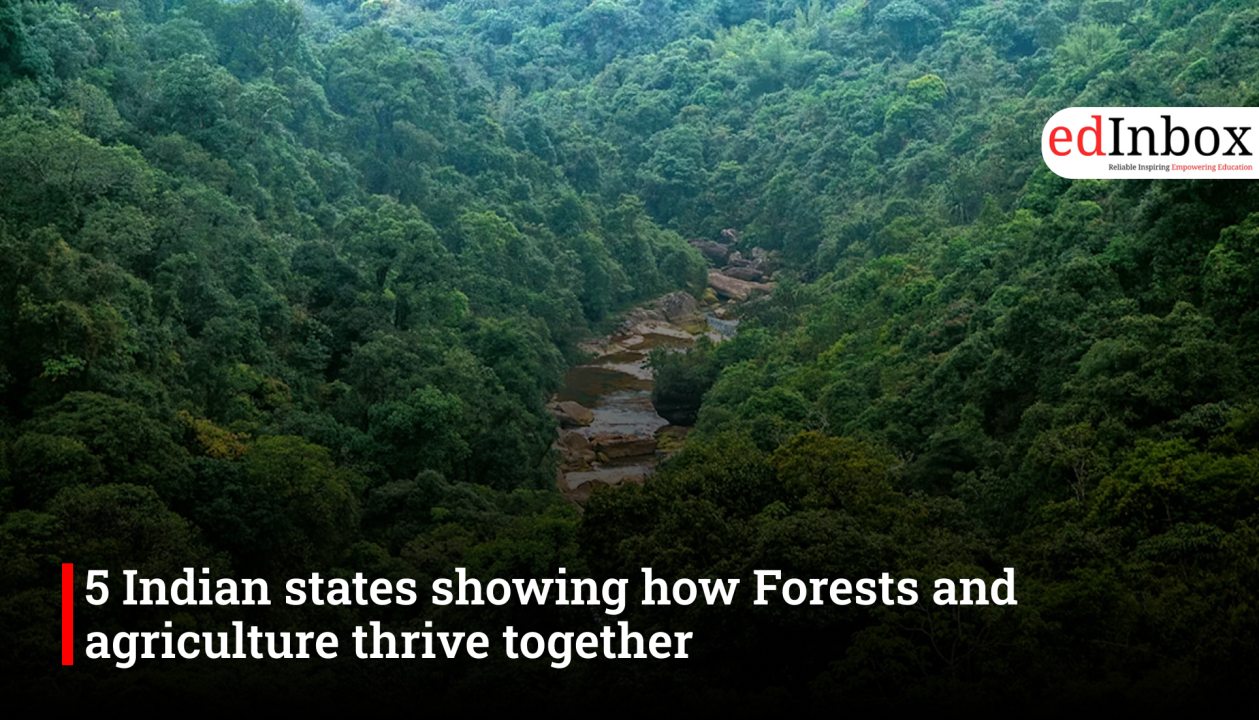
FAO’s Green-Ag project in India, funded by the Global Environment Facility, seeks to form productive landscapes that enhance biodiversity and provide year-round food security. The project integrates forests and agriculture through agroecology across five diverse landscapes: Mizoram, Uttarakhand, Madhya Pradesh, Odisha, and Rajasthan. Implemented in close collaboration with the Indian Ministry of Agriculture and Farmers’ Welfare and the respective state governments, the initiative aims to improve soil fertility, boost water retention, address land degradation, and promote biodiversity conservation including agrobiodiversity.
In Mizoram’s Dampa-Thorangtlang landscape, the Green-Ag project is promoting agroforestry by promoting the plantation of indigenous tree species in traditional jhum lands alongside crops. The project has also prepared a management plan for the Village Supply Reserve—community-managed forest patches traditionally used by each village to supply small timber, fodder, and fuel. The selection of species for plantation has been done in consultation with the community.
The new management plan also has a provision for the plantation of fruit trees along with other species for these supply reserves to support the dietary needs of the local community. This will also enhance the sustainability of the reserve.
In Uttarakhand’s Corbett-Rajaji landscape, traditional mixed farming thrives under forest cover, ensuring food security for mountain communities.
In Madhya Pradesh’s Chambal landscape, Green-Ag is piloting the agri-horti-silvi system, which integrates crops with fruit, vegetable, or ornamental trees on the same land. This approach is being implemented in ravine-affected villages to restore degraded land, boost food production, and diversify income sources for local farmers in the area.
Meanwhile, in Odisha’s Similipal landscape, the project has initiated Miyawaki plantations to restore degraded land and improve biodiversity, alongside promoting mango and cashew plantations in forest fire-prone villages covering 100 hectares. These efforts are enhancing food security and providing alternative livelihoods for local communities.
The Government of India recognises agroforestry as a key strategy for increasing farmers’ income and promoting a carbon-neutral economy. However, the lack of Quality Planting Material (QPM) and a clear certification system has hindered its expansion. The National Agroforestry Policy (2014) emphasises the need to develop and certify QPM. To address this, FAO is assisting the agriculture ministry to develop ‘Protocols for QPM and Certification of Nurseries for Timber and Non-timber Agroforestry Species’.
Traditional knowledge systems
Forests are a vital source of uncultivated foods. Forest areas, uncultivated commons, and village lands provide an important foraging place for such food. Many wild food plants are highly nutritious and also have healing properties.
Some state governments in India are taking action to highlight the importance of these forgotten foods. In November 2024, the Government of Odisha launched a scheme on the ‘Revival and Sustainable Intensification of Forgotten Foods/Neglected Crops of Odisha’.
FAO advocates the protection of traditional food and seed systems. Preserving indigenous seeds and promoting traditional knowledge ensures that local farmers can cultivate resilient crops suited to their environments, which bolsters food security for generations to come.
Forests as food providers
To unlock the potential of forests in achieving food and nutrition security, we need urgent and coordinated action. Integrating forests into agrifood systems is the key. Agroecological approaches must be scaled up to create a balance between conservation and productivity.
By encouraging farmers to adopt agroforestry practices, we can cultivate more resilient agricultural landscapes that sustain both people and the planet.
Equally important is the need to strengthen the rights of forest-dependent communities who are the primary custodians of forest ecosystems. Their traditional knowledge is vital for sustainable forest management. Hence, building their capacities to manage these resources sustainably is essential.
Forests are fundamental to the world’s water systems and their health directly impacts the availability of clean water. Sustainable forest management, particularly in critical watersheds, can safeguard water supplies for millions of people.
Forests are at the core of the planet's freshwater cycle. Their well, being determines the availability of fresh water. Sustainable forestry practices, especially in main water catchment areas, can ensure clean water for a large number of people.
Besides that, forests are natural partners in mitigating climate change. As huge carbon banks, they take up enormous quantities of CO2 from the air. Protecting and reinstating forest areas means not only cutting down greenhouse gas emissions substantially but also boosting biodiversity.
One way we can manage forest ecosystems is by developing markets for sustainable forest products through policy interventions that allow local communities to legally access, produce and market these products. Here, revenue generating forest enterprises can support poverty eradication and food security simultaneously.
On the occasion of the 80th anniversary of FAO in 2025, the agency's unwavering dedication to agroecology and sustainable food systems echoes the recognition of forests as vital sources of food, water, and livelihoods. Coexistence of forests and food production is not only a feasible scenario but also a crucial one if our goal is to leave no one behind.
5 Indian states showing how Forests and agriculture thrive together
Typography
- Smaller Small Medium Big Bigger
- Default Helvetica Segoe Georgia Times
- Reading Mode