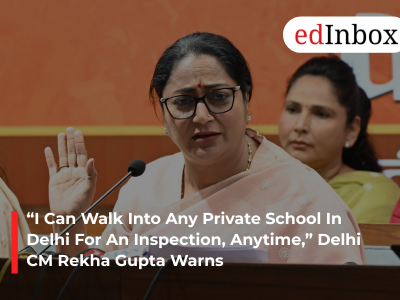
Delhi CM Rekha Gupta has issued a warning to all schools in Delhi. This step was a result of  persistent issues which parents have raised for many years about forced costs associated with school education. The Delhi government established its position on an issue which affects numerous families throughout the city by prohibiting schools from increasing their fees and mandating parents to buy educational materials from designated vendors.

This is not merely routine administrative advice but a clear attempt to address a system that, over time, has placed unnecessary financial pressure on parents in Delhi, through restricted choices and inflated pricing.

Clear Rules, Strong Language, and Direct Accountability

The directive leaves little room for interpretation. The schools have been explicitly told that they must stop using captive buying practices which force parents to purchase school-approved materials from designated vendors. Educational institutions need to publish their complete inventory of academic materials and school-required items which can be purchased from public stores.

Rekha Gupta shared the post of X stating clearly that: “Every school will state it clearly on its notice board, on its website, and at any store it operates that parents are free to buy uniforms, books and stationery from anywhere. There will be no coercion, no captive buying, no single-vendor diktat.”

The present moment represents an essential transformation. The present discussion about rights exists because parents now hold power to make decisions about their children's education instead of being viewed as customers who passively accept educational services.

Inspections Signal Serious Enforcement

The announcement contains major importance because it shows how enforcement will operate. The Chief Minister made it clear that compliance will not be left to assumption: 

“I can walk into any private school in Delhi for an inspection, anytime.” She further added, “The law will impose the most severe penalties for any form of manipulation or wrongdoing. A takeover is not beyond consideration.

The government plans to take action against institutions that fail to comply with regulations following these statements. The government plan includes a possible takeover which demonstrates the importance of the directive and sends a powerful warning to private schools in the capital.

Backed by Existing Education Policy

The Directorate of Education Delhi issued a previous directive which required private unaided schools to stop making parental purchasing from specific vendors mandatory.

The Directorate had also emphasized that:

  • Schools must provide clear and transparent lists of required materials
  • Items listed should be easily available in the open market
  • Procurement must follow guidelines set by boards such as CBSE, ICSE, and state authorities

The DoE declared that educational institutions must maintain practices which do not create financial difficulties for parents because this supports the mission of making education affordable.

Why Does This Matters for Parents?

For many parents, especially in urban areas like Delhi, the cost of education goes far beyond tuition fees. The yearly cost of education rises when parents need to purchase books, uniforms and stationery from specific vendors who control these supplies.

By removing vendor restrictions, the government is effectively introducing:

  • Price flexibility for parents who want to investigate various options
  • Greater transparency in school requirements
  • Reduced financial pressure on households

The implementation of this reform will produce immediate effects which will change how families manage their daily expenditures.

A Larger Shift in Education Governance

This directive provides immediate assistance while indicating the ongoing transformation of educational governance. The initiative establishes frameworks which will hold educational institutions accountable while maintaining open operations and developing policies which prioritize parental involvement.

The Chief Minister’s remark that inspections are driven by “the voices of parents” highlights an important change, policy is now being shaped not just by administrative decisions, but by public feedback and lived experiences.

Rekha Gupta’s Statement is Trending for Good

Delhi needs to take this action because it serves both an important and essential purpose. The solution addresses a long-standing problem because non-fee expenses have gone unregulated for many years despite rising public concern.

The actual results will show their effectiveness through ongoing implementation. The current system will serve as a national model which other states can implement if authorities conduct proper inspections and handle all identified violations without delay.

The Delhi government issue currently shows one thing. The government wants to establish educational spending rules which will create equitable results for all students while giving their parents educational spending options.

China has tightened its rules again, and this time it’s for schools. No entrepreneur is allowed to run a profit-making school for children aged between 6-15 years. The government of China makes it clear: education is not for making money. Basic education is the need of the hour and every country including India must learn from this big step taken by China. India's private tuition world is huge and growing fast which makes it necessary to bring such regulations and ensure the country is focused on producing intelligent/skilled students rather than monetizing from their fears. 

The Reason why China did this

China in 2021 thought of this deeply and took the step which is now official. They closed down large tutoring companies and prevented new profit-driven schools from opening in the country. The objective was simply to reduce family expenses, mend inequality, and retain dominance over learning. 

Earlier, the parents had to spend up to 30% of their income for paying school fees before the ban. Apparently, this led to wealthy children being pulled up while the poor children were pulled down. The private tutoring market was worth $120 billion, bigger than many industries, and China understood it.

The changes worked like magic! In cities, fees were reduced by 70%, most private schools and institutes closed, and fewer kids chased extra classes. Families saved money, and the urban-rural gap shrank. 

The Rising Private Education in India

India mirrors China's old path. Private schools and apps like Byju's bring in billions, which is not wrong but surely not right either. There are more than 3 lakh profit-making schools currently in our country, and parents pay 20-30% of income for IIT or NEET coaching. The market is increasing by 25 percent annually which is quite concerning because this reflects the potential crisis. There are 25 student suicides per week in coaching towns, 80 percent of rural children are deprived of quality education, and so much more that needs to be considered.

The government of India has eyed this too but unlike China strict measures are due.  NEP 2020 is pushing equity, states like UP are capping fees already, exam fights are reaching courts, but the gap still remains. China has taken a bold step for its welfare by prioritising education. If India could do the same, the caliber scale might surpass all the countries. 

What This Means for Educators in India

Teachers and education proprietors should begin to think into the future because education policies are likely to evolve over the next few years. It is possible that elementary education, particularly to Class 10, might be driven to a non-profit level. It would be wise to progressively prepare for this transition by ensuring that the money mindset is restricted to skill-based training and level of education. New partnerships with government schools will also create stability and help a lot when new rules are introduced.

There is also a growing need to focus on a child’s overall development rather than only exam results. Parents are increasingly looking for schools that offer a balanced environment, including sports, creativity, and better mental and physical well-being, instead of just academic pressure. Schools that adapt to this mindset are more likely to build trust and maintain steady enrolments over time.

Simultaneously, one should be aware of the changes in policies in different states. Debates over fee regulation and affordable education are on the rise and the emphasis of the government on ensuring that education is accessible to everyone may result in a tightening of the regulations in the future.

What Could Happen Next

Considering the experience of other countries, the education reforms in China allowed making schooling more affordable and less stressful to students and their families. There are those professionals who think that even the social aspects such as family planning can be affected by such changes. In India, free, or low-cost education debate is already resonating and other nations are closely monitoring the developments.

As school leaders, this is the right moment to ensure that they have sound and clear policies in place as they prepare their institutions to be sustainable. Better opportunities in skill development and job-oriented education may also be offered to investors since the demand in this field is constantly increasing.

Universal Lesson

The reforms in China had a major impact on reducing the costs as well as transforming the education sector by bringing the value of education back. The same might happen to India in case some more stringent regulations are brought up. Finally, there is a shift towards quality education for all children which could transform the way the education sector works in future.

This step by China is turning out to be an inspiration for India, and being an intellectual citizen, we must, on micro level, start prioritising quality education. 

By now, it is almost a cliché to say that engineering in India has evolved. What was once a handful of predictable streams has exploded into a maze of specialisations. Among the most confusing choices today is between Chemical Engineering and Chemical & Biochemical Engineering—two degrees that sound similar but lead to very different futures.

At first glance, both disciplines rest on the same foundation: chemistry, mathematics, and process thinking. But scratch the surface, and the divergence is sharp.

Traditional Chemical Engineering is the backbone of industrial India. It is about scale—refineries, fertilisers, polymers, energy systems. It trains students to think in terms of efficiency, optimisation, and large systems. The graduates who emerge from this pipeline often find themselves in companies such as Reliance Industries or Indian Oil Corporation Limited, solving problems involving thousands of tonnes of material and millions of rupees in daily output.

It is not glamorous, but it is foundational.

Chemical & Biochemical Engineering, on the other hand, reflects where the world is heading—not where it has been. This is the domain of vaccines, biofuels, enzymes, and sustainability. It replaces steel reactors with bioreactors and introduces living systems into the equation. Here, the employers are not oil giants but innovation-driven firms like Biocon and Sanofi.

If Chemical Engineering is about building the industrial present, Chemical & Biochemical Engineering is about designing the biological future.

But here lies the real dilemma for Indian students—and one that deserves sharper attention.

Chemical Engineering still offers something that the newer discipline struggles to match: versatility. Its graduates are not confined to core sectors. Many pivot into consulting, analytics, finance, even tech. In a country where job security often outweighs intellectual curiosity, this flexibility matters.

Biochemical Engineering, while promising, is narrower. It demands commitment to a path that is more research-intensive, more specialised, and often dependent on higher studies. The rewards can be significant—but they are neither immediate nor guaranteed.

So what should a student choose?

The uncomfortable truth is this: the decision is less about the course and more about the student’s temperament.

Those who are drawn to structure, scale, and systems—who are comfortable with equations, machinery, and industrial logic—will find Chemical Engineering both stable and expansive.

Those who are curious about life at a microscopic level, who are willing to spend time in labs, and who see themselves contributing to healthcare, climate solutions, or biotechnology—will find their calling in Chemical & Biochemical Engineering.

Institutions like the Indian Institutes of Technology and the Institute of Chemical Technology now offer both paths, reflecting the country’s attempt to balance legacy industries with future innovation.

Yet, a larger question remains unaddressed in India’s education system: Are students truly being guided to make informed choices, or are they simply chasing trends?

Because in the end, no degree—however advanced—can compensate for a mismatch between aptitude and aspiration.

Choosing between Chemical and Chemical & Biochemical Engineering is not just an academic decision. It is a choice between two ways of understanding the world: one rooted in industrial scale, the other in biological complexity.

And that is not a choice that should be made lightly.

There is something deeply unsettling about a medical degree gathering dust—not because it lacks merit, but because the system refuses to acknowledge it. The story of Kashmiri students with Pakistani MBBS degrees is not just about invalid qualifications; it is about a policy blind spot where security, politics, and human lives collide.

Over the past few years, decisions by bodies such as the University Grants Commission and the National Medical Commission have effectively rendered these degrees unusable in India. The rationale—national security—is not without merit. But the execution raises uncomfortable questions: can a blanket policy afford to ignore individual realities?

Many of these students left for Pakistan as teenagers, some as young as 17 or 18, at a time when such educational routes were neither illegal nor uncommon. They pursued medicine with the same aspirations as any other student—to return home, serve, and build a career. Today, they find themselves reduced, on paper, to “Class 12 pass,” their years of study erased with a bureaucratic stroke.

What follows is a cycle of scrutiny that feels less like verification and more like a life sentence of suspicion. Graduates report repeated interrogations, document checks, and financial audits, often spanning years without resolution. Security clearance—presented as a procedural step—has, in many cases, become an indefinite waiting room.

The problem is not scrutiny itself; it is the absence of closure. If the state has concerns, it must investigate. But if investigations yield no evidence of wrongdoing, why does the limbo persist? Justice, after all, is not just about vigilance—it is also about fairness and timeliness.

There is also a deeper, more uncomfortable layer to this story: inherited suspicion. For some, even family history becomes a barrier. A father’s past militancy, a region’s political baggage—these shadows seem to stretch across generations, quietly shaping outcomes. The question that arises is simple yet profound: can citizenship ever be truly individual if it is constantly weighed against inherited narratives?

The social consequences are equally stark. Careers stalled, mental health strained, and families burdened with uncertainty. In a society where professional identity carries immense weight, being unable to practice after earning a medical degree is not just an economic setback—it is an emotional and psychological blow. Many are now forced to consider unrelated jobs or migration, often starting from scratch.

Ironically, several of these degrees hold value abroad—in countries like Ireland or the UK—raising another paradox. A qualification deemed acceptable internationally is rendered void at home. This inconsistency only deepens the sense of exclusion these graduates feel.

None of this is to undermine legitimate security concerns. In a region as sensitive as Kashmir, vigilance is necessary. But governance must find a balance between caution and compassion. Policies designed for protection should not end up punishing those they are meant to serve.

What is needed is not a rollback of security protocols, but a refinement of them—clear timelines, transparent criteria, and a case-by-case approach that distinguishes between risk and assumption. A system that can investigate efficiently must also be capable of reaching fair conclusions.

Because at its core, this is not just a policy issue. It is a question of trust—between the state and its citizens. And trust, once eroded, is far harder to rebuild than any regulatory framework.

For now, hundreds of young graduates remain in limbo, their futures paused, their identities questioned. Their degrees hang on walls, not as symbols of achievement, but as reminders of a promise deferred.

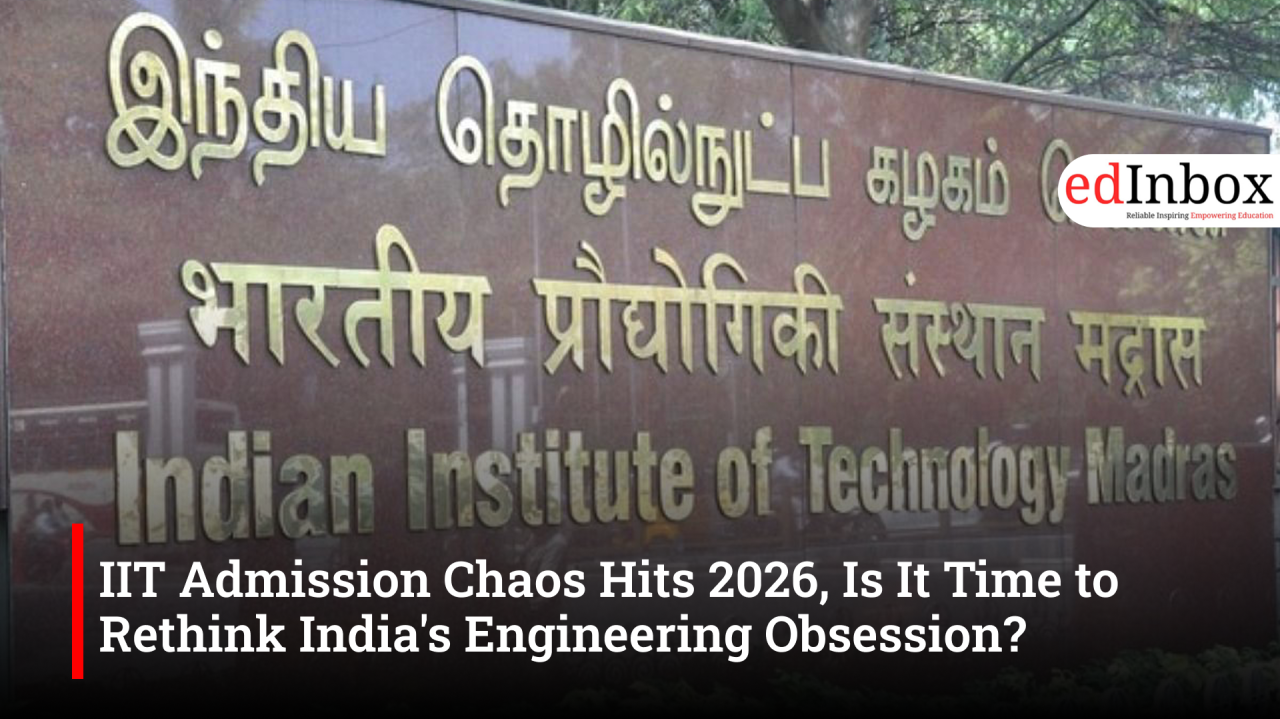
The upcoming JEE Main 2026 examination holds the top position in Google Trends today because thousands of Indian students seek final examination preparation materials and information about upcoming cutoff scores. The current intensity of the Indian educational system creates immense stress for students according to my experience as an education writer. The current system operates as a merit-based structure which creates an extreme pressure system that eventually reaches its breaking point. With cutoffs climbing past 99.5 percentile and coaching fees hitting ₹5 lakhs, is this meritocracy or a pressure cooker waiting to explode? Guess it’s both.

Why JEE 2026 Feels Like Survival, Not Opportunity

JEE Main April 2026 Session 2 is masked as an opportunity, but apparently is the survival challenge for 12L+ JEE aspirants in India. The second session of the examination brings a new level of panic because of the JEE Main 2026 cutoff percentile which is hitting 95.5-95! 

The normalisation of such a cutoff trend has ruined many lives. A bollywood movie of Shushant Singh Rajput has highlighted the concerns such a cutoff list triggers, but was any action taken? Apparently, no. The rat race is still on; students aren’t humans to the current education system, they are the source of money. The Kota suicide headlines represent systemic issues because the educational system values students based on their performance in one Sunday exam. 

Additionally, students sometimes even use modafinil (pill to keep themselves awake; the one people in kdrama take) to work 18-hour a day while their parents search for “JEE drop year success stories” on Google. Our society celebrates suffering as a way to achieve success, and ignores the fact that 70-80% of engineers end up in IT services instead of research laboratories.

Record Registrations Signal Tougher Cutoffs Ahead

The JEE Main examination shows annual registration numbers between 10 lakh and 13 lakh students, and the 2025 examination sessions reached 12 lakh student participation each. The new eligibility rules permit students to take exams six times within a three-year period, which has increased the number of repeat test takers and made it more difficult to reach top percentile scores. 

Students who search for "JEE Main 2026 cutoffs" should understand that General category students must achieve 93-95 percentile scores to qualify for JEE Advanced while top NITs require 98-99 percentile scores for their Computer Science and other popular programs. Basically, this system rewards persistence but punishes work-life balance, turning exam prep into a multi-year marathon.

Coaching vs Real Learning

Did you know the test prep market in India is valued at 58,000 crores? That’s the brutal reality of the rat race. The test prep market is driven by intense competition for limited seats in prestigious institutions. India's coaching cartels operate as a destroyer of all authentic educational experiences, especially those of feeling truly knowledgeable. That's one big statement, however, the real picture supports it completely. These coachings operate as profit-making businesses which offer "IIT guarantees" to students while only 1 student out of 700-800 achieves success. What about rest? They feel pressured, depressed, broken, and the chaotic life begins for them. 

The JEE exam system prefers pattern recognition skills above innovative thinking abilities. Why memorize 500 reactions when ChatGPT solves them instantly? India's edtech boom masks a deeper failure, we're training parrots, not problem-solvers. Yes, AI is not to be relied upon completely but having knowledge about something is different than mugging up just to forget it later. 

The simple fact is that coaching works best as a supplement, not a substitute. NTA's computer-based format favors speed and accuracy over rote memory, meaning free resources like official mock tests often outperform expensive formula handbooks. 

IIT Tag Over Actual Skills 

IIT Bombay's 2025 placement data showed an average package of ₹23.5 lakhs, with 83% BTech students placed, mostly in software roles from Microsoft, Google, and Goldman Sachs. Core engineering jobs remain limited (typically 20-30% of placements), pushing even IITians toward IT services. The top NITs like Trichy and Surathkal report comparable ₹15-20L averages while their students experience higher satisfaction according to their respective academic branches.

The trend proves that academic institutions should require students to develop diverse skills. The institutions of VIT SRM and BITS Pilani attract students who scored JEE Main because they offer modern academic programs and maintain placement rates above 90%. The 2026 admissions process shows 98 percentile students from NIT Warangal who will achieve better results than those from low-ranked IIT branches.

A Balanced Path Forward for JEE Aspirants

JEE Main 2026 preparation needs students to concentrate on essential subjects which carry the most value. The study plan requires students to take one or two mock exams every day this week while they ensure proper sleep and avoid staying awake all night. Students should use Olympiads and internships along with skill certifications to show their abilities because these pathways receive increasing recognition, and duly help build skills that eventually lead to better job opportunities and future. 

India requires engineers who create new ideas instead of engineers who merely satisfy entrance requirements. The government should implement attempt limits and skill-based admission tests to reduce student stress levels. 

But yes, things won’t change instantly, the push must start while students use smart strategies to succeed in the JEE Main April 2026 exam. Lately, remember, your percentile results provide you with opportunities, but your ability to adapt will secure those opportunities. Study for knowledge and see the difference yourself. All the best for JEE Main April 2026. 

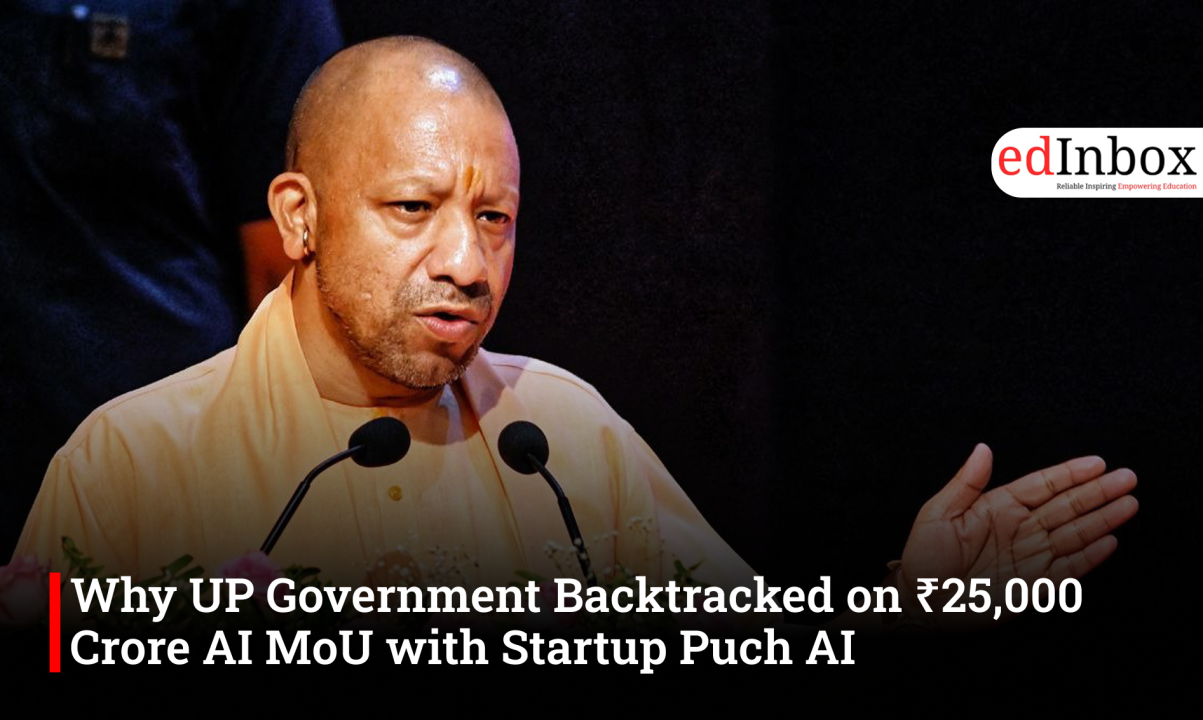
The Uttar Pradesh government's high-profile pledge to spend 25,000 crore on AI quickly became a story of promises or what actually follows, after admitting the deal with puch AI was just a sketchy MoU - not a firm commitment.

Chief Minister Yogi Adityanath painted a bold picture: AI parks, data centers, an AI university, and even an "AI city" near Lucknow. The scale of it inspired interest, Mainly as UP positioned itself as a rising player in india's AI space.

It seems hard to ignore that within 24 hours, officials stepped back and said the MoU wasn't binding at all - just a starting point meant to be studied closely before anything real happens. The state emphasised that any project would proceed only after evaluating the investor’s financial and technical capabilities.

The backtracking was triggered largely by credibility concerns around Puch AI. Industry watchers and social media users asked if a young startup - just 12 employees, under 10 crore in revenue, no public AI products, could actually deliver such a big project. The company's valuation at 250 crore and absence of major releases only deepened doubts.

The government's pattern of signing large MoUs to show progress often clashes with what real startups can do. Digital groups now monitor these deals instantly, comparing promises to actual progress. Is it just optics?

Puch AI said the MoU was a shared push with no state cash outlay. They rejected the revenue claims as misread data, arguing that their model is about open access, not building apps for scale.

“I didn’t drop the course,” Yulia told me over a patchy call. “The war dropped into it.”

She is a management student from Ukraine, enrolled in a partner programme linked to Taras Shevchenko National University of Kyiv. When the conflict intensified, her classroom moved underground—literally. Lectures continued in bunkers, assignments were submitted between power cuts, and exams were taken with one ear tuned to sirens.

“Sometimes,” she said, almost laughing, “the Wi-Fi is stronger than my nerves.”

Thousands of kilometres away, in the Gaza Strip, 19-year-old Ahmed,an engineering aspirant who had hoped to join Islamic University of Gaza, never got to begin his semester. His school was destroyed. His books are buried. Now, he studies from scanned PDFs on a borrowed phone.

“You don’t plan your day,” he told me through a local volunteer. “You wait for a quiet hour—and then you try to remember what normal studying felt like.”

Between these two realities,one of interrupted continuity, the other of suspended beginnings,lies the fragile spectrum of what it means to be a student in a war zone.

The Day the Classroom Shifted

Ranya, a business student from Israel studying at Tel Aviv University, remembers the exact moment her semester changed.

“We were discussing a case study on risk management,” she said. “And then suddenly, risk was no longer theoretical.”

Her university shifted to hybrid mode within days. Some students attended classes online from safer areas; others joined from shelters. Attendance was flexible, deadlines negotiable.

“But concentration?” she paused. “That wasn’t negotiable. You either had it, or you didn’t.”

Across the border, in the West Bank, Noor, a literature student from Birzeit University, described a different kind of disruption.

“We still have classrooms,” she said. “But the mind doesn’t always arrive there.”

Her words stayed with me longer than any statistic. Because they capture a truth institutions rarely measure: presence is not the same as participation.

Russia: Continuing, But Changed

In Russia, Artyom, a computer science student at Moscow State University, described a quieter shift.

“There are no sirens where I am,” he said. “But there is a constant awareness.”

International collaborations have thinned. Exchange programmes have stalled. Conversations in classrooms are more cautious, more coded.

“You still study algorithms,” he added. “But you also learn what not to say.”

For him, education hasn’t stopped—it has narrowed.

The Myth of Seamless Learning

In policy rooms and institutional statements, the phrase “hybrid learning” appears as a solution—flexible, adaptive, resilient.

And yes, it works. To an extent.

When students from the Indian Institute of Management Ahmedabad’s Dubai cohort were relocated amid rising tensions in West Asia, classes resumed quickly. Some continued from Ahmedabad, others logged in from different countries. The system absorbed the shock.

But as one student—who preferred not to be named—told me, “Just because the class continues doesn’t mean your head is in it.”

She had returned home temporarily, attending lectures at odd hours.

“You’re present on screen,” she said. “But part of you is elsewhere—tracking news, checking on people, wondering what happens next.”

Hybrid learning preserves structure. It does not guarantee absorption.

The Unequal Geography of Education

What struck me most across these conversations was not just the disruption—but how unevenly it is distributed.

Yulia still submits assignments.

Ranya still attends classes.

Artyom still writes code.

Ahmed is still waiting to begin.

Global education prides itself on being borderless. But conflict redraws those borders sharply, dividing students not just by geography, but by possibility.

Some adapt.

Some pause.

Some are left behind entirely.

What Students Carry Forward

When I asked Yulia what she had learned from the past year, she didn’t mention her coursework.

“I’ve learned to focus on chaos,” she said. “I don’t know if that’s a skill or a survival instinct.”

Noor spoke about memory.

“I write things down more now,” she said. “Because I don’t trust the day to stay stable.”

And Ranya reflected on ambition.

“You stop planning too far ahead,” she admitted. “You think in weeks, not years.”

These are not lessons listed in any syllabus. But they shape how students will move forward—into careers, into decisions, into a world that increasingly mirrors the instability they studied through.

As our conversations ended—calls dropping, messages delayed, time zones colliding—one thought stayed constant:

Education, in conflict, does not simply stop. It transforms.

Sometimes into resilience.

Sometimes into compromise.

Sometimes into absence.

And somewhere, in between a bunker lecture in Kyiv, a disrupted campus in Tel Aviv, a quiet room in Moscow, and a phone-lit study session in Gaza, students are still trying to hold on to the same idea:

That learning, somehow, must continue. Even when everything else does not.

More Articles ...