Sundar Pichai has addressed growing public anxiety around artificial intelligence ahead of his upcoming commencement speech at Stanford University, jokingly referring to preparations for possible negative audience reactions as his “boo strategy”.
Speaking on the “Hard Fork” podcast, the Google CEO was asked how he planned to approach a graduating class increasingly worried about AI-driven job disruption and whether students might react critically to remarks from one of the industry leaders driving the AI revolution.
Pichai responded by expressing confidence in younger generations, saying he remains “extraordinarily optimistic” about students’ ability to adapt to technological change and shape a better future.
“My goal would be to share my experiences,” he said, adding that graduates themselves will play a major role in both advancing AI and dealing with its long-term societal consequences.
The conversation comes at a time when AI-related concerns are intensifying across universities and workplaces worldwide. Rapid developments in generative AI, automation and machine learning have triggered debates over employment security, especially among young professionals preparing to enter the workforce.
Recent campus incidents have highlighted the tension. Former Eric Schmidt reportedly faced boos during a university appearance in Arizona after discussing AI, while music executive Scott Borchetta drew criticism from students over comments on AI’s growing influence in media and entertainment industries.
Acknowledging these fears, Pichai said people are “rightfully worried” about the pace and scale of technological transformation.
“Humans aren't evolved to process that much change,” he noted during the interview.
The tech executive also referred to broader public skepticism surrounding AI. According to a poll mentioned during the podcast discussion, only a small section of respondents viewed AI as “mostly good”, while a significantly larger percentage expressed negative perceptions of the technology.
Pichai argued that the technology industry must do more to demonstrate the benefits of AI while responsibly managing its risks. He stressed that although technological shifts have historically created anxiety, innovation has also consistently driven economic growth and societal progress.
The remarks come as major technology firms continue investing heavily in AI infrastructure even as companies across sectors increasingly cite automation and AI efficiency gains during restructuring and layoffs. Reports have also pointed to rising unemployment levels among recent graduates, adding to concerns about how AI may reshape entry-level employment opportunities.
Despite the uncertainty, Pichai maintained that the next generation will ultimately “rise to the challenge” and help build a more balanced technological future.
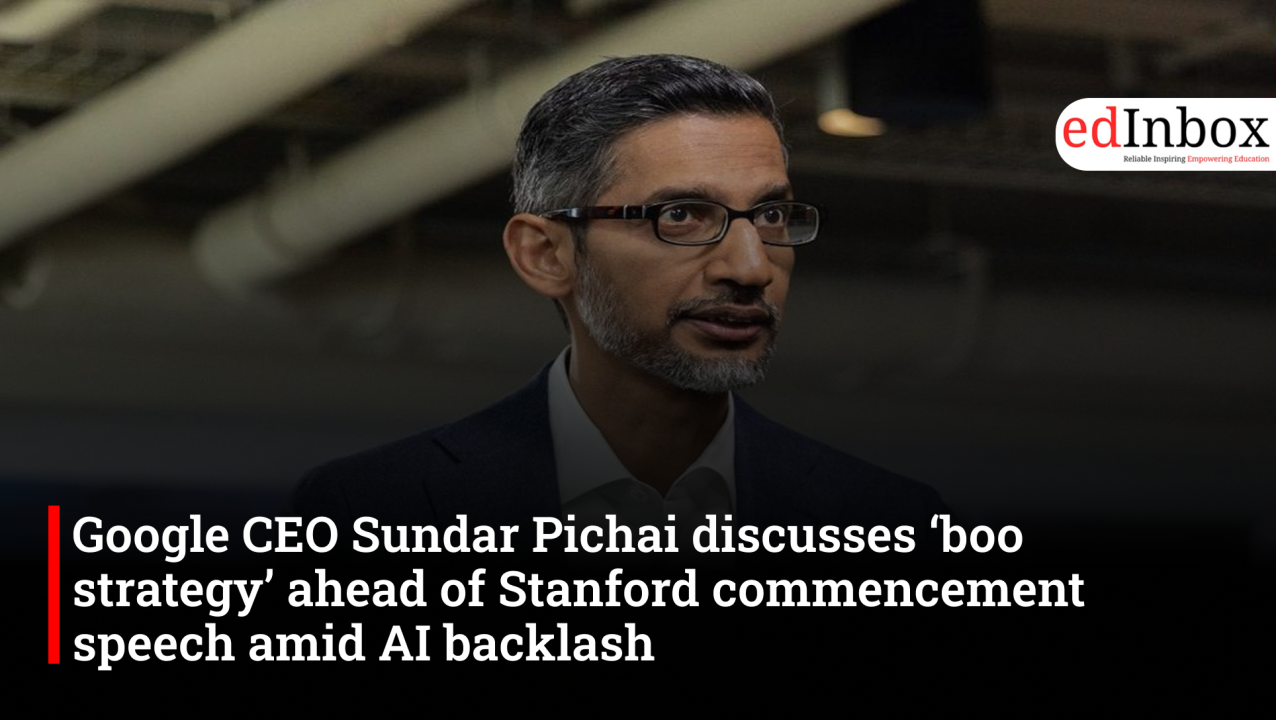
Google CEO Sundar Pichai discusses ‘boo strategy’ ahead of Stanford commencement speech amid AI backlash
Typography
- Smaller Small Medium Big Bigger
- Default Helvetica Segoe Georgia Times
- Reading Mode