
Families still searching for loved ones who were lost in Nepal's floods can expect to find closure through DNA testing of victims.When Amrit Diyali saw a human hand floating down the river he instantly knew it could belong to his brother Raj Kumar, who along with his wife and 4 year old son have been missing since Nepal's monsoon deluges on August 26.
His family's pain is shared by hundreds of others who have lost family members. The process of removing bodies from the water has proved a particularly difficult task.So far only 96 bodies have been positively identified by the Nepal National Disaster Risk Reduction and Management Authority.
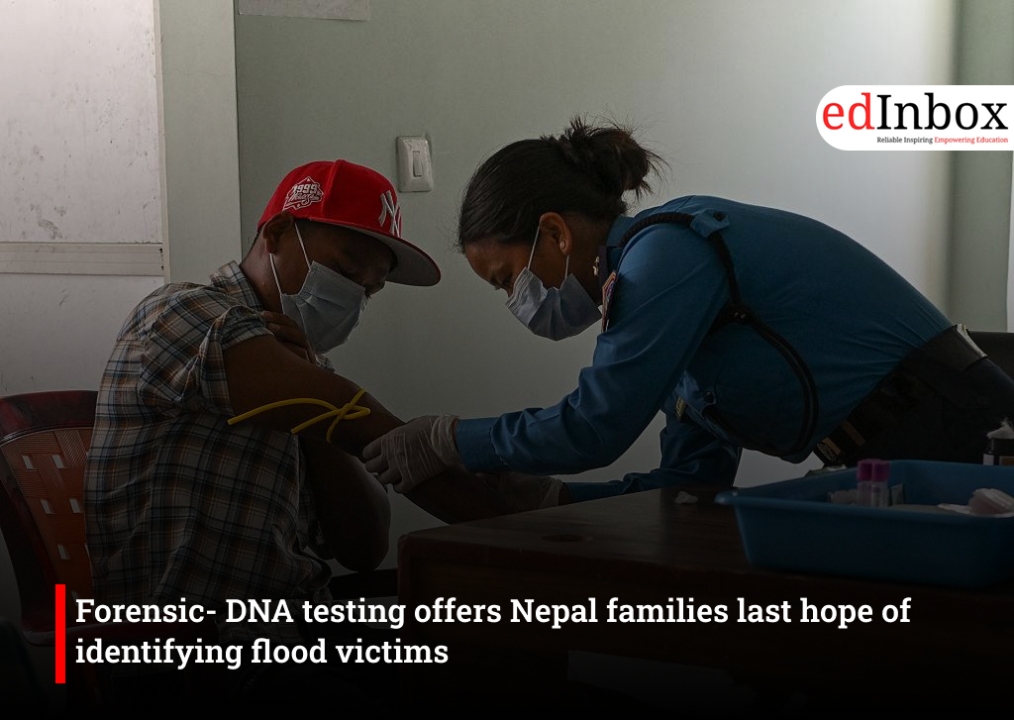
A number of those recovered so far have gone unclaimed by families, as they continue to search for loved ones in the debris.Authorities in Nepal are hoping to expedite the laborious process of identification through DNA testing after finding that so far it has proved one of the most challenging tasks in the wake of the disaster.With bodies recovered from the surging waters often mangled or only partially retrieved, DNA-testing is seen as a way to hasten the identification process.
"DNA testing will help in identification. We are facing great difficulties in identifying the dead," Poudel said.
For families still searching for loved ones, though, the process is likely to be painfully slow. With a number of DNA samples still being tested, many people are likely to experience a drawn out period of anxiety before any test results come in. For those waiting for news on a missing relative, DNA testing could prove vital.
They could potentially bring closure to a family in regards to whether or not the loved one survived and if not give the family the ability to make arrangements for the burial.
Authorities have also made the process easier for families searching for loved ones, by helping them access the list of 1,270 unidentified bodies that have so far been recovered and are available for identification. The number of bodies that still need to be identified is a sobering reminder of the human cost of the disaster. For families such as Diyali's, every identified body brings new hope that a loved one might soon return home.
It also bring the dreadful possibility that the next relative to be identified could be one of their own.Many families will be waiting anxious for DNA results to come in as a means for either bringing closure or giving them an answer as to what happened to their loved one.
DNA testing offers Nepal families last hope of identifying flood victims
Typography
- Smaller Small Medium Big Bigger
- Default Helvetica Segoe Georgia Times
- Reading Mode