
UNESCO Peru has reaffirmed its commitment to promoting Media and Information Literacy (MIL) among young people during Global Media and Information Literacy Week 2025, highlighting the urgent need for critical thinking, ethical technology use, and safer digital participation in an AI-driven world.
Observed globally from October 24 to 31, the UNESCO-led campaign this year centres on the theme, “Think Before AI: MIL in the Digital World,” encouraging reflection on how artificial intelligence is reshaping access to information, communication, and learning.
UNESCO Peru said the initiative comes at a time when young people are spending increasing portions of their lives online, often navigating complex digital environments shaped by algorithms, misinformation, and cyber risks.
Growing digital dependence, rising concerns
According to UNESCO’s report Journey through the MILtiverse, nearly 80 per cent of young people use AI tools several times daily. At the same time, media consumption habits in Peru are rapidly shifting toward social platforms.
Data cited by UNESCO showed that:
- 54 per cent of Peruvians access news through Facebook
- 34 per cent rely on YouTube
- 33 per cent consume news via TikTok
Despite high digital engagement, only 14 per cent of users reportedly verify the information they consume, according to DATUM 2023 findings.
UNESCO also pointed to growing concerns around online safety, particularly for young women and girls. Its report Whatever Happens, Your Opinion Doesn’t Matter found that 58 per cent of young women and girls have experienced cyberbullying on digital platforms.
Media literacy beyond technology use
UNESCO Peru stressed that Media and Information Literacy is not limited to technical knowledge but involves learning how to critically evaluate information, recognise misinformation, respond ethically online, and participate responsibly in digital society.
Officials said these competencies are increasingly important in combating disinformation, hate speech, online harassment, and misuse of AI-generated content while strengthening democratic participation and informed citizenship.
Youth-centred digital citizenship initiatives
Throughout October, UNESCO Peru supported multiple youth-focused activities aimed at building safer and more inclusive digital spaces.
Among the key initiatives:
- A virtual conference on transparency in universities organised with Peru’s National Authority for Transparency and Access to Public Information and the Ministry of Justice, attended by over 700 participants.
- Workshops on technology-facilitated gender violence and safe digital participation during a youth citizenship pre-congress event.
- The “Connected Citizen” workshop in Villa María del Triunfo focused on fake news awareness and strengthening democratic engagement among community youth leaders.
- Participatory workshops at Pontifical Catholic University of Peru (PUCP) under the AMBER Network initiative addressing digital citizenship, cybersecurity, and online harassment prevention from a gender perspective.
Building safer digital environments
UNESCO Peru said its “Connected Youth” initiative seeks to equip young people with practical tools to engage with technology responsibly and ethically.
The organisation emphasised that digital literacy is becoming an essential life skill in modern society, especially as artificial intelligence increasingly influences how information is created, distributed, and consumed.
Through its MIL Week activities, UNESCO Peru reiterated its commitment to empowering young people to think critically, verify information, combat harmful online behaviour, and contribute to creating safer and more inclusive digital communities.
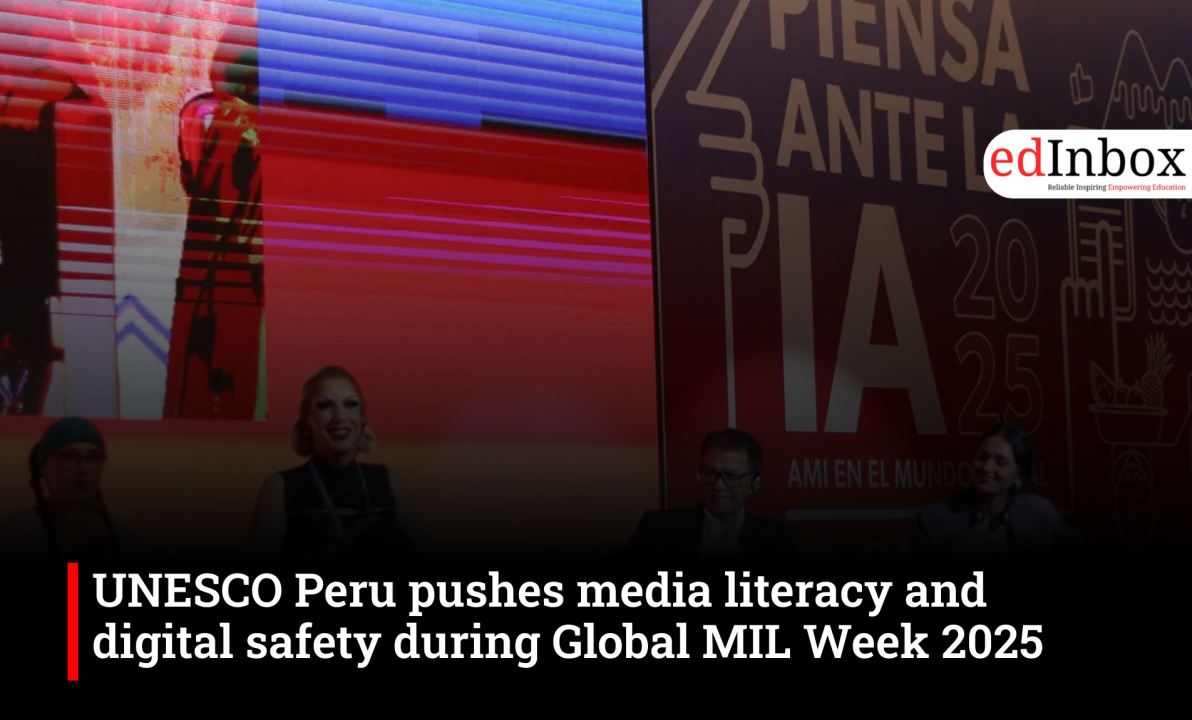
UNESCO Peru pushes media literacy and digital safety during Global MIL Week 2025
Typography
- Smaller Small Medium Big Bigger
- Default Helvetica Segoe Georgia Times
- Reading Mode