
The farming tradition of handing down an agriculture career from one generation to the next one was a reality for many years. The agriculture sector, however, has since grown into one of the world's most dynamic and promising sectors, where science and business skills are needed. This shift has made Farm Management an important career option for students with interests in agriculture, technology, and economics and sustainability.
A farm manager is no longer the mere overseer of cultivation, but someone whose role is in strategic planning, financial management, optimizing resources, risk assessment, managing the workforce, marketing, and sustainable production practices. In several aspects, they are the CEO of an agricultural business.
What Does a Farm Manager Do?.
Farm managers are responsible for the short-term and long-term management of agricultural enterprises. Their responsibilities include:
- Planning crop and livestock production
- Creating annual budgets and financial forecasts
- Labour, machinery, irrigation and farm infrastructure management.
- Soil health and Resource use monitoring
- Adopting modern technologies in agriculture
- Compliance with environmental and safety regulations:
- Creating marketing and sales plans
- Controlling weather, market, pest and disease risks
The management of the farm is one of the most challenging and rewarding careers in Agriculture as every decision that is made affects productivity, profitability and sustainability for the farm.
The growing importance of farm management
Modern farming has a problem to which their parents did not have to deal. Climate change, commodity price volatility, labour scarcity, water availability, increased input costs and changing consumer demands call for professional decision making.
The authors conclude their study in the Journal of Farm Management, saying that strategic planning, entrepreneurial thinking, and good management skills are far more important than experience in the operation itself, in order for successful farming. Additionally, the study highlights that the existing business planning and strategic management practices are identified as some gaps among farmers, further indicating the need of professionally trained farm managers to make informed and long-range decisions.
The research also suggests that each farm must have a different approach to the situation and thus a different solution, rather than a “one size fits all” approach. Managers who routinely assess risks, monitor performance and adjust to market conditions have a better chance of staying competitive.
Success as a farm manager requires a variety of skills
Farm management is a blend of technical and managerial skills. Successful professionals acquire skills like:
- Agricultural production planning
- Business finance and cost management.
- Strategic decision-making
- The analysis of data and precision agriculture.
- Team management and leadership
- Supply chain and marketing
- Risk management
- Sustainable resource management
- Communication and negotiation
A study showed that entrepreneurial orientation, which consists of innovativeness, proactiveness and opportunity recognition, can positively affect farm performance. Those farm managers who constantly explore new opportunities, make sure to run the business as efficiently as possible, and apply the most effective business practices, are more likely to develop resilient agricultural businesses.
Career Opportunities in Farm Management
Farm management graduates work in the public and private sector. Career opportunities include:
- Farm Manager
- Estate Manager
- Plantation Manager
- Agribusiness Manager
- Agricultural Operations Manager
- Precision Agriculture Consultant
- Supply Chain Manager
- Dairy or Livestock Farm Manager
- Agri-input Company Executive
- Agricultural Project Manager
- Farm Business Consultant
- Rural Development Professional
Students also launch their own businesses, such as commercial farms, agritech ventures or agricultural consulting businesses, as many graduates do.
Educational Pathway
Generally, students thinking about this career choose an undergraduate degree from one of the following:
- B.Sc. Agriculture
- B.Sc. Horticulture
- B.Tech Agricultural Engineering
- BBA in Agribusiness Management
- B.Sc. Agribusiness Management
Leadership opportunities can also be further enhanced by higher studies like MBA (Agribusiness), M.Sc (Farm Management), Agricultural Economics or Rural Management.
The Future of Farm Management
Technology is quickly proving to be the driving force in agriculture. The use of artificial intelligence, UAVs, satellite monitoring, Internet of Things (IoT), farm management software, precision irrigation, and data analytics are modifying the way farms are run. Managers who have a grasp of agricultural science, along with digital technologies, will have growing value as farm managers.
Furthermore, the agri-food sector in today's world needs a new generation of highly skilled professionals who can operate with more complex agricultural systems, ensure food security and promote sustainable resource management. It's time for education and industry to collaborate to equip the next generation of leaders for the changing challenges.
What Must Agriculture Aspirants Know?
Farm management is not a supervision of the field job; it is about the management of businesses which provide food for people, protect the environment and drive economic development. The agriculture sector is becoming increasingly innovative and sustainable, and this will surely drive continued growth in the demand for professionals who can effectively manage, analyze and provide leadership in agriculture. It is an emerging career with rewarding opportunities in the years to come.
For all the students seeking a career involving science, technology, entrepreneurship and impact on society, farm management is an exciting career field. It is a career where smart choices can make a positive difference in productivity, reinforce food systems and influence the future of global agriculture.
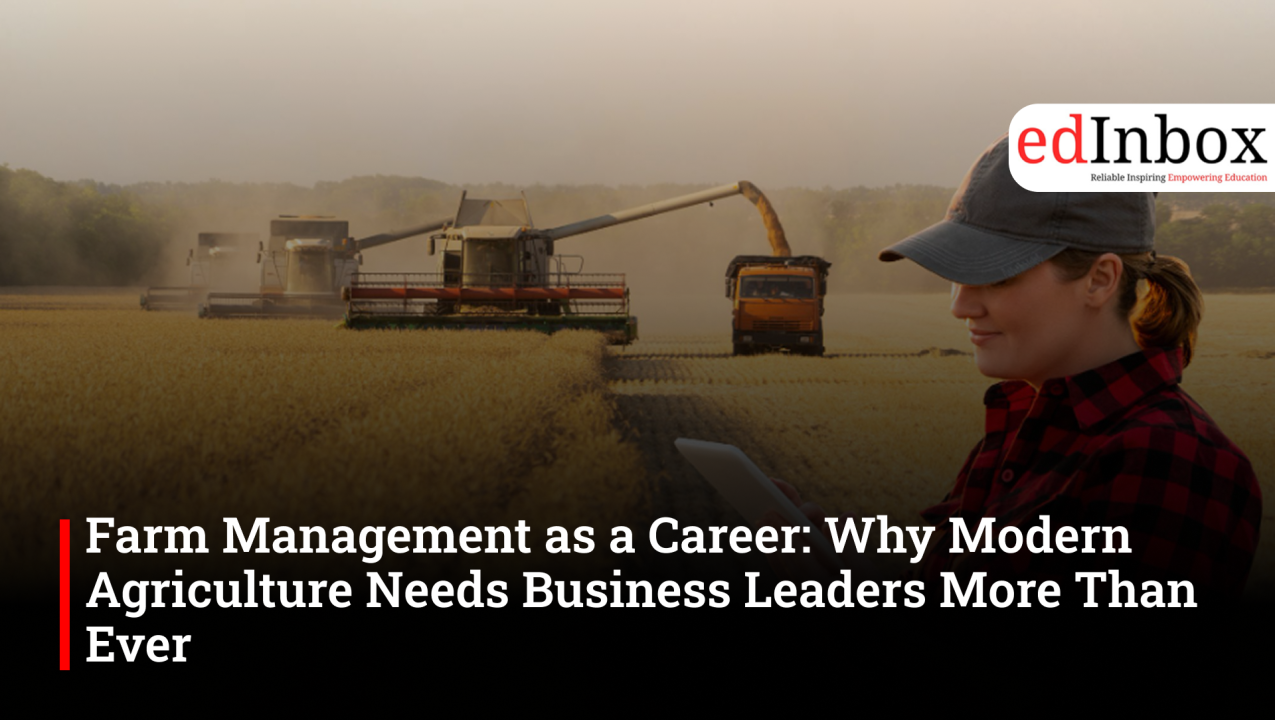
Farm Management as a Career: Why Modern Agriculture Needs Business Leaders More Than Ever
Typography
- Smaller Small Medium Big Bigger
- Default Helvetica Segoe Georgia Times
- Reading Mode