
Legal education not just about churning out bar, bench professionals: CJI Gavai
 Teline V
Best News Template For Joomla
Teline V
Best News Template For Joomla


Students seeking a future-proof career option are choosing courses like cyber law, cyber security and more. A career in cyber law is indeed lucrative due to the rapidly growing digital ecosystem and increasing dependency on AI, tech, and the internet. To the passionate individuals in the field of law who are eager to safeguard the digital sphere, the opportunities of cyber law in 2025 and further business and government across industries provide a wide range of high-growth prospects.
Cyber law deals with legal matters involving the internet, electronic communication, online business, data security, and investigating crimes such as hacking, fraud, and data breaches. With the globalisation of the digital world, good legal frameworks and professionals are essential in protecting individuals, organisations and governments.
The online world is expanding at lightning speed. All businesses, including banks and health care industries, rely on technology, and online fraud, hacking and identity theft are increasing. As AI emerges, emerging legal issues demand skills in privacy, intellectual property, compliance, and accountability of autonomous systems (such as AI bots and drones). Additionally, India frequently amends its cyber laws; recent legislations are tougher data privacy (DPDP Act 2024-25), cryptocurrency regulations, and regulations on the use of AI and IoT devices.
|
Cyber Law Role |
Entry-Level Salary (INR) |
Mid-Level |
Senior |
|
Cyber Lawyer/Consultant |
2L – 5L |
5L – 10L |
10L – 20L+ |
|
IT Compliance Analyst/DPO |
3L – 6L |
6L – 12L |
12L – 18L+ |
|
Cybersecurity Advisor/Analyst |
5L – 8L |
8L – 12L |
12L – 18L+ |
|
Cybercrime Cell Specialist |
5L– 10L |
10-11L |
10.4– 29L+ |
|
Corporate Counsel |
9L – 12L |
12L – 20L |
20L – 28L+ |
|
Legal Tech Product Manager |
6L – 9L |
10L – 20L |
20L – 30L+ |
Top recruiters include Wipro, Infosys, Deloitte, Tech Legis, Grow Up Technologies, S&R Associates, and both public and private law enforcement agencies
To sum up, cyber law is not limited to courtrooms. Career paths in this field range from law firms and IT companies to startups, policy advisories, and NGOs. With scams, data leaks, and AI-driven threats news becoming the headlines almost every day, cyber law professionals are in high demand. Thus, a career in cyber law is a good choice.
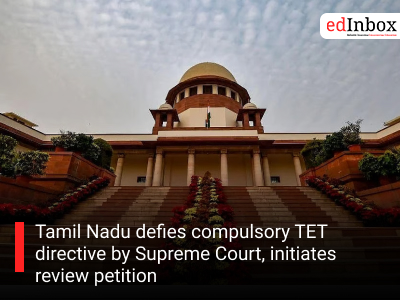
The Tamil Nadu government on Monday submitted a review petition in the Supreme Court requesting that its September 1 directive mandating all in-service teachers to clear the Teacher Eligibility Test (TET) within two years of joining be reconsidered, School Education Minister Anbil Mahesh Poyyamozhi informed reporters in Tiruchy yesterday, Tuesday, September 31.
The minister said the review petition challenged the Supreme Court order and grounds of relation, highlighting that retrospective effect of the mandatory TET rule would adversely affect 3.28 lakh teachers who had over five years of service remaining and about 67,000 close to retirement, The New Indian Express adds.
If the experienced teachers are declared to be unqualified or made to retire, it will leave schools empty in tens of thousands of schools, threatening the future of millions of children," he cautioned.
He further stated that the state was also considering the option of implementing special legislations in the next Assembly session to safeguard teachers and avoid disruption to the school education system.
Referring to the National Council for Teacher Education (NCTE) statement of August 23, 2010, exempting teachers appointed prior to the date from the TET requirement, Poyyamozhi said the state has asked that this exemption be continued.
"We have requested clarification that pre-2010 appointees should be eligible for promotion, and TET prospectively only for new appointments and promotions on or after 2010," he added.
The minister underlined that the government would implement the Supreme Court order unchanged and it could lead to an unprecedented deficit of more than four lakh teachers, which the state could not fill within two years.
Such a situation, he asserted, would endanger rural, hilly, and disadvantaged children's right to education who have no other option but government schools.

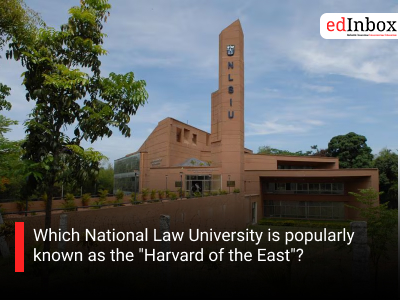
In India, Law aspirants favor National Law Universities (NLUs). When a student is thinking of studying at an NLU, one should know the advantages as well as the possible obstacles of studying there. Here are the key advantages and disadvantages of attending an NLU that will allow students to make a better choice regarding law education.
NLUs have one of the best law programs in India, experienced faculty, a good curriculum and prescribed teaching methods. It focuses on both theory and practical skills in order to provide a good grounding in law.
NLUs are well-linked with the leading law firms, corporate houses, government legal departments, and NGOs. Good placement support is offered by many NLUs allowing students to get internship opportunities and employment offers in reputed organisations.
Most NLUs have modern libraries, moot court halls, and access to legal databases. These resources support students in their studies and research work.
Entry into NLUs is very competitive and it relies on the Common Law Admission Test (CLAT). Students all around India have an opportunity to study in one place, this creates a diverse student community and adds to the learning experiences.
NLUs give a lot of importance to activities like moot court competitions, internships, and workshops. These help students gain real-world experience and prepare them well for their future legal work.
Admission in NLU is very difficult. Students may be subjected to stress by the competition. Also, coursework may be strenuous.
The curriculum at NLUs is quite structured, which means there are fewer options to choose electives or explore subjects outside law. This might limit students who want to study other areas alongside law
There are numerous NLUs in small towns or cities. Students might experience difficulty adjusting in new locations particularly beyond their homes and large urban centres.
Faculty, infrastructure and placement vary significantly across different NLUs. The quality of resources and opportunities available to some NLUs might not be as good as in the best ones, which will influence the overall experience.
Though generally more affordable than private colleges, some NLUs may still have fees that could be a concern for students from less privileged backgrounds.
There are numerous positive points in studying in an NLU, such as high-quality education, good internship opportunities, and placement opportunities, whereas there are also such negative aspects as intense competition and the problem of adjustment. These benefits and drawbacks must be well considered by students according to their individual preferences and career objectives in order to decide the most appropriate way to study law.
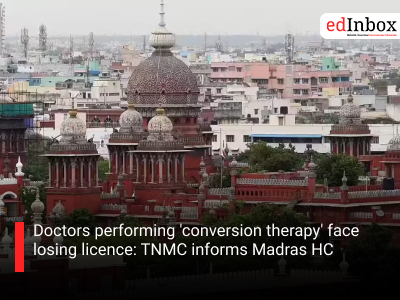
The Tamil Nadu Medical Council (TNMC) on Monday reported to the Madras High Court that circulars have been issued to all registered medical practitioners stating that conducting conversion therapy and unethical treatment of trans people would lead to stringent action involving suspension of the registration of medical practitioners. It also stated that these problems would be introduced into the ambit of continuing medical education (CME) in order to sensitize the doctors.
The submission was before Justice N Anand Venkatesh when the petitions dealing with LGBTQIA+ matters were taken up for hearing.
The legal counsel representing the TNMC stated that the circulars had been issued on September 12, 2025, informing that the TNMC is vested with power to initiate disciplinary proceedings on any complaint received regarding any attempt/interventions to alter the sexual orientation and/or gender identity of an individual, which is also known as 'conversion therapy', which shall be interpreted as 'professional misconduct' on the part of the medical professionals and suitable action shall be initiated in accordance with the prevailing rules.
Any type of so-called conversion therapy or coercive medical/psychological practice for changing the sexual orientation, gender identity, gender expression or sex characteristics of an individual is strictly prohibited by the circulars. This is deemed to be unethical and could attract disciplinary action under TNMC rules.
All clinicians are bound by a professional and ethical obligation to deliver healthcare on an non-discriminatory basis in terms of gender identity, gender expression or intersex status. Dignified, respectful and inclusive care must be guaranteed at all phases of medical interaction, it added.
Declaring that its ethics committee will consider complaints of misbehaviour or discriminatory attitude against transgender and intersex individuals as high-priority disciplinary cases, the council instructed all registered medical practitioners to hold themselves to these guidelines in letter and spirit and failure to do so would be taken seriously and may invite disciplinary action including suspension of registration.