Five students from Maharashtra have achieved a 100 percentile at the Law (three-year) Common Entrance Test (CET) 2025 on Friday. They are Ganesh Choudhar, Somanath Suman Ramayan Sudhanshu, Shrihari Manjunath Prabhu, Swapnil Singh, and Tanmay Chindaliya.

The year saw the biggest ever mass registration in Law CET with 94,506 candidates registering and 74,621 candidates sitting for the test. The huge turnout is an indication of the growing trend of law's popularity among students wishing to pursue the career line in advocacy, corporate law, legal services, and judiciary preparation.

Sectarian gender composition was 49,406 men being involved and 25,213 women being involved. Two individuals were also registered as participants being transgender. The mixed induction is a reflection of the increased diversified population embracing legal studies in modern times.

The test was held at several test centers in the Maharashtra state, and the candidates were tested on topics such as Legal Aptitude, Current Affairs and General Knowledge, Logical Reasoning, and English. The test is an entrance test to admissions to Maharashtra state government and private law colleges through Maharashtra state university affiliation to three-year LLB courses.

State CET Cell authorities announced that the paper of this year was medium in terms of difficulty with a slight tilt towards reasoning and legal aptitude kind of questions. In spite of the difficulty, these five students were able to breach the top percentile score and held the highest level among law aspirants.

Education officials also argue that higher numbers of top scorers appearing for the test and more participation are reflective of improved preparation for the tests and increased competition. "Law as a profession has emerged as a choice among students from engineering and commerce streams also who wish to be of service to society," quotes a CET official.

CAP for Law CET is to be conducted soon and will be filled based on CET marks, preference, and available seats in college.

Legal professions being the focus area in India's evolving socio-political and business environments, such records not only make students pull out all stops but also necessitate investment in infrastructure towards quality legal education within the state

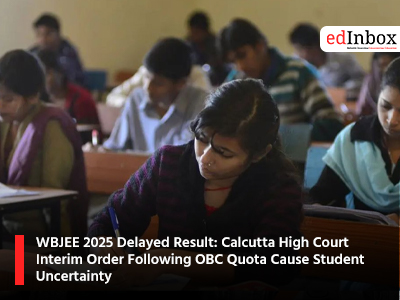
Release of the WBJEE 2025 results has been put off, leaving thousands of hopefuls in suspense and uncertainty about their professional life. The reason behind the delay lies in a pending court case related to OBC-A and OBC-B reservation regulations in West Bengal.

Over 1 lakh West Bengal and other state students write WBJEE annually, which is the state's chief entry test for undergraduate courses in engineering, pharmacy, technology, and architecture. But the uncertainty regarding declaration of result, which has been prevalent so far, has infuriated students and parents on a large scale.

The waiting is an aftermath of a Calcutta High Court direction for an interim stay on implementing the recent West Bengal government notifications related to OBC-A and OBC-B category reservations. The division bench of Justice Tapabrata Chakraborty and Justice Rajasekhar Mantha ruled that all executive orders made between May 8 and June 13, 2025, regarding these two categories, would be suspended till July 31, 2025.

Although the West Bengal Joint Entrance Examinations Board (WBJEEB) has not made it legally official that the reason for the delay lies in legal procedures, the connection is likely possible because WBJEE results are accompanied by category-wise ranking and affect admissions under reserved quotas directly.

On 15th May, WBJEEB Chairperson Sonali Chakraborty signaled the results declaration may be put back because of ongoing legalities, but no such official announcement has been issued as yet.

Greater Student Outrage on Social Media

As the other exam counselling procedure has also been standardized at the national level, candidates sitting for WBJEE 2025 are limited and anxious. Social media has seen an outburst of messages from students requesting assistance and seeking openness from the board.

One of the commentors wrote, "Approximately 1 lakh students are eagerly awaiting WBJEE results. All are perturbed as counselling has begun elsewhere. The delay is disturbing our academic calendar. Please take steps."

Another user wrote, "We humbly request authorities to act at the earliest to rectify the result delay and relieve deserving students."

A third said, "WBJEE results are yet to be declared. Board has not officially updated. Request the Hon'ble Chief Minister to take intervention."

Another one said, "WBJEE 2025 results are pending and JOSAA counselling is underway. Thousands of students of West Bengal are in suspended animation. As again and again requested, the board is tight-lipped."

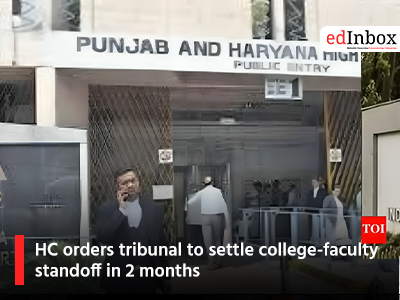
The Punjab and Haryana high court has ordered the educational tribunal, Punjab, to hear and dispose of the current litigation between faculty members and Akal Degree College for Women, Sangrur, within two months.

The court declined to intervene in the matter and dismissed a plea made by the faculty asking for orders so that admissions to the BA course are made for the 2025-26 session and not hindered, directly or indirectly, by the college.

In 2020, the college had decided to scrap the course due to poor admissions. Since then, almost 10 teachers and the college administration have been in litigation at different forums. The 53-year-old aided college affiliated to Punjabi University, Patiala, had also experienced protests from farm unions and local bodies against the move. Its management was suspended in April 2022 for "misusing funds" by the state government.

Even though the court acknowledged that members of faculty might suffer inconvenience because of the discontinuation of the course, it noted that "such collateral detriment, howsoever genuine, does not ipso facto invest them with requisite locus standi to assail the administrative decision of College in question as also the society in question, by way of a writ petition, before this court.". Personal sentiments or inconvenience, however intense, cannot bestow a justiciable right to challenge such a decision made by the college," the court observed sending back the case to the tribunal.

The bench also made it clear that it had not decided the case on merits, particularly since one set of petitions is already listed for hearing before the tribunal. The case has been remitted to the tribunal for determination within the specified time

Back-to-basics education is in free fall worldwide. Fifty million children are going through the motions in school, unable to read Sub-Saharan Africa and Southeast Asia, not even able to read a sentence or simple maths problem.

The pandemic was followed by an invisible crisis, but the learning poverty is a hard pedagogical failure of our era. The crisis is not just rich countries' crisis, however. Reading literacy in America during the January 2025 National Assessment of Educational Progress (NAEP) remains at historic lows, with about one-third of eighth graders at or below basic.

Mathematically, American performance was no stranger to stagnation and increasing disparities, most especially for those who had long been underrepresented. The UNESCO 2025 Global Education Monitoring (GEM) Report puts the scale of this learning crisis globally into perspective: six of every ten school-age young people in the world today are at or below minimum level of mathematics and reading at the end of primary schooling.

Minimum proficiency capacity is a metric of whether kids are able to achieve a minimum of math or literacy for their grade. But even that is not achieved by more than 60% of primary school students, the survey states. And in most low- and middle-income nations, things get worse again, revealing the harsh disparities built into education systems across the globe.

It is weakest in South Asia and sub-Saharan Africa, and the improvement there is weakest. In most countries in Africa, less than one in five are minimum in number and reading skills at the end of primary school. For instance, there was no improvement—and even deterioration—for some nations in learning despite increased schooling.

Latin America has also fallen behind its own plateaus, especially because of the COVID-19 pandemic. Decades' progress was undone by closures of some of its schools.

And what about wealthier nations like Europe and North America? Their average learning proficiency scores are higher, but there too, slightly qualified groups—majority of whom are immigrants and poor citizens—trail behind.

What is fueling the world learning crisis?

The world we're used to has tens of millions of illiterate kids who can't read or do elementary arithmetic under the umbrella of a record-high historic school enrollment rate.

Systematized, structural—and entrenched—are the causes.

Following on the roll call of what's wrong:

  • Inadequate instruction and dearth of teachers: Too many low-achieving, overenrolled classrooms, particularly in developing nations, by untrained or under-certified teachers.
  • Inadequate infrastructure: Billions of school-going children study with no electricity, water, or even the simplest of learning materials.
  • Poverty of learning: Poor children have higher chances of being late to school, being absent from school on sporadic instances, or dropping out of school early.
  • Gender discrimination and conflict: Girls in conflict-affected, politically unstable, and conflict environments suffer disproportionately.
  • Language deficit: The majority of children from the majority of countries are taught home languages they themselves can no longer read, again resulting in issues of comprehension.
  • Early childhood development deficit: It cites learning early before primary in trying to establish foundations, but far too late again for those children with insufficient chance to benefit from high-quality early childhood education.

With the AI revolution, people have no option but to accept the use of AI. The era of Boon and Bane debate over the use of AI tools is gradually ending. AI is becoming deeply embedded in every sector, and courtrooms are no exception. As an aspiring Indian law student, you are on the fringe of a technological revolution. Generative AI is not an empty phase because it is quickly becoming the new foundation of modern law practice and legal education in India. 

Artificial intelligence in Indian law

Indian courts and law firms do not hesitate to adopt Artificial Intelligence anymore. Programs such as Manupatra, Kanoon.ai, and LegitQuest are becoming ubiquitous resources in the law research communities, and are being used in a similar way to machine learn through huge databases, identify pertinent cases, and in some cases even forecast whether a given case is likely or otherwise to find in the client favour. Even the SUVAS program started by our Supreme Court in translating legal texts in regional languages is already starting to make justice more accessible to justice seekers in our multilingual country.

However,chatbots, such as LAWFYI.IO  are making lawyers and their wisdom available to all citizens, particularly those in rural and under-served communities, very quickly. It is not a matter of convenience but it is democratizing access to justice.

Exclusive Insights by AI expert 

During a discussion with an AI expert, he told edinbox, "AI is a good thing in courtrooms; in fact, a lot of Legal Tech Startups in India have emerged to improve legal work by combining human expertise with AI-driven solutions and to eliminate common tasks. e.g. Eudia.” This proves that AI is going to play a big role in the courtrooms. “But the model may have hallucinations, so human oversight is necessary." He added, clarifying the downsides of AI and its working.

He also highlighted, "We shouldn't decide justice through AI because AI can only help a judge provide the info of both parties and not make the final call. This is due to AI's current inability to comprehend human emotions, ethics, and the context of an action.” This is where the question  of early justice comes into play. Using Generative AI in the Indian courtrooms might be a great option but will it be worth putting justice at stake? 

Upon questioning the ability of AI, AI Expert told Edinbox, “it’s not like AI is not capable, it has the ability to make decisions, but there is a chance that they will be incorrect. If justice is not carried out correctly, an innocent person may have to suffer, which would put the entire legal system at risk.

Proprietary Data: The Extent of AI Adoption

  • At the end of 2024, there were more than 250 working AI models in India, and one of the fastest-growing sectors is the legal one.
  • As of 2024, there were more than $ 750M in funding invested in Indian generative AI start-ups and three-quarters of them earned a revenue already.
  • Industry estimates state that law firms are reporting up to a 30% faster turnaround rate in research and documentation activities since adopting AI tools. 

Law as a field is changing in a major way and law students need to be ready to change along with it. The legal industry is among the industries where AI tools are being increasingly utilized, which is why efficiency and accuracy are being transformed. Young lawyers can now devote time in strategy and communication with the clients because they have cut their time in the research and document review. The change, however, is also indicative of a widening of the skills shortage in the field. Law students must be apt to the digital world, having a good grasp of data privacy, artificial intelligence, and legal technology as a way of remaining in the game.

AI in Indian Legal Education

The best law schools such as NLU Delhi are already teaching students these skills, including classes on prompt engineering, legal tech and actually incubating AI legal start-ups. Digital literacy is an important area for such attention, because the legal system is currently experiencing the material effects of artificial intelligence. To give an example, AI is assisting courts to reduce large backlogs through ordered processing of cases and simplification of hearings that results in quicker justice.

Since the daily routine is to be replaced with an AI, the emphasis in terms of lawyers shall be put on the human face of the law, i.e., judgment, empathy, and ethics. Data privacy, algorithmic bias and knowledge of AI boundaries have become the equivalent of knowledge of the IPC or CrPC. Dr. Garima Tiwari of NLU Delhi affirms, "Digital fluency, data literacy, and technological flexibility, are the conditions that the next generation of lawyers should be prepared with." To accomplish this, law schools are integrating AI and legal technology into required classes, providing practical, real world experience working in AI-based programs, working with start-ups and industry to provide internships and collaborative research projects.

Challenges of Using Generative AI 

Nonetheless, it does not come without difficulties. The Indian legal market needs high customization of most generative AI tools, and regulatory barriers such as confidentiality and privacy of data slows down the uptake. Additionally, although AI is a good fit in jobs that involve repetition, interpretation and strategic thinking cannot be replaced by a machine. The legal world as we know it keeps evolving, and law students should be ready to embrace the power of AI at their disposal to ensure that they maintain the edge that a legal professional stands for.

Future Skills for Law Student

  • Get Tech-Savvy: Get familiar with the use of AI tools in research and drafting. Incorporate your legal pursuits with the development of digital literacy.
  • Stay Curious: Keep track of the new innovation in law and technology.
  • Network: Look out to find internships in law firms that are early adopters of AI and start-ups.
  • Thinking Beyond the Bar: He who will become the lawyer of tomorrow is also a hybrid, half-legal eagle and half-techie.

Generative AI cannot be treated as a tool because it is the new language of the Indian legal profession. Individuals who become fluent speakers will spend their days defining the next generation of justice in India. And to law students and law aspirants the message is also clear, adopt AI, learn constantly, and prepare to take charge of a world where law and technology work in harmony.

The future of the Courtroom is AI, be trained and stay relevant to have a better future as a law aspirant. Professor Linna says, “All the judges of the 21st century and beyond need to be technologically up-to-date and trained in AI.” It’s evident that the future may see GenAI assistants influencing the legal cases much like human law clerks, but with the added risks as well as promises of machine logic.

Families who pay for private schools lost their bid to overturn Labour's fees tax yesterday – but judges still labeled the policy 'discriminatory'.

The High Court ruling stated the 20 per cent VAT would be 'disproportionately prejudicial' on children with special needs.

But it also held Parliament could still exercise the right to make such a decision. Yesterday, the Boarding Schools Association called it a 'sad day' for vulnerable children, and went on: 'There are no winners here.' At least one of the claimants is expected to appeal.

Paul Conrathe, of solicitors SinclairsLaw which acted for a group of parents of special educational needs children, Education Not Discrimination, said 'the Government should hang its head in shame'.

There was also outrage at the Government's insistence throughout the case that the tax would go towards state schools. This week it indicated that the funds will now cover housing.

VAT on school charges was levied on January 1, after being promised in Labour's election manifesto. The challenge to it was mounted by three sets of families and a number of private schools. They wanted the charge ruled 'incompatible' with human rights legislation.

Yesterday's ruling, by Dame Victoria Sharp, Lord Justice Newey and Mr Justice Chamberlain, concurred that the tax was 'discriminatory' towards children with special educational needs. It also intruded upon their right to education under the European Convention on Human Rights, they added.

‘If the imposition of VAT makes the fees unaffordable, there is a significant risk that the state school to which they transfer will not provide adequately for their needs,’ they added. ‘The measure will have a disproportionately prejudicial effect on them.’

But they held that Parliament had a 'broad margin of discretion in determining how to weigh the interests of those negatively affected against the interests of others who might benefit from public provision funded by money which it will raise'.

Fees are paid by many special educational needs parents because private schools have superior pastoral care. The Government stated the court had upheld its law was 'compatible with its human rights obligations'.

Delhi University is once again in the news and this time it is over Manusmriti. DU has taken an official decision to drop the controversial ancient text after a new round of criticism and protests by students and teachers. What is the story behind this decision then, and what are the implications on students and the academic community?

Recently, an ancient Hindu law book, the Manusmriti, was put as suggested reading in a four-credit course named Dharmashastra Studies as part of the new Undergraduate Curriculum Framework, which was developed according to the National Education Policy (NEP) 2020. Other classical texts, such as the Ramayana, Mahabharata, Puranas and Arthashastra, were also included in the course along with the Manusmriti.

The inclusion of Manusmriti in the undergraduate curriculum was not welcomed by many. This drew the objections of student groups and some instructors, primarily due to the fact that the text has been previously criticised on its opinions regarding gender and caste. There was a general opinion that the teaching of Manusmriti might be interpreted as propaganda of backward and exclusionary beliefs. The text has stirred controversy at Delhi University before as well. There had been earlier plans to introduce the text in the curriculum which had to be withdrawn following protests.

After the protest against the addition of this dharmashasta recently, the university administration responded to the outcry promptly. The statement given by the university was, "The University of Delhi will not teach the Manusmriti text in any course offered by the university.” It also added, "The 'Dharmashastra Studies' course, a Discipline-Specific Core (DSC) paper of the Sanskrit Department, in which Manusmriti was listed as a recommended reading, stands deleted."

In its official statement, DU made it clear that Manusmriti is not going to be studied in any form in any of its courses. The paper, Dharmashastra Studies, in which Manusmriti was included, has been removed from the syllabus. Additionally, The university’s Vice Chancellor, Yogesh Singh, reiterated that this stance for undergraduate curriculum is final and will be upheld in the future as well..

In the meanwhile, students of Delhi University shall presumably continue to study Sanskrit and history without the Manusmriti. University is trying its best to ensure that its curriculum is less exclusive and causes no conflict or feelings of being excluded to the students.

This news of Manusmriti in Delhi University brings forward the discussion that has been going on concerning what is to be taught in Indian universities. Some may say that all ancient works should be studied academically, whereas others feel that some works, particularly those containing offensive social codes, gender discrimination, and class discrimination, ought to be handled with care, or omitted altogether.

The takeaway of this whole DU news is that student voices are heard, and the curriculum will reflect the values of inclusivity and respect as per the need of the era.

More Articles ...