
Forensic science is an interdisciplinary field that is one of the fastest-growing fields, combining science, law, and criminal investigation. With the growing interest in forensic careers, many students may encounter two intriguing careers: criminologists and toxicologists.
Both have a role to play in understanding crime and supporting the justice system, but they are very different in terms of their educational pathways, and in their day-to-day work. These differences can help aspiring forensic science students decide on the career path that best suits their interests and strengths.
What is a Criminologist?
A criminologist is a person who studies crime, criminal behaviour, and the social factors that affect criminal activities. Criminologists are not forensic laboratory experts, but they are concerned with the causes of crime, the perpetrators of crime, and how society can prevent crime.
Criminologists examine social and psychological factors, analyze crime trends, study offender behavior, and assist in the creation of policies that will help to reduce crime. They frequently assist law enforcement, government agencies, research organizations, and policy makers.
What is a Criminologist?
A criminologist may:
- Examine the nature and origins of crime.
- Analyse crime statistics and reports
- Investigate crime and crime motives
- Assess crime prevention programmes
- Help with the development of criminal justice policies
- Help police with behavioural analysis
- Do academic and social research
Criminology is a field that integrates elements of sociology, psychology, law, and criminal justice to gain a deeper understanding of crime and its effects on society.
What is a Toxicologist?
A toxicologist is a scientist who investigates the effects of chemicals, drugs, poisons and toxins on living things. Toxicologists are essential to the criminal investigation process in forensic science, where they examine biological samples to identify substances that can be associated with injury, illness, impairment or death.
Forensic toxicologists use sophisticated scientific equipment to detect and quantify drugs, alcohol, poisons and other chemicals in a lab setting.
What is a Toxicologist?
A forensic toxicologist can:
- Analyse blood, urine, hair and tissue samples
- Identify drugs and poisons
- Help to identify causes of death
- Support investigations of drug overdoses
- Conduct scientific investigations in criminal investigations
- Prepare laboratory reports
- Provide expert testimony in court cases
Their results can be pivotal in criminal investigations and court cases.
Difference Between Toxicologist and Criminologist
ASPECT
Criminologist
Toxicologist
Primary Focus
Understanding crime and criminal behaviour
Analysing chemicals, drugs, and toxins
Field
Social Science and Criminal Justice
Biological and Chemical Sciences
Work Environment
Research centres, universities, government agencies
Forensic laboratories, hospitals, research facilities
Main Objective
Study causes and prevention of crime
Determine the presence and effects of substances
Skills Required
Research, analysis, psychology, sociology
Laboratory analysis, chemistry, biology
Job Role
Behavioural and crime pattern analysis
Scientific evidence examination
Although, both do similar work but the perspective and method differs.
So, which career is better in Forensic Science?
There’s no one “good career” option, both are lucrative careers with their own features and contributions. Choosing the right career for yourself depends on your desire and inclination; if you are inclined towards understanding the psychology of a criminal to hunt him/her down, you must choose criminology. But if you are more into lab work and love finding evidence, toxicology will be the best.
There are opportunities to make a difference in the public safety and justice system in both careers, so choosing for either one of these will still lead you to the same reputation and respect.
How to become a Criminologist?.
To be a criminologist, students must start with a bachelor's degree in a criminology-related field, such as forensic science, criminal justice, psychology, sociology, or law. For this, qualifying the AIFSET entrance test is important. Additionally, postgraduate qualifications might also be necessary for advanced research and specialisation.
How to become a toxicologist?
Same as Criminology, to be an expert toxicologist, one must first crack AIFSET and gain admission into one of the top institutes offering forensic science. A forensic toxicologist typically needs a solid background in science to pursue a career in the field. Undergraduate degrees in forensic science, chemistry, biochemistry, life sciences or related areas are common for students pursuing further specialization in the field through postgraduate studies or professional training.
Educational Pathway After Class 12
Both the professions can be started by students from Class 12 by selecting science related programmes. Popular options include:
- B.Sc. Forensic Science
- B.Sc. Chemistry
- B.Sc. Biotechnology
- B.Sc. Life Sciences
- Criminal Justice Studies
Criminology Programmes
Forensic science is a popular course for many students because they get to explore a variety of specialisations such as crime scene investigation, toxicology, DNA analysis, cyber forensics and criminology.
Students interested in pursuing forensic science courses can consider taking part in the All India Forensic Science Entrance Test (AIFSET) to gain admission to forensic science programs at various top universities in India.
Career Opportunities
Career Options for Criminologists
- Crime Analyst
- Criminal Behaviour Researcher
- Policy Analyst
- Correctional Services Professional
- Academic Researcher
- Criminal Justice Consultant
Career Options for Toxicologists
- Forensic Toxicologist
- Laboratory Scientist
- Drug Testing Specialist
- Research Scientist
- Pharmaceutical Toxicologist
- Public Health Toxicologist
What Should Aspirants Know?
While both criminologists and toxicologists are forensic professionals, they have different roles in the justice system. Criminologists are interested in the nature of crime and criminal behaviour, and toxicologists apply scientific techniques to the investigation of substances that could be involved in a criminal investigation.
Understanding these differences are a crucial first step for students interested in pursuing a career in forensic science. Both behavioural analysis and laboratory science are rewarding fields of work that can be of service in investigations, public safety and the quest for justice. The important thing to remember is that you need to get a head start on the field, select the appropriate educational route, and develop the specialized knowledge needed to achieve success in your chosen career.
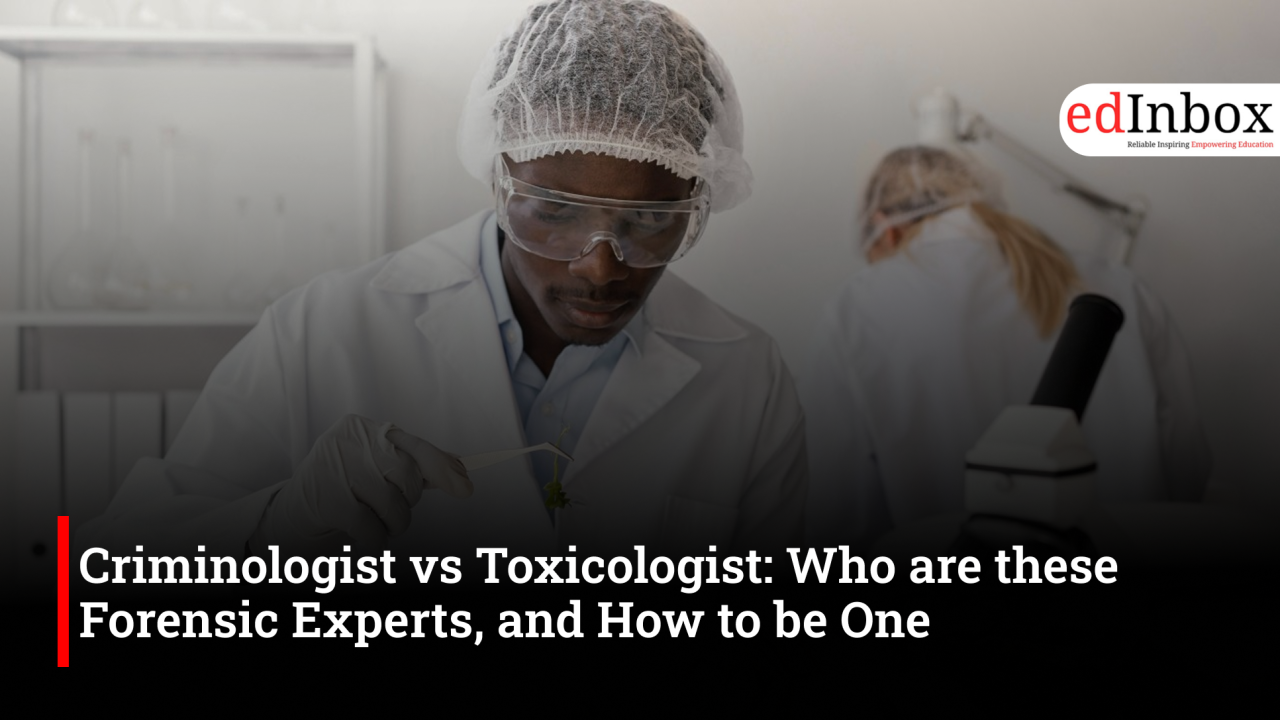
Criminologist vs Toxicologist: Who are these Forensic Experts, and How to be One
Typography
- Smaller Small Medium Big Bigger
- Default Helvetica Segoe Georgia Times
- Reading Mode