Marketing is a field of opportunities in the 21st century. From branding and promotion to lead conversions, everything in the business ecosystem depends on marketing. It is not wrong to address marketing as the oxygen of this digital era for businesses. 2025 marketing trends rely heavily on viral branding. Let’s talk about it in detail. 

Viral Branding Marketing Trend

True viral branding is no longer a matter of chance. Instead, it is a combination of art, science, and strategy. In 2025, brands that go viral create the trend, rather than just ride it. Going viral is now the top aim of brands in cyberspace, with platforms like TikTok, Instagram Reels, and YouTube Shorts providing access to content that spreads like wildfire. For MBA (Marketing) students, the science behind viral branding can contribute to business growth and set the enterprise apart from the rest.

What Makes a Brand Go Viral?

At its essence, viral marketing means developing content designed to be shared by others. Most successful campaigns in 2025 succeed primarily because they resonate with a true human emotion, such as happiness, surprise, curiosity, or even outrage. Customers today value connectedness and authenticity. They are attracted to brands that feel real, tell engaging stories, and encourage dialogue instead of merely selling goods. Emotional intelligence, meme culture, and even principles of neuromarketing now enter into the crafting of content that explodes over the internet.

But that does not mean emotion alone really cuts the mustard. Important as that is, technical know-how is as important. The content needs to be created with all algorithm biases in mind: videos should autoplay sound off, and then there should be scroll-stopping thumbnails and captions that encourage interaction. That combination of emotional resonance and platform intelligence is what makes a campaign truly viral in 2025.

The Power of Social Media and Algorithms

The engine of viral brands is social media. Above all, TikTok and Instagram Reels are built for high engagement and sharing, with an algorithm strategy that measures most interactions with the content by users. In 2025, short-form video, trending audio, and interactive AR filters will be used by the brand with snackable content to lure viewers in only seconds. Then, together with Instagram's shopping integration and TikTok's live shopping features, turning viral moments into sales instantaneously. 

AI-driven algorithms are also able to analyse and associate data so that marketers can understand what is likely to go viral, whom to influence, and when to nudge them to maximize the brand's message. Based on this data-driven approach, brands now find it possible to customise content even more specifically for the audience, making virality targeted and efficient like never before.

Authenticity and Trust 

Consumers in 2025 are selective about what they like and share. They need brands to be transparent, ethical, and relatable. Authenticable viral campaigns, a behind-the-scenes video, user-generated content, or a raw, unpolished story surpasses too-polished or promotional ones. It is about building trust; if a brand creates honest communication with customers and showcases real experiences of customers, it builds long-lasting loyalty and organic sharing.

Personalisation is another factor that is in high demand for making the content go viral. With advances in AI as well as in data analytics, the ability of organisations to create experiences with virality to relevant segments but still create mass audience virality is becoming more effective. In fact, personal content speaks a lot to the reader, thus increasing the probability of sharing and engagement. The successful brands in 2025 are those that manage, at scale, to ensure every consumer feels seen and valued.

The Role of Influencers and Social Proof

Influence marketing forms the backbone of viral brands. It is potentially the fastest and easiest way for your brand to grow reach and credibility by working with the right influencers. 2026 will see micro-influencers, the ones having small but very high-engagement audiences, who will benefit the most from authentic conversations and shares. 

Testimonials, social proof, and user-generated content are more convincing than ever. It builds trust and peaks virality when real people share happy experiences and urge others to contribute.

However, it really is a challenge these days to be noticed among so much competing content. There is a dose of oversaturation; hence, the brands need to be bolder, more creative and more human. The best campaigns are those that have experimented with different formats or have taken a quick response to trends or risk-taking; they surely stand out from the rest. But that aside, ethical considerations come into play. Hence, there is a consumer demand that fulfilment of responsibility is attached to brand behavior and not just sensationalism for clicks.

Best Practices for MBA (Marketing) Students

  1. Shareability is Key: Generation of easily shareable content, short videos, interactive quizzes, or memes.
  2. Be Real: be relatable and be real with your audience. Share stories that connect on a human level.
  3. Keep a Track: Use analytics to get to know your audience better and even predict where trends are headed.
  4. Co-create with Influencers: Get your brand in greater space by teaming up with voices that share your brand values and ideals.
  5. Keep It Simple: Simple, Clear, short messages can easily be understood and passed along.
  6. Stay Ethical: The conflation of messages should promote trust, credibility, honesty, and genuineness in its messages. 

Career Opportunities in Viral Branding

The skills to make the brand viral will take MBA (Marketing) students straight to the high-flying careers of Marketing Executive, Brand Manager, or Digital Marketing Specialist. These professionals are in huge demand as companies realise that it is a highly impressive factor in leveraging social media and viral trends to achieve business growth. By 2026, companies in India will want marketers to be creative yet data-driven in their approach since they have a dramatic impact on the cultural phenomena of everyday campaigns. 

Viral branding in 2025 will be the showy mix of storytelling, clever technicality, and emotional availability. The understanding of what presses people's buttons and how these can push them to share with others. For MBA (Marketing) students, mastering this secret science offers not just a career opportunity but the key to the future in the realm of digital success for brands. Build value that spreads through people sharing while doing not just marketing but building a movement.
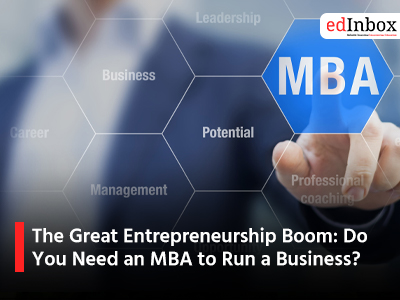
These past several years have seen a dramatic rise in entrepreneurship, with startups popping up every single day and innovators shaking up traditional industries. The notion of being your own boss and running an innovative business with a top-notch USP is hotter than ever. However, amidst all this entrepreneurial excitement, one big question remains: Is an MBA really an important or necessary tool toward entrepreneurial success?

Changes in Entrepreneurship in 2025

Old paradigms had it that to succeed in business, one needed an MBA. The degree was supposed to impart all of the critical skills: bespoke management skills, finance, marketing and leadership skills for setting up and running a company. The entrepreneurial ecosystem initiated a paradigm shift when digital technology gave birth to mushrooming sources of information and newer funding concepts, such as crowdfunding and angel investing.

Today, there are entrepreneurs who have self-taught their way into coding, marketing, and engineering and even became founders after dropping out. Many others have built billion-dollar startups without being formally educated in business. If so, is an MBA considered less and less useful? 

What the MBA Offers Entrepreneurs

An MBA gives aspiring entrepreneurs a platform for learning business fundamentals, strategic thinking, networking, and insights from industry veterans. The most favoured skills taught are finance and accounting, such as:

  • Preparing budgets
  • Conducting market research and competitor analysis
  • Training and educating teams
  • Managing legal and ethical issues
  • Fundraising and managing investor relations

To many, MBA programs also open up powerful alumni networks and mentorships to boost a business. 

When to do an MBA Degree?

If you are unsure about when to do an MBA, analyse your options with the following:

  • Scaling Your Startup: The operational, human resources, and financial complexities increase once an idea gets past a startup's initial phases. The MBA skills imparted to entrepreneurs definitely prepare one to handle challenges on a large scale.
  • Investor Respect: Investors would rather get involved with founders who have at least some formal business training. This, they feel, denotes preparedness and professionalism.
  • Particular Knowledge: Some industries, such as finance, healthcare, or consulting, may require a greater depth of knowledge in areas requiring MBA specialisation.

Why Some Entrepreneurs Skip the MBA?

Many people who are today successful entrepreneurs have skipped doing an MBA because of 3 key reasons: 

  • Learning Through Action: Many believe that experience is worth more than learning in a classroom. More so, startups are typically fast-paced environments that require practical and hands-on problem-solving. 
  • Cost and Time: The pursuit of an MBA will cost a lot in tuition and time away from applying learnings to build a business. 
  • Other Locations for Access to Such Resources: Online courses, along with incubators and mentors, can provide flexible and affordable alternatives to a standard MBA.

The reality is that there are no standard answers; successful entrepreneurship relies more on passion, creativity, stamina, and a capacity for perpetual learning. For some, an MBA hones their competitive edge and opens vital doors. For others, going through the grind and developing by learning is the only way forward. For prospective entrepreneurs, weighing their goals, income situation, and business ideas' specific needs will ultimately answer this dilemma.

In conclusion, the entrepreneurship boom is changing the democratic face of success. While an MBA remains useful for many, it is not the only way to develop a successful business. Today's entrepreneurs have more choices than ever, whether to invest in formal business training or dive straight into the startup world. Remember, whichever route you choose, you must keep learning, remain flexible, and develop a strong network. Being mindful, confident, and creative shall help you climb the pedestal of the top entrepreneurs in the 21st century.

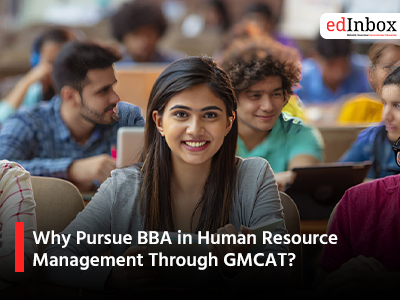
Pursuing a BBA degree in India is easier than deciding whether to pursue it. The selection of an appropriate post-school career becomes really challenging particularly because India presents strong competition and different available options. Students seeking to establish themselves in human resource management and organizational people management now find the Bachelor of Business Administration in Human Resource Management (HRM) to be an attractive academic option among many others. The BBA in Human Resource Management training can be combined with the Global Management Common Aptitude Test (GMCAT) which delivers students an educational combination of rigorous study and worldwide exposure.

A three-year undergraduate BBA in HRM program provides students with essential abilities needed to successfully handle workforce management requirements. The successful completion of this program provides students with knowledge about all significant human resource aspects including employee recruitment and training and payroll management together with employee relationships and strategic planning. Students receive business management education about finance along with marketing and organizational behavior which enables them to pursue leadership positions in HR. The approach combines multiple aspects of training to create graduates who become versatile professionals able to tackle various responsibilities at work.

Human Resource Management fields have expanded rapidly because organizations recognize employees as their essential assets for driving business success. Today's organizations regard their employees as their most essential business asset. The increasing need for organizational success and employee satisfaction makes HR professionals instrumental in developing policies which drive organizational performance. HR career possibilities grow stronger because of new trends which include artificial intelligence enhanced HR operations and virtual reality training platforms along with data-based managerial decisions. The exciting nature of HRM as a field draws students because it enables them to progress in technological advances while making noticeable impacts on organizational expansion.

Students who want to study management at any global institution must take the Global Management Common Aptitude Test (GMCAT) which functions as their standardized entrance examination. GMCAT enables students to choose their exam dates from different points within the year due to its flexible scheduling system so everyone can find a suitable time. GMCAT establishes degree recognition through international management programs which increases the value of your education because it gains acceptance worldwide. Candidates need to demonstrate quantitative ability as well as verbal reasoning skills together with integrated reasoning ability and analytical writing proficiency during the test which serves as the assessment for management positions. The extensive evaluation process enables students to handle upcoming workplace challenges in their future careers.

a BBA in human resource management provides several rewards for its students. New graduates gain opportunities to work as HR managers, talent acquisition specialist, payroll coordinator, IT recruiter, and administrative executive in different industries such as IT and healthcare and government organisations. The premier recruiting institutions for this field are tcs, wipro, infosys, accenture and deloitte. Entry-level salaries for bachelor of business administration in Human Resource Management graduates span between ₹3–5 LPA. graduates can expect substantially heightened compensation, reaching ₹30–45 LPA when they earn senior positions following experience and acquire qualifications such as an MBA or PGDM in HRM. Students acquire essential leadership capabilities through this program which includes strategic planning abilities together with performance management experience, conflict resolution mastery, and employee engagement practices.

Students who complete their BBA in HRM can pursue MBA studies with HRM specialization or switch to international business, finance analytics, or entrepreneurship fields. The educational programs provide students with executive training to boost their professional development potential toward senior-level positions. Graduates gain competence in dealing with contemporary workplace issues through their exposure to automated HR processes that include recruitment and training management systems (HRMS) components. Professional HR managers maintain their marketability because their versatility keeps them current in an environment of continuous job market transformation.

Students in India should opt for human resource management studies owing to the nation's fast-growing employment market conditions. A substantial increase in employer demand exists for HR professionals who handle diverse employee populations. Healthcare institutions have transformed into the leading recruiters of HR professionals due to their sector-wide expansion. The implementation of Industry 4.0 technology introduced remote work systems which demand new HR models anchored in virtual employee introductions and adaptable working conditions. Business organizations throughout India rely heavily on qualified HR managers to navigate their complex regulatory requirements. Students who enroll in BBA in HRM through GMCAT-approved universities enhancing global experience and contemporary education about market trends can boost their employment potential in both domestic and foreign markets.

Students who desire GMCAT certifications must build their analytical abilities together with their training in quantitative reasoning and verbal comprehension. To succeed in BBA studies students need to prioritize their weak subjects using a planned study outline in combination with year-to-year past question work and simulated testing along with global management industry knowledge updates. Passing the GMCAT entrance exam leads to admission in top-notch colleges while developing essential capabilities which lead to superior management performance.

To sum up, BBA in Human Resource Management program through GMCAT 2025 gives Indian students outstanding prospects to develop rewarding careers within the highly dynamic management sector. Your long-term professional development gets a solid backing from the blend of promising financial rewards along with varied workplace options available in numerous industries and modern workspace adaptability capabilities. The knowledge and skills provided by HR Management programs help both recruitment teams of multinational corporations and startup employee engagement advocates succeed professionally. Rewarding employment opportunities across India are waiting for aspiring students like you to clear GMCAT, pursue BBA in the top universities, and be worthy of the opportunities.

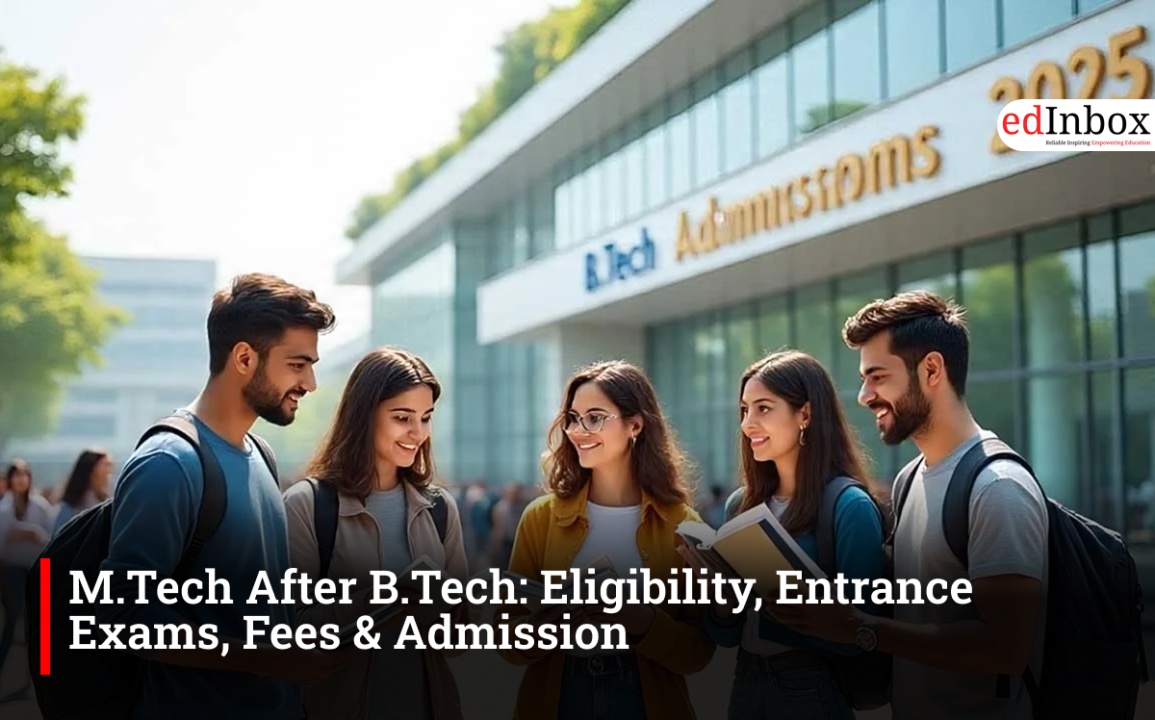
M.Tech, or Master of Technology, is a postgraduate engineering and technology course generally pursued after a relevant bachelor's degree. GATE is the major national-level entrance examination used for M.Tech admissions in India, although individual institutes can have their own eligibility and admission routes. For students planning M.Tech admission, GATE 2027 registration is currently open, with the regular application deadline set for September 27, 2026. 

For the M.Tech 2026 admission cycle, GATE scores have been used by participating institutes through different admission and counselling processes. COAP has handled offers from participating IITs and IISc, while CCMT has handled centralised counselling for participating NITs, IIEST Shibpur, IIITs and CFTIs.

What is M.Tech?

M.Tech is also called Master of Technology. This is a postgraduate course which is aimed at providing advanced knowledge as well as practical/research experience in a particular field of engineering and technology.

There are many specializations available, and they include Computer Science and Engineering, Artificial Intelligence and Machine Learning, Data Science, VLSI, Electronics and Communication, Structural Engineering, Power Systems, Thermal Engineering and Manufacturing Engineering.

What is the Duration of M.Tech?

A standard full-time M.Tech programme is generally two years or four semesters. However, students should check the duration of the particular programme because institutes may offer different structures for specific categories or programmes. 

Who is Eligible for M.Tech Admission?

M.Tech eligibility varies according to the institute, programme and specialisation.

A relevant B.E., B.Tech, B.Arch or equivalent qualification is commonly accepted. However, some programmes can accept candidates with qualifications such as M.Sc., MCA or other approved degrees, depending on their programme-specific rules.

Importantly, GATE eligibility and M.Tech admission eligibility are not the same thing. For GATE 2026, candidates studying in the third year or higher of an eligible undergraduate programme, or candidates who have already completed an approved degree, can appear for the examination. The GATE eligibility list includes B.E./B.Tech./B.Pharm., B.Arch., B.Sc. (Research)/B.S., M.Sc./M.A./MCA and several other qualifications.

But a student who is eligible to appear for GATE is not automatically eligible for every M.Tech programme. The qualifying degree, GATE paper, minimum marks and other requirements can differ from one programme to another.. Different qualifications, GATE papers, marks, and eligibility criteria may vary for different programmes.

M.Tech eligibility generally depends on

  • Qualifying Degree and Branch
  • Minimum Percentage / CGPA
  • GATE Score, wherever required
  • Accepted GATE Paper
  • Program Specific Criteria
  • Eligibility for Category, where necessary

Therefore, it becomes imperative for students to verify the requirements of the particular M.Tech program, rather than relying on generic information.

Which Entrance Tests are Required for M.Tech?

Unlike prominent programs, there is no entrance examination common to all M.Tech institutes in the country.

GATE (Graduate Aptitude Test in Engineering)

GATE is the most well-known entrance test conducted at a national level for post-graduate engineering and technology admissions. GATE scores are accepted for admission in M.Tech in participating IITs, IISc, NITs and many other institutions, based on their respective admission procedures. GATE itself has clearly mentioned that qualifying in the examination is not a guarantee for admission in a post-graduate course.

Some Other M.Tech Entrance Tests

  • GCSET: National Level Entrance Examination
  • CEETA-PG: Tamil Nadu
  • AP PGECET: Andhra Pradesh
  • VITMEE – VIT's university-level entrance route

These routes do not provide access to every M.Tech college in India. Their usefulness depends on the participating universities and programmes. This is why students should first shortlist the colleges and specialisations they want and then identify the entrance examination accepted by those institutions.

M.Tech Admission Process

The mode of admissions depends on the institute a candidate wants to get into.

Admission to M.Tech at IITs & IISc

For all those IITs and IISc that participate in this program, COAP i.e., Common Offer Acceptance Portal serves as a common platform to access and select M.Tech admission offers. But COAP is not the application portal for M.Tech admissions. Candidates have to apply separately to these participating institutes. Each institute will follow their own procedure for admission.

For COAP 2026, candidates having valid GATE scores either from 2024, 2025 or 2026 were allowed to register themselves under certain conditions.

M.Tech admission at NITs and other participating institutes

For NITs, IIEST Shibpur and participating IIITs and CFTIs, CCMT 2026 serves as a common counselling body for M.Tech admissions using valid GATE scores. As per the official website of CCMT, candidates can apply for M.Tech courses at eligible participating institutes using only one online application.

What are the Subjects in M.Tech?

M.Tech subjects vary according to the specialisation and university. There is no single M.Tech syllabus followed by every institute. For example, M.Tech programmes can cover areas such as:

  • Advanced computer science
  • Artificial intelligence and machine learning
  • Data science
  • VLSI and microelectronics
  • Communication engineering
  • Power systems
  • Thermal engineering
  • Manufacturing engineering
  • Structural engineering
  • Environmental engineering
  • Materials engineering
  • Computational science

What are the Fees for M.Tech?

There is no standard fee for M.Tech across the nation. M.Tech fees differ according to the institute, programme, category, and type of admission offered. Hence, students should not solely depend on a single average figure while comparing various M.Tech programmes. The official fee structure of the particular institute should be taken into consideration before admission.

Moreover, M.Tech programme students who qualify in GATE are also offered financial assistance as per the concerned government/institute guidelines. According to the GATE 2026 website, financial assistance for eligible M.Tech students is ₹12,400 per month, up to 22 months, depending upon the concerned rules.

However, mere qualifying in GATE does not make sure that the M.Tech programme student will get a scholarship or financial assistance. It depends on the rules of the admitting institute concerned.

Is GATE Mandatory for M.Tech?

No, not for every M.Tech programme in India. GATE is the leading national level entrance test and forms an essential part of admissions via COAP or CCMT process; however, each institute has its own admission categories. GCSET (Global Computer Science Entrance Test) is a better alternative for M.Tech if candidates wish to pursue Computer science or related programmes from a top private institute and get concession on fees. Therefore, students should check whether their chosen M.Tech programme requires GATE, accepts GATE scores or has another admission route.

What is the Difference Between COAP and CCMT?

The two are often confused by M.Tech aspirants. COAP is primarily the common platform for viewing and accepting M.Tech admission offers from participating IITs and IISc. Candidates must apply separately to the institutes. CCMT is the common counselling platform for M.Tech, M.Arch and M.Plan admissions to NITs, IIEST Shibpur and participating IIITs and CFTIs, based on valid GATE scores.

Feature

COAP

CCMT

Main purpose

M.Tech offer acceptance

Centralised M.Tech counselling

Major institutes

Participating IITs and IISc

NITs, IIEST, participating IIITs/CFTIs

GATE score

Required for eligible candidates

Required

Separate institute application

Yes

Common CCMT application for participating institutes

2026 valid GATE years

2024, 2025, 2026

2024, 2025, 2026

Is M.Tech a Good Career Choice?

M.Tech may prove to be helpful for those students who require advanced specialization, experience in research or more knowledge about a particular field of engineering. The usefulness of an M.Tech course largely depends on the specialization, institute, syllabus, practical experience and career goals of the student.

M.Tech is specially helpful for students who wish to go into the field of engineering for advanced specialization, R & D, specialized jobs in the field of engineering and for further research.

M.Tech: Key Things Students Should Remember

  • M.Tech stands for Master of Technology.
  • A standard full-time M.Tech generally takes two years.
  • GATE is the major national-level entrance examination for M.Tech admissions.
  • GATE qualification does not guarantee admission.
  • COAP is not an application portal.
  • CCMT is a centralised counselling platform for participating NITs, IIEST, IIITs and CFTIs.
  • Eligibility differs according to the programme and institute.
  • M.Tech fees vary widely between institutions.
  • Some institutes offer GATE-exempt or alternative admission routes, but these are subject to specific rules.
  • Students should always verify the latest official brochure, eligibility, fees and deadlines before applying.

FAQS

Is GATE required for M.Tech?

GATE is the major national-level entrance route for M.Tech admissions, but not every M.Tech programme necessarily follows the same admission route. Students should check the requirements of their chosen institute.

What is the difference between M.Tech and M.E.?

Both are postgraduate technical degrees, but their nomenclature and programme structure can vary between institutions. Students should compare the curriculum, specialisation, institute and career outcomes rather than choosing solely based on the degree title.

What is the eligibility for M.Tech after B.Tech?

Eligibility depends on the institute and programme. A relevant bachelor's degree and the prescribed minimum marks/CGPA are commonly required, while GATE qualification is required for many GATE-based admissions. CCMT 2026, for example, specifies GATE and qualifying-degree requirements for its participating programmes.

How much does an M.Tech cost in India?

There is no fixed M.Tech fee in India. Fees vary by institute, programme and category, so students should check the official fee structure of the institution they plan to join.