
Growing children and family members of high-ranking Iranian officials,commonly called Zadeh or noble-born - are working as professors and instructors at top American universities. This has reignited discussion about ethics, the role of influence, and how scholars move between countries during times of strained relations.
These individuals are found in areas like medicine, engineering, math, and social sciences at well-known schools. Although hiring decisions often follow academic standards, some believe family ties to powerful people in Iran create unfair advantages. Access to resources and speaking opportunities may not be equally distributed.
Fatemeh Ardeshir-Larijani, the daughter of ali Larijani who served in government, once taught at Emory's Winship Cancer Institute. Her name was later taken down from the university's site after media attention. Leila Khatami, daughter of former president Mohammad Khatami, taught math at Union College. She also had her online content reduced after coverage increased. Probably not coincidentally, both cases show how public visibility affects academic profiles.
Other names include Zeinab Hajjarian, who works at the University of Massachusetts Lowell, and Ehsan Nobakht, an associate professor at George Washington University. Zahra Mohaghegh Damad is also an assistant professor at the University of Illinois Urbana-Champaign.
Analysts believe between 4,000 and 5,000 relatives of prominent Iranian officials live in the U. S., many of whom are enrolled in schools or working in professional fields overseas. Critics argue these opportunities aren't available to regular Iranians inside the country.
The situation has led to divided opinions. Some say universities should stay focused on ability and avoid political ties, fearing that being linked to a person's background creates unfair bias. Others claim politically tied individuals in key academic roles can influence how Iran is portrayed, Mainly since their families stay within a government that often views the U S. Negatively.
With ongoing international tensions, how academics, migration patterns, and family connections interact is becoming a tricky issue - raising concerns about equal chances, access to education, and what it means for learning globally.
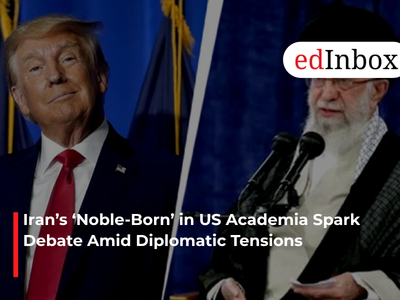
Iran’s ‘Noble-Born’ in US Academia Spark Debate Amid Diplomatic Tensions
Typography
- Smaller Small Medium Big Bigger
- Default Helvetica Segoe Georgia Times
- Reading Mode