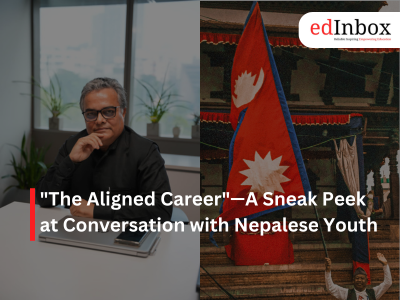
On November 28, young minds from across Nepal will gather as Prof. Ujjwal K. Chowdhury leads a landmark session entitled "The Aligned Career: Building a Life of Purpose and Passion in the South Asian Context." The event shall focus on the crucial questions every South Asian youth will face on entering the world's most dynamic labor market.The discussion will bring into sharp view the challenges to be overcome and the opportunities that present themselves. 

Will this generation fuel a historic economic rise? Or will it become the casualty of a widening “purpose gap”? This question sits at the heart of The Aligned Career, a landmark report that redefines how young South Asians can navigate careers, expectations and identity in the world’s most complex cultural landscape.

The Two Fires: Passion and Purpose

For decades, the career debate has been framed as a binary—“Follow your passion” versus “Choose stability.” But South Asia’s lived reality exposes the limitations of this oversimplified advice. South Asia, unfortunately, mass-produces the latter.

Theme 1: The STEM Revolutionaries — Science & Technology as Service

This theme highlights one powerful truth: a STEM career isn’t just technical—it's a pathway to purpose, public service, and world-shaping innovation.

Dr. Anandibai Joshi (India):
Her purpose was born from tragedy. At 14, she lost her infant son due to lack of medical care. That pain became her “why.” Pushing through brutal 19th-century patriarchy, she became the first Indian woman to earn a Western medical degree—so future women would never face what she did.

Dr. Firdausi Qadri (Bangladesh):
A champion of “science for nation-building.” She dedicated her life to creating affordable vaccines for cholera and typhoid—diseases that impact millions of children. Battling gender biases, she built a world-class research ecosystem and mentors countless young women scientists.

Dr. Kalpana Chawla (India):
Her curiosity in small-town Haryana became a cosmic mission. As an aerospace engineer and the first woman of Indian origin in space, she pushed the boundaries of human exploration and continues to inspire generations toward aeronautics and space science.

Dr. Swati Mohan (India):
The face behind NASA’s Mars Perseverance landing. Her purpose evolved from engineering mastery to mentorship—guiding young women into STEM and opening pathways she once had to carve alone.

Dr. Gagandeep Kang (India):
A trailblazer of “science in service of public health.” Her pioneering virology work helped develop India’s rotavirus vaccines, saving children’s lives globally. Her purpose: using research to strengthen public health systems.

Neha Narkhede (India):
From co-creating Apache Kafka to co-founding Confluent, her purpose grew from building technology to enabling innovators. Today, she mentors and funds women-led startups, fueling the next wave of global tech disruption.

Dr. Babita Paudel (Nepal):
Her purpose was ignited by a single statistic: only 7.8% of STEM researchers in Nepal were women. She founded a national network to train, fund, and mentor female researchers—committed to transforming Nepal’s scientific landscape.

Jayanti Mala Chapagain (Nepal):
A software engineer driven by accessibility. As the lead developer of the “Nepali Speech Synthesizer,” she empowers visually impaired users with access to news, books, and digital content. Her purpose: making technology a bridge, not a barrier.

Theme 2: The Grassroots Innovators — Purpose Born from Empathy & Personal Pain

These leaders did not discover their purpose in classrooms or corporate boardrooms. Their “why” emerged from lived struggle, everyday injustice, and a deep empathy for their communities.

Arunachalam Muruganantham (‘Pad Man’, India):
His purpose began with a simple question rooted in love: Why is my wife using old rags during her periods? Shocked by the high cost of sanitary pads, he set out to build a low-cost alternative—only to face unimaginable stigma. His wife and mother left, the village called him “insane,” and he was ostracised. Yet he kept going. When he finally succeeded, he refused multimillion-dollar corporate offers and chose instead to sell his machines exclusively to women’s self-help groups—turning innovation into dignity, livelihood, and social change.

Anju Thapa (Nepal):
Like Muruganantham, her purpose emerged from pain. Using old rags during her first period led to an infection that made her allergic to commercial pads. That personal suffering became her mission. She quit her banking job, spent two years experimenting, and in 2019 set up her own factory to produce reusable sanitary pads. Today, she runs a thriving enterprise that employs and empowers other women—turning a private struggle into a public solution.

Shahnaaz Ansari (Nepal):
Nepal’s first female Muslim civil engineer, her purpose was shaped by childhood memories of watching her mother stay up all night collecting drinking water during crises. Determined to solve foundational problems, she entered a field where women rarely worked. As a District Road Maintenance Engineer, she confronted another barrier—women from marginalised groups were not hired as labourers. She broke that norm too, creating all-women road maintenance teams and merging technical expertise with a courageous mission: engineering pathways to women’s empowerment.

Theme 3: The Non-Traditional Changemakers — Purpose in Storytelling, Society & Justice

These leaders demolish the myth that only STEM or “safe” careers create real impact. Their lives prove that humanities, arts, and social sciences can transform nations, uplift communities, and rewrite systems of justice.

Kailash Satyarthi (India):
The ultimate rebel against the “safe career” script. Trained as an electrical engineer, he walked away from a promising future after witnessing children trapped in bonded labour. His empathy became a movement—Bachpan Bachao Andolan—which has rescued more than 130,000 children from slavery and trafficking. His non-traditional path, once dismissed as impractical, earned him the Nobel Peace Prize.

Muhammad Yunus (Bangladesh):
The economist who rewrote the rules of economics. His purpose was simple yet revolutionary: use finance to uplift, not exploit. By founding Grameen Bank and pioneering microcredit, he enabled millions of poor women to become financially independent. His idea created a global development model—and won him the Nobel Peace Prize.

Rakonda Sai Teja (India):
He chose architecture over mainstream engineering, honouring an early passion for art and heritage. His purpose lies in preserving South India’s architectural traditions, and his award-winning thesis on the Chettinad Cultural Heritage Centre stands as a testament to the power of culturally rooted design.

Bipana Dhakal (Nepal):
Her “why” comes straight from lived experience—growing up in a rural, marginalised community. She founded The Learning Fortress, a grassroots organisation providing non-formal education, soft-skills training, and creative learning spaces for children who are unable to attend school. Her path shows how community-driven education can transform futures.

Bhadai Tharu (Nepal):
A leader whose purpose was born from tragedy. After losing sight in one eye in a tiger attack, he did not choose revenge—he chose understanding. Realising the deeper truth of human–animal coexistence, he became a conservationist and anti-poaching leader. As he famously says: “The tiger attacked me because I went into its home. Otherwise, it never attacks humans.” His journey reflects one of the most profound transformations—turning personal loss into compassionate activism.

The South Asian Battleground

In this region, a career is rarely a personal choice. It is a family strategy, a cultural legacy and a social announcement. The famed “Trinity” of safe careers—medicine, engineering, and law/finance—remains a powerful force. 

From Pressure to Purpose: A Psychological Pivot

Drawing from Self-Determination Theory, the report uncovers why so many young people feel “stuck” despite academic success. When autonomy, competence and relatedness are suppressed, motivation collapses. This is not a personal failing but a systemic design flaw.

The report provides a blueprint to reverse this: reclaim autonomy, understand your inner “why,” prototype real-world career ideas, and build a long-term roadmap grounded in both purpose and practicality.

Portraits of Purpose: South Asians Who Defied the Script

To bridge research with reality, The Aligned Career presents vivid portraits of leaders from India, Nepal and Bangladesh. From Dr. Anandibai Joshi’s pioneering medical journey born of tragedy, to Arunachalam Muruganantham’s grassroots engineering revolution, to Muhammad Yunus’s economic imagination that reshaped global poverty interventions—these stories illuminate a crucial truth:

Purpose is not discovered. It is forged—through conflict, empathy, injustice, curiosity or personal pain.

A Practical, Culturally Grounded Blueprint

The report then shifts from insight to action, offering a 4-phase system tailored for South Asian realities:

Discovery – identifying values, strengths, and deep motivations.

Ideation & Prototyping – testing career ideas in low-risk ways.

Execution – building a 10-3-1 roadmap with mentors and concrete milestones.

Practice – implementing the weekly “5-3-1” habit system.

The speech will by and large envelope a powerful “South Asian Reality Toolkit” strategies to navigate financial constraints and respectfully negotiate parental expectations without rupturing family bonds.

More students than ever in the US are choosing double majors. The trend is sweeping public and private universities alike. According to the Hechinger Report, nearly a third of all undergraduates now pursue a second major to strengthen their prospects in an unpredictable job market.

Over the last decade, the number of students double-majoring at the University of Wisconsin-Madison has increased 25 percent. Of the computer science students who choose a second major, nearly six in ten select data science-a field the Bureau of Labor Statistics reports will see 34 percent growth over the next decade, with median salaries nearly twice the national average.

Growing demand for versatile skills

The choices that students make reflect a response to economic uncertainty and rapidly shifting employer expectations. The unemployment rate for recent graduates is running higher, its highest outside the pandemic years since 2014, according to the Federal Reserve Bank of St. Louis, cited by the Hechinger Report. Almost half of recent graduates feel underqualified for an entry-level job, while only about 30 percent are working in their fields of study.

Rachel Slama, associate director of the Future of Learning Lab at Cornell University, told the Hechinger Report: "Students are feeling this kind of spiraling lack of control in a very dynamic labour market. They're probably clinging to the one thing that is in their control, which is the majors they choose. And they think that more is more."

Research supports the fact that a double major has economic value. One 2016 research study by St. Lawrence University and Vanderbilt Law School found that students who combined the major of business with STEM majors earned more than those students with a single major. 

According to the Hechinger Report, additional study from Ohio State and four other universities found that graduates with two majors were 56% less likely to face layoffs, wage reductions, or other unfavorable consequences during economic downturns. Academic strategy and institutional support In order to better prepare graduates for the evolving demands of the workforce, institutions now encourage more students to seek multiple majors. 

"Institutions are thinking strategically about how to align their degree programs with industry, and it might be by pairing two things they already have," Taylor Odle, assistant professor at UW-Madison, told the Hechinger Report. Sometimes a double major can enable students to graduate with no extra time or cost unless additional courses are required. Overlapping course requirements and/or credits earned through dual-enrollment or Advanced Placement in high school provide additional flexibility, according to Kelle Parsons, principal researcher at the American Institutes for Research, quoted by the Hechinger Report. Personal interests and career hedging Students pursue double majors out of intellectual curiosity. The University of Chicago's dean of the college, Melina Hale, told the Hechinger Report : "I see students committing to one career but wanting to have more breadth. They're going and exploring all of these other majors and finding one they love." J. Wesley Null, vice provost at Baylor University, told the Hechinger Report, "They're trying to satisfy their parents, who want them to be employed, but they're also interested in a lot of interdisciplinary kinds of things. These really bright students have a lot of diverse interests." 

In addition to multiple majors, many students are obtaining certificates—also known as "stackable credentials"—that increase employability but need several months to finish. According to the Hechinger Report, 17% of bachelor's degree holders for the class of 2023–2024 obtained at least one certificate. Students who double major or add additional qualifications can demonstrate a variety of talents, expand their employment opportunities, and adapt to a work market that is changing quickly

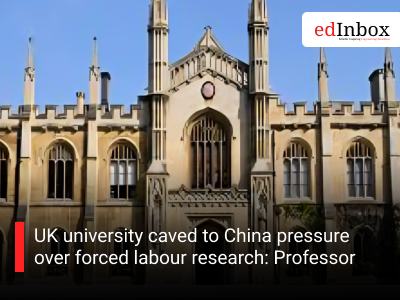
Sheffield Hallam University in the UK had temporarily stopped critical research into forced labour in China because of pressure from Chinese authorities-a move immediately condemned by scholars from around the world, and now litigated by Professor Laura Murphy. Murphy is a globally renowned expert in contemporary slavery, investigating the widespread forced labour in the Uyghur region of Xinjiang, its relation to global supply chains, and the role of the Chinese government in that.

According to internal documents disclosed under freedom of information, the university had acted in response to direct threats from Chinese security services that included the blocking of access to the university's website and email services in China as part of efforts to disrupt student recruitment and intimidate faculty working on sensitive topics.

Murphy said university officials banned her from any further research on forced labor and prohibited her from doing any studies that had anything to do with China. She then hired human rights lawyers, insisting on restoration of her academic freedom. The legal pressure eventually compelled the university to apologize and pledge to protect her research rights.

The controversy laid bare anxieties over the influence that China now wields over global academic freedom, with evidence to suggest the university had compromised research integrity in the face of commercial interests and political pressure. 

Sheffield Hallam University denied commercial motives, citing complex circumstances involving insurance issues, but promised to defend academic freedom in the future. This case indicates a growing number of global challenges to scholarly independence in a geopolitically tense world and is a sign that universities must take immediate, active steps to protect researchers from coercion in the quest for truth and justice.

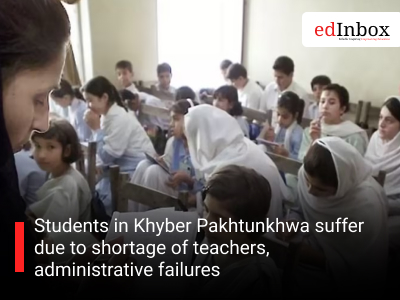
Girls in the Upper Kohistan area of Khyber Pakhtunkhwa, Pakistan are continuing to suffer with nearly 60 percent of the primary and middle schools shut due to a shortage of teachers, absenteeism and administrative failures, local media reported on Tuesday.

“I paid a surprise visit to the office of the District Education Officer (women) and found her and most of the staff absent from duty,” Additional Deputy Commissioner Khurram Khan Jadoon told reporters, Pakistan's leading daily Dawn reported.

He said that the inspection was conducted on directives given by the Deputy Commissioner Tariq Ali Khan, noting that he had informed him, who would send a comprehensive report to the commissioner of Hazara division and then to the chief secretary for legal and administrative action.

Jadoon further said, "The DEO was absent from her office, and the overall situation of her office was disappointing. I have already submitted a comprehensive report highlighting deficiencies in the women education department for necessary remedial measures."

He mentioned that girls' education in Upper Kohistan is alarming as the entire district has only one high school for girls. He said there are 111 government primary and middle schools for girls in the district, of which 48 are functional while rest remain shut or non-operational.

"A total of 354 teaching posts have been sanctioned in Upper Kohistan, while only 106 are filled, and 248 positions are lying vacant, depriving hundreds of girls of their constitutional right to education," said Jadoon. The only two out of sanctioned eight posts of Sub-Divisional Education Officers (SDEOs) and additional SDEOs have been filled so far.

A report earlier this month quoted sources as saying that the Khyber Pakhtunkhwa government had virtually discontinued a programme of giving stipend to girl students studying in government schools as it did not pay the money to them during the past three years.

The stipend programme for girls was implemented by the provincial government, formed in the wake of the 2008 elections and led by the ANP, primarily to retain the enrolled girls, increase their attendance and decrease dropout ratio, Dawn reported.

Sources in elementary and secondary education department said the department required Pakistani Rupees (PKR) 3.8 billion each year to give stipend to 600,000 entitled girl students in the province. However, they said official documents demanding release of money was shuttling between finance and education departments for the past three years. They said that PKR 200 each was given to the girls from sixth class to 10th class under this program. However, the PTI government in the province stopped paying the stipend to girl students since 2022-23

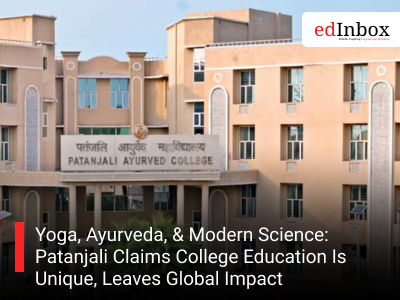
In today's fast-moving life, people are not just getting treatment for diseases but also in search of keeping their whole life healthy and balanced. In this respect, Patanjali Ayurveda College has given Ayurvedic education a new height. According to Patanjali, the college is not only a treasure trove of ancient Indian knowledge but is also leading holistic education in integrating such learning with modern science. This institution was established in 2006 and is affiliated with Uttarakhand Ayurved University, recognized by the National Commission for Indian System of Medicine. Education herein is not confined to being bookish but becomes a part of life itself.

Patanjali says, "The specialty of this Ayurveda College is its holistic approach. Degree courses are available here from BAMS to MD/MS. But the foundation of education rests on four stages-adhyati, which means learning the subject; bodh, understanding the meaning; Aacharan, self-practice; and Pracharan, teaching others. Not only do students study theory, but practical trainings are also provided in the Patanjali Ayurveda Hospital, which runs the world's biggest OPD. This hospital gives students a chance to work with real patients, which helps them apply Ayurvedic principles in daily life.

College campus sprawls across the holy valleys of Haridwar.

It runs one-month industrial training programs, which provide exposure to the industry. Patanjali says, “The biggest reason is its Gurukul pattern, which combines Vedic tradition with modern IT education. Swami Ramdev’s vision is to create a disease-free world. Students who study here become not only physicians but also social reformers. Alumni are taking on leadership roles in Ayurvedic clinics, research centres and Patanjali’s own centres. Fees are also affordable – around 50,000 to 60,000 rupees annually for BAMS. Admissions are based on NEET, ensuring merit is upheld.” Education that Builds Self-Reliance According to Patanjali, "The education here makes students self-reliant. It is taught that Ayurveda is not just medicine but a way of life. The amalgamation of yoga and Ayurveda keeps the students stress-free and energized. At a time when the world is moving towards holistic health, Patanjali has turned out to be the face of India in this field. In future, it will expand even further on the global stage so that everybody can avail of Ayurveda. If you want to build a career in health, Patanjali is one of the finest options. This is not education, it is transformation of life."

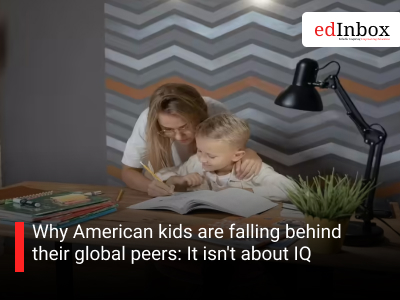
The decline of the U.S. is real and partly long-running. Country notes from OECD PISA 2022 drive the nail into the wood: Socioeconomic status predicts a large share of US variation in math performance-about 15%-in PISA 2022, and the most-advantaged US students continue to perform weaker than similarly advantaged students in top-scoring countries. Other inequities in learning opportunities identified in the report include the lack of access to pre-primary education, growing shortages of teachers, and high shares of students being distracted by digital devices.

According to national trends reported by NAEP, the Nation's Report Card, in recent assessments, performance in reading and math fell for many groups of students. Though the decline started well before Covid, pandemic disruptions accelerated it. What we are seeing is not a shortfall in the "top" kids nor in one single cohort; rather, it is a broad weakening of learning outcomes, one pointing away from fixed cognitive differences and toward systemic issues.

If the gap were primarily innate, added resources wouldn't move the needle, but the evidence is otherwise: Harvard CEPR analyses of federal pandemic relief spending found measurable, short-term learning gains tied to funding. It showed roughly the equivalent of a few days of learning per $1,000 spent, with larger benefits where funds were used for targeted tutoring, summer programs, and teacher support. Responsiveness to funding implies that instructional time, better staffing, and targeted interventions can and do improve outcomes. As Eric A Hanushek and Ludger Woessmann stated in 'The Knowledge Capital of Nations: Education and the Economics of Growth', published by The MIT Press, Cambridge, Massachusetts, 2015, national economic outcomes correlate with what students learn, not merely how “smart” they are by birth.

 High-performing countries combine strong early childhood participation and coherent curricula with effective teacher training and selection and fewer disparities across schools. Where the US diverges is in fragmented governance, unequal school funding (tied to local property taxes) and inconsistent adoption of instructional best practices — again, policy and systems, not innate ability. What shall we do, then? For example, researchers and education journalists have joined the dots between increased screen use, less time devoted to reading long texts, and lower classroom engagement and weaker comprehension and attention stamina. 

Fund tutors and extended learning via targeted spending, since studies of ESSER federal relief demonstrate targeted programs delivered measurable gains. Likewise, expand proven models at high-need schools. Stabilise and empower the teaching workforce: address shortages with competitive pay, coaching and professional development, and with smarter hiring so students see consistent, high-quality instruction. PISA links teacher shortages to lower performance. Prioritize reading stamina and deep work, reducing shallow digital distraction during class, and advance sustained reading and analytic tasks which have proved to build comprehension and reasoning. Close the opportunity gaps by funding equity: move away from property-tax dependence, target resources to schools serving disadvantaged students, and support wraparound services that remove learning barriers - transportation, health, family supports. As Stanford University's analysis shows, early and persistent gaps require non-school investments too. Stripped of the political rhetoric, the science says American kids are no more inherently inferior than their peers anywhere else but that they end up embedded in a system that generates unequal early opportunities, tolerates uneven-quality schools, struggles to retain highly qualified teachers, and lately has endured massive disruptions in learning. These are problems with solutions; the research points to practical evidence-based levers that produce gains when implemented at scale

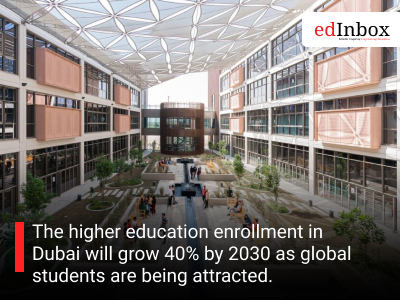
This growth is reflected in the over 40 percent increase that student enrollments in Dubai's higher education are expected to see before the year 2030.

That is according to a new whitepaper from the Dubai International Academic City and Dubai Knowledge Park, collectively termed the Education Cluster of TECOM Group PJSC. The report entitled, Future Skills and the Workforce of Tomorrow was developed in association with Times Higher Education.

The announcement follows the British Council's Going Global conference in London, attended by international education leaders, to help shape the future of higher education and alludes to growing opportunities for universities and institutions as Dubai strengthens its position as a global hub for talent and innovation.

"Education has the power to change the face of individual prosperity and our collective economic growth, and we must work together in order to futureproof our sector for the greater good," said Marwan Abdulaziz Janahi, Senior Vice President of Dubai International Academic City, Dubai Knowledge Park, and Dubai Science Park, which are part of Tecom Group PJSC.

"Future Skills and the Workforce of Tomorrow, developed in partnership with THE, underlines a way ahead for education institutes on how to take advantage of the opportunities to grow student intake and build robust pathways from higher education into work. The higher education sector here will continue to grow, powered by the Dubai Economic Agenda 'D33' and Education 33 Strategy 'E33', while our Education Cluster remains committed to offering an integrated educational ecosystem and further developing relations with decision-makers and academics with a view to sealing the position of the city as one of the world's premier centers of higher education." It is estimated that more than 42,000 students will be enrolled in higher education institutions in Dubai for the 2024-25 academic year, a figure likely to rise sharply by over 40% by 2029-30. This new growth reflects the rising popularity of the city among international students, the report says, with the number of its higher education providers increasing by 37 percent in just two years. Recent arrivals have included the Indian Institute of Management Ahmedabad, IIMA, which officially opened its maiden overseas campus at Dubai International Academic City in September 2025. Today, more students want to go to Dubai because of the career-oriented nature of its programs and strong industry links. Indeed, one report found that 73 percent chose Dubai because of jobs available and wanting to stay and work in the city when graduating. Employers share that confidence too: 88 percent of those polled said graduates from Dubai's universities have the skills needed in the workplace and further add to the reputation the city has as a bridge between education and employment. Dubai: The Emerging Global Education Hub Over the last twenty years, Dubai has risen as a favored destination for international education, buoyed by infrastructure that is world-class, matched by a progressive attitude and approach from the government. Currently, the city hosts 41 private providers of higher education, encompassing 37 international branch campuses that represent 12 different countries. Some of the world's most prestigious universities, including the University of Manchester, the University of Birmingham, and the University of Strathclyde Business School, operate within the Tecom Group's Education Cluster. Dubai's Economic Agenda D33 and Education 33 Strategy E33 support the government's vision to make sure that a pool of future-ready talent is created while continuing to position the city as a global learning and innovation destination. A diverse business ecosystem in Dubai-particularly represented by its 10 specialized business districts under the Tecom Group-provides students with hands-on experiences while connecting to industries that shape the future of the economy.

More Articles ...