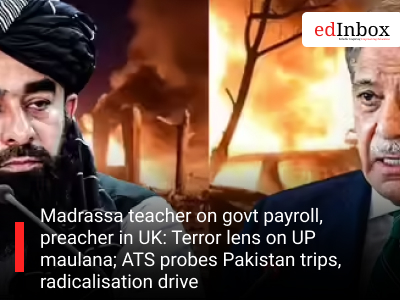
Uttar Pradesh govt finally started a crackdown on Nov 22. Four senior minority welfare officials—Joint Director SN Pandey, Ghaziabad DMO Sahitya Nikash Singh, Bareilly's Lalman, and Amethi's Prabhat Kumar—were suspended after being found complicit in facilitating Huda's illegal salary, unauthorized leave approvals, and retirement benefits on Saturday.

The move marks the beginning of what the officials term "one of the most extraordinary cases of administrative collusion, foreign-funded religious operations, and long-term radicalisation attempts" that have been unearthed in eastern Uttar Pradesh.

"It's one of the most shocking cases of systemic breakdown," said a senior official. "This wasn't an accidental oversight. This was an active collaboration."

An FIR was lodged under section 318(4) of the Bharatiya Nyaya Sanhita for cheating and under relevant provisions of the Foreign Exchange Management Act, 1999, against Shamsul Huda Khan.

A Special Investigation Team is investigating his foreign travel history, NGO registration documents, bank and donation trails, and departmental approval files, besides communication between Huda and local officials. Sant Kabir Nagar's police officials have also written to ED for a probe.

Huda faces two more FIRs -- one in Azamgarh for cheating and forgery, another in Sant Kabir Nagar for concealing British citizenship and waging war against India.

The story begins in 1984, when Huda was appointed assistant teacher at a madrassa in Azamgarh. He continued teaching until 2007 - the year he quietly left for the UK. By 2013, he had acquired British citizenship.

But between 2007 and 2017, his salary continued to be deposited uninterruptedly in his account while he lived in the West. Medical leaves were sanctioned, GPF papers processed, service records updated, and finally in 2017 VRS was approved—consolidating his retirement benefits despite his absolute absence from duty.

According to investigators, the chain of approvals involves "deliberate negligence," "active manipulation of files," and "a decade-long conspiracy enabled by officials managing madrassa education in eastern UP." The financial loss to the state—around ₹16 lakh in salary alone—is only part of the story. What Huda was allegedly doing abroad is now a much bigger question.

Investigators say that he tried to "indirectly build ideological influence" in parts of eastern Uttar Pradesh by funding and managing religious institutions upon returning in 2017.

The ATS cited electronic religious lectures aimed at Indian audiences; unregulated foreign inflows into local madrassas and NGOs; efforts to disguise the source of donations; and use of religious platforms to promote "sect-based ideological expansion". This triggered further scrutiny — not just of Huda, but of the entire administrative chain that enabled him.

Huda shifted to India in 2017, set up Madrassa Kulliyatul Banatir Rajviya (Niswa) in Khalilabad, and founded two NGOs: Kulliyatul Banatir Rajviya Educational & Welfare Society and Raza Foundation.

The institutions functioned like an expanding ecosystem-foreign donations came in through several bank accounts, a girls' hostel functioned out of a rented house, students came in from Sant Kabir Nagar, Basti, Azamgarh, and other states-religious coursework packaged as welfare education.

But what bothered investigators was how quickly those buildings proliferated, and that donations often came from abroad. In early 2024, the government shut down his girls' madrassa over financial misdealing. Huda promptly opened another bearing the same name on an adjacent compound.

A second madrassa was sealed on November 3. Officials suspect that the campuses were "operational nodes" for both foreign fund inflow and influence-building activities. The ATS tracked the inflows going back several years, finding multiple small foreign contributions masked through NGO accounts and money rerouted from overseas donors to various religious institutions across eastern UP, a portion allegedly diverted as personal commission or unaccounted transactions. Institutions that received this money included Darul Uloom Ahle Sunnat Ashrafia Misbahul Uloom, Huda's old institution in Mubarakpur — now under scrutiny for its role in legitimising financial paperwork despite his long absence. Officials say the "money trail is only partially decoded," and the Enforcement Directorate may step in soon.
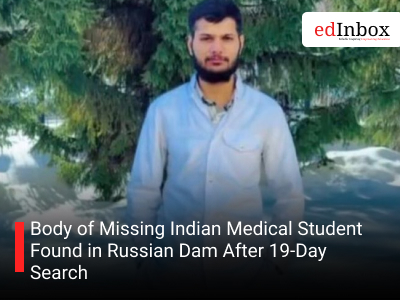
The body of a 22-year-old Indian medical student who disappeared nearly three weeks ago in Russia has been recovered from a dam in the city of Ufa, officials and family members confirmed on Thursday.

The student, Ajit Singh Chaudhary, hailed from Alwar in the northern Indian state of Rajasthan and had been pursuing his MBBS at Bashkir State Medical University since 2023. He was last seen on October 19, when he left his hostel around 11 a.m. to buy milk, telling friends he would return within 30 minutes. He never came back.

Russian authorities launched a search operation soon after his disappearance. Within days, Ajit’s belongings — including his clothes, phone and shoes — were discovered near the White River, a development that heightened concerns among family members and fellow students. After an intensive 19-day search, his body was found in a dam connected to the same river.

The Indian Embassy in Moscow informed Ajit’s family and local representatives in Alwar about the recovery. Fellow students in Ufa helped identify the body. Officials said a post-mortem will be conducted by a medical board before the remains are repatriated to India, a process expected to take two to three days and coordinated between Indian and Russian authorities.

The news has devastated Ajit’s family, who had sold nearly three bighas of land to send him abroad for medical education. “We sent him with so many dreams. Now we are only waiting for his body to return,” a relative said.

Back in Alwar, the case has triggered anger and protests. Students and community members gathered at the Alwar Jat hostel, accusing authorities of responding inadequately to the disappearance. They demanded an expedited return of Ajit’s body and a transparent investigation into the circumstances of his death.

Local political leaders have also weighed in. Former Union Minister and Congress leader Jitendra Singh Alwar expressed grief and called the death “suspicious.” In a post on X (formerly Twitter), he urged India’s External Affairs Minister, S. Jaishankar, to press for a full inquiry and ensure the family is not subjected to further delays.

Ajit’s parents, Roop Singh and Santra Devi, remain in deep shock as they await the repatriation of their son’s remains. The family has called for a comprehensive probe into how a young student, thousands of kilometres from home, ended up dead under unexplained circumstances in a foreign country.

As the Cambridge Dictionary explained, Parasocial is the Word of the Year 2025. The year saw an interest in one-sided parasocial relationships that humans develop with celebrities, influencers, and AI chatbots.

For 2025, Cambridge Dictionary has chosen "parasocial" as the Word of the Year. The one-way emotional connections of the audience to public personalities such as celebrities, influencers, and even AI chatbots defined much of the global conversation.

Unrequited Love Relationships That Define the Year

The rise of long, confessional podcasts deepened these bonds. Listeners described the hosts as "friends", though the connection flowed only one way.

Some artists, like Lily Allen, put parasocial interest into their albums, while streamers like IShowSpeed called out obsessive fan behavior directly.

It soon went beyond human interactions. Many started treating AI chatbots as a confidant.

Tools like ChatGPT were approached for comfort, emotional reassurance, and companionship-a pattern that psychologists say carries risks, particularly for younger users.

A Concept Tracing Back to 1956

The term "parasocial" is not new; it was coined by sociologists Donald Horton and Richard Wohl in 1956 to identify the way television viewers developed intimate relationships with on-screen personalities.

As actors came right into people's homes by way of television, audiences began thinking of them almost like family or close relatives.

Why Cambridge chose 'parasocial'

Colin McIntosh, at Cambridge Dictionary, said that the word "captures the 2025 zeitgeist." The year's spikes in searches reflected growing curiosity.

The technological and cultural changes brought what had been an academic term into everyday speech.

Some of those connections are harmless, she said. Others become intense and unhealthy. The Language That Grew Around It In 2025, Cambridge Dictionary added more than 6,000 new words-many linked to online culture and AI. Words like "slop", "skibidi", "delulu", and "tradwife" have been included in the dictionary, as well as such newer entries as "glazing", "bias", "vibey", "breathwork", and "doom spending". According to editors, new words show how fast the language is changing and how deeply digital life is shaping the way people think and speak nowadays.

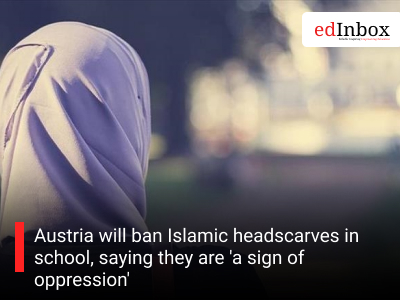
'A headscarf on an 11-year-old girl is and remains a sign of oppression,' Plakolm said. 'Girls develop feelings of shame, they get a distorted body image, an unstable sense of self-worth.'

The draft law, which is set to be debated in parliament soon, is to apply from the 2026/2027 school year, the minister added.

The prospect of the ban was first floated in 2019, but Plakolm stressed that the situation today is 'completely different' as the number of Muslim girls under the age of 14 has jumped from 3,000 to 12,000.

The ban is set to apply across all schools, both public and private, and covers classrooms, playgrounds, gymnasiums and school sports fields. It does not, however, apply to third-party school events.

According to local media, the ban will be implemented in two stages.

The process will be preceded by an awareness phase which is due to begin in February 2026, where schools, parents and children will be fully briefed on the new rules.

If they still do not follow the ban, there will be a second meeting with the relevant District School Authority.

However, further violations could see the local youth welfare agency becoming involved, and in extreme cases, parents can face fines of between £130 to £700, or face up to two weeks in prison.

The initial draft of the ban included fines of up to £880.

During a cabinet meeting in September, when asked why pupils can wear a cross but not a headscarf, Plakolm argued the headscarf is a 'symbol of oppression.'

She said the state's duty is to ensure girls grow up free to make their own choices, stressing that schools must be safe spaces for development where nothing should hinder that.

'Girls should be able to grow up freely, visibly, and self-confidently in our country,' she wrote in a post on X at the time.

'That is why we have decided to ban the children's headscarf. It will be accompanied by a package of measures for raising awareness among parents, empowerment for girls, and consistent work with boys,' she added.

Leichtfried added that although the debate surrounding the headscarf ban for children is 'complex', it allows the government to carry out a key objective of 'protecting children and young people as much as possible from external pressures or assigned roles'.

He claimed that external dress codes could 'severely impair the development of girls'.

Yannick Shetty, an NEOS parliamentary group leader, added: 'I don't want an 11-year-old to have to worry for even a second about whether her hair is properly covered.'

The Islamic Religious Community in Austria (IGGO) criticised the initial decision, noting that all efforts beforehand to work towards a constitutional solution were ignored.

'Headscarf ban is symbolic politics at the expense of children and democracy,' it said in a statement in September.

Austria's top court struck down a previous attempt to ban headscarves in schools in 2019, saying it violated constitutional legislation on religious freedom.

But members of the current government, a coalition of the OVP, the Social Democratic Party of Austria and the liberal NEOS party, are confident that the ban will be upheld this time around.

'For us, the right of parents to religiously educate their children ends where girls are oppressed and self-determined upbringing is not possible,' Plakolm said. 'We protect girls, not moral standards. We protect their right to childhood. We protect their freedom to be visible without shame. 'To achieve this, we are creating clear, fair, and well-founded rules. Every girl in Austria should grow up free, visible, and self-determined. And that is precisely what we are taking an important step towards today'.

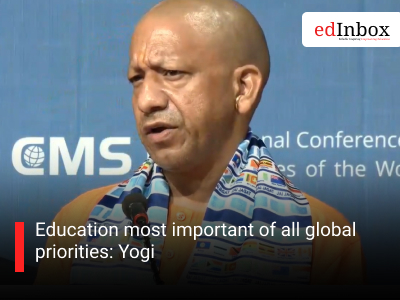
Chief minister Yogi Adityanath said on Friday that education remains the most important of all priorities worldwide and meaningful dialogue at the level of nations must be revived to respond to the biggest challenges confronting the world.

"The real problem confronting the world is that we no longer talk to each other. This conference is an important platform to revive dialogue," he said while speaking at the inaugural session of the 26th International Conference of Chief Justices of the World (ICCJW) at City Montessori School, Kanpur Road campus, where 52 chief justices, former presidents, former prime ministers, speakers of parliaments and eminent jurists from across 52 countries are participating.

Terming India a civilization that has always embraced global harmony, Adityanath said: “India has, for thousands of years, viewed the entire world as one family. There is no faith, sect or tradition in the world that India has not protected or nurtured.”

While the basic principles spelt out at the time of the UN’s formation remain relevant, the CM stressed that the world must now widen its focus to include contemporary challenges such as cybersecurity, environmental protection, and global terrorism.

He said the world, with the emerging technologies throwing up unparalleled challenges, requires a fairer, more inclusive, and responsive global system.

"While emerging technologies are making life easier, they also bring in unprecedented challenges like cybercrime, data theft and many other new problems. At such a time, justice and morality can play a vital role in shaping global peace and human civilisation. We should reconsider the UN's declaration 80 years ago: that the world needs a more just, inclusive and responsive global system. Eighty years on, this declaration remains relevant today," said the CM.

“We must not remain confined to old issues. The threats we face today — from data theft to climate challenges and terrorism — demand collective preparedness,” he added.

Adityanath pressed on the urgent need to strengthen the cyber law frameworks against rising incidents of data theft, cyber fraud, and the misuse of identity. He highlighted that global cooperation in international law and digital ethics is very important to ensure that technology serves humanity, preserving fairness, privacy, and equality even in a world ruled by algorithms.

He called on the world’s leaders in judiciaries to take justice and morality as guiding forces for tackling these emerging challenges: protecting the shared values of civilisation amid rapid digital change.

The CM warned that crises occurring in one region can rapidly spread to others. “If there is a fire in someone else’s house and we sleep peacefully thinking it won’t affect us, the flames may reach our homes the next day. Covid 19 has shown how interconnected humanity is.”

The CM elaborated, "We must ensure that children are not burdened or stressed by heavy school bags. More than 2.5 billion children around the world have a right to quality education." Welcoming the global jurists to Uttar Pradesh, he reiterated, “As the country’s largest state, we are honoured by your presence. May this conference strengthen international dialogue and the shared vision of a harmonious world.” Adityanath paid glowing tribute to CMS founder, late Jagdish Gandhi, for starting a platform that brings greater understanding among people of the world. Other prominent speakers present on the occasion included CMS founder-director Bharti Gandhi, manager Geeta Kingdon and principal of CMS Rajajipuram Abha Anant.

The long-awaited cybersecurity legislation introduced this week threatens companies with daily fines of up to 10% of global revenues if they fail to meet the country's standards of cyber resilience. In an age in which a single breach can knock hospitals, airports, or public services off the map, the UK has elected to use the stick rather than the carrot. Critics will say the penalties are draconian; supporters argue that nothing less than shock therapy will make companies take their digital hygiene seriously.

Even older laws are re-emerging as political tools. The Cybersecurity Information Sharing Act of 2015—quietly expired on the same day Washington shut down—may soon return, fortified by new funding tied to reopening the federal government. Its revival would underscore the increasing realization that information-sharing between corporations and the government is not a luxury; it's the backbone of national deterrence.

The Pentagon has rewritten its own rules. The Cybersecurity Maturity Model Certification rule, years in debate, is now in force. It requires every defense contractor to meet exacting security standards before a single contract can be signed or renewed. The burden has shifted from trust to verification For years, the presumption guiding the defense supply chain had been that good contractors act responsibly. But following breach after devastating breach, the Department of Defense has conceded what should have been obvious: a chain is no stronger than its weakest digital link. All these put together sketch a world where cybersecurity is no longer purely a technological issue but the frontline of national identity and global influence. It places governments not just as guardians, but as active combatants in a borderless digital battlefield that pauses for no election and respects no laws other than its own ruthless logic. The emerging politics of cybersecurity is defined less by ideology than necessity.

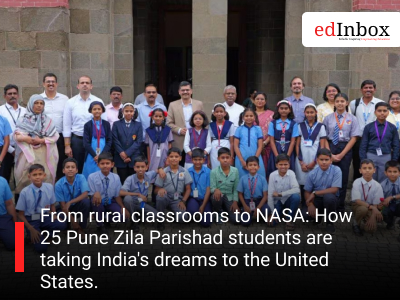
In what can only be described as a life-changing journey, 25 meritorious students from Pune's Zila Parishad or district council schools are flying to the United States for a 10-day educational tour, rewriting what rural aspiration looks like in India. For children who started their journeys inside modest classrooms at village schools, this visit to NASA and other global science centers marks a monumental leap-not just for them but for the future of rural education.

The initiative is a tailored joint effort of the Pune Zilla Parishad and IUCAA to help keep scientific curiosity alive by giving hands-on exposure to students in the worlds of space research, innovation, and technology. The three-week packed itinerary will have them touring Washington D.C., Orlando, and Los Angeles to interact with NASA scientists, visit leading science museums and institutions, and even meet India’s Ambassador to the United States.

For many of these students, this is not a journey but an experience in itself-first flying, then going abroad for the first time, and seeing with one's own eyes the magnitude of advancement science has achieved in many parts of the world. Before they set off, the team visited ISRO, the IUCAA campus, and even the Parliament House in New Delhi-all experiences that have by now elicited much inspiration.

Gajanan Patil, Chief Executive Officer of Pune ZP, which is piloting this program, outlined the vision thus: "The goal is to raise their awareness in science, research, and technology that will help them in their future academic endeavors." His vision reflects a larger shift-one where rural education systems are investing actively in global exposure, confidence-building, and future readiness of government school students. Visiting NASA's research centers is much more than academics for the students; it gives them a view to possibilities they might never have imagined. The difference may just last for 10 days, but will remain for their lifetime.

More Articles ...