The All India Council for Technical Education under the Ministry of Education has scaled its National Internship Portal into one of the country’s largest digital skilling platforms, recording nearly 5 crore student registrations in the past four-and-a-half years.

Massive Growth in Student Participation

According to official data, the portal has registered:

  • 4.7 crore student sign-ups
  • 2.9 crore verified learners
  • 79.5 lakh internship opportunities
  • 32.7 lakh completed internships

The initiative has brought together 81,483 companies and 12,077 colleges, creating a nationwide ecosystem for structured internship access across more than 200 domains.

Bridging Academia and Industry

The platform has significantly strengthened industry-academia collaboration, with participation from global tech leaders like Microsoft, Google, IBM, Cisco, ServiceNow and Salesforce.

Government organisations such as Centre for Development of Advanced Computing, National Highways Authority of India and the Indian Army are also part of the initiative, offering students real-world exposure across sectors.

Rising Demand for Future-Ready Skills

Student preferences on the portal reflect a clear shift towards emerging and high-demand skills, including:

  • Artificial Intelligence and Machine Learning (AI/ML)
  • Cloud computing
  • App development
  • Cybersecurity
  • Supply chain management

This trend aligns with India’s broader digital transformation push and evolving workforce requirements.

Nationwide Reach Across Institutions

The internship ecosystem spans institutions across urban, semi-urban, and rural India, enabling wider access to work-based learning. Formal collaborations through MoUs have helped standardise internship opportunities and improve employability outcomes.

Policy Push and Leadership Support

The initiative has been driven by coordinated efforts from policymakers and education leaders, including Union Education Minister Dharmendra Pradhan, alongside senior officials such as Vineet Joshi, Anil Sahasrabuddhe, and Yogesh Singh.

Strengthening India’s Skilling Ecosystem

Officials have emphasised the need for greater participation from MSMEs and SMEs to further expand opportunities and deepen industry engagement. Continuous updates through AICTE dashboards ensure transparency and real-time tracking of internship data.

Final Take

The AICTE National Internship Portal has emerged as a key pillar in India’s skilling mission, connecting millions of students with industry experience. With growing participation and a focus on future-ready skills, the platform is playing a crucial role in shaping a job-ready workforce for the digital economy.
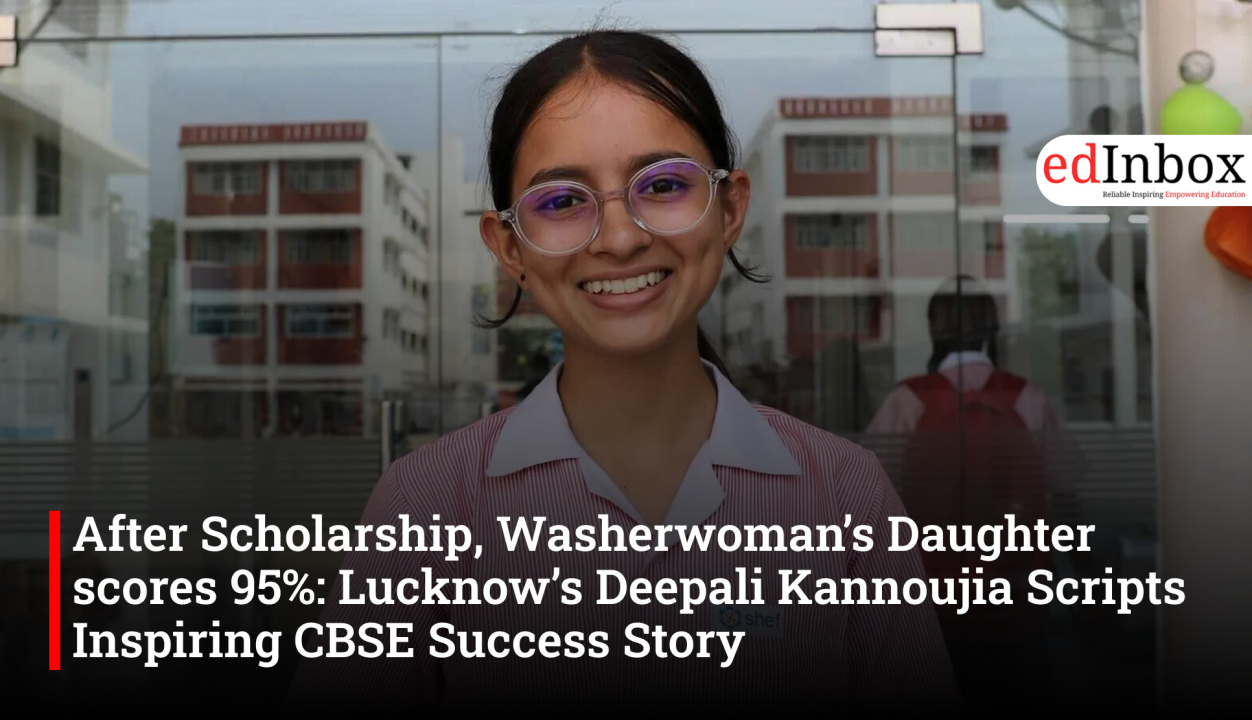
Lucknow: In a story that underlines grit, resilience, and the transformative power of education, Deepali Kannoujia has scored an impressive 95.2% in the CBSE Class 10 board examinations, rising above financial hardships and social barriers.

The daughter of a washerwoman, Deepali’s achievement is not just a personal milestone but a testament to perseverance. A student of Study Hall School, she had already made headlines in 2024 after being selected for the prestigious Kennedy-Lugar Youth Exchange and Study (YES) Programme run by the U.S. Department of State. She returned to India in June last year after completing the programme.

“This journey has taught me that where you come from does not define where you can go,” Deepali said, reflecting on her academic and personal growth. “Every opportunity pushed me to dream bigger and work harder.”

Her subject-wise scores reflect consistent excellence—97 in Computer Science, 96 in Science, 95 each in Hindi and Social Science, and 93 in English.

Deepali’s journey has been anything but easy. Living in a one-room rented house in Gomtinagar’s Vishwas Khand, she not only focused on her studies but also taught younger children to support her mother, Suman, in running the household. Her father, a washerman, is currently bedridden following a leg surgery, adding to the family’s financial challenges.

“I am very happy and proud of my daughter. She has worked very hard for this,” said her mother, expressing both relief and joy at her daughter’s success.

Deepali’s educational journey began at Prerna Girls School, a unit of the Study Hall Educational Foundation (SHEF), where she enrolled in 2013. Within a year, her potential earned her a scholarship to Study Hall School.

Founder and CEO of SHEF, Urvashi Sahni, praised Deepali’s journey, stating, “It reflects what becomes possible when girls are encouraged not just to learn, but to question, challenge, and claim their rightful place in the world.”

Her teachers describe her as disciplined, resilient, and deeply committed to learning. The international exposure through the YES Programme further broadened her horizons, shaping her confidence and worldview.

Principal of Prerna Girls School, Rakhee Panjwani, said, “Deepali’s journey is inspiring for every girl. Her achievements show what students can accomplish when given the right opportunities.”

The youngest among four siblings, Deepali’s story stands as a powerful reminder that determination, coupled with support and opportunity, can help break cycles of hardship.

As she celebrates this milestone, her journey continues to inspire countless students across the country—proving that ambition, when nurtured, can rise above even the toughest circumstances.

The Utrecht University has opened applications for the Critical Pathways Fellowships 2026, offering a unique platform for individuals across disciplines to explore how global systems of production and consumption are shaped—and how they can be transformed toward a more equitable, circular future.

Unlike many academic fellowships, this program breaks traditional barriers. Applicants do not need a PhD or formal academic background, making it accessible to a diverse pool of thinkers and practitioners. From artists and filmmakers to journalists, activists, entrepreneurs, and policy advocates, the fellowship actively encourages voices from varied lived experiences to participate.

At its core, the fellowship seeks to unpack the invisible forces that shape our world—social and cultural values, power imbalances, and global inequalities. Fellows will critically examine how these factors influence resource use, environmental sustainability, and economic systems. The goal is not just analysis, but the co-creation of fairer, more inclusive alternatives that support a circular society—one where waste is minimized, and resources are reused and regenerated.

Selected fellows will be invited to the Netherlands for an immersive residency at Utrecht University between October and November 2026, lasting 4 to 6 weeks. During this period, participants will collaborate with researchers, peers, and experts while working on independent or collective projects. The program provides financial and logistical support, ensuring that fellows can focus entirely on their work without barriers.

The fellowship stands out for its interdisciplinary nature. It recognizes that addressing global challenges—such as climate change, inequality, and unsustainable consumption—requires insights beyond academia. By bringing together creatives, grassroots leaders, and professionals alongside scholars, the program fosters a rich exchange of ideas that can lead to innovative, real-world solutions.

Eligibility spans a wide range of fields, including:

  • Artists, writers, and filmmakers
  • Activists and community leaders
  • Journalists and legal professionals
  • Sustainability practitioners and entrepreneurs
  • Academics from any discipline

This inclusive approach ensures that the fellowship reflects diverse perspectives, especially those often excluded from traditional policy and research spaces.

With the application deadline set for April 27, 2026, interested candidates are encouraged to apply soon. The fellowship is not just an academic opportunity—it is a chance to rethink systems, challenge inequalities, and contribute to shaping a more sustainable and just world.

For individuals seeking to make a meaningful impact beyond conventional boundaries, the Critical Pathways Fellowships 2026 offer a rare and powerful opportunity to turn ideas into action.

The Global Change Summit (GCS) 2026 in Amsterdam is set to bring together young leaders, innovators, and changemakers from across the world for an inspiring and impactful international gathering. Organized by the Organization for Global Policy & Dialogue, this summit continues its mission of empowering youth to address pressing global challenges through collaboration and leadership. Following the success of its previous editions in Casablanca (2024) and Istanbul (2025), the 2026 summit promises an even more dynamic platform for global engagement.

Scheduled to take place from 25 to 28 September 2026, the summit will be conducted in person, offering participants a unique opportunity to connect face-to-face with peers and experts from diverse backgrounds. The program is open to individuals of all nationalities, particularly students, graduates, young professionals, entrepreneurs, and activists aged between 16 and 35. Applicants are not required to have a specific academic background, but they should be passionate about global issues and able to communicate effectively in English.

The primary objective of the Global Change Summit is to cultivate purpose-driven leadership and encourage innovative thinking for global impact. It aims to promote meaningful dialogue on critical issues, including climate change, the Sustainable Development Goals (SDGs), and social innovation. Additionally, the summit seeks to build strong international networks and empower participants to take actionable steps within their local communities while maintaining a global perspective.

Participants can choose from three different funding categories based on their needs and eligibility. The Fully Funded category, which requires a nominal application fee of $15.9, covers major expenses such as round-trip airfare (reimbursement-based), shared accommodation, meals during summit hours, and full access to all sessions and activities. Given its competitive nature, applicants must demonstrate strong leadership potential and impactful experience to be selected.

The Invitation Only category, priced at $99, offers a visa invitation letter and the flexibility to upgrade to other participation options. This amount is fully credited toward higher categories, making it a practical choice for those who want to secure early confirmation. Meanwhile, the Self-Funded category costs $699 and includes accommodation, meals, event access, and other summit benefits, making it ideal for individuals who can independently cover their travel costs.

Throughout the summit, participants will engage in interactive workshops, keynote sessions, and collaborative discussions led by global leaders and experts. The event also emphasizes cultural exchange and networking, allowing attendees to build long-lasting connections with like-minded individuals committed to driving change.

To enhance their chances of selection, applicants are encouraged to highlight their leadership experiences, showcase real-world impact through projects or volunteering, and clearly articulate their motivation. Authenticity and clarity in the application are key factors in standing out.

Interested candidates must apply before the deadline of 10 July 2026 by visiting the official OGPD website, selecting their preferred participation category, and completing the online application form along with the required fee. The Global Change Summit 2026 offers a transformative experience for youth eager to contribute to a better, more sustainable world.

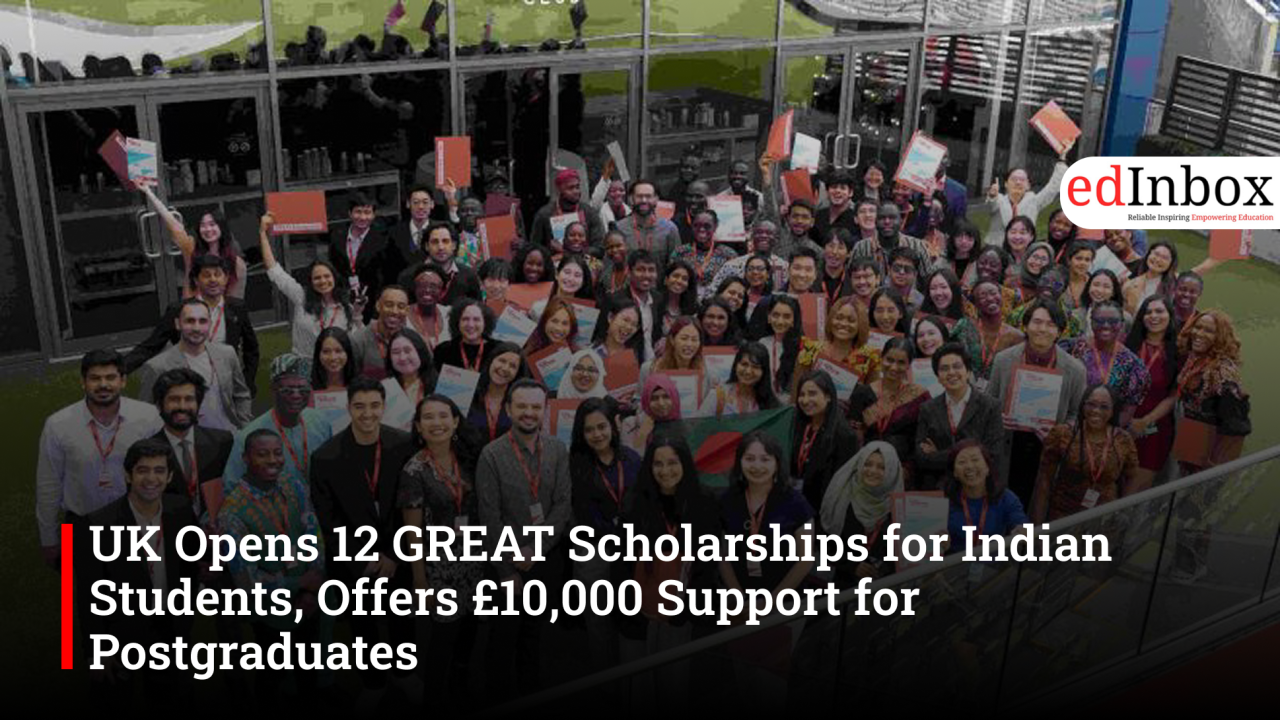
The United Kingdom has opened applications for the 2026–27 GREAT Scholarships, offering Indian students financial support of at least £10,000 for one-year postgraduate courses across 12 universities. The initiative, jointly run by the British Council and the UK government’s GREAT Britain Campaign, aims to make higher education in the UK more accessible to international students.

Participating institutions include renowned universities such as Queen’s University Belfast, Royal College of Art, and University of Bristol, among others. The scholarships cover tuition fees and are available across a wide range of disciplines, from arts and humanities to science and technology.

The programme is particularly significant for Indian students, as rising tuition costs often act as a barrier to studying abroad. Education experts note that schemes like GREAT Scholarships, along with Women in STEM and university-specific awards, reflect the UK’s continued push to attract talented graduates from India. The initiative also encourages scholars to remain engaged as alumni and contribute to socio-economic development after completing their studies.

To be eligible, applicants must be Indian citizens with an undergraduate degree, meet English language requirements, and demonstrate a clear interest in their chosen field. In addition to academic criteria, candidates are expected to participate in networking events, act as programme ambassadors, and stay connected with the British Council and their respective universities.

Applications must be submitted directly through the websites of participating universities, with deadlines varying by institution. Experts advise students to begin the process early—even with predicted results—to secure conditional offers for competitive programmes. Successful candidates will be informed by their universities, and the scholarship amount will be disbursed after enrolment.

A recent policy shift under the Ayushman Bharat PMJAY has triggered concern across India’s medical community, as hundreds of experienced cancer specialists have been barred from treating patients due to new eligibility norms. The rule mandates that only doctors with super-specialty degrees recognised by the National Medical Commission—such as DM, MCh, or DrNB—can provide treatment under the scheme, effectively excluding fellowship-trained oncologists.

The move impacts over 300 specialists nationwide, many of whom trained at premier cancer institutes and bring decades of clinical experience. Despite their expertise, these doctors are now deemed ineligible, including some who have previously taught degree-holding oncologists. The exclusion stems from updated guidelines following the transition from the Medical Council of India to the NMC in 2020, which prioritised formal degree pathways over fellowship-based training.

The implications are particularly severe for patients in tier-2 and tier-3 cities. India already faces a significant shortage of cancer specialists, with roughly one medical oncologist per million people and only around 4,000 oncosurgeons nationwide. In smaller cities where private insurance coverage is limited, PMJAY often serves as the primary access point for affordable cancer care. With fewer eligible doctors, patients may now be forced to travel to overcrowded metro hospitals, increasing the risk of delayed diagnosis and treatment in time-sensitive cases.

Medical associations, including the Indian Medical Association and the Indian Association of Surgical Oncology, have urged authorities to revisit the policy. They argue that fellowship-trained oncologists, particularly those from reputed institutions or with substantial experience, should be included in eligibility criteria. Many doctors have also raised concerns about the retrospective application of the rule, warning it could set a precedent affecting other government health schemes.

With both the National Health Authority and the NMC yet to resolve the issue, the situation remains in a state of uncertainty. Some affected practitioners are now considering legal action, even as the broader healthcare system grapples with balancing regulatory standards and urgent patient care needs.

The number of fellowships available to minority students in India has dropped sharply, mainly after MANF was canceled in 2022.

Shahid, a Ph. D. student at Jamia Millia Islamia, grew up in Muzaffarnagar, Uttar Pradesh. His family never had anyone go to college before. After earning his Master's in 2021, he got into a doctorate program with dreams of becoming a professor.

The fellowship that helped him pay for it - Maulana Azad National Fellowship - was gone the same year he started. Now, it was meant to fund M Phil and ph. D. Work for minority applicants. Without it, his path became harder to follow.

“It was a dream to get into a Ph.D. programme,” Shahid said. “But without a fellowship, survival became the first challenge.”

Fellowships: The Backbone of Research Access

This fellowship has long been a lifeline for first-gen students stepping into research. And the university Grants Commission reported 6,722 beneficiaries from MANF between 2014, 15 and 2021 - 22, with 738.85 crore paid out. It seems hard to ignore how its end left a gaping hole.

Shahid had no choice but to take on loans, ask family for help, and do freelance gigs. He kept applying for the JRF, but it was too competitive - no guarantee of success. Without steady income, survival became harder and so did his academic progress.

He missed key conference slots like IIT Kanpur and kalyani University because registration costs were simply too high. “I had my work ready,” he said, “but not the means to present it.”

A Systemic Decline in Fellowship Support

The shuttering of MANF aligns itself with a larger narrative of shrinking fellowship and scholarship for minority students. For example, Maulana Azad Education Foundation's grant plunged by 99% in the year 2022, which practically put a cap to its functioning in terms of helping education.

The scaling down of other schemes too, is a fact. Begum Hazrat Mahal Scholarship was only given partial support, and Padho Pardesh Scheme, which was the interest subsidy for educational loans abroad, was discontinued.

Another major point leading to this change is, the Budget allocation. Merit-cum-Means Scholarship has been drastically cut while the actual disbursement under Post-Matric and Pre-Matric has been almost zilch, in spite of initial allocations. Altogether these patterns show that though money is made available practically accessibility to fellowships is being restricted.

From Research to Survival

The impact of fellowship cuts is being felt beyond Ph.D. scholars. Blessy K. Abraham, a student at Dr. B. R. Ambedkar University Delhi, says rising education costs have forced her to rely on crowdfunding.

“Scholarships earlier made education manageable,” she said. “Now they barely cover anything.”

In the absence of reliable fellowships, students are increasingly turning to part-time work, teaching assistantships, or informal financial support—often compromising their academic focus.

Experts Flag Long-Term Consequences

Experts warn that weakening fellowship systems could deepen structural inequalities. Salman Khurshid, former Union Minister for Minority Affairs, has argued that such schemes were introduced to address systemic disadvantages identified by the Sachar Committee.

“If support systems are withdrawn, the idea of equal opportunity becomes hollow,” he said.

Academic voices echo this concern. Zoya Hasan of Jawaharlal Nehru University describes the trend as “structural exclusion,” cautioning that reduced financial support could further lower minority participation in higher education and research.

Uncertain Future for Aspiring Scholars

Further complicating the situation is the policy uncertainty. Scrutiny of irregularities in the scholarship grant process has stalled decisions, and as a result, many schemes have not been implemented and the students have been kept waiting.

At Jamia, Shahid is still trying to finish his thesis but the money problems have not only slowed down his academic progress but also changed his goals.

"My first intention was to have a career in teaching, " he said. "At this point, I only want a steady job."

While India is on the path to build a knowledge-based economy, the decreasing number of fellowships is prompting an urgent question: is it the country's policy to allow financial constraints to determine who has the right to engage in research and higher education?

More Articles ...