The Prime Minister Internship Scheme has seen a rise in dropouts which has forced the Centre to modify the programme by offering higher stipends and relaxing eligibility criteria to enhance retention and participation.

According to Ministry of Corporate Affairs figures, more than 7,290 candidates have left the scheme without completing it as on March 9, 2026. This happened even though the scheme, launched as a pilot in phases, still manages to get a large number of applications - thus revealing a growing disparity between enrolment and completion.

The first phase of the scheme, which was implemented in October 2024, got over 6.21 lakh applications but only 8,760 candidates joined. Up till now 3 605 have only completed the internship. The second phase, which was started in January 2025, got 4.55 lakh applications and more than 7,300 of the applicants joined.

Government sources say that the scheme was never meant as a job guarantee programme but rather a platform for creating industry-relevant skills and enhancing employability. Nonetheless, the number of exits indicates that maintaining engagement, especially in a year-long internship format, has become a major challenge.

In response, the government has introduced a series of course corrections. First, the monthly stipend has been raised from 5,000 to 9,000starting March 2026. Second, the scope of eligibility has been enlarged to include postgraduates and MBA students. Third, the age range has been changed to 18-25 years (it was 21-24 years).

On the supply side, norms for company participation have been loosened. Besides companies mandated to have corporate social responsibility (CSR) obligations, non-CSR companies can now take interns, and opportunities will be available throughout the year, not only at certain times. The scheme is also entering new sectors such as semiconductors, renewable energy, and global capability centres.

Above all, internship length has been made more varied, with 6- and 9-month choices offered after industry consultation.

The third phase is currently being planned for about 100,000 candidates, with over 15,500 job placements already recorded across sectors and states.

The change in policy reflects a well-known issue in India's skilling system: very desirous but uneven acquisition of skills. It remains to be seen whether the amended model can convert involvement to completion, and training to real employment, thus ensuring the programme's credibility in the long run.

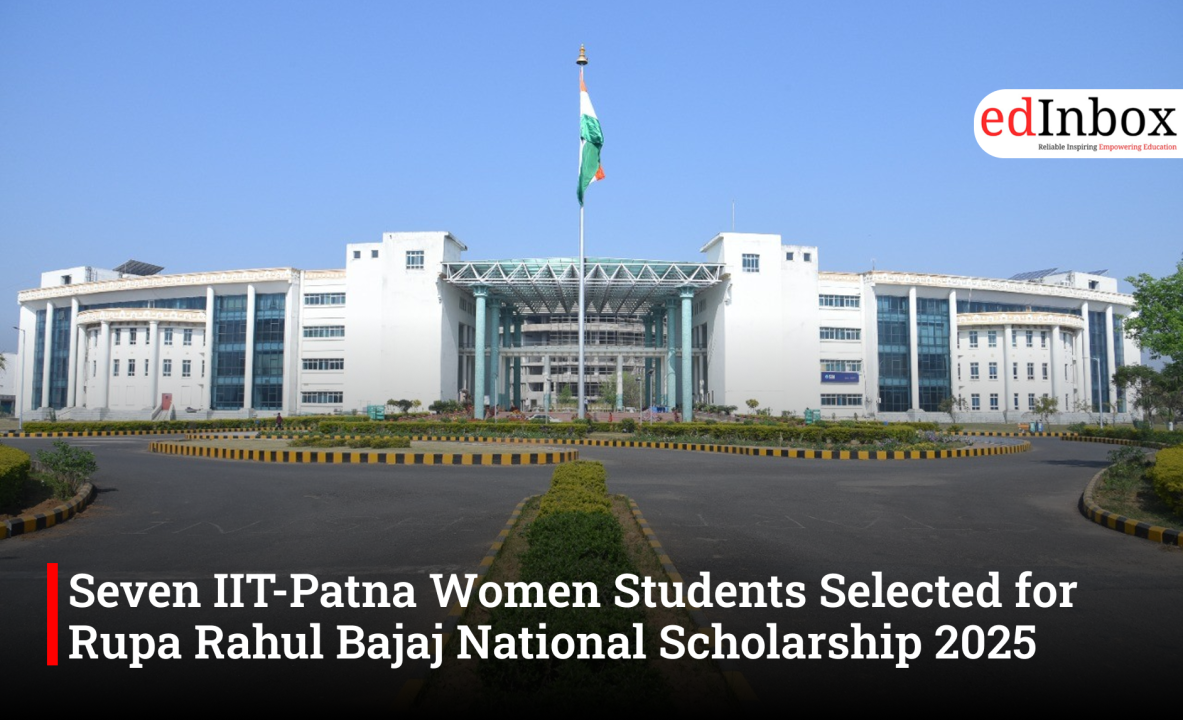
Seven first-year BTech students from IIT Patna have been picked for the rupa Rahul Bajaj National Scholarship for women in engineering 2025. It seems this move is a strong step toward including more women in engineering fields where men have historically led. Plus, the students selected,Priya Bharti, Sneha Raj, Saumya Tyagi, Kuracha Tejaswini, D Neeharika, Ishika Agrawal, and janhvi Singh,are part of the 2025 - 29 batch. They earned the spot based on strong academic records and shown potential in male-dominated engineering areas.

The scholarship brings financial help of up to 8 lakh over four years. It covers full semester fees for the entire BTech program. Recipients also get mentorship, real-world industry access, and training to build their skills and careers. IIT-Patna Director T N Singh praised the students and said the institute values both excellence and diversity. He also noted the work of faculty N K Tomar, Rishav Singh, and kripa Shankar Singh in making the process run smoothly.

The thing is, this recognition might encourage other institutions to follow suit. Hard to ignore how meaningful this support could be for young women entering engineering.

The scholarship is designed to help students who are studying main engineering branches like mechanical electrical electronics and communication, industrial/production automobile mechatronics instrumentation material sciences, and metallurgy. These areas have traditionally been characterized by fewer women due to economic hurdles, lack of access to mentors, and societal restrictions.

The program wants to solve these problems and as a result increase diversity in the engineering world and open the doors for more women to enter and excel in high-impact technical jobs. In fact, educational leaders recognize that such selective scholarships are an effective tool to reduce gender disparities, especially in the manufacturing and core engineering sectors.

The fact that seven of the students selected were from IIT-Patna is evidence, on the one hand, of the rising involvement of women in engineering and, on the other hand, of the crucial role that ongoing institutional and financial backing plays in helping them flourish.

The Indian Institute of Technology Delhi has opened applications for its Summer Research Fellowship Programme (SRFP) 2026, inviting undergraduate and postgraduate students from across India to apply for hands-on research training under faculty mentorship.

Introduced in March 2026, the investment was tailored to pave the way for students to get a taste of the highest level of research settings and locate the technical problems that exist in the real world. The fellowship would start about May and last till July for a total of 810 weeks.

The fellowship is available only for those students who are still studying in a recognised engineering institution and mainly 2nd or 3rd year students. Applicants should have an excellent study record usually 8.0 CGPA or 75% marks at least. No students from Indian Institute of Technology Delhi will be eligible as the program is meant to lure the best talents from other institutes.

Awardees would be given a weekly allowance of 2,000 along with free stay at the campus. They will also enjoy the privilege of being in touch with modern laboratories and research facilities and working hand in hand with the faculty on selected projects. Certificates will be handed over to the participants at the end which will be a great add-on in their academic and professional profiles.

Application Process and Deadline

 Those who want to apply should do so by visiting the official website of the Indian Institute of Technology Delhi then register online, complete the academic details, upload the necessary documents such as mark sheets and CV, and lastly submit a research proposal or statement of purpose by April 3, 2026.

Selection Procedure 

The selection will be entirely on the basis of academic credentials and the research proposal quality. Departmental Committees will be performing the application reviews. Due to limited seats, the competition is expected to be very high.

This fellowship is designed to encourage research capability development among students and equip them with practical skills beyond what is taught in the classroom. It therefore presents a very good opportunity for those intending to build a career in research and innovation.

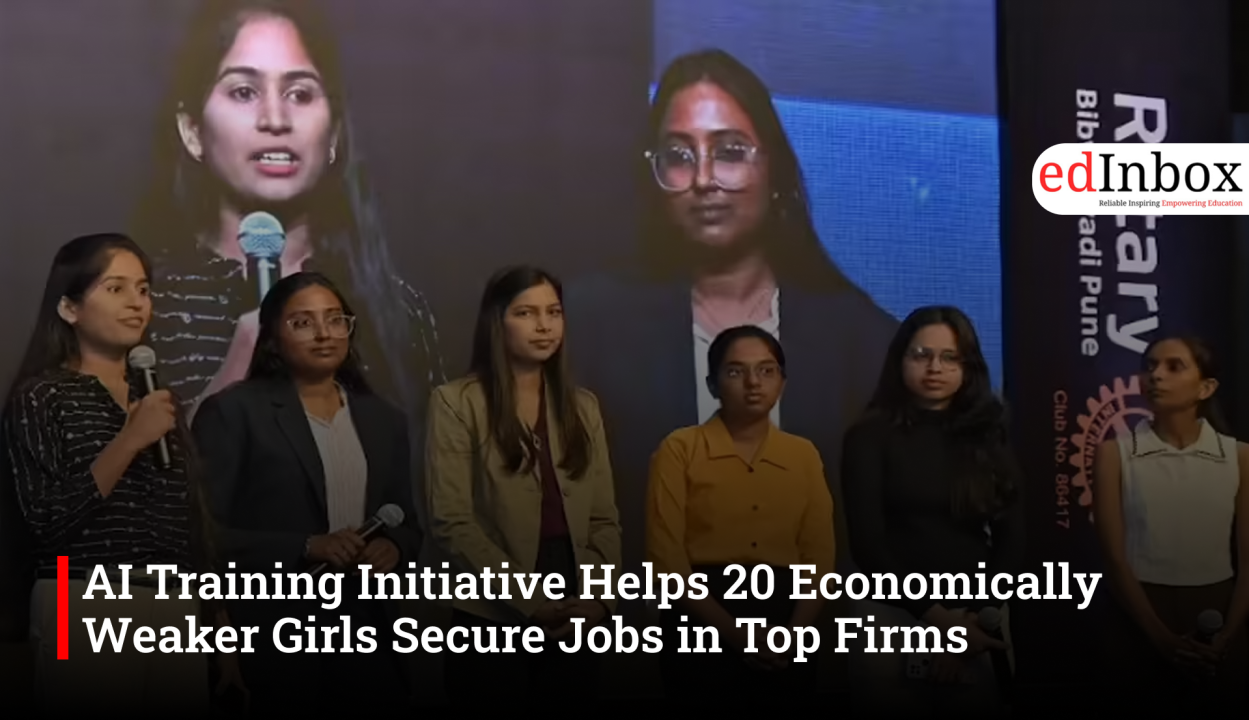
A six-month artificial intelligence (AI) training initiative has enabled 20 girls from economically weaker sections to secure jobs in leading companies, highlighting the growing role of skill-based education in improving employability.

At its core, the ideal A.I. assistant gets to know the user and adapts to them to provide accurate and contextual responses especially for creative tasks. The A.I. assistants can read your mind by understanding you through the content you have provided. It is a great idea to keep some notes handy when making multiple edits through chat as it is transported to memory. In times of economic hardship and unemployment concerns, allocating resources solely towards education or training can be quite a challenge and a luxury for many families. Let's think about it: how can poor students carry the financial burden of advanced technology study (including reasonable living expenses, personal and social life) when they do not have access to the basic necessities?

The Sylvan Learning Network is ready to assist with elementary through high school tutorial services whether you wish to help one child or a whole class. Our programs summarizing and paraphrasing help you organize your thoughts and learn the material for yourself, but plagiarism is unethical and illegal. Use them to check and see if your sentences match the original source, and in turn, that you have properly cited the author. Then rewrite or quote the original.

Electricity is a form of energy resulting from the existence of charged particles(strongly positive and negative) either statically as an accumulation of charge or dynamically as a current. Electricity is part of Discuss the key similarities and differences between Enlightenment and Romanticism.

Bachelor of Artistic Research is a three-year (full-time) study program combining art practice and interdisciplinary theoretical research. Art practice is a form of artistic research and to undertake a creative process step defines the methodology of the artistic work. 

The results of the programme were presented at the Asmita Symposium in Pune. Several participants explained how the training has raised their self-confidence, improved their technical skills, and opened up new career opportunities.

Teachers involved with the course remarked that AI integration is a must-have for modern career paths and highlighted that there is a need to move forward with such projects to make sure that everyone has access to the new technologies.

The triumph of Asmita NXT highlights the possibilities of skill development programmes that focus on specific groups not only leading to jobs but also ensuring women's participation in the technology sector.
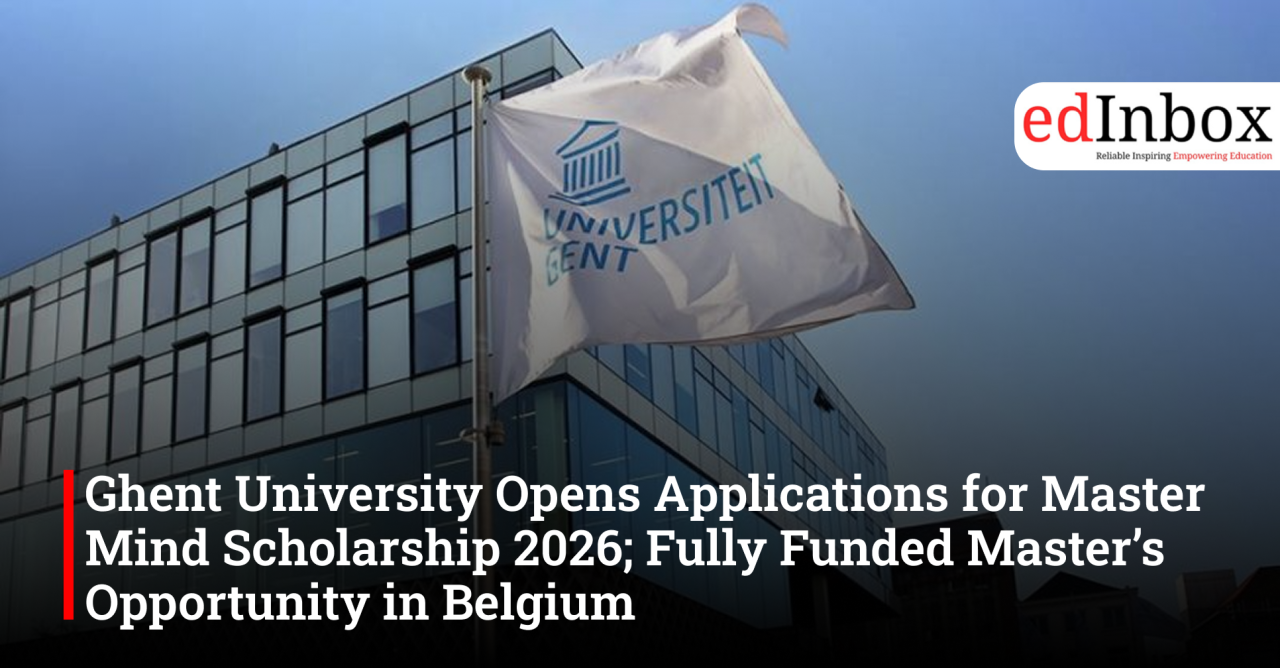
Applications are now open for the Master Mind Scholarship 2026 at Ghent University, offering international students a fully funded opportunity to pursue a master’s degree in Belgium.

Funded by the Government of Flanders, the scholarship aims to attract high-performing students from across the globe to study at one of Europe’s leading research institutions.

Scholarship Details and Coverage

The Master Mind Scholarship provides financial support of approximately €10,225, along with a full or partial tuition fee waiver. Selected candidates will also receive support for accommodation and living expenses.

International students are permitted to work up to 20 hours per week during the academic term, offering additional financial flexibility.

Eligibility and Academic Requirements

The scholarship is open to applicants of all nationalities. Candidates must:

  • Apply for a master’s programme at Ghent University for the 2026–27 academic year
  • Have a minimum CGPA of 3.5 out of 4.0
  • Demonstrate English language proficiency
  • Applicants do not need to submit a bank statement as part of the visa process, according to the programme guidelines.

Application Process

Interested candidates must first apply for admission to a master’s programme at the university. Following this, programme coordinators will nominate selected applicants for the Master Mind Scholarship, with final decisions made by the Flemish government.

The deadline to apply is April 1, 2026.

Career Opportunities After Graduation

Graduates may apply for an “orientation year” permit, allowing them to stay in Belgium for up to 12 months after completing their degree to seek employment or start a business.

Global Education Hub

Ghent University is among Belgium’s oldest and largest universities and is consistently ranked among the top institutions globally. The scholarship reflects a broader push by European countries to attract international talent through funded education pathways and post-study work opportunities.
Initially, the Centre's initiative received a rather cool response. Hence, it plans to completely revamp the Prime Minister Internship Scheme with several attractive features like a much higher stipend, looser eligibility norms, and a shorter duration so that it becomes a magnet for the youth.

Government sources shared that the updated scheme would be able to provide a monthly stipend of 9,000 instead of 5 000 the earlier amount. Out of this, the government will be giving 8,100 and the remaining 900 would be the companies' contribution done through CSR (Corporate Social Responsibility) funds.

The age participation bar has been raised to 1825 years from the old range of 2124 years. This move has twofold advantages i.e. if more talented youth can be brought to the fore, then also they can be the beneficiaries of the programme which was first of all, designed to be their source.

Moreover, one more major development is that the internship period has been curtailed and it will now be only 69 months as against the previous 12 month schedule. So, the businesses first will choose the exact duration of the internship. This arrangement also gives the companies and the candidates a better choice of times.

Launched in October 2024 following its announcement in the Union Budget 2024–25, the scheme is administered by the Ministry of Corporate Affairs. The next round of internships is expected to be announced soon, with listings likely to go live within the coming week.

Low Participation, High Dropouts Prompt Changes

The revamp comes after disappointing participation and high attrition rates in the first two pilot rounds.

In the first round, companies extended 60,866 internship offers, of which 28,144 were accepted. However, only 8,760 candidates joined, and more than half—4,702 interns (53.6%)—dropped out midway. Ultimately, just 3,417 candidates completed the full programme.

The second round, launched in April 2025, saw over 300 companies offering 71,195 internships. While 24,638 candidates accepted the offers, only 7,300 joined physically. Of these, 2,464 candidates (33.7%) exited before completion. Final completion data is still awaited.

Officials attribute the low uptake to location constraints, long internship duration, and lack of job assurance post-completion, with many candidates unwilling to relocate beyond short distances.

Push to Make Scheme More Viable

The revised structure aims to address these concerns by making the programme more financially viable and time-efficient. By increasing stipends and reducing duration, the government hopes to align the scheme more closely with the expectations of India’s youth and industry requirements.

The upcoming round will be a crucial test for the scheme, which was envisioned as a flagship initiative to enhance employability and provide hands-on industry exposure at scale.

The Scheduled Caste (SC) students who were beneficiaries of the scholarship in the year 2025-26 might have only been 36.07 lakh which is less than half of their target set. Apart from increasing the seats and monthly stipends of students from 4,000 to 8,000 the government has also decided to double the number of seats available under the National Overseas Scholarship (NOS) scheme for Scheduled Caste students from 125 to 250 in the year 2026-27. Moreover, the seats for the Scheduled Tribe (ST) students have also been raised from 20 to 50. This information was conveyed to the Parliamentary standing committee by the ministries of social justice and empowerment and tribal affairs, a joint communication revealed.

On the other hand, the 31-member Social Justice and Empowerment Standing Committee, established by the Lok Sabha and headed by P.C. Mohan, a BJP member, in its report on the demands for grant of the Union Ministry of Social Justice and Empowerment (MoSJE) and Ministry of Tribal Affairs (MoTA), has pointed the finger at the lack of funds for the NOS scheme and how the allocated money was spent.

Through the NOS scheme, students belonging to Scheduled Castes and Scheduled Tribes (SCs and STs) who are best in studies are given government grants for pursuing higher education in foreign universities ranked in the top 1,000.

Between 202122 and 202425, MoTA spent 21.95 crore on 68 ST students under the NOS scheme. The scheme has been allocated 20 crore for Financial Year (FY) 202627.

The committee however was not happy that the ministry had only used 8,757.04 crore of the revised estimate of 10,824.18 crore for the year 202526 as of February 23, 2026 this amount being almost 19% less than the allocation for MoTA. The committee also observed that the ministry has been allocated 15,421.97 crore for 202627 against the proposed demand of 17,223.47 crore, a difference of about 10.5% less than the sought amount.

According to the committee report tabled on Wednesday, the annual maintenance allowance for ST students will increase from $15,400 to $19,250 in the upcoming Expenditure Finance Committee (EFC) cycle for 2026–27 to 2030–31.

The MoTA also informed the panel that it will consider raising the family income ceiling for ST students from ₹6 lakh to ₹8 lakh, bringing it in line with the eligibility criteria for SC students.

However, the committee flagged funding concerns in the NOS scheme for SC students. The budget estimate for the NOS scheme for SC students in 2026–27 is ₹125 crore, down from ₹130 crore in 2025–26, despite the proposal to double the number of slots. According to a report, the department will provide scholarships for 250 slots while the budget was only for 125 slots. At present, SC students are given up to $15,400 per year as a maintenance allowance while doing their studies in the US and other countries, and 9,900 in the United Kingdom.

The panel also mentioned the problems of the Post-Matric Scholarship (PMS) for SC students which is a Department of Social Justice and Empowerment scheme through states and Union Territories implemented under the Ministry of Social Justice and Empowerment.

The number of students who received financial help was reduced to 36.07 lakh in 2025-26 against a target of 76.55 lakh - less than 50% achievement. The scheme helped 47.38 lakh students in 2023-24 and 48.04 lakh in 2024-25.

This ministry has suggested increasing the maximum family income limit from 2.5 lakh to 4.5 lakh for the next Finance Commission cycle starting in 2026-27. Besides that, the ministry has also proposed to double the number of slots from 3,500 to 7,000 and to increase the monthly stipend from 4,000 to 8,000.

More Articles ...