Gujarat Schools Directed to Ensure 100% APAAR Registration by January 31
 Edinbox
 Blog
Edinbox
Edinbox Blog
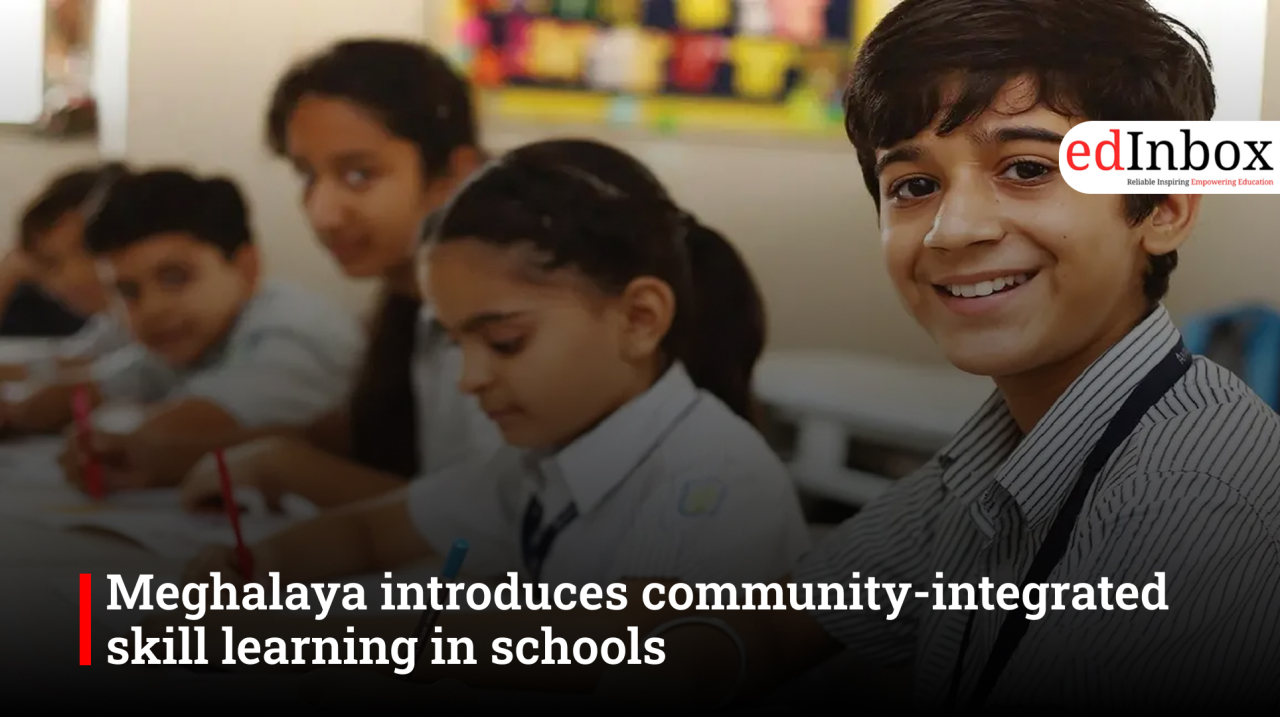
Meghalaya Chief Minister, Conrad K. Sangma, announced on Friday that the State Cabinet has given its nod for the introduction of Community Integrated Skill Learning (CISL) as a formal curricular component for students from Classes VI to X. This is a landmark educational reform in the state's school education system to make learning more experiential and socially rooted.
Speaking further, the Chief Minister pointed out that currently, Health and Physical Education is given as the sixth subject for Classes VI to X, but its character remains mostly limited to textbooks and theoretical knowledge about health and physical activities.
To make the subject more meaningful, practical and relevant to students’ lives, the Cabinet has decided to integrate CISL into the existing framework.
The skills may range across traditional occupations, local practices and community-based expertise, allowing students to learn directly from their immediate social environment.
Explaining the concept, CM Sangma said that if a student’s family is engaged in farming, the student may opt to learn agricultural skills directly from parents.
Students will be required not only to observe but to actively learn, participate and demonstrate the selected skill as part of the assessment process.
The Chief Minister said the initiative carries multiple long-term benefits.From a skill development point of view, CISL will enable students to get hold of hands, on and work, oriented skills that might be of help in their future personal or professional lives.
Moreover, students won't be required to do the same work as their parents, but the approach will most likely lead to the continuation, respect and valuing of traditional family and community based ways of living.
CM Sangma further pointed out the social aspect of the programme emphasizing that as CISL is going to be a major component of academic assessment, it will motivate students to interact and collaborate more with their families.
The Chief Minister, referring to CISL as an innovative step by the Education Department, stated that the initiative intends to bring the gap between theoretical knowledge and practical skills down, to raise the community's participation in education, and to create a great social impact by linking education to real life experiences.
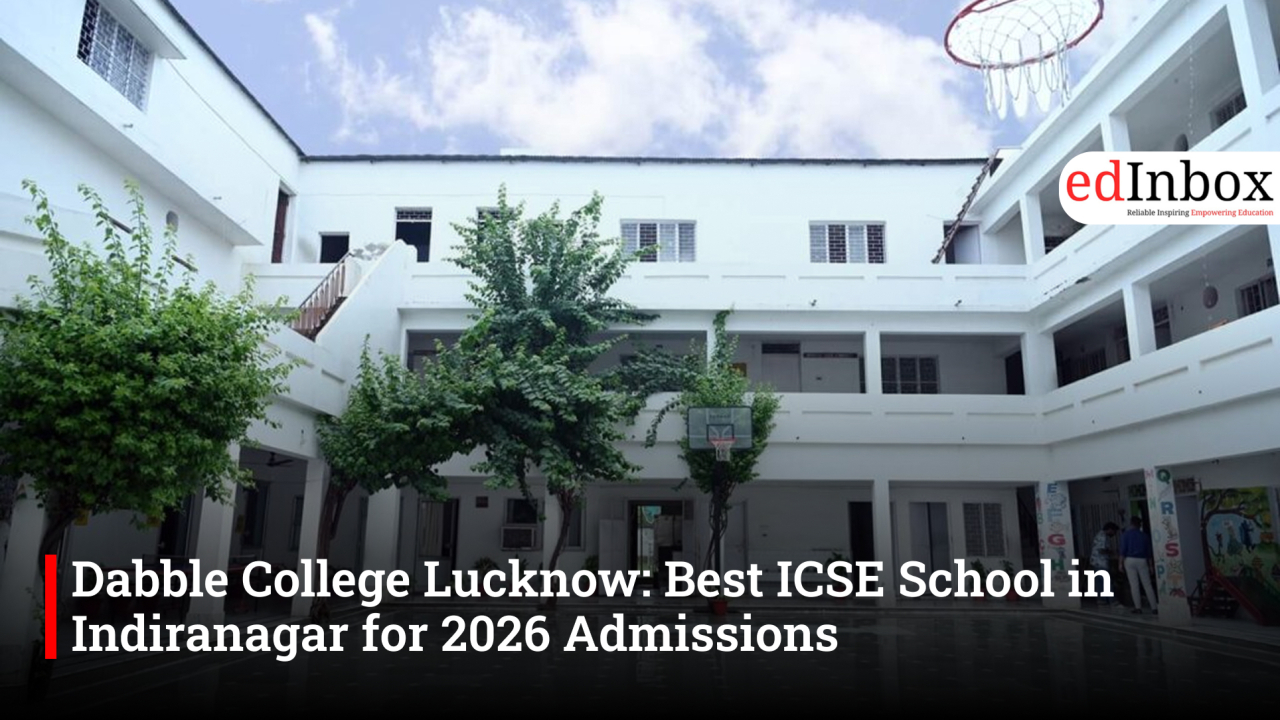
Dabble College in Lucknow's Indiranagar emerges as a parent favorite for ICSE education with 100% board results and holistic child growth. Home to 700+ students guided by 50+ experienced teachers, this serene campus sparks curiosity through modern labs and vibrant activities. Searching "Dabble College admissions 2026," "best ICSE school Jankipuram," or "Indiranagar schools near me"? Here's everything you need to know as parents.
Located at Aravali Marg, Sector-15, Block-C, Indiranagar, Lucknow (226015), Dabble College blends academics with joyful learning in a safe, student-friendly haven. Affiliated to ICSE/ISC, it nurtures creativity, ethical values, and leadership for children from Nursery to Class 12. With 40+ dedicated faculty, the focus stays on personalized mentoring and community spirit.
Dabble boasts 100% pass rates in ICSE/ISE 2024 exams. Awards include Torchbearer of Knowledge, Excellence in Education, and Pedagogy & Joyful Learning. Student highlights feature exhibition successes and press releases, positioning it as a top performer among Lucknow ICSE schools.
Dabble follows ICSE/ISC curriculum across Nursery to Class 12:
Fees remain affordable for premium quality (exact details via enquiry form; no hidden charges). Value-packed with sports, arts, and labs included.
Modern classrooms with tech, science labs, vast library, art/music rooms, indoor/outdoor sports (swimming, yoga, aerobics), and monitored safe grounds. Jankipuram campus extension boosts space. Life buzzes with events, sports days, celebrations, galleries capture teamwork, fitness, and fun.
50+ caring teachers and 40+ members bring expertise and warmth. They mentor individually, sparking creativity and values in a family-like setup loved by parents.
Busy Lucknow parents near Indiranagar/Jankipuram wanting 100% results, holistic growth (sports/arts), and affordable ICSE without stress. Perfect for kids thriving in joyful, supportive environments.
Families needing CBSE board, IIT-JEE coaching focus, or large urban facilities. Skip if competitive ratios matter more than nurturing vibes.
In short, Dabble College Lucknow offers proven excellence, safety, and joy in Indiranagar, building confident leaders. Enrol now at
Meghalaya Chief Minister, Conrad K. Sangma, announced on Friday that the State Cabinet has given its nod for the introduction of Community Integrated Skill Learning (CISL) as a formal curricular component for students from Classes VI to X. This is a landmark educational reform in the state's school education system to make learning more experiential and socially rooted.
Speaking further, the Chief Minister pointed out that currently, Health and Physical Education is given as the sixth subject for Classes VI to X, but its character remains mostly limited to textbooks and theoretical knowledge about health and physical activities.
To make the subject more meaningful, practical and relevant to students’ lives, the Cabinet has decided to integrate CISL into the existing framework.
The skills may range across traditional occupations, local practices and community-based expertise, allowing students to learn directly from their immediate social environment.
Explaining the concept, CM Sangma said that if a student’s family is engaged in farming, the student may opt to learn agricultural skills directly from parents.
Similarly, skills practiced by other family members or available within the local community can be chosen.
Students will be required not only to observe but to actively learn, participate and demonstrate the selected skill as part of the assessment process.
The Chief Minister said the initiative carries multiple long-term benefits.From a skill development point of view, CISL will enable students to get hold of hands, on and work, oriented skills that might be of help in their future personal or professional lives.
Moreover, students won't be required to do the same work as their parents, but the approach will most likely lead to the continuation, respect and valuing of traditional family and community based ways of living.
CM Sangma further pointed out the social aspect of the programme emphasizing that as CISL is going to be a major component of academic assessment, it will motivate students to interact and collaborate more with their families.
He said that this will make the family relationship stronger and generate a feeling of shared responsibility in the learning process.
The Chief Minister, referring to CISL as an innovative step by the Education Department, stated that the initiative intends to bring the gap between theoretical knowledge and practical skills down, to raise the community's participation in education, and to create a great social impact by linking education to real life experiences.
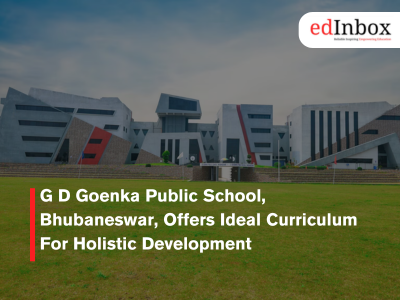
G D Goenka Public School, Bhubaneswar (GDGPSB) is one of the best emerging schools of Odisha with a progressive curriculum that received the award at Asian Education Summit 2022. It promotes holistic development via experiential learning of Classes Nursery to 12 spearheaded by world-renowned academician Prof. Prasant Mohapatra (VC, UC Davis, USA). This profile will focus on those parents who visited the search engine to enter GD Goenka Bhubaneswar admission 2026, best CBSE schools BBSR fees, or GDGPSB reviews, among others, and explain its facilities, admission procedure, and why the school is the best among the young learners.
A high-end CBSE-affiliated school in Bhubaneswar, GDGPSB has a holistic philosophy in which students are co-learners, parents are stakeholders and the school awakens inner potential. Principal SK Singh heads it and focuses on 21st century skills such as critical thinking, IT integration, and such values as honesty, compassion, tolerance. The curriculum covers Foundation (Playgroup-2), Preparatory (3-5), Middle (6-8), Secondary (9-10), Senior Secondary (11-12) and the same attention is given to both scholastics and co-curricular activities such as music, dance, sports.
GDGPSB has been recognized as the best emerging school with progressive curriculum at the Asian Education Summit 2022, which is an excellent achievement when it comes to the standard of holistic education. It is distinguished by certified expert teachers, high-quality infrastructure and experiential learning programs in the Odisha CBSE rankings. Sport-strong, club-strong, health and wellness; national pride, community service and global citizenry.
CBSE curriculum involves competency based, experience-based learning- none of the rote learning. Core: English, Hindi/Odia, Maths, EVS/Science, Social Science; extras: IT, Arts, PE, PSHE. Stages Foundation (play-way), Preparatory (activity-based), Middle (project-led), Senior (NEP-aligned streams Science/Commerce/Humanities). However fees are around 1-1.5 lakh/year (Nursery-12; depends on class, check with
Nursery: Age 3+ by the end of March; higher classes: TC of former school, birth certificate. None primary; Grade 1+ interaction; Grade 6+ 75+ than Grade: 1 previous academics. Aadhaar, Vaccination record, Aadhaar required.
Easy procedure: Go to gdgoenkabbsr.org, get a prospectus, hand in documents (2 child photos, parents photos/Aadhaar/residence proof, birth cert, last 2 yrs reports, TC Grade 2+, vaccination). Interaction/assessment; confirm pay fees.
Premium Catering: Smart classrooms, IT, experiential, sports fields (SEP program), clubs (music/drama/art/tech), wellness centres. A healthy, good atmosphere creates self-control, teamwork; experiences create confidence, life-long learning.
Passionate, trained teachers and learning specialists, certified, experienced; trained in competency-based methodology that is holistic. Informative, emphasis on individual development, 21 st -century skills such as problem solving.
Parents looking for the best Bhubaneswar CBSE school offering holistic, quality education, good values, sports, and international orientation should surely choose this school for their kid. Three-to-teen-year-old (ages 3-18) ambitious children who like to think in terms of challenge are the best fit for this career-preparation strategy in the non-traditional world. Other than that,if you prefer traditional rote CBSE or low-fee govt schools then this school won’t be the right choice. It is not for families wanting minimal co-curriculars or non-partnered parent involvement.
The GD Goenka Public School Bhubaneswar provides the motto Higher, Stronger, Brighter by providing visionary leadership and the best facilities, securing your child’s future by choosing this school. 2026-27 admissions open.