Assam Chief Minister Himanta Biswa Sarma on Sunday announced that his government would introduce special classes for rural students appearing for matriculation examinations, stating that he had observed a similar programme in Jharkhand.

The chief minister posted on X, "In the next few months we will be introducing a Special Class program for our children in villages who will be taking the matriculation exam. They will be instructed by educated youth of their own villages who will be paid an honorarium of ₹300 per student."

Sarma authored, "This year the matriculation examination form fill up will be carried out in October. Once form fill up gets completed in October until February-March, we will set up night schools. That is, the B.A, B.Sc passed youths of the villages will set up the village students in the schools after school hours and will give them special classes."

"There will be less professional work, whatever is taught in the schools, will be taught in these special classes. The rich students can pay tuition, so this arrangement has been made for the village students at the local Anganwadi centers and schools. And for this reason, we have dedicated a budget of Rs. 300 per candidate for the matriculation examination.". The choice whether to give the payment directly to teachers or through students will be taken after consultation. If one village has 50 candidates and two graduates, they can assist the candidates with their preparation for these four months," he said.

Describing his last year's visit to Jharkhand, the BJP leader mentioned, "While I was campaigning in Jharkhand for elections, I noticed an NGO that had established these schools. It was very successful and we want to follow the same pattern in Assam."

Sarma added the students would be taught from 6 pm to 9 pm as part of the new initiative.

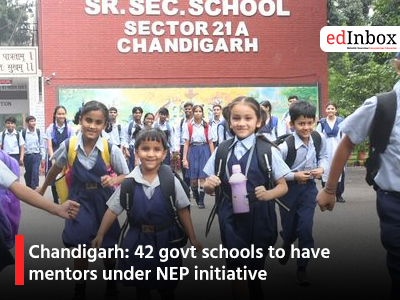
Chandigarh Education Department has made it compulsory for teachers in government schools in the city to wear a uniform dress code - formal, salwar-kameez, for male, female teachers.

"The dress code requirements of the uniforms specify that all female staff shall wear sarees, salwar kameez, while all male staff will wear formal shirt and trousers," the department announced in an official statement issued on Saturday.

"This change is aimed at unifying the appearance of teachers, fostering professionalism, and creating an environment conducive to learning," it added.

By having a teachers' dress code, Chandigarh becomes the first Union Territory or state to introduce this in government schools, it said.

"In a move towards creating a better professional environment in the educational setup, the Chandigarh Education Department, in response to the directions of the Administrator UT Chandigarh, has implemented and inducted a spotless teacher's uniform in all government schools," it added.

The program has been implemented for the very first time in the PM Shri Government Model Senior Secondary School, Sector-14, Dhanas, Chandigarh, the release further stated. W The decision has been welcomed by Punjab Governor and Chandigarh Administrator Gulab Chand Kataria, it further stated.

"A common dress code does not only favor the equalization of staff but also gives an element of pride and professionalism," Kataria, according to the release, further added.

The department said it wants to introduce it in all its schools prior to the resumption of classes after the summer break in 2025.

"By having a uniform dress code, the teachers will be perceived to present a more professional image, thereby serving as a good example to students. A uniform dress code eliminates socio-economic disparities among employees, providing a better atmosphere. A common look can boost team spirit and morale among teachers," it added.

Sainik School Amethi has published recruitment against various posts such as TGT, PGT, Librarian, Lab Assistant. Those candidates who are searching for the govt. job and want to apply for this recruitment and who are eligible for this recruitment may submit their application form in the prescribed address through offline mode up to 10th May. The closing date for submission of application form in the prescribed address is 10th May 2025.

How to apply

In order to apply for this recruitment, applicants need to visit the recruitment page on Sainik School Amethi sainikschoolamethi.com website and download the offline application by following the notification link. Following this, the applicants need to fill it up and attach all the documents required along with it. Applicants need to attach the demand draft of application fee with the form. The application fee must be paid in the credit of "Principal Sainik School Amethi" payable at Gauriganj. The application fee has been kept at Rs 500 for General, and OBC candidates and Rs 250 for SC, and ST categories.

Where to send the form

The completed form must be mailed to the address of The Principal, Sainik School Amethi, Kauhar Shahgarh, District – Amethi, Uttar Pradesh – 227411 by ordinary post or speed post. Do remember that the forms will not be accepted after 5 pm on 10 May.

Recruitment details

Through this hiring, a total of 25 positions will be hired in Amethi Sainik School. The details of the recruitment according to the post are as follows-

PGT English: 1

PGT Computer Science: 1

PGT Maths 1

PGT Physics: 1

PGT Chemistry: 1

PGT Biology: 1

TGT Maths: 2

Expand article logo  Continue reading

TGT Social Science: 1

TGT General Science: 2

TGT Hindi: 1

Art Master: 1

Librarian: 1

Music Teacher/Band Master: 1 post

Counselor: 1 post

Lab Assistant Physics: 1 post

Lab Assistant Chemistry: 1 post

Lab Assistant Biology: 1 post

Medical Officer: 1 post

LDC: 1 post

Ward Boy: 3 posts

TGT English (Temporary): 1 post

Disclaimer: This material has been collected and edited from Dainik Jagran. Though we have made changes for presentation and clarity, the original work is the property of its respective authors and website. We do not own the content.

Uttar Pradesh Chief Secretary Manoj Kumar Singh has instructed authorities to speed up the construction of CM Abhyudaya Composite Schools, highlighting that work needs to start forthwith at the sites where the land has been settled.

Going through the progress report of CM Model and CM Abhyudaya Schools, Singh emphasized early completion to revolutionize school infrastructure throughout the state. Out of 24,000 composite schools in the state, 75 schools have been shortlisted for upgradation in the first phase.

The new Abhyudaya schools will have state-of-the-art computer labs, libraries, smart classrooms, midday meal shelters, children's gardens, nutrition gardens, Wi-Fi, and CCTV coverage. There will also be renovation of existing infrastructure at an investment of ₹15 lakh per school.

Pointing to the importance of integrated development, the chief secretary stressed the availability of sports and physical education facilities. Every school is supposed to have open gyms, race tracks, volleyball and badminton courts, hockey grounds, indoor playgrounds, and yoga centers. Singh also suggested incorporating a third-party audit in the construction process for quality and accountability, and district authorities and departments being assigned to monitor continuously in order to adhere to deadlines.

Independent of this, new schools are being planned in all 75 districts under the CM Model Composite Schools scheme. The schools will impart integrated education in science, mathematics, commerce, and arts based on the UP Board curriculum from pre-primary to class 12. Each model school is expected to cost an estimated ₹24.78 crore for civil work alone.

The step is indicative of the Uttar Pradesh government's resolve to upgrading the education sector with the best facilities, as a means to set a new benchmark for the state's public schooling.

The Karnataka government issued a new rulebook for 2025-26 in a move to seek justice and ensure transparency in private school admission processes. The state's all the private schools including national board schools like CBSE and ICSE will be administered by the norms.

The key feature of the new policy is that the process of admission is regulated to avoid arbitrary and unlawful practices and safeguard parents against hidden charges and discrimination. According to the new rules, a child cannot be younger than 5 years and 5 months on June 1, 2025, to be admitted to Class 1.

For ensuring transparency, schools are now required to publish detailed information regarding admission calendars, capacity, and fees. All these have to be displayed on notice boards, school websites, and even in the admission manuals. Fees can also be raised only with prior sanction by the concerned department and with its announcement to the public. Unauthorized or surreptitious fees are prohibited under stricter standards.

As a measure for inclusive education, the government has placed a big emphasis on mandatory reservations. Reservations are for half of the seats for the girl students and the SC students, ST students, and the OBC students are reserved seats.

More than anything else, schools will cease to be able to hold entrance tests or interview on admission into pre-primary or Class 1. The overhaul will ease the load on tiny children and an end to discrimination in selection mechanisms.

The Karnataka School Education Department has made it amply clear that the schools which are found to be non-compliant with such regulations will be dealt with sternly, including cancellation of No Objection Certificates (NOCs) or recognition. The officials have asserted that the state regulations need to be complied with by all the schools regardless of the board to which they are affiliated so that equality in pursuit of education is achieved.

These reforms are an indication of the shift in the direction of the government to make school admission simpler, child-focused, and accountable. Parents and institutions need to get accustomed to the new trend from the start of the new session in 2025-26 as well in order to present a well-balanced learning environment.

In a stern administrative action, Indore Divisional Commissioner Deepak Singh has put on hold District Education Officer (DEO) Sushma Vaish immediately on grounds of persistent absence in public hearings and inaction regarding complaints pertaining to CBSE schools. The order came on the proposal of Indore Collector Ashish Singh, who has appointed Joint Collector Vijay Kumar Mandloi as temporary District Education Officer in order to make the working of the department uninterrupted.

According to reports, scores of complaints were being heard during the public hearings conducted at the Collectorate on issues faced by students and parents of more than 250 private CBSE schools in Indore, but the DEO continued to be missing, which brought increasing frustration for the complainants.

These schools together serve almost eight lakh students, and it is estimated that prominent CBSE schools in Indore charge Rs 150 to Rs 200 crore every year in fees from students of all classes - from LKG to Class 12. Even with such exorbitant fees, parents and students are frequently subjected to coercive conduct by school managements. Parents complain that if they voice concerns regarding school regulations or insist on their rights, school administrators and principals threaten to expel their children during the middle of the term.

Likewise, teachers and employees working in such schools are reportedly intimidated and coerced. Various teachers have complained that raising voice regarding fundamental rights or administrative problems has resulted in abrupt termination of their services without notice or justification, shattering their professional continuity.

Angered by this high-handedness, parents, teachers, and school employees have tried to seek redressal, but say no dedicated CBSE official is present in Indore. They are usually informed by local officials that issues pertaining to private CBSE schools are not within their jurisdiction.

Adding to the problem is the lack of a CBSE regional office in Indore. Currently, the sole CBSE office in Madhya Pradesh is in Bhopal, which handles almost 2,500 CBSE-affiliated schools in the state. People affected in Indore complain that they cannot spare the time and money involved in going to Bhopal again and again to register and pursue complaints.

To meet this, Indore citizens are now demanding that Indore be made a separate CBSE office city and that CBSE officers also attend bi-weekly public hearings at the Collector's office. They have also asked the authorities to open a special grievances cell within the Collectorate for registering and sending complaints from parents, educators, and school staff to CBSE offices in Bhopal and Delhi and enabling local monitoring of resolution of complaints.

This bureaucratic overhaul and popular demand mirror increasing apprehensions regarding the unbridled freedom of private CBSE schools and the pressing necessity for institutional accountability mechanisms at the district level.

The suspension of DEO Sushma Vaish is being interpreted as a warning to other administrative officers to pay heed to public complaints, particularly when they relate to education and the welfare of children. Indore Collector Ashish Singh was quoted as having expressed dismay over the growing number of complaints from parents and teachers that were not being heard, saying that issues related to education need to be prioritized in public hearings, particularly in a city like Indore with a huge network of private schools.

In the meantime, education activists and parent groups have appreciated the prompt action by the district administration but emphasized the necessity of systemic change. According to them, without effective monitoring and accountability, private CBSE schools tend to function as independent entities where there is little concern for equitable treatment of parents, students, or employees. "We need transparent redressal mechanisms and periodic audits of CBSE schools to safeguard educational rights," a representative of a local parents' group stated.

The state government decided to shut down Anganwadi centres, Shishu Batika and schools for students up to class 12 for five days in the review meeting held under the chairmanship of Chief Minister Mohan Charan Majhi, Revenue and Disaster Management Minister Suresh Kumar Pujari informed.

Odisha government on Tuesday declared closure of schools and colleges for five days from tomorrow due to prevailing severe heatwave conditions in the state.

Anganwadi centres, Shishu Batika and schools for students up to class 12 shall remain closed for the next five days, it was decided at a review meeting led by Chief Minister Mohan Charan Majhi, said Revenue and Disaster Management Minister Suresh Kumar Pujari.

According to the order, schools will not function at any of the government or government-aided or private educational institutions but the students may remain in their respective hostels, the Minister told. He also issued a warning that action would be initiated against the authorities of the school if they fail to comply with the direction of the state government.

The Revenue and Disaster Management Minister, however, made it clear that the tests of the students would be conducted according to their schedule.

Law Minister Prithviraj Harichandan, School & Mass Education Minister Nityananda Gond, Chief Secretary Manoj Ahuja, Additional Chief Secretary Satyabrata Sahu, DGP  Y B Khurania, Revenue and Disaster Management Additional Chief Secretary Deoranjan Kumar Singh and others attended the heatwave review meeting.

It should be noted here that the weather department has announced yellow warning for severe heatwave conditions for the next five days in the State. Season's highest temperature of 46.2°C was recorded today in Jharsuguda.

More Articles ...