
As artificial intelligence continues to transform education worldwide, more than 80 teachers and education professionals from across Southeast Europe gathered in Sarajevo to discuss how emerging technologies can be integrated into classrooms while preserving human values, educational integrity and learner well-being.
The regional conference, “AI and Education – Challenges and Perspectives,” was held from May 7 to 10, 2026, bringing together educators from Bosnia and Herzegovina, Croatia, Serbia and Slovenia.
The event was organised by the Catholic School Centre Saint Joseph with support from UNESCO, UNICEF, the French Institute and the Croatian Cultural Society Napredak.
Addressing Opportunities and Challenges
Artificial intelligence is increasingly influencing how people learn, teach and access information. While AI offers new opportunities for personalised learning, improved educational resources and administrative efficiency, it also raises concerns related to ethics, privacy, data protection and academic integrity.
Against this backdrop, the conference provided a platform for educators to critically examine the opportunities and risks associated with AI-driven education.
Over four days, participants engaged in discussions on:
- Ethical use of artificial intelligence
- Data privacy and protection
- Responsible integration of digital technologies
- Safeguarding learner well-being
- Maintaining educational integrity in AI-enabled environments
Practical Training for Educators
In addition to policy discussions, the conference featured interactive workshops where participants gained hands-on experience using AI tools and explored practical ways to apply them in educational settings.
The workshops focused on ensuring that AI enhances teaching and learning rather than replacing the human elements that remain central to education.
Educators also exchanged experiences and best practices, helping build a regional network of professionals navigating similar technological transitions.
UNESCO Resources Launched in Local Languages
A major outcome of the conference was the launch of UNESCO's global AI-in-education resources in Bosnian, Croatian, Serbian and Montenegrin.
Making these materials available in local languages is expected to improve accessibility and support wider adoption across schools and educational institutions in the region. The translated resources provide educators with practical guidance on using AI responsibly while aligning technological innovation with educational goals.
Building Resilient and Inclusive Education Systems
The conference contributed to broader efforts to . that are resilient, inclusive and prepared for a rapidly evolving digital future. Participants emphasized that successful AI integration requires not only technological readiness but also strong ethical frameworks and continuous professional development for teachers.
Discussions highlighted the importance of ensuring that AI supports critical thinking, creativity and meaningful learning experiences rather than simply automating educational processes.
Teachers Remain Central to Learning
A recurring theme throughout the event was that while artificial intelligence can become a powerful educational ally, teachers remain indispensable. Educators play a crucial role in interpreting information, fostering human connection, nurturing values and guiding students through complex learning journeys.
The conference concluded with a clear message: the future of education is not merely about adapting to new technologies, but about shaping their development and use in ways that uphold human dignity, promote inclusion and expand opportunities for learners.
As AI continues to evolve, educators will remain at the heart of ensuring that technology serves education—not the other way around.
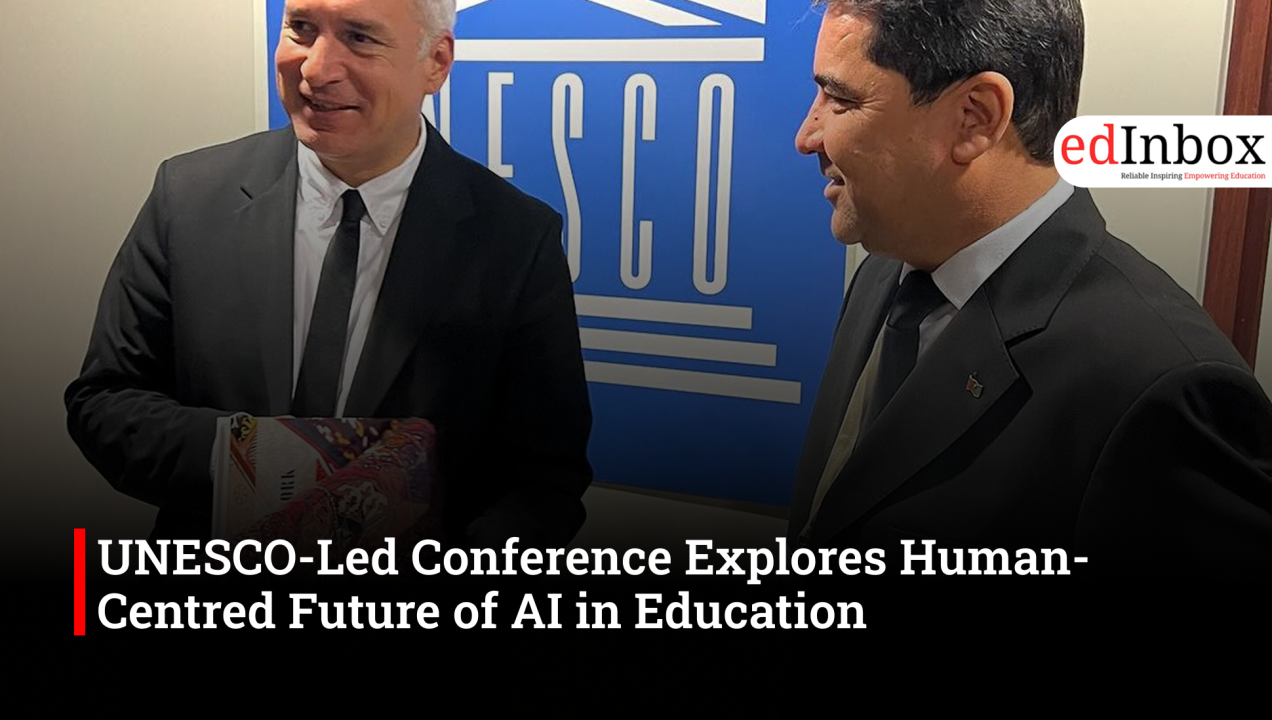
UNESCO-Led Conference Explores Human-Centred Future of AI in Education
Typography
- Smaller Small Medium Big Bigger
- Default Helvetica Segoe Georgia Times
- Reading Mode