New research warns that viral myths and fake news pose a critical danger to global safety efforts.
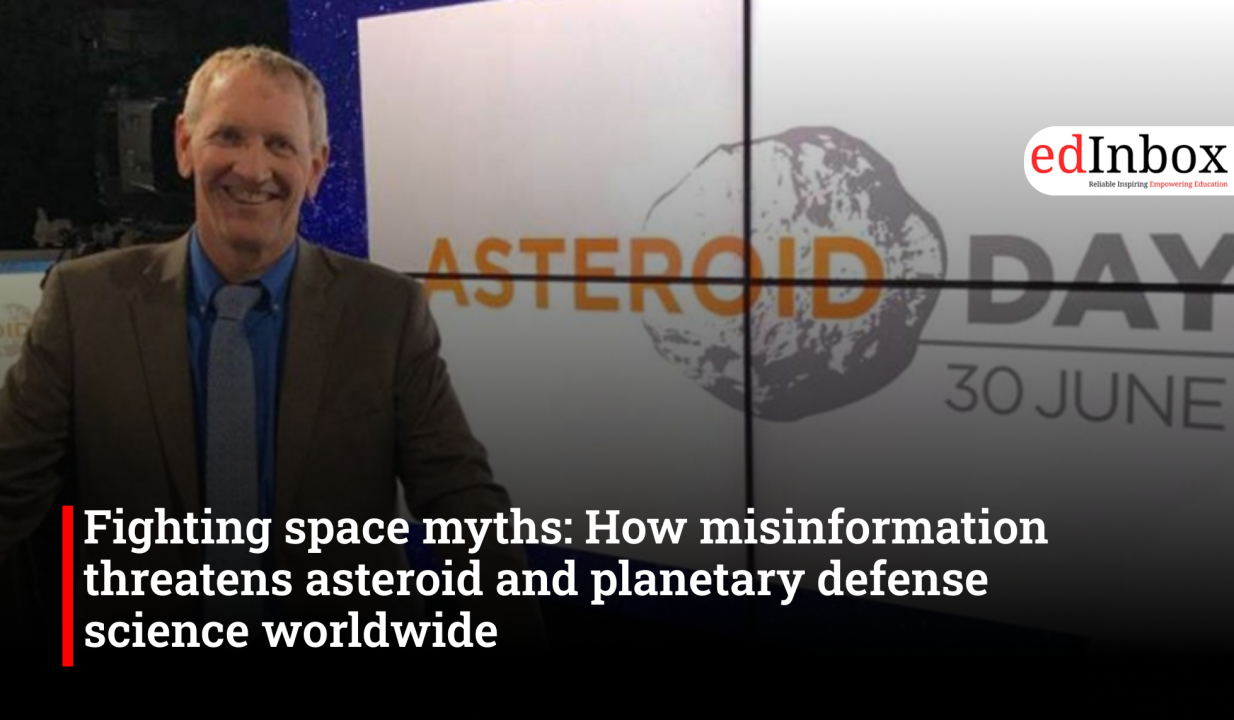
Boslough at Asteroid Day in Luxembourg. (Cover Image Source: University of New Mexico)
Raising alarm about the rapid spread of misinformation and disinformation on digital platforms, a team of researchers led by astrophysicist Mark Boslough from the University of New Mexico recently published a comprehensive review examining the current media landscape, which comprises multiple actors, including legacy media, influencers, AI, etc. According to the scientists, although the use of the internet and digital platforms has made it easier to access information, it has also allowed the rise of channels through which AI slop, internet clickbait, and sensationalized stories overflow.
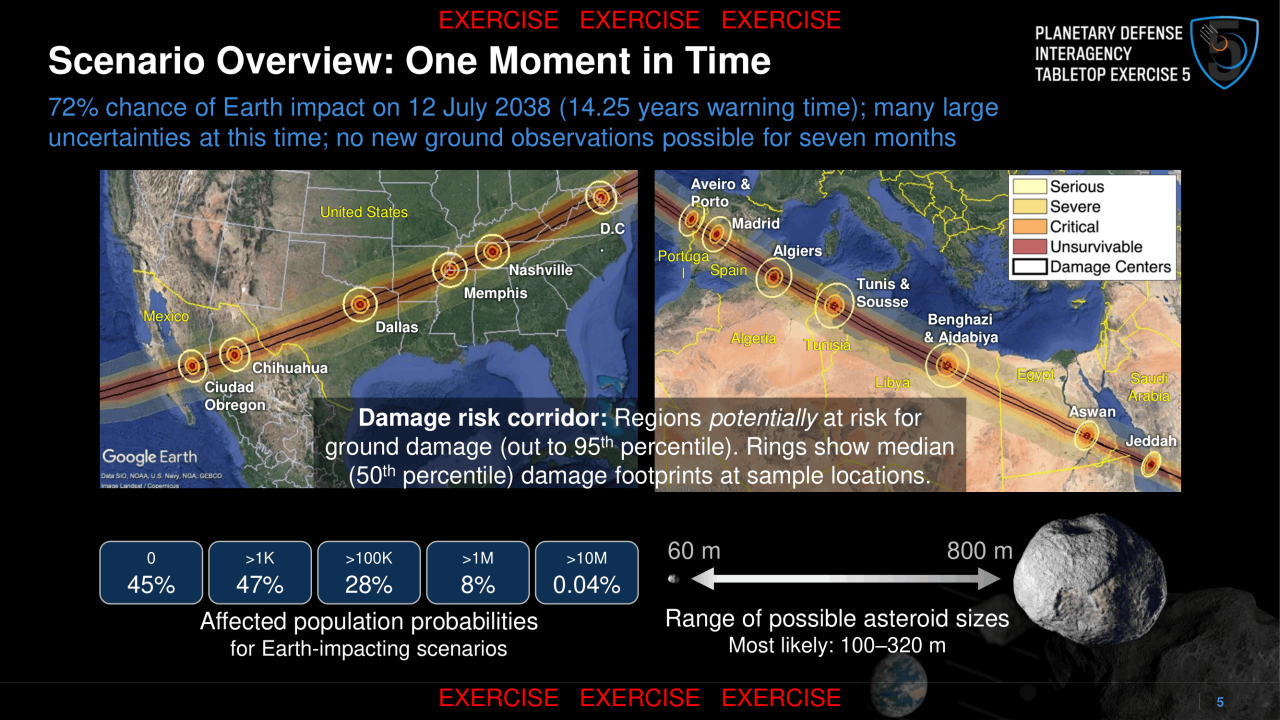
A part of the Quick report prepared by NASA on 13 May 2024 (Representative Image Source- NASA)
On May 13, 2024, a quick look report was prepared by NASA on "planetary defense exercise" as a preventive measure. This was a drill for preparedness that takes place biennially to check the readiness of scientists and government agencies in case they had to respond to a fictional asteroid threat scenario. The exercise was not based on any real asteroid that was predicted to strike our planet. But bits and pieces of information from the simulation quickly turned into sensationalized online claims that were spread through X, Facebook, Reddit and other platforms. Apart from factual errors, the post's viral post implied that NASA had given a frightening alert about the 88-foot asteroid that might collide with Earth. This eventually led to mass panic, misunderstandings, and the spreading of rumors about Earth's possible end. On June 20, 2024, NASA clarified that there are currently no known significant asteroid threats to Earth in the foreseeable future, stressing that the widely shared impact claim was false and unrelated to any real-world danger.
Even though NASA made a public statement that there are 'no known significant asteroid threats,' it was too late for the false story that had already been exposed to a huge number of people. For Boslough and his co-authors, this incident is an illustration of how modern digital ecosystems can very rapidly alter scientific information before the experts have an opportunity to clarify or make corrections. The authors of this paper also pointed out that open access publishing, poorly reviewed content, influencers, etc. are some of the factors that have contributed to the situation in which lies can be circulated worldwide in a matter of hours.
The article discusses the different ways of misinformation that can come about and even continue. In fact, some rumors tend to spread rapidly during newscasts that are still unfolding. The authors highlighted the cases of false reports of an asteroid hitting the Earth as well as pseudoscientific hypotheses that propose such things as alien spacecraft orbits being interstellar objects or comet attacks annihilating ancient civilizations. Researchers cautioned that communication itself has become an element of planetary defense. Boslough will likely be presenting at the Geological Society of America meeting in Albuquerque about the research and its importance in communicating planetary defense.
Fighting space myths: How misinformation threatens asteroid and planetary defense science worldwide
Typography
- Smaller Small Medium Big Bigger
- Default Helvetica Segoe Georgia Times
- Reading Mode