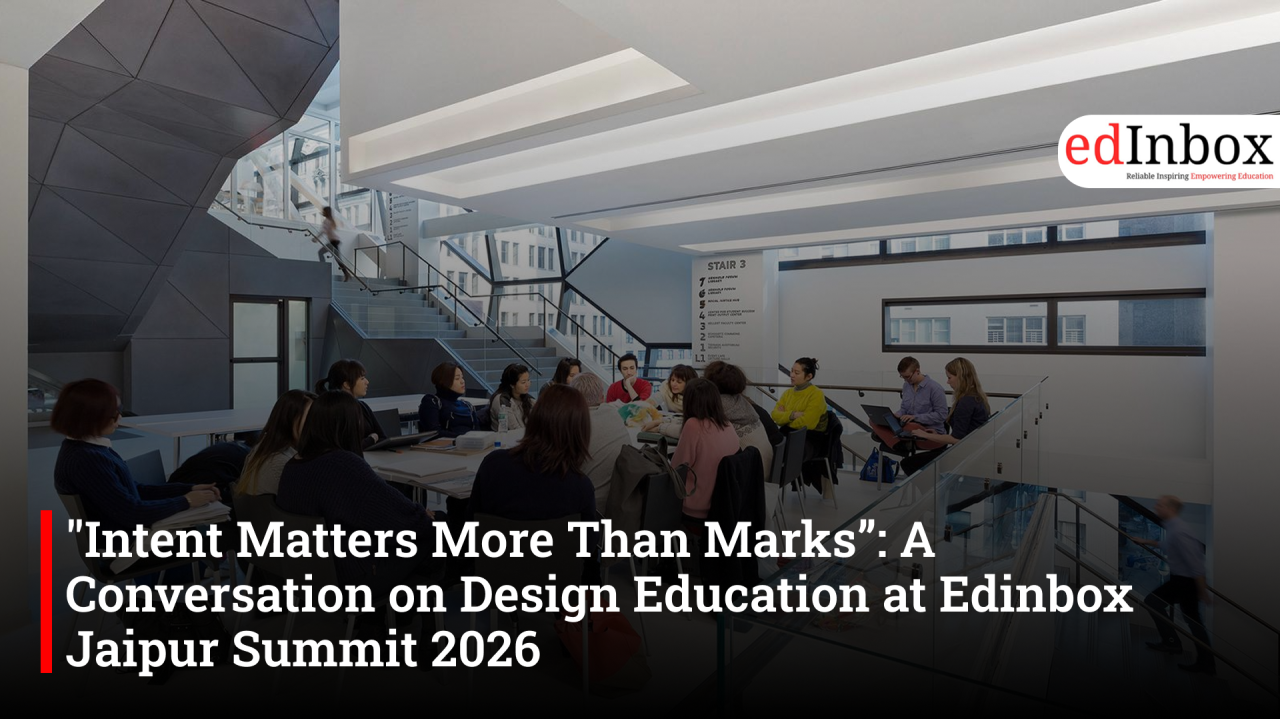
Art has been taught for numerous years. Yet in India, the subject has been sidelined for long and reduced to merely the basics of drawing or observational drawing, reappropriated by poorly trained educators into copying images or copying what the teacher him/herself does. The lack of an effective arts curriculum led to initiatives outside of school taken by private and public institutions, some to great benefit, but a majority yet failing to realise the full potential of arts for students. This article will not heed to the why of the situation, instead explore what arts are capable of doing for a child’s development. For arts are now making their way into Indian school curriculums much more effectively.

Indian boards such as the CBSE and State Boards have struggled to maintain an effective arts curriculum for school students. But the influx of international boards such as the IGCSE or the IB have given more opportunities to the ones who can afford. However, if you are a parent whose child goes to a CBSE or even State Board school, you may – or not yet – have started to hear about integrating arts into the curriculum. If yes, then that is because of the new National Education Policy that encourages the use of Arts to teach various concepts across subjects in a manner that is more experiential and perhaps, joyful. The policy also states that doing so will allow a greater connection between Indian culture and education. But why the arts? Dr. Elliot Eisner, a famous professor of art and education, stated numerous times in his speeches and conversations that the arts are capable of much more than merely assisting the learning of other subjects.

And he made a solid case for how the study of arts were capable of developing cognitive abilities that are crucial for any adult living in a civic society. Similarly, Sir Ken Robinson, yet another leader in the field of education and creativity, stressed the importance of creativity as a necessity as opposed to a luxury for children in schools. Engaging a child in learning of art and design exposes them to creative environments that encourage freedom, expression, risk-taking, experimentation, collaboration and more. All of which are capable of coming together to build skills that are now considered as 21st century skills by the World Economic Forum – Creativity, Communication, Collaboration and Critical Thinking. 

This honest expression, when nurtured and guided by art and design educators, is also capable of boosting self-esteem in children. Children, more often than not, take pride in their creations and in the development of their skills which equips them with confidence to face challenges in their subjects, which eventually also reflects on their confidence in life. Art and Design education are also catalysts to building empathy and encouraging collaboration for students. Art as a field allows one to perceive another’s expression and design works towards solving problems for people.

Both enable a child to understand different perspectives and experience or understand other people’s views. This aids in the development of empathy within children. Additionally, both are capable of improving collaborative skills amongst students. Based on the nature or scale of the project, art may require a child to work with colleagues and design as a subject perhaps cannot function without the involvement of various stakeholders required to work together. Art and Design also nurture critical thinking and develop problem solving skills. If you have ever visited a museum and picked up an exhibition brochure or read any supporting descriptions on artworks, you would have noticed the many symbols, metaphors or meanings that can be embedded within an artwork.

Similarly, in design, the outcome always has a function that improves utility like the aerodynamics of a car for better fuel efficiency or the use of stretch fabric for more comfort in garments. While these examples may be far-fetched projects for young children, exposure to such projects and an awareness of the same nurtures critical thinking and develops problem solving skills. There are numerous educators, leaders and professors who have reiterated these points on several occasions. But the lack of awareness and the lack of available services often causes parents to misunderstand the importance of the arts in a child’s learning journey.

India’s education landscape has for long focussed on Science and Commerce for that was the need of the industry when we gained independence and when we became a liberated economy. Today’s industrial landscape demands for more creativity for the world is becoming increasingly volatile, uncertain, chaotic and ambiguous (VUCA). Some have also started to address the world as brittle, anxious, non-linear and incomprehensible (BANI). What kind of education then do you reckon will aid the future generation be better prepared? What kind of skills do you imagine the future generation will need to develop solutions to increasing global challenges? 

The Indian Institute of Technology, Bombay (IIT Bombay) has begun the registration of the Undergraduate Common Entrance Examination in Design 2026. The applicants, who want to get admitted in design, can submit their application without late fees up to October 31st. The applicants can submit their application with late fees up to November 7th. Let us find out when the entrance exam will be held.

The students can apply by visiting the official website, uceed.iitb.ac.in. IIT Bombay has released the complete schedule. Meritorious students can take admission in Bachelor of Design (B.Des) courses in IIT Bombay, IIT Delhi, IIT Guwahati, IIT Hyderabad, and IIITDM Jabalpur, etc. IIT Bombay conducts this entrance exam annually.

UCEED 2026 Registration: How to Apply: How to Register

  • Visit the official website, uceed.iitb.ac.in.

  • Click on the Registration tab on the homepage.

  • Register by providing your email address, phone number, and other details.

  • Submit the application form after providing the details.

  • Upload your documents.

  • Pay the fees and submit.

UCEED Exam 2026 Date: When will the exam take place?

The entry test admit card to take admission in the Design UG course shall be out on January 2 at 1:00 PM as per the calendar released by the authorities. The entry test will be conducted on January 18, 2026, from 9:00 AM to 12:00 PM. The answer key of Part A will be out on January 20, and objections may be raised till January 22. The final answer key will be published on January 28.

The Feb 5 deadline will announce the cut-off for Part A, and the results will be announced on Mar 6.

Switching the career is both an exciting and a high risk decision that people are taking in the current era, especially moving into the creative field of design, which is rapidly growing and evolving in India. With India’s booming startup culture, genZ workstyle, digital transformation, and expanding lifestyle sectors, design skills have become more valuable than ever. For all those thinking about career change, here are the five best design courses in India that offer excellent career opportunities, skill development, and future-proofing your professional life.

Bachelor of Design (B.Des) in Fashion Design

Fashion design is an evergreen and lucrative field in India and worldwide. Pursuing this course means learning about India's rich textile heritage and modern fashion evolution. Thus, a B.Des in Fashion Design in India teaches you garment construction, fabric science, fashion illustration, and new-age trends like sustainable fashion. Additionally, India is one of the largest textile producers globally, and with the rise of Indian fashion brands domestically and internationally, fashion designers have immense scope.

  • Top colleges: National Institute of Fashion Technology (NIFT), etc 
  • Career opportunities: Fashion designer, apparel quality manager, stylist, fashion merchandiser. 
  • Average starting salary: ₹3.5 to 5 LPA.

Bachelor of Design in UI/UX Design

User Interface (UI) and User Experience (UX) design jobs have tripled in the last five years because of India’s digital economy expanding rapidly. UI/UX designers make apps, websites, and digital platforms intuitive and user-friendly, a key factor in business success. Want to know  why to choose this course? Apparently,  the demand for UI/UX designers in tech startups, banks, fintech, and e-commerce sectors is booming. It offers a blend of creativity and technology.

  • Top colleges: Indian Institute of Technology (IIT) Bombay - IDC School of Design; National Institute of Design (NID), etc.
  • Career roles: UI designer, UX researcher, interaction designer, usability analyst.
  • Average starting salary: ₹5 to 8 lakhs per annum, with rapid growth potential.

Graphic Design Diploma or Degree

Graphic design is the art of visual storytelling used in branding, advertising, publishing, and digital media.  This  is a skill many people, especially individual content creators have learned in past years. From logos to social campaigns, graphic designers communicate powerful messages visually. Thinking about why choose this course? See, it's simple, every business from startups to multinational corporations needs branding, marketing collateral, and digital content, creating constant demand. 

  • Top colleges: National Institute of Design (NID), Indian Institute of Technology (IIT) Delhi, etc.
  • Career roles: Graphic designer, art director, visual designer, digital illustrator.
  • Average starting salary: ₹3 to 6LPA. 

Bachelor of Degree or Diploma in Interior design.

An interior design is a stream and a trendy course over the last ten years, combining creativity with functionality, influencing living and business environments. As real estate development is on the increase more so in the developing economy such as India, the industry is expanding day by day. More and more urbanization and business development leads to a steady need of interior designers who are adept at creating both aesthetically pleasing and practical solutions. 

  • Top colleges: National Institute of Design (NID), Sir J.J. College of Architecture, and so on.
  • Career options: Interior designer, space planner, furniture designer.
  • Salary: 3-5 lakhs yearly.

Product Design (Industrial Design)

Product designing is another career that is developing due to the needs and demands of genZ. It entails coming up with the products that are practical, functional, and appealing or attractive. It encompasses the creation of concepts, prototyping, and production.

In case you are asking yourself whether this will be a good decision, understand this: the manufacturing industry in India is expanding, and more importantly it is an innovation-driven industry, so product designing is a modern and exciting job.

  • Top colleges: National Institute of Design (NID), MIT Institute of Design, IISc Bangalore (PG programs) etc.
  • Career options: Product designer, design engineer, UX product designer.
  • Salary Package: 4 to 7 lakhs per annum.

Why are these Courses Trending in India in 2025?

Startups, digital transformation, e-commerce, and lifestyle improvements are expected to increase the Indian design industry at 12-15 percent per year. In addition, the government is contributing through programs such as Make in India and Digital India that is encouraging design-led innovation in both manufacturing and technology. Furthermore, new career opportunities are emerging through new technology, such as augmented reality (AR), virtual reality (VR), and AI in design.

What is the Best Way to Select a Design Course? 

In case you need to change your career to design, this is how you may choose the appropriate design course to pursue: 

  • Evaluate interest: It takes real interest in creative areas. Find out whether you are a visual storyteller, technology human interaction, spatial aesthetics or product innovator.
  • Time and investment: Degree courses require 3-4 years, whereas the time required by a diploma or certificate course is between 6 months and 2 years.
  • Consider placement and alumni success: Investigate industry connect, internship, and placement statistics of the institute.
  • Industry-specific tools: Degree programs that educate software use, such as Adobe Creative Suite, AutoCAD, Sketch, Figma, and Rhino, make students more employable.

Switching careers from XYZ field to design can be a promising step for those looking to blend creativity with growth potential while doing what they are actually passionate about. The five courses above provide a mix of traditional and contemporary disciplines aligned with evolving Indian industry needs. Whether fashion, digital design, interiors, or product innovation appeals to you, investing in a recognized course from reputed Indian institutes will set a solid foundation for a successful new career.

Artificial intelligence (AI) is changing everything, and the creative industry is transforming with it. The birth  of a new type of job: the ‘AI Photo Designer’ is one of the most discussed options. However, will this title be a legit and accepted job, one where there is demand, career opportunities and growth? Here is everything you need to know, but before that let’s start by understanding the job role of an AI Designer.

Who is an AI Designer? 

An AI Designer is a creative professional who uses technologies of artificial intelligence to design, develop, and improve products or experiences. They work with engineers and other stakeholders to develop AI-based solutions, typically human-centric and interactive interfaces and interactions. Their work involves designing the AI prototypes, creating new AI technologies, and creating AI-driven products. AI Designers blend innovation and substantial technical expertise and work on such domains as computer vision, voice interfaces, and machine learning applications. They also help ensure the AI systems’ ethical and effective use, creating user-friendly, transparent, and trustworthy AI experiences. The key skills are design thinking, prompt engineering, basic programming, excellent teamwork and communication skills.

Who Is an AI Photo Designer?

An AI Photo Designer is a professional creative designer who uses advanced AI tools to create, edit, or transform photographic images on behalf of clients, brands, or companies. It is not simply about editing pictures using AI filters, it involves prompt engineering (providing the AI with text prompts), strategic images, style transfer by AI, and working with automated and human teams to produce high-quality and unique visual images.

Is the Market on the Build?

The number of job ads suggest that AI is rising in design and creative work, with mentions of the word AI in job descriptions and titles in 2023 and 2024, along with 56% in 2025 in search results, indicating a strong demand among design employers in 2025 for designers of products and services who are tech-savvy and capable of using AI tools productively.

AI Content Creator, AI Art Director, or Prompt Engineer are already official job listings and AI Systems Designer has witnessed a steep increase in posts - rising more than 90 points in 2025 alone. Media, advertising, e-commerce, and fashion designing companies are posting job adverts that seek applicants with the ability to apply Midjourney, Stable Diffusion, DALL·E, Firefly, and other generative image systems.

As a traditional graphic design industry is being automated, a new generation of so-called hybrid creative jobs is emerging. Employers value candidates who combine sensitivities of design, art direction, proficiency in AI tools, and timely creation.

Although AI has emerged, the skill of design is currently the top skill in AI-focused job advertisements, even over pure programming or AI model development. Communication, creativity and leadership are recurrently presented as qualities to these occupations.

Existing Examples and Career Pathways

AI Photo Editing and Art Direction

In numerous studios and agencies, there is a new position called AI Image Curator or AI Art Generator Specialist, making the job description to instruct AI to produce branded images, ad content, social media content and editorial illustrations.

AI-Enhanced Freelancing

In India and the world, successful freelancers are establishing their careers by composing and restoring AI images and performing image enhancement through creative cloud services, meeting the needs of publishers, e-commerce sellers, influencers, and brands.

Education and Upskilling

The mainstreaming of these skill sets is being reflected in the introduction of micro-credentials and workshops in AI image creation in the best universities and design schools.

Will AI Replace or Create Jobs for Designers?

  • Endangered Traditional Roles: The World Economic Forum (WEF) places graphic design at the top of the list of occupations that are on the downward trajectory because of automation, yet adds that new kinds of hybrid creative occupations are emerging. 
  • Identifying as AI Photo Designer: Although the term AI Photo Designer is not a standardized job title on either Naukri or LinkedIn, its capabilities are now being listed on such positions as Content Creator, Digital Visual Designer, Prompt Engineer, and many others, all of which are currently requesting expertise in AI image tools.
  • Competitive Advantage of First Adopters: Designers that adopt AI processes, i.e., integrating generative images with narrative, curation, and creative decision-making, are enjoying increased productivity, demand, and securing newer job titles, which only a few years prior were unattainable.

What Aspiring AI Photo Designers Should Pay attention to?

  1. Develop Hybrid Skills: Study design basics and prompt engineering in AI. Applications such as Midjourney, Firefly, DALL.E, and Adobe Express can now be used to create meaningful imagery without the conventional editing process; however it takes an artistic vision and effective communication with AI.
  2. Keep Pace: AI systems and design requirements change rapidly. Online challenges (such as Adobe Creative Residency) and courses and webinars are a good way to keep your skills up to date.
  3. Build Your Brand: With the field becoming more competitive, visual style and human stories cannot be replaced regardless of the heavy lifting done by AI in implementation.
  4. Ethics and Authenticity: With the emergence of AI fakes as a topic of concern, human designers with expertise in ethical application of AI, curation, and differentiation of authentic work will be even more sought after.

Does the “AI Photo Designer” Exist?

Yes, the AI Photo Designer is already becoming a reality and an appreciated occupation, with its technical and creative skills. As the traditional graphic design career gets redefined, AI fluency coupled with design thinking is creating new career opportunities in India and the world at large. Not only will designing photos with AI become a marketable skill in the next several years, but in many ways a formal job role; with high demand in many industries including media and advertising, technology, entertainment, and e-commerce. 

Top Bloggers

  • Sample avatar

    Christian Hardy

    Joomla! core

  • Sample avatar

    Agnes Payne

    Joomlart's Co-Founder

  • Sample avatar

    Christian Hardy

    UberTheme's CEO