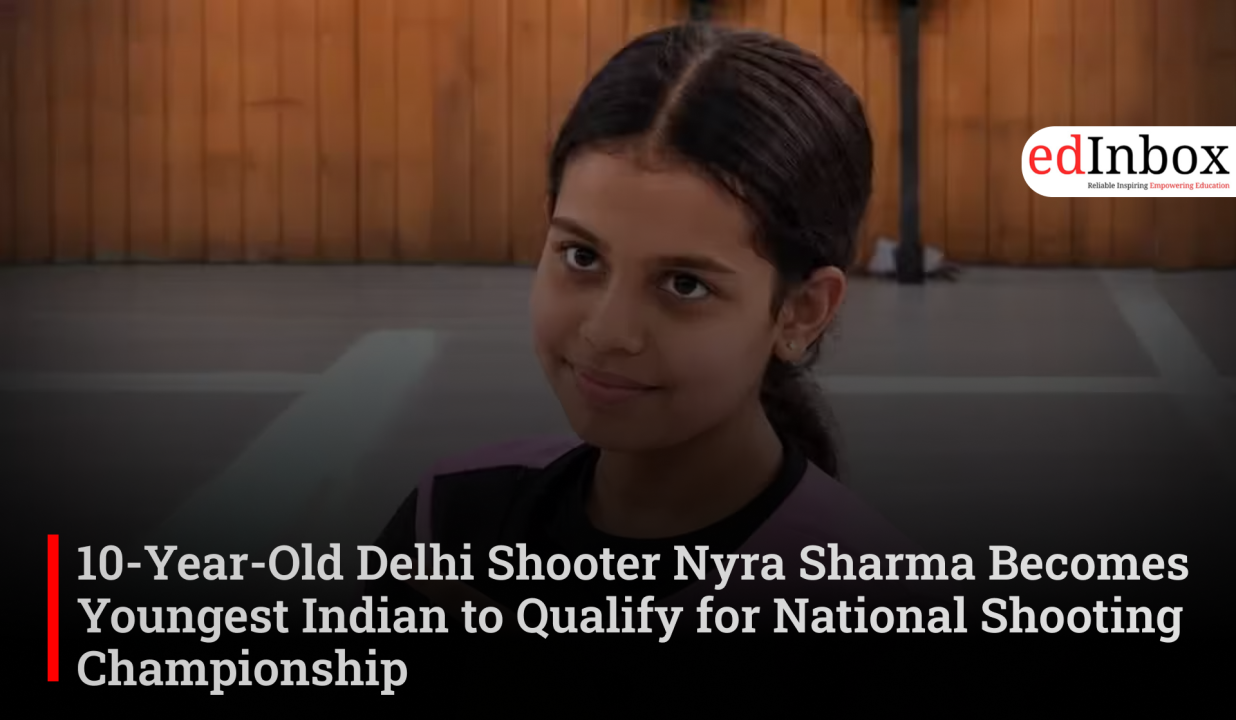
Appearing for the All India Forensic Science Entrance Test (AIFSET) offers numerous compelling reasons for aspiring forensic science students. Here are seven key motivations to consider:
 Edinbox
 Blog
Edinbox
Edinbox Blog
Appearing for the All India Forensic Science Entrance Test (AIFSET) offers numerous compelling reasons for aspiring forensic science students. Here are seven key motivations to consider:

Aspiring forensic scientists and scholars, the time has come to prepare for the prestigious AIFSET 2024 examination. This examination, set to establish new benchmarks in forensic science education, is A testament to your dedication and potential.
Forensic Science AIFSET https://aifset.com/ is a crime-scene-based science, but forensic science graduates are consulted in civil cases, such as providing the validity of a signature on a wall or an important document. Forensic science professionals are consulted for issues related to cutting corners or any illegal activities.

Design that communicates has always intrigued you, hasn't it? You like posters, branding, social media visuals, websites, animation or the way a particular advertisement tells a story. You'll spend hours observing colors, fonts, and layouts. However, there is one thing that is stopping you from taking Communication Design after 12th, and that is you can't draw that well.
Students often have this question before selecting a design course. But you don't have to be an expert artist to study Communication Design.
There's a catch to this, though. Drawing may not be a required skill in all Communication Design courses, however, the ability to draw, sketch, observe and visualise may be assessed in some design entry tests. So, the real question is not simply whether you can draw. It is whether you can communicate an idea visually and are willing to improve your basic drawing skills when required.
If you are thinking about pursuing Communication Design after class 12, here's what's important and which entrance exams you can apply for and why AIDAT might be a great choice for students interested in Communication Design and other design fields.
No, not all Communication Design courses require advanced drawing skills. Communication Design is about using visual and digital forms to communicate an idea, message or experience. Depending on the programme, students can work with graphic design, typography and branding, illustration, photography, motion graphics, animation, digital media, visual storytelling and UI/UX. Studying Communication Design does not mean you are training to become a fine artist or illustrator. However, a designer could be asked to answer questions like:
You don't need beautiful drawings to solve these problems, you need observation, ideas, visual thinking and problem solving. Indeed, the official syllabus of UCEED divides the drawing and design aptitude. The Design aptitude element involves solving problems/situations in an innovative and empathetic way. This is relevant to students who may have the thought in their head that “I can't draw, I can't be a designer.”
Sometimes, yes. This is where design aspirants must be cautious. There is no single entrance exam for every Communication Design course in India. Admission requirements vary by university and institute. There may be different admission procedures for each university/institute. You can find a Design Test of your college of interest or an AIDAT, NID DAT, UCEED or an Entrance Test of your institute. These tests are not all based on the same way of assessing students. As a result, AIDAT is a good fit for communication design aspirants.
If students are still in the process of considering their options after Class 12, they can try the All India Design Aptitude Test (AIDAT) as one of the options of entrance. Candidates with 10+2 education from any recognised board can apply for the undergraduate diploma and degree courses. It's listed in the design areas of Communication Design and graphic, fashion, interior, product, UX and other creative disciplines.
It can be useful for a student who is not certain about exactly what his or her design specialisation will be because the process isn't just a drawing test. The existing AIDAT system comprises 100 MCQs based level-1 exams of 60 minutes, a portfolio round later, counselling (college section) and interview phases.
Its syllabus includes design aptitude, 2D/3D visualisation, observation, design principles, creative thinking, logical reasoning, design ability, aesthetic sense, form and function, perspective and visual logic.
If you're more of a thinker when it comes to design and solving visual problems, then AIDAT could be worth a look. It is also crucial to grasp the nature, and non-nature, of AIDAT. AIDAT is a national level design entry system that provides access to different design courses offered by participating institutions. AIDAT is not accepted by every Communication Design college in India. Students should therefore check whether their preferred college and programme participate in the AIDAT admission pathway before applying.
NID's B.Des programme offers Communication Design courses like Graphic Design, Animation Film Design, Film and Video Communication and Exhibition Design at its Ahmedabad campus. Selection is based on his/her performance in the Design Aptitude Test (DAT) in two stages.
NID's B.Des programme includes Communication Design disciplines such as Graphic Design, Animation Film Design, Film and Video Communication and Exhibition Design at its Ahmedabad campus. Admission is based on performance in two stages of the Design Aptitude Test.
NID's 2026–27 B.Des eligibility allowed students from Science, Commerce, Arts, Humanities and other recognised 10+2 streams, subject to the prescribed eligibility and age conditions.
For a student who is weak at drawing, however, NID DAT should not be approached with the assumption that drawing does not matter. The test assesses design-related knowledge, skills and qualities, and preparation should include visualisation and drawing alongside broader design aptitude.
The admissions for B.des are made based on the scores of UCEED. Institutes like IIT Bombay, IIT Delhi, IIT Guwahati, IIT Hyderabad, IIT Indore, IIT Roorkee and IIITDM Jabalpur are accepting admission. The scores of UCEED are also accepted by several other institutes through their direct admissions.
The students who are from Science, Commerce and Arts & Humanities could appear for UCEED 2026 provided that they fulfill the eligibility criteria for the exam. However, if you are not good at drawing, you need to be aware of one thing before taking the admission to UCEED: They actually test drawing.
Drawing products, people or scenes with an awareness of proportion, line quality, composition, perspective and shading is a part of the UCEED syllabus. It also assesses design ability and problem solving skills. You need not be an expert artist, but if UCEED is in the list of your targets, you should practise drawing.
NIFT is relevant primarily if you are interested in Fashion Communication, rather than assuming it is the standard entrance exam for every Communication Design degree.
NIFT's B.Des programmes include Fashion Communication, alongside areas such as Fashion Design, Accessory Design, Textile Design and others. Its 2026 entrance framework included the General Ability Test and Creative Ability Test for B.Des programmes.
This distinction matters because Communication Design and Fashion Communication overlap in some skills but are not automatically the same course. Always check the exact programme title before preparing for an entrance exam.
Instead of asking “Which exam is easiest?”, ask “Which exam matches the type of design education I want?”
|
Entrance exam |
Best suited for |
What a weak drawer should know |
|
AIDAT |
Students exploring participating design colleges and multiple design disciplines |
Its current Level 1 format is MCQ-based, but its broader published syllabus also includes visualisation and drawing-related concepts |
|
NID DAT |
Students targeting NID |
Design aptitude and visual skills matter; prepare beyond conventional drawing |
|
UCEED |
Students targeting IIT B.Des and other participating/result-sharing institutes |
Drawing is explicitly part of the syllabus |
|
NIFT Entrance Exam |
Students targeting NIFT's B.Des programmes, including Fashion Communication |
Creative Ability is part of the B.Des entrance process |
The important takeaway is that being weak at drawing should not stop you from applying for design, but it should influence how you prepare.
You may be able to come up with creative ideas but struggle to draw a realistic face, person or object. This doesn't mean that you are automatically bad at Communication Design. Design entrance preparation is different from preparing for a fine-arts competition. In many designs, a sketch is used to convey an idea, not a finished piece of art. A rough drawing that clearly shows how a person might use an object or how a visual story could unfold can be more useful than a highly detailed drawing that does not communicate the idea.
That's why students who are preparing for an entrance exam for Communication Design after 12th should practice drawing for the purpose of visual communication and not artistic perfection only. For instance, consider an ordinary item like a chair, bottle or school bag and attempt to reimagine it for other users or different situations. Think about how you would make it easier to carry, more suitable for a child or more practical in a small room. The exercise is not about making the sketch pretty. It is about showing how you observe a problem and turn an idea into a visual solution.
It is an important concept for students to grasp that you are not training to be a fine artist, but to be able to express yourself by design.
If drawing is your weak area, don't spend months simply copying portraits. Your preparation should be a mixture of the basic drawing skills, observation and design thinking. Create with common items and develop to proportion, perspective, the basic figure of the human form, gesture and visual narration.
A helpful practice exercise is:
Another aspect to consider is starting to notice the design you see every day. Pay attention to the packaging, ads, websites, apps, posters and public signs. Why one design attracts you and why another does not. This type of observation can enhance visual thinking skills which are valuable beyond drawing.
Yes, if they are eligible for the specific programme. The Communication Design course is not restricted to Fine Arts students, and does not require them to have taken Fine Arts in classes 11 and 12.
For example, NID's 2026–27 B.The candidates from Science, Arts, Commerce and Humanities were all accepted by Des admission process as per the prescribed eligibility and age criteria. UCEED 2026 also has an option for candidates of Science, Commerce and Arts & Humanities to appear for the examination, but the participating institutes may have their own admission criteria.
After class 12 students may also pursue a course in AIDAT. Its eligibility details show that candidates who have passed out 10+2 from any recognised board are eligible to apply for its design undergraduate program which includes Communication Design and other design courses.
Hence, if you have been in Arts, Commerce or Science, this should not deter you from considering Communication Design as your stream of your School. It's all about the eligibility of the specific course, how you are getting in, and ultimately, if you want to do work with design.
It's helpful to be creative, but it's not enough to be creative to be a good designer. Communication Design is largely about making decisions — how an idea should look, what the audience should notice first and how easily they should understand the message
Constantly, a designer will ask himself/herself the following questions:
These are questions of design. You can use drawing to explain the answer, but it is as important to explain the thinking that led you to the answer. Good observation, storytelling, problem solving and understanding people skills can lead to effective design skills even if students are not naturally gifted as artists.
Unlike other courses, there isn't any entrance examination that is mandatory for all Communication Design courses in India. The right exam depends on the college and programme you want to pursue.
For example:
You do not need to walk in as a skilled artist. What matters is that you are ready to work on drawing, careful observation, and visual thinking. This is extra important if the entrance test you pick checks these areas.
A better question is this: do you enjoy solving communication tasks using visuals? If you feel interested in how a brand should look, how an app can explain its purpose, how data can be shown in a clearer way, or how a story can be told with images, then your current skill level should not be the only factor.
When you choose an entrance test after 12th grade, start with the program and college you want. Then look at the eligibility rules and how the selection works. After that, pick the test that matches your target.
For many students, AIDAT can be a good option because it focuses on a wider design skill path. NID DAT and UCEED can fit students who already know they want specific institutions.
You might not draw perfectly right now. Still, you can learn how designers think. So, if you are sure you want to pursue this course, give your 100% and build a successful career. Remember the most famous line always: where there is a will, there’s a way.

Joomla! core
Joomlart's Co-Founder
UberTheme's CEO