The University Grants Commission (UGC) is going to approve foreign universities to open campuses in India. This has been done to provide the students with education from foreign universities in their own country and not abroad.

There are three foreign universities operating in India at present. The government has altered rules to enable foreign institutions to become a part of the Indian education system.

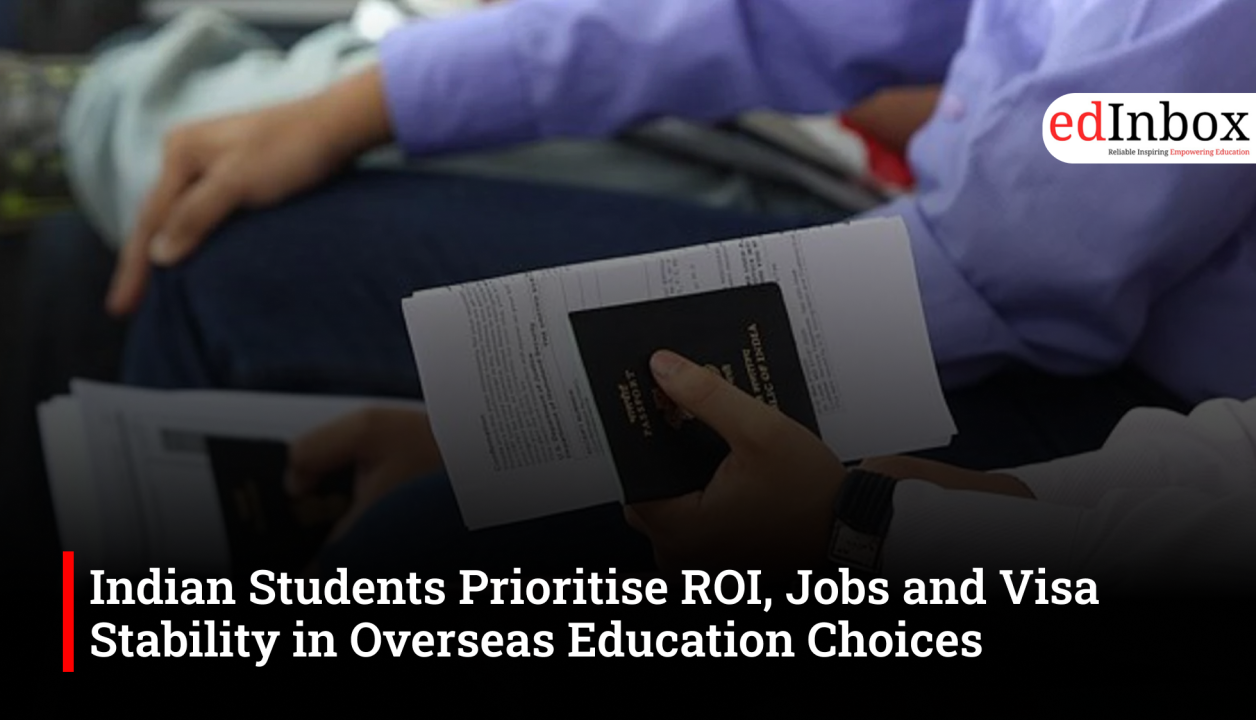
According to Education Minister Dharmendra Pradhan, around 14 to 15 lakh Indian students pursue higher studies abroad, resulting in an outflow of funds. In an effort to provide opportunities for students to study within the country, the government is going to allow foreign universities to open campuses in India.

Over 50 major international universities have shown interest in getting UGC recognition and are holding talks with state governments, says Dharmendra Pradhan.

"Approvals will be made after these universities have been rated according to our standards. Pradhan asserted that this measure is in the best interests of the pupils."

The UGC will rate these foreign universities on its standards and grant approvals. Pradhan asserted this is in the students' interests and will enable them to achieve access to education opportunities.

The government has also pledged to supporting institutional independence and guaranteeing foreign universities shall enjoy self-governance upon settling in India. And wishes to maintain standards high in the education sector. While answering a question regarding punishments for universities for violating rules, Pradhan mentioned that the government will do what is required.

A student at Columbia University has stated that he employed an AI program he had developed to assist students in cheating successfully during their coding interviews to secure summer internships at tech giants such as Amazon, Meta, TikTok, and others. An intangible piece of software called Interview Coder was created by Roy Lee to assist students in passing LeetCode interviews, including algorithmic and coding problems.

Baptiste Vicini, an API pioneer and tech entrepreneur, recently shared some behind-the-scenes data on X (formerly Twitter) regarding how a 21-year-old college student made $170,000 a month "trolling" Silicon Valley.

"This is Roy Lee. He is an undergrad student who just got EXPELLED from Columbia. Not for cheating on exams. But for EXPOSING Big Tech's hiring secrets. Here's how a 21-year-old made $170K/month "trolling" Silicon Valley," his long post starts.

"Meet Chungin "Roy" Lee. 600 horrible hours of working on LeetCode (tech's toughest coding interview prep platform) nearly got him out of coding forever. Instead of throwing in the towel, though, he had a idea that would lay bare Silicon Valley's greatest weakness," this post added.

Roy Lee created Interview Coder, an AI assistant that is non-intrusive and can instantly solve any coding problem. The genius part? The screen recording software couldn't detect it. To Lee's surprise, he wasn't done yet. Something nuts was going to happen to him.

He approached the world's biggest tech companies: TikTok, Meta, and Amazon. Four interviews and 96 hours later? Each one of them gave him a job.

Lee turned them down. His real mission? To demonstrate the reality of tech hiring's mess. To show them how he duped all of them, he uploaded the interview video to YouTube. Upon 1 lakh views, Silicon Valley erupted.

Amazon executives went ballistic. They sent Columbia University an hysterical email about Lee's "alarming" conduct. All corporate offers were forthwith rescinded.

Meanwhile, Lee made $170K in one month, and Interview Coder grew 50 per cent weekly. The gadget that exposes the cracks in Big Tech's machine? It was becoming an empire of millions of dollars. But there were consequences.

First, he was suspended from Columbia University for a week. The university's disciplinary board held that he was "responsible for facilitating academic dishonesty." Lee, though, did not go quietly into the night. He posted images of university staff on the web and released recordings of his own disciplinary hearings.

How did Columbia University respond? A one-year suspension. But Lee wasn't even fazed by it. His response to becoming an internet sensation? "Update: I got kicked out!". Either way, he had no desire to go back to Colombia. Traditional routes already didn't interest him.

“Lee’s logic was bulletproof: “Everyone programs nowadays with the help of AI. It doesn’t make sense to have an interview format that assumes otherwise.” One week of coding exposed decades of outdated practices,” Baptiste Vicini’s lengthy thread also added.

In spite of being instructed otherwise, 80 per cent of students are said to be already using AI in coding exams. Large technology companies such as Anthropic, Deloitte, and Google were considering significantly altering their hiring practices.

Vicini’s tweet claims that Lee has already enlisted viral creators to assist with Interview Coder’s marketing. In addition, he is working on an enigmatic new project. Where will Lee go next? San Francisco. At the age of 21, he decided to pursue entrepreneurship instead of corporate America.

In addition to scholarships, education loans, assistantships, and part-time jobs can be considered to fund study in the US by Indian students.

Education loans

Indian students have many loan facilities available to fund their studies in the US. Indian banks, NBFCs, and foreign lenders provide education loans that include the cost of tuition, living, and travel.

Institutions like Credila, SBI, BOI and global suppliers like MPOWER Financing and Prodigy Finance offer special advantages — no collateral, no cosigner, and competitive interest rates from 9.99%, with loan limits of up to $100,000. Such offerings are especially useful for students who might have financial constraints.

Career Mosaic assists students in managing education loans by providing information on different options, such as collateral, non-collateral, non-cosigner loans, and international loans. This support enables students to make sound financial choices, making it easier for them to study abroad, by enabling students to determine their eligibility within minutes, providing lower interest rates and discounts on processing fees.

With widespread collaborations and affordable services, these alternatives assist students in obtaining the financial assistance they require to pursue their dream of studying abroad.

Assistantships and fellowships

Numerous US universities provide teaching, research, and graduate assistantships, which enable students to work with faculty members while earning tuition waivers and/or stipends. These assistantships not only alleviate the cost of education but also provide excellent academic and professional exposure.

Depending on the funding arrangement, assistantships can be fully or partially funded, in which students can get a full tuition waiver with a stipend, a partial tuition waiver with a stipend, or just a stipend without a tuition waiver. For instance, the University of Massachusetts Lowell provides partial and full assistantships to qualified students, while others such as Northeastern University and University of Missouri - Kansas City also offer assistantships that support students financially while increasing their learning and research opportunities.

Part-time work

International students in the USA on an F-1 visa may work part-time for 20 hours a week or less on campus during the academic term, assisting them to cover living expenses while acquiring valuable work experience. The opportunities exist in cafeterias, libraries, gyms, campus local stores, the admissions office, or as proctors, among others. Also, during summer and winter breaks, when the students are not taking full-time courses, they can work a maximum of 40 hours weekly, which is another chance to earn a higher income.

Certain colleges also provide remunerated internships that go towards paying tuition, providing additional financial aid. Nevertheless, it is important that the students comply with visa guidelines to sustain their legal status and future eligibility for work within the US.

In an insightful Reddit post that has sparked debate, a European student questioned an increasing number of Indians seeking to migrate to the West, questioning whether Western nations remain the land of opportunity they seemed to be.

The post, in a mainstream migration subreddit, spoke of fears about the Western economies. The writer cited speedily increasing housing prices, stagnant wages, and heightened competition in the labor market as indicators of the failing Western dream.

"Housing is becoming extremely costly, and its cost is increasing at a higher rate than wages. Many industries are on the verge of collapse, and highly educated natives also find it difficult to get employment. How can you, as an Indian, think that this is a land of milk and honey where you will prosper in all your enterprises?" the student asked.

The article points to a developing sentiment among Westerners that they do question why high-skilled professionals from fast-developing economies such as India keep looking abroad for opportunities. The Redditor cited India's high growth rate in GDP, its vibrant business economy, and lower standard of living as good reasons to remain.

"Outside, India is a nation whose GDP is growing so rapidly and whose horizon is pink. Would not a materialistic Indian be better off with starting his own business or being employed by businesses in its fast-growing economy?" they supplemented.

Cognizant of the fact that they did not have first-hand information in India, the student was careful to frame their wish for an open debate.

The post quickly gained traction, eliciting a range of responses from Indian users who shared personal experiences and counterarguments. Some pointed to systemic issues like bureaucracy, corruption, and limited opportunities for cutting-edge research as reasons for seeking jobs abroad.

"India is growing, but so is its population. The competition here is brutal, and opportunities are limited if you’re not from a privileged background," wrote one user.

Another noted Western work culture popularity: "It's not money; it's work-life balance, better infrastructure, and freedom. That still counts."

Others concurred with the perspective of the European student, highlighting India's local market opportunities. "Western cost of living is crazy. I make more than sufficient money in India and live a better quality of life compared to my classmates who went overseas and are swamped in rent and bills," wrote one.

The reasoning cites the sophistication of migration decisions, uncovering a combination of economic ambitions, cultural ambitions, and personal career ambitions. While the West remains attractive to many because of its potential and stability, India's emergence as an economic giant is convincing some to reconsider the need to leave home.

Scotland is a scenic nation in the United Kingdom, which is mountainous. A university of this nation is inviting foreign students including Indians to pursue studies and has also provided scholarships. The university name is Strathclyde University, which has begun scholarships for interested and eligible international students joining full-time, on-campus postgraduate programs in the Engineering Department for 2025. The university has fixed the application deadline as 12 September 2025. Foreign students under the scholarship will be provided with 5,000 pounds i.e. approximately Rs 5.53 lakh for studies. 

Scholarships will be given to those admitted in these courses-

Aeronautical Engineering

Architecture

Biomedical Engineering

Chemical Engineering

Civil and Environmental Engineering

Civil Engineering

Design, Construction, and Engineering Management

Electronic and Electrical Engineering

Environmental Engineering

Marine Engineering

Mechanical and Aerospace Engineering

Mechanical Engineering

Naval Architecture

Naval Architecture, Ocean and Marine Engineering

Ocean Engineering

Product Design

Prosthetics and Orthotics

Renewable Energy

What are the eligibility criteria?

Applicants should be self-funded, international fee-paying students. They should have an offer letter to pursue a full-time postgraduate course at the University's Glasgow campus for September 2025 admission. Students who are fully sponsored by a government institution or embassy are not eligible.

A scholarship can be awarded only once a year. The Faculty of Engineering's decision on awarding the scholarship is final. Applicants who fail to meet any of the above eligibility requirements will not be considered for their application.

Dean's International Excellence Award

Besides the £5,000 scholarship, the Faculty of Engineering is also providing a limited number of Dean's International Excellence Awards of £7,000 and £10,000. The awards will be awarded to outstanding students. Shortlisted students will be notified of their selection by 31 July 2025.

For more information, you may refer to the official website of Strathclyde University, strath.ac.uk.

Disclaimer: The content has been sourced and edited from tv 9. Though we have made changes for clarity and presentation, the original content remains with its respective authors and website. We do not own the content.

The 60th convocation ceremony of the Indian Institute of Management Ahmedabad (IIMA) took place at the Louis Kahn Plaza of the Institute. In the ceremony, Professor Bharat Bhasker, director of the Institute, declared that they will open the first international campus in Dubai. The first programme at the Dubai campus will be rolled out in September 2025. IIM Ahmedabad will become the first IIM to do so.

The director also announced the launch of a new Madan Mohanka Centre of Excellence in Case Method of Learning with Madan Mohanka, an industrialist and an alumnus of IIMA from PGP 1967.

The convocation function had Dr S Somanath, Dr Vikram Sarabhai, a professor and ex-chairman of the Indian Space Research Organisation (ISRO) as the chief guest. The duo awarded degrees to more than 1200 students.

The Convocation ceremony conferred degrees on 630 young leaders from four programmes. These comprised 22 scholars from the Doctoral Programme in Management (PhD), 405 students from the two-year Post Graduate Programme in Management (MBA-PGP), 45 students from the two-year Post Graduate Programme in Food and Agri-business Management (MBA-FABM), and 158 students from the one-year Post Graduate Programme in Management (MBA-PGPX), according to the press release.

Five students received gold medals from the chief guest for their good performances in academics. These are Abhi Bansal, Ishaan Jain, and Aanchal Chadha from MBA-PGP; Yogesh Kumar R from MBA-FABM; and Aashruth Rangarajan from MBA-PGPX.

While that is taking place, the Indian Institute of Management, Ahmedabad (IIMA) collaborated with the FPSB India, the Indian unit of Financial Planning Standards Board Ltd. (FPSB), in launching the executive programme in financial planning and investment advisory services. The initiative serves to increase the importance of planned financial education in India.

Intended for mid-to-senior finance professionals, the one-year programme will provide participants with expertise in investment management, retirement tax planning, estate & portfolio risk management, insurance, and alternative investments, in addition to an understanding of regulatory systems and ethical guidelines.

The course focuses on behavioural finance, leadership, negotiation, and communications skills, the need of the hour for present-day financial advisers, according to the press release. Applications for the course have been initiated in March and will continue till August. The first batch will begin from September 2025.

Atul Kumar Tiwari, National Council for Vocational Education and Training (NCVET) Chairman and Ministry of Skill Development and Entrepreneurship (MSDE) Secretary, on Thursday, stated that India is set to be a global leader in distance education, with rising internet penetration and the emergence of e-learning platforms.

Speaking at the 20th annual convocation of the Karnataka State Open University (KSOU) here, Mr. Tiwari informed that distance education enrolments, including those from open universities, account for 10.62% of the overall enrolment in higher education and added that open universities have been serving to improve access to higher education. The admissions reflect that open universities are contributing significantly to the nation's overall Gross Enrolment Ratio (GER), he added.

Saying that online education and open distance learning are growing unprecedentedly around the world, NCVET Chairman opined that advancements in Massive Open Online Courses, artificial intelligence-adaptive learning, and blended models have enhanced learning by making education more engaging and interactive.

With the aim to fill gaps in skills and meet the requirements of changing economies, nations around the world are bringing ODL and online learning within the folds of their national educational policies, he added.

Observing that the landscape of distance and online learning is changing fast, Mr. Tiwari stated that the National Education Policy (NEP)-2020 has prioritized technology-enabled education, encouraging innovation in digital learning, and widening the ambit of higher education institutions.

Enumerating Centre's digital education initiatives, MSDE Secretary revealed that the Indian government has implemented a number of measures to augment ODL and online learning. SWAYAM platform provides top class courses of top institutions and ensures affordability as well as access to learners anywhere in the nation.

Referring to the National Digital University as conceptualized under the NEP-2020, Mr. Tiwari stated that the university would seek to merge online and open learning materials to provide a smooth learning ecosystem.

Mr. Tiwari stated the regulatory organizations, like the NCVET, are doing their part to close the gap between theory and industry skills. The skill development courses, vocational training, and online education programs are imparting employability skills to the learners so that education continues to remain relevant in the face of a rapidly changing global scenario. Karnataka State Open University has been a pioneer in this change of learning paradigm, he added.

Governor Thawar Chand Gehlot, who attended the convocation, awarded Dakshayini S. Appa, chairman of the Sharanabasaveshwara Vidyavardhaka Sangha, Kalaburagi, and C.M. Irfanulla Shariff, chairman of the Indian Education Society, Chitradurga, with an honorary doctorate. An honorary doctorate was awarded in absentia to Minister for Public Works Satish Jarkiholi.

Atul Kumar Tiwari, Chairman of the National Council for Vocational Education and Training (NCVET) and Secretary of the Ministry of Skill Development and Entrepreneurship (MSDE), on Thursday, said India is poised to become a global leader in distance education, with increasing internet penetration and the development of e-learning platforms.

Referring to the 20th annual convocation of the Karnataka State Open University (KSOU) here, Mr. Tiwari explained that distance education enrolments, including those in open universities, account for 10.62% of total higher education enrolment and further stated that open universities have been making an effective contribution to raising access to higher education. Admissions show that open universities contribute significantly to the nation's total Gross Enrolment Ratio (GER), he added.

Asserting that open distance learning (ODL) and online learning are growing at an unprecedented scale internationally, NCVET Chairman averred that the emergence of Massive Open Online Courses (MOOCs), adaptive learning using artificial intelligence, and blended models of learning has given a new dimension to education that is interactive and engaging.

Nations across the world are incorporating ODL and online learning in their national education policy to fill skill gaps and address the needs of emerging economies, he further added.

Observing that the terrain of online and distant education is changing very fast, Mr. Tiwari stated that the National Education Policy (NEP)-2020 has focused on the role of technology-based education, promoting digital learning innovation, and opening up the reach of higher education institutions.

Enumerating the Centre's digital learning programs, the MSDE Secretary stated that the government of India has initiated a number of initiatives to enhance ODL and online learning. High-quality courses from top institutions are provided through the SWAYAM platform, making it affordable and accessible to learners throughout the country.

National digital university

Talking about the National Digital University proposed under the NEP-2020, Mr. Tiwari stated that the university will seek to combine online and open learning materials to build a seamless learning ecosystem.

The NSDC and the Skill India Mission are dedicated to vocational training through initiatives such as PMKVY, enhancing employability. The National Digital Library of India offers millions of digital materials for students and researchers. The DIKSHA facilitates school education with e-learning materials for teachers and students.

Academic knowledge and industry skills

The regulatory agencies, including the NCVET, are striving to overcome the discrepancy between academic knowledge and industry skills, said Mr. Tiwari.

Skill development programs, vocational training, and e-education activities are imparting employability skills to the learners to keep education up-to-date with the changing global scenario, he added.

Karnataka State Open University has been a pioneer in this educational makeover, he said.

Honorary doctorate conferred

The ceremony was attended by Governor Thawar Chand Gehlot, who also awarded the honorary doctorate to Dakshayini S. Appa, chairman, Sharanabasaveshwara Vidyavardhaka Sangha, Kalaburagi, and C.M. Irfanulla Shariff, chairman, Indian Education Society, Chitradurga. In absentia, Minister for Public Works Satish Jarkiholi was also awarded the honorary doctorate.

The Governor also awarded 41 PhDs, 54 gold medals, and 58 cash prizes to students. Up to 17,348 candidates, including 6,402 male and 10,946 female candidates, were awarded different degrees at the convocation. 

Vice-Chancellor Sharanappa V. Halse received the guests and read the report of the university. Registrar K.B. Praveena, registrar (evaluation) H. Vishwanath, and dean (academics) Lakshmi attended.

The Skill India Mission and NSDC are primarily concerned with vocational training under schemes such as PMKVY to enhance employability. The National Digital Library of India offers millions of digital contents for students and researchers. The DIKSHA facilitates school education through e-learning materials for students and teachers.

More Articles ...