
As artificial intelligence transforms workplaces and hybrid work models continue to redefine organizational structures, human resource leaders are increasingly finding themselves at the centre of strategic business decisions. Industry experts believe that while technology is changing how work is performed, the skills that will matter most in the coming decade are distinctly human—empathy, creativity, emotional intelligence and trust.
Speaking to Economic Times Digital, HR strategist and founder of Jijivisha HR Solutions, Kanak Kiran, said the future of work is no longer a distant concept but a reality already shaping organizations worldwide. Distributed teams, AI-assisted workflows and employees seeking greater flexibility and purpose are changing traditional workplace dynamics.
According to Kiran, many organizations continue to view AI primarily as a tool for efficiency and cost reduction. However, HR leaders should focus on a more fundamental question: how technology can enhance human potential rather than simply replace jobs. As routine tasks become automated, capabilities such as relationship-building, ethical decision-making, creativity and emotional intelligence will become increasingly valuable.
Experts argue that organizations must also rethink their structures to prepare for the workforce of 2030. Traditional career paths and rigid job descriptions are giving way to more fluid, project-based and cross-functional roles. Companies that encourage continuous learning, internal mobility and psychological safety are expected to adapt more successfully to rapid change.
The evolving workplace is also transforming the role of HR itself. Once primarily associated with recruitment and compliance, HR is now playing a key role in addressing challenges such as employee retention, burnout, leadership development, workplace culture and AI-driven transformation. As a result, Chief Human Resource Officers (CHROs) are increasingly becoming strategic advisors involved in shaping business direction.
Kiran emphasized that data-driven decision-making should complement, not replace, human judgment. While analytics can identify trends and patterns, qualities such as trust, resilience and leadership potential often require human understanding and intuition.
Looking ahead, experts believe future HR professionals will need a broader skill set that combines business strategy, technology, AI literacy, analytics and organizational psychology. However, they stress that the ability to balance technological expertise with empathy and human sensitivity will ultimately distinguish exceptional leaders in an increasingly automated world.
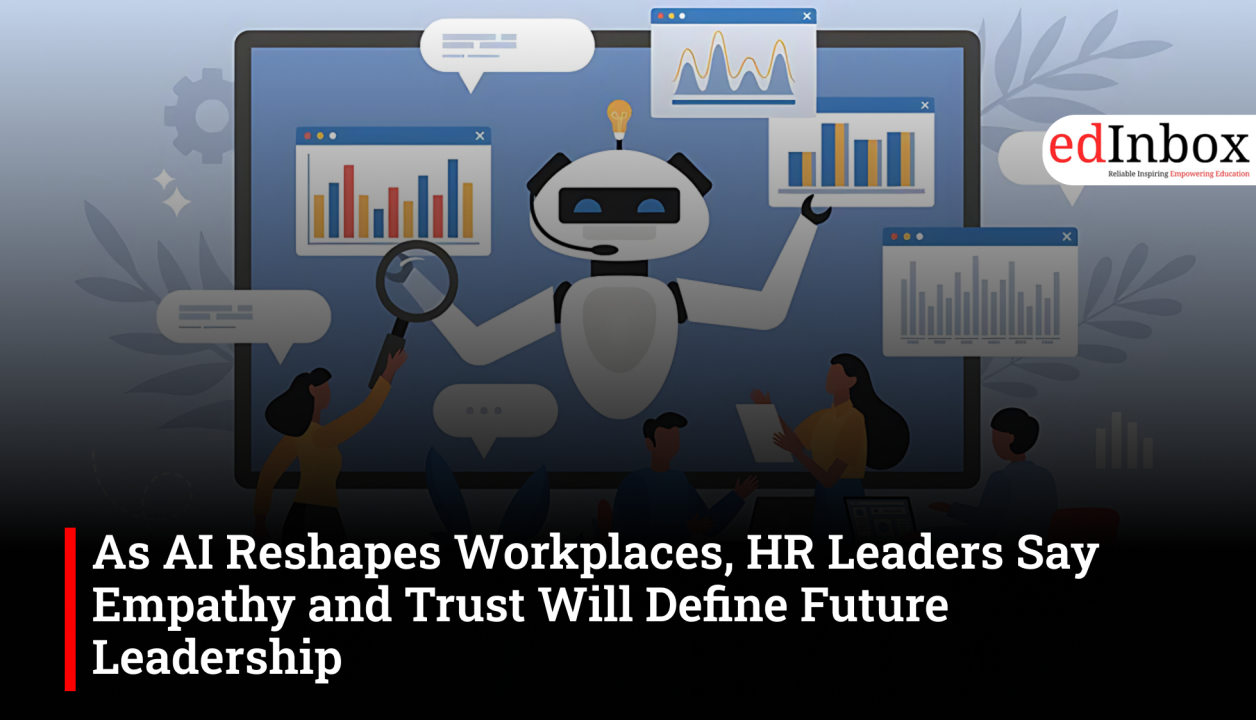
As AI Reshapes Workplaces, HR Leaders Say Empathy and Trust Will Define Future Leadership
Typography
- Smaller Small Medium Big Bigger
- Default Helvetica Segoe Georgia Times
- Reading Mode