The Karnataka High Court on Friday issued notices to the Government of Karnataka and other authorities in response to a public interest litigation (PIL) challenging the transfer of land located on the campus of the Government Veterinary College in Bengaluru.

The notices were also served to the college administration and the Karnataka Veterinary Animal and Fisheries Sciences University (KVAFSU), which oversees the institution.

The petition was filed by the Karnataka Veterinary Association, the Bengaluru Veterinary College Alumni Association, and two other organisations. They have challenged a January 8 government order directing the transfer of four acres of KVAFSU land located within the veterinary college campus at Hebbal. The order also transferred another three acres of land to construct a super speciality hospital.

A division bench, comprising Justices DK Singh and TM Nadaf, directed the respondents to file their responses or statements of objections to the writ petition within 10 days. The next date of hearing is March 25.

According to the petitioners, the transfer of land and the planned constructions will adversely affect the research, teaching and extension activities of the veterinary college.

They expressed apprehension that it might lead to the de-recognition of the college by the Veterinary Council of India and also a decline in future assessments of the National Agricultural Education Accreditation Board. The petitioners urged the court to consider a series of representations submitted by them in Feb.

NCERT has come out with a very sincere and heartfelt apology for the content of chapter IV, "The Role of Judiciary in our Society, " of social science textbook for class 8 students "Exploring Society: India and Beyond (Part II)."

In a press statement, the council announced that the whole textbook has been recalled and it will no longer be distributed. NCERT regretted the matter and acknowledged the inconvenience caused to students, teachers and other stakeholders due to the content of the particular chapter.

The textbook is a part of the Grade 8 social science syllabus and is used by the majority of schools in the country. After the concerns were raised about the chapter on judiciary, the council investigated the matter and decided to withdraw the publication completely

NCERT regretted the mistake and thanked teachers, schools and the larger educational community for their understanding and forgiveness. The council, in a press note, stated that it is still deliberating on the measures to rectify the situation and prevent recurrence of such issues in future publications.

The decision was welcomed not only by the central board schools (CBSE) but also by the state boards, which are largely dependent on the NCERT books and other such study materials developed by NCERT. This change has created quite a buzz in the education sector as the textbooks of NCERT are not only used by the schools affiliated to the Central Board of Secondary Education (CBSE) but also many state boards which their curriculum is based on or adapted by the NCERT textbooks.

Educationalists point out that the amending and pulling out of textbooks is nothing new and usually happens after the raising of issues with the accuracy, interpretation or the sensitively of the topics in a book. Nevertheless, the complete withdrawal of a book teamed with a formal apology is regarded as a very big or major step by the council. NCERT has not revealed when the new edition of the book or some other alternate material will be ready. Possibly, schools and teachers will get additional instructions for modifying their teaching plans in the nearby weeks.

In a landmark decision, Allahabad High Court has ruled that a live- in relationship of two consenting adults belonging to different religions without the intention of marriage is not a criminal offence under the Uttar Pradesh Prohibition of Unlawful Conversion of Religion Act, 2021. The court expressed this view while hearing a batch of 12 petitions by women who sought police protection on the ground of being threatened for their association with men of different religions in life, in relationships, these being allegations levelled against them.

Out of 12 petitions, 7 were filed by Muslim women residing with Hindu men, and in the other 5 cases, women were of the Hindu religion and men of the Muslim faith. The petitioners informed the court that they faced harassment from family members and others for their choice of love. The Judge hearing the matter, Justice Vivek Kumar Singh, said that the court was looking at the petitioners as consenting adults who have exercised their right of personal choice, not as belonging to any religion, or fact of their religious beliefs.

In a strongly worded observation, the bench noted that if the law permits even same-sex adults to live together peacefully, then neither families nor the State can object to a heterosexual live-in relationship between two majors acting out of free will. The court underscored that the right to life and personal liberty under Article 21 of the Constitution includes the freedom to choose a partner and live with dignity.

The State government opposed the petitions, arguing that the anti-conversion law requires prior declaration to the district magistrate if religious conversion is involved, and that such compliance had not been shown. However, the court found no material to indicate that any conversion had taken place or was even attempted.

Conversion is understood as giving up ones religion to embrace another, " the bench said while noting that none of the petitioners had made allegations of coercion or intention to convert. Since there was no FIR or complaint accusing them of illegal conversion, the court found that the simple fact of an interfaith relationship should not be grounds for criminal liability under the law.

By referring to Articles 14, 15, and 21, the High Court ruled that consensual interfaith live, in relationships are fully protected by the constitution. The Court advised that the petitioners may request police protection if they feel threatened, and it clearly distinguished between illegal religious conversion on the one hand, and adults' fundamental right to choose their partners on the other.

 The National Council of Educational Research and Training (NCERT) has decided not to sell the newly launched Class 8 Social Science book after a part about corruption in judiciary became a subject of harsh reaction in the Supreme Court.

The matter was raised after a few hours before a Bench headed by the Chief Justice of India Surya Kant, who took a very serious view of the matter and suo motu proceedings were ordered. CJI observed that the court will not allow any move to defame the judiciary, implying that it is a matter that concerns the whole judiciary, both the Bar and the Bench.

“I am fully aware of it. We will wait for a day. This definitely concerns the entire institution. I am getting a lot of calls and messages. I am taking suo motu cognisance. I will not let anybody, no matter how high up they are, defame the institution,” CJI Kant observed in court.

The issue was brought up by senior advocates Kapil Sibal and Abhishek Manu Singhvi who stated that the text of the book seemed to single out the judiciary while not mentioning the corruption in other sectors such as politics and bureaucracy. They argued that by isolating the problem, a distorted view was given to the young students.

Sources revealed that NCERT has withdrawn the textbooks from the market and is re, examining the material. The contentious paragraph was allegedly a part of a chapter on the judiciary's role and the discussion of the problems of the judiciary of the backlog of cases, the mechanisms for the accountability of the judges, and the instances of corruption which are said to have been reported.

The Supreme Court's move to take suo motu cognizance signifies the sensitivity of the issue of institutional integrity and the framework of civic education. NCERT will probably change the material after getting advice.

This incident has sparked the discussion again of how the constitutional institutions should be presented in the school syllabus and the extent to which the students' right to questioning should be balanced by the respect for the institution in the classrooms.

The Allahabad High Court has terminated the criminal case against two students who were accused of performing namaz in a place where the local administration had prohibited it.

The case was overturned by a single judge bench of Justice Saurabh Srivastava after an FIR was filed under sections 143 (member of unlawful assembly) and 188 (disobedience to municipal orders) of the IPC. The bench stated that the setting up of the two applicants "who had no criminal record" was totally uncalled for.

In Sant Kabir Nagar, the court had recognized the charges and directed the two students to appear before it in May 2019.

The attorney for the applicants argued that the two were just students without any previous record of crime and had been set up for actually performing namaz, which was their religious practice.

It was also argued that one of them was preparing for a competitive exam and continuation of trial in such a "petty offence" could adversely affect his future.

Opposing the plea, the additional government advocate admitted that the applicants had no criminal record but went on to say that certain places had been declared out of bounds for offering namaz so as to avoid any law and order problems. The state argued that the applicants deliberately defied the authorities' request not to say namaz at the site and thereby infringed on the peacekeeping measures that had been issued.The court emphasized that in a democratic and secular country, all citizens, including those of minority faiths, belong to their religious rights and practices. But, it also mentioned that in a heterogeneous society, it is most beneficial for public order and harmony that people obey the directives of the local authorities.

The bench considered it was almost unfair that the two applicants were brought to court, especially since they had no previous records of crime, and this action might severely impact their future.

 The court in its order dated February 17, had only reversed the proceedings against the two applicants.

At the same time, it warned them to strictly follow any instructions or specific restraints issued by the local administration.

A young man, 19, who was a NEET aspirant and a non-working youth (NEET) from Madhya Pradesh represented his own case in the Supreme Court of India and as a result, MBBS admission under the Economically Weaker Section (EWS) quota was granted to him.

During the conversation with TOI Atharva Chaturvedi said, "I didn't argue emotionally; I just presented the law as it is".

NEET Aspirant secures MBBS Seat via EWS Quota after Legal Battle

Atharva cleared NEET 202425 with a score of 530 out of 720 marks in the EWS category. But even after fulfilling all the criteria for admission, he was refused entry because the EWS reservation policy was not implemented correctly in private medical colleges in Madhya Pradesh.

The constitution provides for 10 percent reservation to EWS category candidates in private non, minority institutions, but the policy has not been implemented in the state's private medical colleges.

Being firm in his decision to take the complaint forward, Atharva decided to personally argue the case instead of hiring a senior advocate.

Legal Argument Supported by 103rd Constitutional Amendment

In front of the Madhya Pradesh High Court, Atharva argued that the 103rd Constitutional Amendment, especially Articles 15(6) and 16(6), which allow for 10% reservation for the Economically Weaker Sections in the educational institutions and public employment, be taken into consideration.

The High Court directed the state to increase seats and implement the EWS quota in private medical colleges within a year.

Nevertheless, the policy was not put into practice in the following admission cycle.

Article 142 Relief Granted by Supreme Court

When Atharva was rejected admission once more in spite of being at 164 rank EWS in NEET 202526, he took the matter to the Supreme Court through an online petition.

On 10 February, the panel chaired by Chief Justice Surya Kant was just about ending the session for the day when Atharva, after asking for ten minutes, got the opportunity to argue his case. The bench permitted him to argue.

Invoking its powers under Article 142 of the Constitution, the Supreme Court noted that the petitioner was denied admission due to factors that were out of his control and that the state authorities had failed to comply with previous judicial directions.

The court ordered the National Medical Commission and the Madhya Pradesh government to make sure that he is admitted to an MBBS program in a private medical college and warned that if the matter is delayed any further, a deserving candidate would be irrevocably harmed.

Self-Representation and Virtual Hearing

Speaking to TOI, Atharva explained that he was initially nervous, but after carefully going through the earlier orders, he became confident that law was on his side.

His father, advocate Manoj Chaturvedi, helped him decipher the earlier rulings but deciding to argue the case himself was a conscious decision. Doing court visits in Delhi would have been financially and logistically exhausting and as such, he decided to file the petition online and attend the hearing virtually.

Court observers were impressed by how respectfully and convincingly Atharva dealt with the issues of constitutional intent, reservation policy, and administrative lapses, a degree of accuracy that even seasoned lawyers hardly ever achieve.

Although suggestions were made to Atharva that the courtroom was perhaps opening up a path for him to pursue a legal career, he is still dead set on his medical doctor goal.

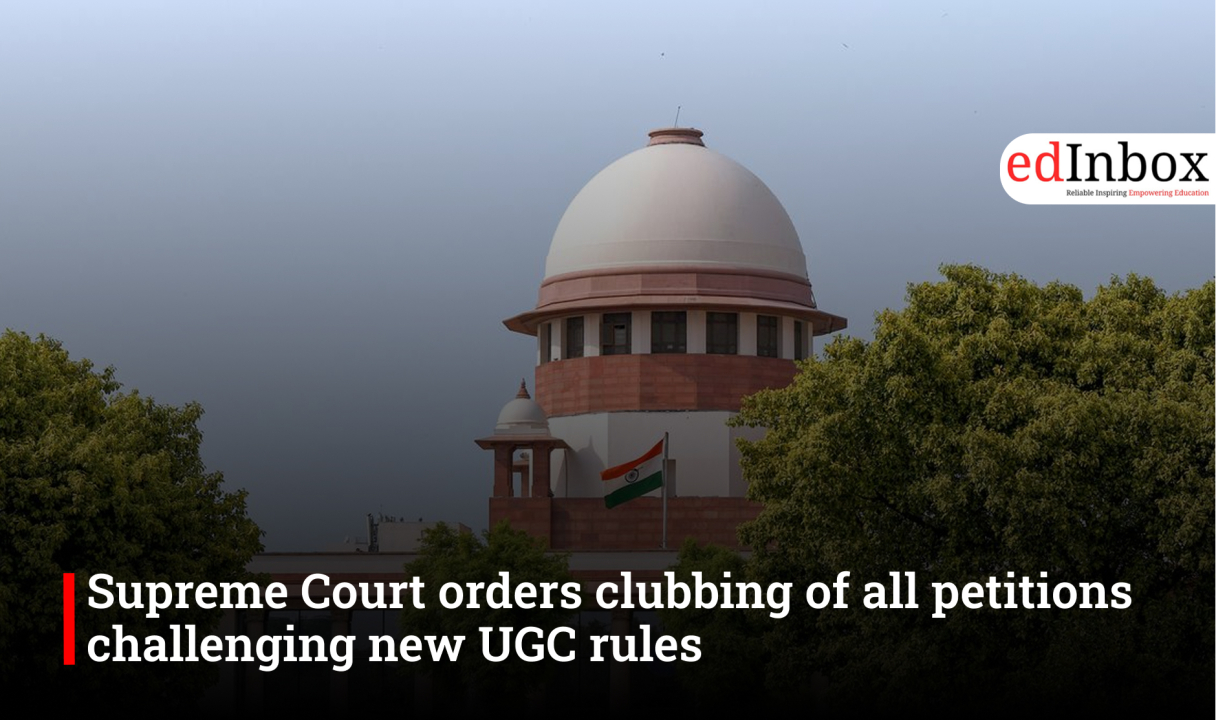
The Supreme Court today served the Central Government and the University Grants Commission (UGC) with notices through two new petitions which challenge the recently announced UGC regulations 2026. The bench ordered that these new petitions be merged with the earlier petitions, and all matters would be collectively heard.

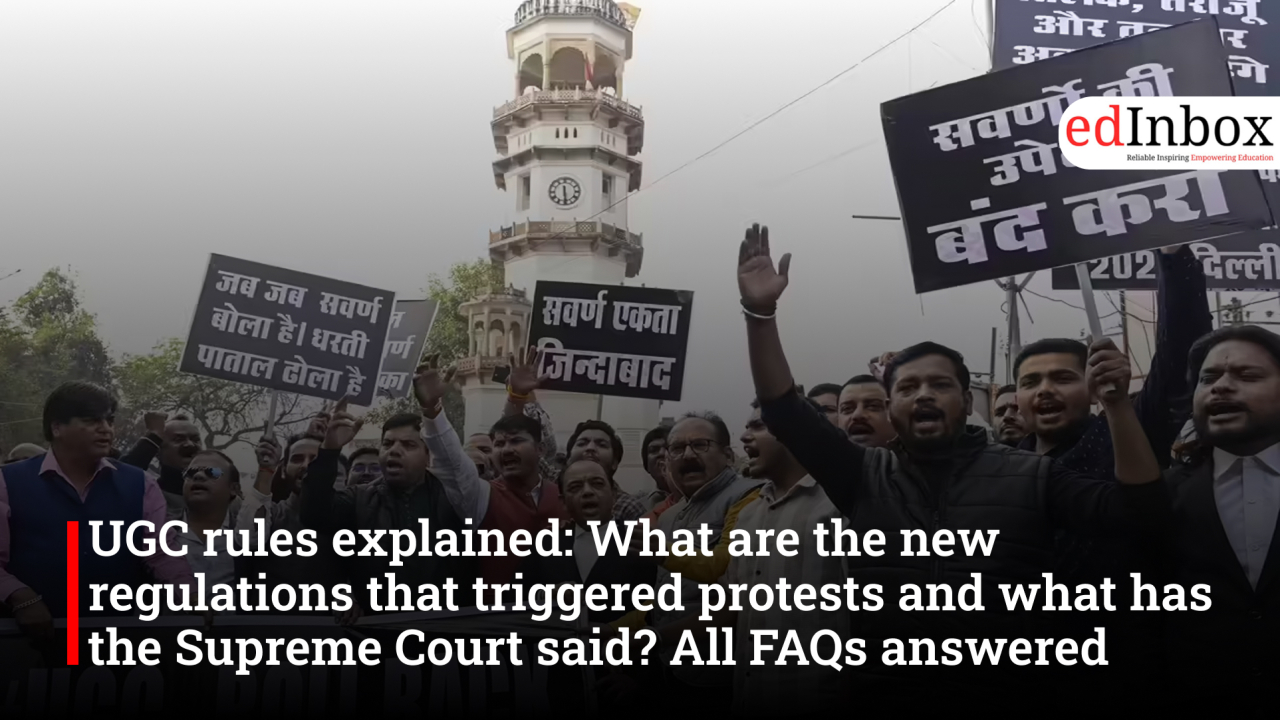
The fresh petitions contend that the new rules discriminate against the general category and violate their fundamental rights. Earlier, the top court had issued notices to the Centre and UGC and stayed the implementation of the regulations. During the proceedings, the court also suggested the constitution of a committee to reconsider the provisions of the UGC rules. A hearing date for the combined petitions will be scheduled shortly.

The UGC regulations 2026, which mandated all universities and colleges in the country to establish an Equal Opportunity Centre (EOC) and campus-level committees to inquire into discrimination complaints and promote equity and inclusion, have been put on hold amid widespread protests, especially from general category students. The bench flagged "complete vagueness" in the rules that makes them prone to misuse.

During the hearing, Chief Justice of India Surya Kant had highlighted the persistence of caste-based discrimination even 75 years after independence.

"In a country after 75 years, all that we have achieved, to become a classless society; are we becoming a regressive society? The worst thing happening in ragging is that children coming from south or north-east... they carry their culture, and somebody alien to this starts commenting on them. Then you have separate hostels. For God's sake. There are inter-caste marriages, and we have also been in hostels where all stayed together," the Chief Justice had remarked.

The bench made it clear that the language of the regulations has to be evaluated by the experts. Justice Joymalya Bagchi, who was on the two, judge bench, brought to light that Article 15(4) authorizes making laws for Scheduled Castes and Scheduled Tribes, but lawmaking with a stepping up attitude should not be stepping back.

I hope we dont go to segregated schools like the U.S. where blacks and whites went to different schools, he said, to which the Chief Justice of India added, This kind of situation can be exploited.

While representing the petitioners, the lawyer Vishnu Shankar Jain submitted that Section 3(c) of the regulations limits the definition of caste, based discrimination only against SCs, STs, and OBCs, thereby excluding the general category, and hence it is against Article 14.

Caste based discrimination is define as discrimination against SC, ST and OBC only. This completely excludes the members of the general category. This definition under Section 3(c) is hit by Article 14, as discrimination cannot be assumed to target only one segment," Jain said.

With the UGC 2026 regulations stayed, colleges and universities must continue following the 2012 rules. The next hearing has been scheduled for March 19.
More Articles ...