A young man, 19, who was a NEET aspirant and a non-working youth (NEET) from Madhya Pradesh represented his own case in the Supreme Court of India and as a result, MBBS admission under the Economically Weaker Section (EWS) quota was granted to him.

During the conversation with TOI Atharva Chaturvedi said, "I didn't argue emotionally; I just presented the law as it is".

NEET Aspirant secures MBBS Seat via EWS Quota after Legal Battle

Atharva cleared NEET 202425 with a score of 530 out of 720 marks in the EWS category. But even after fulfilling all the criteria for admission, he was refused entry because the EWS reservation policy was not implemented correctly in private medical colleges in Madhya Pradesh.

The constitution provides for 10 percent reservation to EWS category candidates in private non, minority institutions, but the policy has not been implemented in the state's private medical colleges.

Being firm in his decision to take the complaint forward, Atharva decided to personally argue the case instead of hiring a senior advocate.

Legal Argument Supported by 103rd Constitutional Amendment

In front of the Madhya Pradesh High Court, Atharva argued that the 103rd Constitutional Amendment, especially Articles 15(6) and 16(6), which allow for 10% reservation for the Economically Weaker Sections in the educational institutions and public employment, be taken into consideration.

The High Court directed the state to increase seats and implement the EWS quota in private medical colleges within a year.

Nevertheless, the policy was not put into practice in the following admission cycle.

Article 142 Relief Granted by Supreme Court

When Atharva was rejected admission once more in spite of being at 164 rank EWS in NEET 202526, he took the matter to the Supreme Court through an online petition.

On 10 February, the panel chaired by Chief Justice Surya Kant was just about ending the session for the day when Atharva, after asking for ten minutes, got the opportunity to argue his case. The bench permitted him to argue.

Invoking its powers under Article 142 of the Constitution, the Supreme Court noted that the petitioner was denied admission due to factors that were out of his control and that the state authorities had failed to comply with previous judicial directions.

The court ordered the National Medical Commission and the Madhya Pradesh government to make sure that he is admitted to an MBBS program in a private medical college and warned that if the matter is delayed any further, a deserving candidate would be irrevocably harmed.

Self-Representation and Virtual Hearing

Speaking to TOI, Atharva explained that he was initially nervous, but after carefully going through the earlier orders, he became confident that law was on his side.

His father, advocate Manoj Chaturvedi, helped him decipher the earlier rulings but deciding to argue the case himself was a conscious decision. Doing court visits in Delhi would have been financially and logistically exhausting and as such, he decided to file the petition online and attend the hearing virtually.

Court observers were impressed by how respectfully and convincingly Atharva dealt with the issues of constitutional intent, reservation policy, and administrative lapses, a degree of accuracy that even seasoned lawyers hardly ever achieve.

Although suggestions were made to Atharva that the courtroom was perhaps opening up a path for him to pursue a legal career, he is still dead set on his medical doctor goal.

The Supreme Court today served the Central Government and the University Grants Commission (UGC) with notices through two new petitions which challenge the recently announced UGC regulations 2026. The bench ordered that these new petitions be merged with the earlier petitions, and all matters would be collectively heard.

The fresh petitions contend that the new rules discriminate against the general category and violate their fundamental rights. Earlier, the top court had issued notices to the Centre and UGC and stayed the implementation of the regulations. During the proceedings, the court also suggested the constitution of a committee to reconsider the provisions of the UGC rules. A hearing date for the combined petitions will be scheduled shortly.

The UGC regulations 2026, which mandated all universities and colleges in the country to establish an Equal Opportunity Centre (EOC) and campus-level committees to inquire into discrimination complaints and promote equity and inclusion, have been put on hold amid widespread protests, especially from general category students. The bench flagged "complete vagueness" in the rules that makes them prone to misuse.

During the hearing, Chief Justice of India Surya Kant had highlighted the persistence of caste-based discrimination even 75 years after independence.

"In a country after 75 years, all that we have achieved, to become a classless society; are we becoming a regressive society? The worst thing happening in ragging is that children coming from south or north-east... they carry their culture, and somebody alien to this starts commenting on them. Then you have separate hostels. For God's sake. There are inter-caste marriages, and we have also been in hostels where all stayed together," the Chief Justice had remarked.

The bench made it clear that the language of the regulations has to be evaluated by the experts. Justice Joymalya Bagchi, who was on the two, judge bench, brought to light that Article 15(4) authorizes making laws for Scheduled Castes and Scheduled Tribes, but lawmaking with a stepping up attitude should not be stepping back.

I hope we dont go to segregated schools like the U.S. where blacks and whites went to different schools, he said, to which the Chief Justice of India added, This kind of situation can be exploited.

While representing the petitioners, the lawyer Vishnu Shankar Jain submitted that Section 3(c) of the regulations limits the definition of caste, based discrimination only against SCs, STs, and OBCs, thereby excluding the general category, and hence it is against Article 14.

Caste based discrimination is define as discrimination against SC, ST and OBC only. This completely excludes the members of the general category. This definition under Section 3(c) is hit by Article 14, as discrimination cannot be assumed to target only one segment," Jain said.

With the UGC 2026 regulations stayed, colleges and universities must continue following the 2012 rules. The next hearing has been scheduled for March 19.

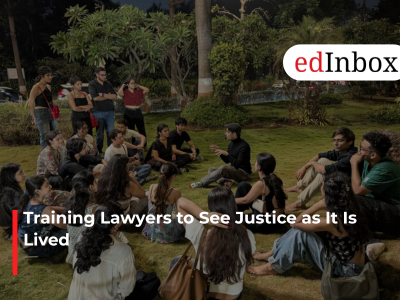
New lawyers without a lot of legal education, training, courtroom exposure, or income generally end up doing banal and repetitive work, according to a Careers360 investigation. In fact, first generation lawyers and women are particularly vulnerable as they not only face financial hardships but also have to handle gender discrimination that is deeply rooted in the profession.

From Patiala House Courts, Delhi to the civil courts in Bengaluru, young lawyers disclose that they are essentially given donkey work, drafting pla Rohit Kumar, a junior advocate practising in Gaya, Bihar, said he continues to rely on family support while struggling to meet basic professional expenses such as court robes, rent, and bar association fees. “Seniors often cite lack of contacts or pedigree as reasons for not trusting juniors with cases,” he said.

Legal aid panels, often projected as opportunities for hands-on experience, present a mixed reality. While juniors receive a high volume of cases—ranging from undertrial defence and domestic violence petitions to eviction matters—they are frequently left to handle them independently, without supervision or guidance. Several senior lawyers acknowledged that legal aid work has increasingly become a “file-dumping system,” raising concerns about both junior welfare and the quality of justice delivery.

Women lawyers face additional systemic barriers. Ridha Joshi, a 2021 batch female lawyer practising at Patiala House Courts, recalled that during the preparation of a case brief, hers was taken away and given to male colleagues on the excuse that they had more 'experience'. In Bengaluru, Ananya Mehra revealed that even during hearings, men get informal priority in using the podium which further establishes disparities in visibility, speaking time, and earnings.

Law schools are still teaching theory thus graduates will not be able to sustain in practice without depending on informal apprenticeship which is full of favouritism. The investigation further exposes a mismatch between legal education and judiciary. Law schools continue to stress theory at the expense of practical skills such as live legal reasoning, court behaviour, and oral advocacy.

Young advocates have made public their wish that stipends be compulsory, that there be structured mentorship programmes, that case allocation be made more transparent and that there be anti, gender bias protocols in order to make legal practice at the entry level more professional. If India is to have a fair and equitable justice system, then lawyers at the bottom of the ladder should not be left out of the changes that are taking place.

The Madras High Court has instructed the Bar Council of India (BCI) to decide on requests made by 11 private law colleges in Tamil Nadu, for sanction to increase student intake and the introduction of new courses, within three weeks. A division bench of Justices R. Suresh Kumar and Shamim Ahmed delivered the order while hearing a batch of petitions by the law colleges which sought a direction to the BCI to consider their applications that were pending for the next academic year. However, seven colleges challenged the BCI’s decision to return their applications along with the fees, while two other colleges sought a direction for processing of their applications, as their fees had not been refunded.

During the course of arguments, it was also brought to the court’s notice that the applications of two additional law colleges were pending with the BCI, taking the total number of affected institutions to 11.

The bench observed that there was no legal ban or restriction on the BCI from processing the applications. Therefore, the court ordered the BCI to clear all pending applications within three weeks of receiving a copy of the order.

To ensure the timely processing of their applications, the court also ordered the law colleges whose applications had been returned to submit their applications again within three days.

The order is likely to be a source of relief for private law colleges in Tamil Nadu that have been waiting for regulatory clearance to increase their capacities and diversify their courses. The players involved in legal education contend that the court's ruling may avert an academic crisis and provide a smoother admission process for the next session.

The Delhi High Court, through a judgment on Wednesday, has put an end to the overall ban on the migration of MBBS students under the Graduate Medical Education Regulations, 2023. The court expressed that a total prohibition is a clearly arbitrary act and a violation of fundamental constitutional protections.

Besides, the Court directed the authorities to consider the case of a visually impaired medical student who is willing to relocate from a Rajasthan medical college to Delhi primarily on account of health and disability, related reasons.

A Division Bench consisting of the Chief Justice and Justice Tejas Karia, observed that Regulation 18 of the Graduate Medical Education Regulations, 2023 which enforced a total ban on the migration of undergraduate medical students, isn't a provision that is legally justified.

The Court remarked that a blanket ban on a prohibition would constitute a violation of Article 14 of the Constitution of India even in the cases of exceptional or deserving persons and, therefore, such a ban would violate the rights of persons with disabilities.

In addition, the Bench instructed the National Medical Commission (NMC) to review petitioner's migration application without taking into account the bans on migration and to look at his case in terms of disability rights and the necessity for reasonable accommodation. Petitioner, Sahil Arsh, is a visually impaired person to the extent of 40 per cent. He qualified for the NEET, UG 2023 from the Other Backwards Class, Persons with Disabilities category. Although initially, he was not allowed to participate in the counseling under the PwD category which led him to take the matter to the Supreme Court and later the court ordered the authorities to treat him as a PwD candidate. As a result of the delay in his approval for the counseling session, only the stray vacancy round was left for Sahil and hence he had very fewer options. Eventually, he got admission at Government Medical College, Barmer, Rajasthan. Later, the petitioner requested for a migration to Delhi on the ground that his eye condition worsened due to the harsh climate of Barmer and also because he needed treatment at AIIMS Delhi.

The National Medical Commission (NMC) rejected his plea in December 2024 on the ground that the 2023 Regulations had done away with the migration provision completely.

The High Court observed that while it is certainly a correct aim to keep uniform standards in medical education a completely banning migration ignores the true, real, life situations and, therefore, most unfairly deprives the deserving students.

The Court explicitly stated that the possibility of misuse ought not to be a ground for the denial of lawful rights, particularly when it is feasible to carry out reasonable safeguards.

Besides, the Bench observed that the petitioner was largely at the mercy of the situation due to the counselling authorities' not recognising his PwD status timely which thus denying him the chance of picking the right med college earlier. So, blaming him for choosing a far, off college in such a scenario was unreasonable.

Underlining the fact that the authorities are mandated to take reasonable measures, provide accommodations and ensure equality and non, discrimination, the Court, citing the Rights of Persons with Disabilities Act, 2016, reiterated the same. It decided that excluding a student from admission whose medical condition had deteriorated as a result of exposure to the environment is a denial of such accommodation.

The Court further underscored that regulatory measures may not disregard human dignity or constitutional protections in pursuit of administrative efficiency. 

In a prominent ruling, the Allahabad High Court has opined firmly against the 'disconcerting' pattern of a large number of assistant teachers in Uttar Pradesh getting jobs on the basis of fake and fabricated certificates.

The High Court in a writ of mandamus has commanded the state government to investigate thoroughly in every district of the state.

The order was given by a single judge Justice Manju Rani Chauhan. The order was loaded today on the Court website. The court directed the Principal Secretary, Basic Education, to complete this task, if possible, within six months.

The court also directed that not only should the illegal appointments be cancelled, but the salaries paid to such teachers should also be recovered, and strict action be taken against the officials involved in the collusion.

The court observed that despite several circulars and directions issued by the state government, the officials responsible for maintaining transparency in the education system have failed to take effective and timely action against such illegal appointments.

The court further commented, “The inaction of the authorities not only encourages fraud but also strikes at the very roots of the education system, causing serious harm to the interests of the students, which is the most important and paramount consideration for this Court.”

The court was hearing a writ petition filed by Garima Singh. The petitioner had challenged the order of the BSA (Basic Shiksha Adhikari) Deoria, cancelling her appointment.

The BSA had passed this order against her after it was discovered that she had forged her educational documents and domicile certificate.

Petitioner claimed that she was appointed as an assistant teacher in July 2010, although the petitioner had served for almost 15 years without any complaint.

The UGC’s renewed emphasis on equality and non-discrimination in higher education has drawn pushback not only from sections of the student community but also from parts of the academic fraternity. What was purported to be an attempt to strengthen safeguards against caste-based discrimination on campuses has instead opened up questions around definitions, scope and institutional impact. The unease eventually reached the Supreme Court, which stayed the University Grants Commission’s newly notified equality regulations, flagging concerns around caste-based discrimination – an issue the UGC itself sought to address through the new rules.

Hearing pleas against the University Grants Commission (Promotion of Equity in Higher Education Institutions) Regulations, 2026, the apex court described the framework as prima facie vague with potentially sweeping consequences and said the possibility of misuse could not be ruled out. The court's intervention paved the way for an extensive reassessment of the methods by which discrimination in India's universities can be recognised, treated and prevented. The UGC issued these equity regulations on January 13, 2026, which mainly replaced an antidiscrimination framework that was advisory and first embedded in UGC's 2012 regulations with a binding structure that requires institutional mechanisms such as Equal Opportunity Centres, Equity Committees, helplines and monitoring bodies. The bench led by Chief Justice of India Surya Kant and Justice Joymalya Bagchi brought up four major questions of law on whether the core definitions and provisions of the regulations are reasonable.

The order highlighted ambiguity in how caste-based discrimination is defined, segregation might play out in campus arrangements, lack of procedural safeguards for extremely backward sub-groups, and the omission of ragging – a specific form of harassment recognised in earlier rules – from the current framework.

The legislation that had been in place since 2012, covered a larger range of discriminatory acts, including the clear mention of specific categories like ragging, harassment and victimisation, and also gave a broader definition of discrimination in terms of religion, caste, gender, disability and other grounds. However, the 2026 draft differently delineates the term "caste, based discrimination" to mean only a discrimination against the members of the Scheduled Castes (SC), Scheduled Tribes (ST), and Other Backward Classes (OBC) while it also keeps a broad definition for the general discrimination. Critics say this dual system is inconsistent and potentially exclusionary – a point the Supreme Court signalled for closer scrutiny.

Politicians crossed party lines

Across the political spectrum, reactions to the Supreme Court’s stay and the broader controversy have been mixed. Several Opposition parties welcomed the court’s step as correcting a flawed process that lacked adequate stakeholder consultation and had stirred social tensions.

Bahujan Samaj Party chief Mayawati termed the court stay as proper in view of the unrest which the new rules had caused. On the other hand, Congress leaders Pramod Tiwari and Ranjit Ranjan said that the regulations were vaguely defined and a parliamentary panel should look into the issue so that there are no divisions among students.

Kalyan Banerjee of Trinamool Congress raised a point regarding the constitutional validity. On the other hand, the voices of the Opposition were not unanimous: CPI(ML) Liberation stated that caste and racial discrimination are still real issues that students face every day on campuses and that equity safeguards should be there at the least.

Tamil Nadu Chief Minister M K Stalin praised the original regulations, at the same time asking for their extension, saying that they were a very good step towards reforming higher education which is full of discrimination and institutional apathy. He referred to student suicides and harassment of weaker sections as some of the problems. He stressed that equity provisions should not be diluted under pressure and that genuine safeguards remain an unavoidable necessity.

Around the same time, BJP insider reports that the PTI, the party was thinking of trying to reschedule the next step as the matter exposes the party to rift with a part of the student community and political critics.

Ministers of the union however were very positive about the stay and called it a significant step towards the preservation of cultural unity and social harmony. They said that the problems of abuse and the absence of clarity needed to be resolved at the policy level.

How student groups responded

The controversy ignited on-ground protests at leading universities. Student unions and politically affiliated campus groups publicly opposed the stay and demanded that anti, discrimination protections be enacted and even legislated immediately.

At Jawaharlal Nehru University, the JNUSU marched and shouted slogans supporting the 'Rohith Act', referring to the bills based on the unfortunate 2016 death of student Rohith Vemula, who according to many activists, symbolizes the unending caste discrimination.

In various locations of Delhi University, Left, supported factions like the All India Students' Association (AISA) and the Students' Federation of India (SFI) conducted rallies requesting not only the implementation of the regulations be done immediately but also that they be further strengthened to effectively deal with the rising number of complaints of discrimination, the opponents of the regulations even pointed out that the number of such complaints has significantly increased in the recent years.

While many student bodies stated they were dejected with the stay by the Supreme Court, other student factions, including some aligned with the ruling establishment, welcomed the court’s intervention, arguing the rules lacked clarity and could be misused against general category students.

More Articles ...