A new project in Indian higher education started in Boribel, Daund, Pune. It links people's spirits to nature and soil, helping students grow in many ways. The Life Makeover Centre honors Urmila V. Karad, who passed away.

It starts on Thursday, March 12. Shivraj Singh Chouhan, union agriculture minister, will be there as guest of honor. Prof. Dr. Vishwanath D. Karad, who started MIT World Peace University, will lead the event.

This leads to more natural ways for students to learn. Students could feel closer to the land and their own roots. Also, the center may help young people find peace in daily life. Dr. Rahul V. Karad, a youth education expert and the one who created the LTC, shared this during a press meeting.

He said Swami Ramdev, founder of patanjali Yogpeeth and a spiritual guide, and Maharashtra's deputy chief minister Sunetra Ajit Pawar will join as special guests. Lt Gen Dhiraj Seth (PVSM, AVSM), head of southern Command, and ranjan Sodhi, who won the rajiv Gandhi Khel Ratna award, will also be there.

MLA Shrikant Bharatiya, MLA Adv. Rahul Kul, Latur Rural MLA Ramesh Karad, Sarpanch Nandkishor Pachpute, Maharashtra State Gram Panchayat Officers’ Union president Sanjeev Nikam, and Padma Shri Popatrao Pawar are also expected to attend the ceremony.

Elaborating further, Rahul Karad stated that the centre is built around five core pillars: Agriculture and Nature, Physical Fitness and Sports, Team Building and Leadership, Patriotism and Nation Building, and Spirituality and Peace.

The initiative aims to nurture students’ physical, intellectual, and mental well-being while also shaping their outlook towards life. It is considered a milestone experiment in the education sector, he added

Dr. Rahul Karad has established the centre on over 150 acres of land at Boribel in Daund taluka, with the objective of bringing transformation in youth and contributing towards building a stronger India and a better world.

He explained that the centre provides an atmosphere working on the comprehensive growth and the discovery of the self of the students through the philosophy of reconnecting the soul with the soil. The main highlight of the centre is its hands- on approach to learning. Training programmes will concentrate on the comprehension of real, world problems and will be structured according to a problem based learning model.

Besides environment awareness the development of responsible citizens is the goal of the programme. Nowadays, the human being is the slave of mobile and social media, to the point of developing a rapid lifestyle and even stress.

The centre advocates the idea of minimalism, that is, simple living and in this way One may even be able to concentrate on the main things in life through the elimination of unnecessary distractions, he further added.

Today's generation, due to busy and fast lifestyles, continuous streams of information, and the pressures of competition, have been separated from nature, society, and their inner selves. In this context, the Life Transformation Centre is a platform that is inviting the youth to take a break and think about their lives. After going through the different situations and learning about the environment the youth will get to know the centre through the values of

Simplicity, moderation and mindful living. During the press conference, the MIT World Peace University Vice, Chancellor Dr. R. M. Chitnis and the other two members of the university, Dr. Datta Dandage and Dr. Shruti Nigudkar were also available.

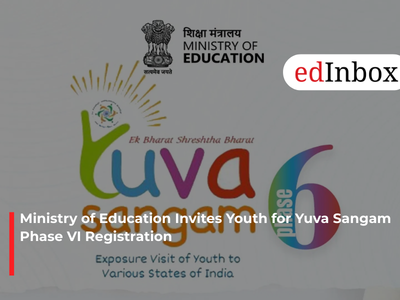
The Ministry of Education has opened online registrations for Yuva Sangam Phase VI, which is a youth exchange initiative under the main Ek Bharat Shreshtha Bharat programme. The programme is designed to boost the feeling of unity in diversity among young Indians by allowing them to learn about the culture, traditions, and ways of development of different parts of the country.

Yuva Sangam, an initiative of the Department of Higher Education, connects young people from different states and Union Territories through well planned exposure visits. The programme gives participants an opportunity to visit the partner states and learn about the local culture, schools, and community life.

Who Can Apply for Yuva Sangam Phase VI?

Young individuals aged 18 to 30 years are eligible to apply for the programme. The initiative welcomes participation from diverse youth groups, including:

  • Students enrolled in Higher Education Institutions (HEIs)

  • Volunteers from the National Service Scheme

  • Members of Nehru Yuva Kendra Sangathan

  • Young professionals from various fields

The programme is designed to encourage cross-cultural learning and foster stronger connections among India's young citizens.

What Participants Will Experience

Selected candidates will participate in 5 to 7-day educational and cultural tours (excluding travel time) in their paired state or Union Territory. During the visit, participants will:

  • Explore regional traditions, languages, and cuisines

  • Interact with local communities and youth

  • Visit educational institutions and significant local landmarks

  • Learn about regional development initiatives and governance practices

The programme also focuses on building a deeper understanding of India’s diverse social and cultural landscape.

Strong Participation in Previous Phases

The Yuva Sangam programme has received significant interest from across the country. In Phase V, more than 46,000 registrations were recorded nationwide. Since the pilot launch in 2022, over 6,000 participants and coordinators have taken part in the initiative.

For Phase VI, 22 premier higher education institutions have been selected as nodal centres to organise and coordinate the exchange tours.

Aligned with National Education Policy 2020

The programme supports the vision of National Education Policy 2020 by promoting experiential learning and national integration among youth. It follows a “Whole of Government” approach, bringing together multiple ministries, departments, state governments, and educational institutions to create meaningful learning opportunities for young participants.

Through Yuva Sangam, the government aims to nurture culturally aware, socially responsible, and nationally connected youth, strengthening the idea of a united yet diverse India.

Over the last few years, technology has stopped sitting at the edge of Indian schooling. It has moved into the middle of the pedagogy conversation. NEP 2020 pushed that shift. When it spoke about digital literacy and computational thinking, it was setting a long-term direction. The message of the policy was that technology will no longer be limited to an isolated computer period or an ICT lab. Now, it has to start shaping how subjects are taught and how students practise.

The first visible curriculum step came in the senior classes. CBSE introduced Artificial Intelligence as a Skill subject for Classes IX and X. Students could opt for it formally. They could learn the basics, create projects, and work through the AI project cycle. Now the shift is moving earlier.

The government aims to introduce AI and Computational Thinking from Grade 3. Now, that changes the starting point. It is no longer a change meant only for teenagers who have learnt to code. It begins at the primary level. Any curriculum reform, however, does not travel on circulars or frameworks alone. Teachers are the backbone of any pedagogical shift.

How AI-ready are our teachers?

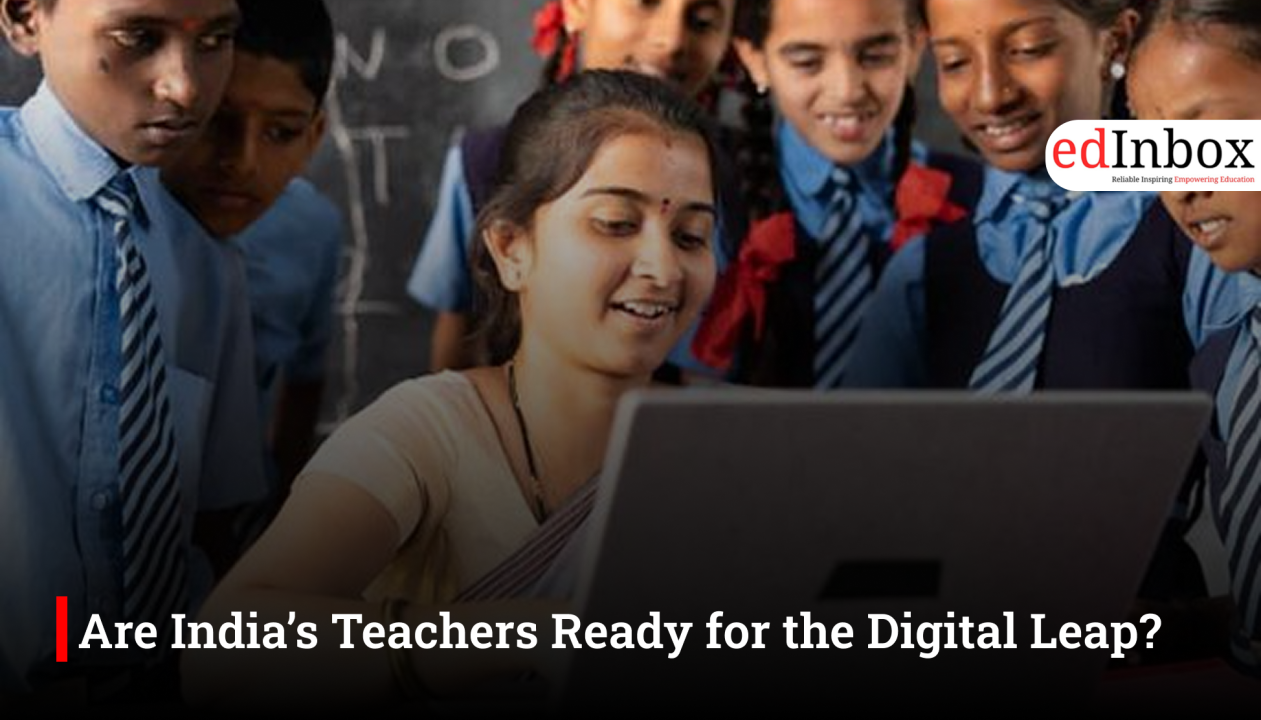
For AI to be inculcated successfully in everyday learning, the first pre-requiste is well-trained educators. Now, here is the real question: Are our teachers ready for the big AI shift in Indian classrooms?

According to a 2025 nationwide survey by the Centre for Teacher Accreditation (CENTA), nearly 75% of teachers reported using AI resources actively. Lesson planning happens to be their number one use case. Around 26% of survey participants said they use AI to generate classroom activity ideas.

But here is the catch. The same survey also flagged a gap between confidence and clarity. While 67% of respondents rated their AI expertise at 6 or higher on a 10-point scale, and the average self-rating was 7 out of 10, only 57% could correctly answer a basic misconception question on AI posed by CENTA.

Microsoft’s teacher training push

Against this backdrop, Microsoft has launched its ‘Elevate for Educators’ programme in India, the first country in Asia. The tech giant plans to train two million teachers in Artificial Intelligence skills by 2030. The rollout begins with all 75 CM SHRI schools in Delhi. That makes Delhi the first full implementation site.

India has close to 10 million teachers across school education. If the target is met, roughly one in five educators will be part of the programme over the next five years. Microsoft also plans to ensure that the initiative reaches up to 200,000 schools and institutions.

How the programme is structured

Microsoft’s India note describes Elevate for Educators as a framework built on three core pillars: Credentials, Community and Capacity.

Put simply, it is a teacher training programme that prioritises usage of AI tools in education. This initiative is not part of a curriculum change, rather, it is aimed towards professional development.

As part of the Credentials pillar, Microsoft plans to roll out new AI-related certifications for educators. These certifications are in line with national education standards as well as the AI literacy guidelines. Designed to arm teachers with a better understanding of AI tools, helping them plan better and improve student engagement in class, this programme is available to educators across schools, skill institutes and higher education. However, operational details such as training hours, exam assessment and success matrices haven’t been detailed out yet.

The second pillar happens to be Community. The initiative is an effort to offer a shared platform to a community of 2 million teachers and equip them with a strong peer-learning network where they can collaborate, exchange practices and support each other while adopting AI tools. The idea is to foster long-term engagement and not a one-time training cycle.

The third and a crucial pillar of the programme is Capacity. Here, Microsoft will help create AI Ambassadors, Educator Academies, AI Productivity Labs and Centres of Excellence across 25,000 institutions. The aim is to build “AI readiness” before large-scale classroom use.

Delhi teachers are embracing AI

In Delhi’s CM SHRI schools, AI is entering the classrooms through teachers’ prep work. Fatima, who teaches at the CM SHRI school in Rohini’s Sector 11, told TNN that she used Microsoft Copilot for preparing a Class XI biology lesson. The tool, she revealed, helped her quickly put together posters, infographics and a structured presentation, with the learning goals laid out clearly. According to her, concepts that earlier took long explanations can now be broken down into smaller steps that students find easier to follow.

In an interaction with TNN, Madhubala, another teacher at a CM SHRI school in Dwarka, shared how she used Copilot to support a student with autism. She created customised motivational stickers and simple feedback tools so the child felt more at ease during class, said Madhubala.

Language learning is another area where teachers find AI to be beneficial. Preeti Sharma, another educator from Rohini, told TOI that the tool helps her simplify abstract ideas in English lessons. She said it also helps her push students beyond straightforward answers, nudging them towards skills like inference and prediction.

Scale vs. substance

Microsoft’s plan to train two million teachers sounds impressive. But teacher training in India has historically struggled with depth and continuity. While workshops are organised and certificates are issued, sustained handholding for improved efficiency is not something that gets its due importance. There are also harder questions too, the ones that policy notes do not always linger on. Defining what responsible AI use looks like in classrooms, setting guardrails to prevent misinformation, and recognising the ethical, pedagogical and practical nuances involved are challenges far too complex to be addressed through ambition alone.

Also, unequal access is a reality, too glaring to ignore. Evolved urban schools will be quick at experimenting and adapting. On the other hand, rural schools, where basic infrastructure is still an insurmountable challenge, adoption of AI and training teachers seem to be difficult, to say the least. If teacher readiness is uneven, AI risks widening the very learning gaps it claims to reduce. What remains to be seen is whether or not the promised scale translates into depth on the ground, especially for teachers in resource-constrained schools.

Forests are much more than ecological reserves only. Actually, they are an integral part of the ecosystem and a primary source of wild food and nutrition besides featuring as a source of livelihoods for millions of people.

Besides providing us with wild fruits, nuts, and medicinal plants, forests are highly crucial for agriculture as they promote soil fertility and the water cycle. Though there is a direct link between forests and food systems, it is hardly acknowledged.

International Day of Forests is a global celebration held on 21 March, and this year's theme is 'Forests and Foods'. By this occasion, the Food and Agriculture Organization of the United Nations (FAO) is aspiring to spotlight the crucial role that forests play in feeding the world and achieving food security.

It is possible to increase food production and at the same time protect the natural environment by scaling up agroforestry, which is a combination of agriculture and forestry, thereby making farming more resistant to climate change.

Forests and agriculture mesmerizingly work hand in hand. Forests offer a vast range of ecosystem services that are essential for both sustainable agriculture and reduction of its vulnerability to climate change. Besides providing habitat to pollinators which are essential for crop production, they also have wild crop relatives, who play a significant role in crop breeding.

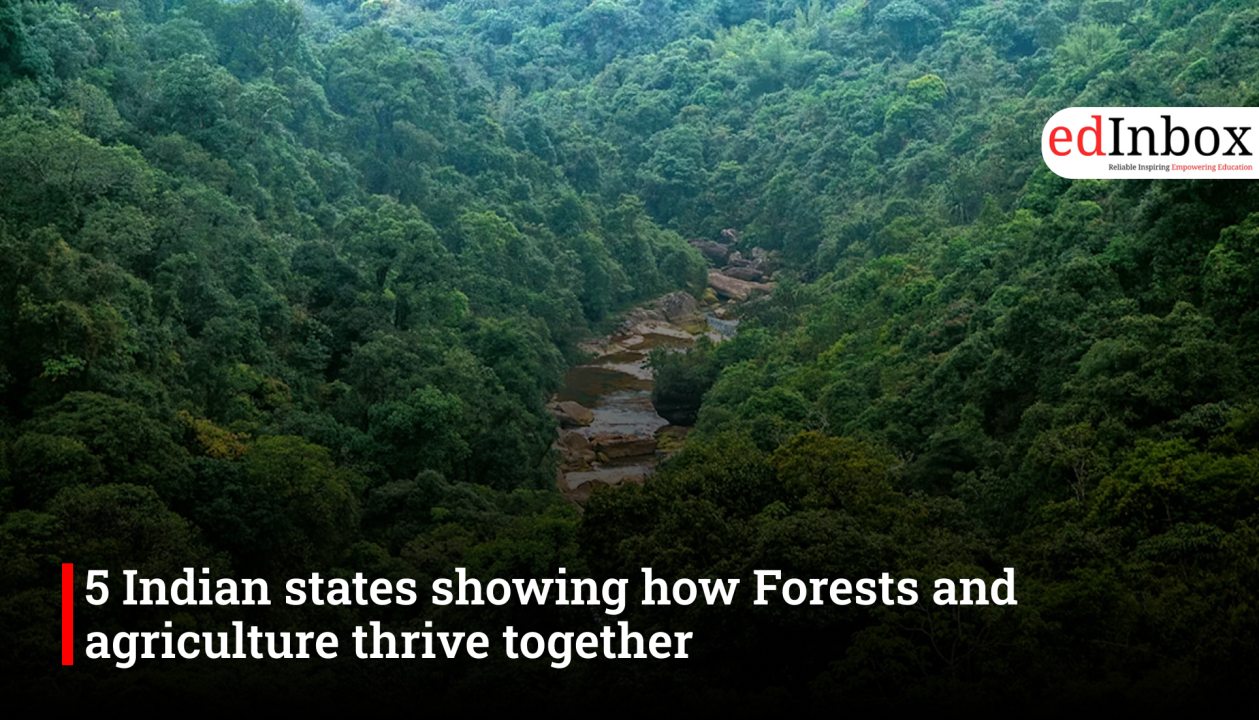
FAO’s Green-Ag project in India, funded by the Global Environment Facility, seeks to form productive landscapes that enhance biodiversity and provide year-round food security. The project integrates forests and agriculture through agroecology across five diverse landscapes: Mizoram, Uttarakhand, Madhya Pradesh, Odisha, and Rajasthan. Implemented in close collaboration with the Indian Ministry of Agriculture and Farmers’ Welfare and the respective state governments, the initiative aims to improve soil fertility, boost water retention, address land degradation, and promote biodiversity conservation including agrobiodiversity.

In Mizoram’s Dampa-Thorangtlang landscape, the Green-Ag project is promoting agroforestry by promoting the plantation of indigenous tree species in traditional jhum lands alongside crops. The project has also prepared a management plan for the Village Supply Reserve—community-managed forest patches traditionally used by each village to supply small timber, fodder, and fuel. The selection of species for plantation has been done in consultation with the community.

The new management plan also has a provision for the plantation of fruit trees along with other species for these supply reserves to support the dietary needs of the local community. This will also enhance the sustainability of the reserve.

In Uttarakhand’s Corbett-Rajaji landscape, traditional mixed farming thrives under forest cover, ensuring food security for mountain communities.

In Madhya Pradesh’s Chambal landscape, Green-Ag is piloting the agri-horti-silvi system, which integrates crops with fruit, vegetable, or ornamental trees on the same land. This approach is being implemented in ravine-affected villages to restore degraded land, boost food production, and diversify income sources for local farmers in the area.

Meanwhile, in Odisha’s Similipal landscape, the project has initiated Miyawaki plantations to restore degraded land and improve biodiversity, alongside promoting mango and cashew plantations in forest fire-prone villages covering 100 hectares. These efforts are enhancing food security and providing alternative livelihoods for local communities.

The Government of India recognises agroforestry as a key strategy for increasing farmers’ income and promoting a carbon-neutral economy. However, the lack of Quality Planting Material (QPM) and a clear certification system has hindered its expansion. The National Agroforestry Policy (2014) emphasises the need to develop and certify QPM. To address this, FAO is assisting the agriculture ministry to develop ‘Protocols for QPM and Certification of Nurseries for Timber and Non-timber Agroforestry Species’.

Traditional knowledge systems

Forests are a vital source of uncultivated foods. Forest areas, uncultivated commons, and village lands provide an important foraging place for such food. Many wild food plants are highly nutritious and also have healing properties.

Some state governments in India are taking action to highlight the importance of these forgotten foods. In November 2024, the Government of Odisha launched a scheme on the ‘Revival and Sustainable Intensification of Forgotten Foods/Neglected Crops of Odisha’.

FAO advocates the protection of traditional food and seed systems. Preserving indigenous seeds and promoting traditional knowledge ensures that local farmers can cultivate resilient crops suited to their environments, which bolsters food security for generations to come.

Forests as food providers

To unlock the potential of forests in achieving food and nutrition security, we need urgent and coordinated action. Integrating forests into agrifood systems is the key. Agroecological approaches must be scaled up to create a balance between conservation and productivity.

By encouraging farmers to adopt agroforestry practices, we can cultivate more resilient agricultural landscapes that sustain both people and the planet.

Equally important is the need to strengthen the rights of forest-dependent communities who are the primary custodians of forest ecosystems. Their traditional knowledge is vital for sustainable forest management. Hence, building their capacities to manage these resources sustainably is essential.

Forests are fundamental to the world’s water systems and their health directly impacts the availability of clean water. Sustainable forest management, particularly in critical watersheds, can safeguard water supplies for millions of people.

Forests are at the core of the planet's freshwater cycle. Their well, being determines the availability of fresh water. Sustainable forestry practices, especially in main water catchment areas, can ensure clean water for a large number of people.

Besides that, forests are natural partners in mitigating climate change. As huge carbon banks, they take up enormous quantities of CO2 from the air. Protecting and reinstating forest areas means not only cutting down greenhouse gas emissions substantially but also boosting biodiversity.

One way we can manage forest ecosystems is by developing markets for sustainable forest products through policy interventions that allow local communities to legally access, produce and market these products. Here, revenue generating forest enterprises can support poverty eradication and food security simultaneously.

On the occasion of the 80th anniversary of FAO in 2025, the agency's unwavering dedication to agroecology and sustainable food systems echoes the recognition of forests as vital sources of food, water, and livelihoods. Coexistence of forests and food production is not only a feasible scenario but also a crucial one if our goal is to leave no one behind.

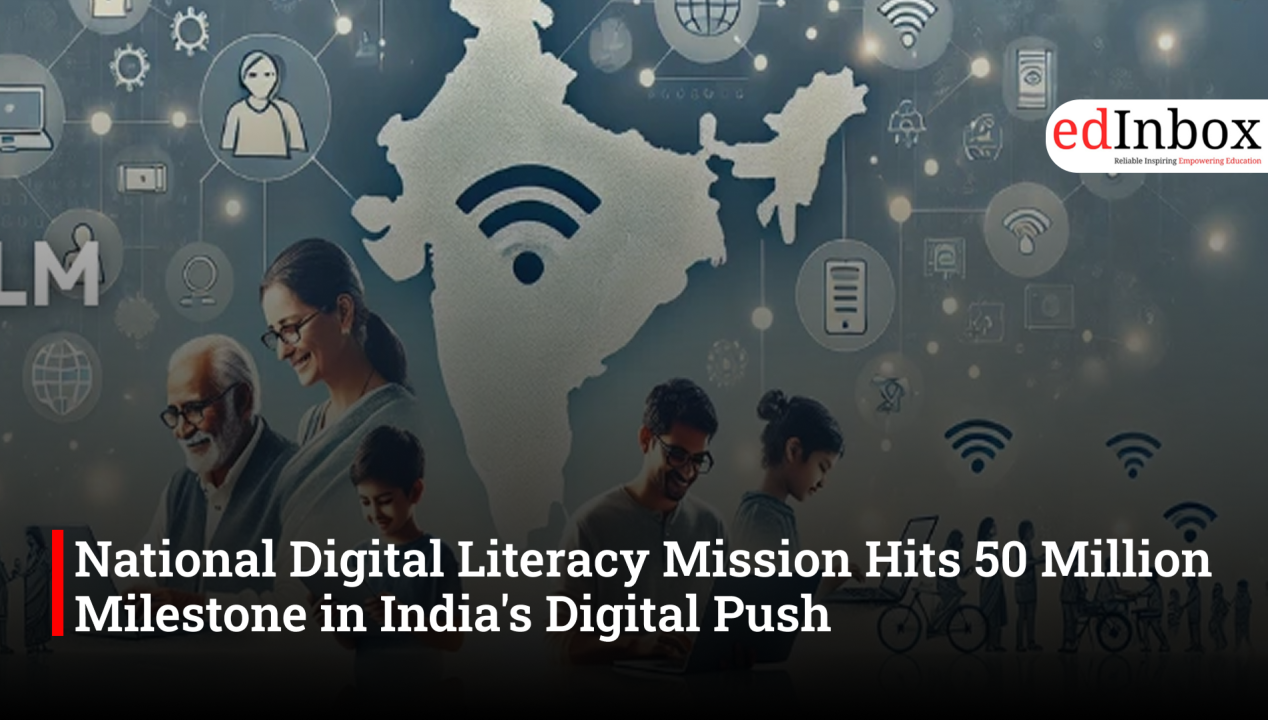
In its continuous endeavour for a digitally empowered society, the Government of India National Digital Literacy Mission (NDLM) has marked a significant milestone by making millions of people digitally literate through the programme.

The mission launched in 2014 to equip people from varied socioeconomic backgrounds with basic digital skills, is basically about equipping individuals with the skills of using computers, surfing the Internet, and accessing digital services in a safe manner. The programme has experienced a tremendous growth in its outreach recently as a part of the government's grand plan of a digitally inclusive India.

Ministry of Electronics and Information Technology officials say that more than 50 million people have been made digital literate through the programme so far. Women, rural people, senior citizens, and persons with disabilities have been given special training as these are the groups that have most commonly experienced the greatest difficulties in the digital access area.

The preparation for digital literacy under the scheme is done by the accredited training partners, community centres, and through the mobile camps. The learners become conversant with such essentials as the use of email accounts, online access to government services, digital transactions, and the concept of cyber safety and privacy.

"The digital world should never be a barrier for anyone, " said a ministry official. "We want to make sure that everyone has the confidence to use the internet for accessing government services, education, and business."

Local governments in states like Uttar Pradesh, Tamil Nadu, and Rajasthan, have been very active in running community level camps and collaborating with non governmental organizations to deliver services in hard to reach areas. Besides, schools and colleges have introduced digital literacy components in their courses, thus students are getting basic digital skills even before they graduate.

While there have been some very impressive results, the analysts are still pointing out the necessity of continual support and advanced training in order to completely overcome the digital divide. Some problems such as poor internet connectivity in remote areas and the high prices of gadgets still exist and therefore require a combined effort from the government and other stakeholders.

India is moving rapidly towards a digital future and the National Digital Literacy Mission is one of the key pillars of the government's plan to make sure that everyone has equal opportunities in the digital world whether it is through e, learning, digital commerce or e, governance.

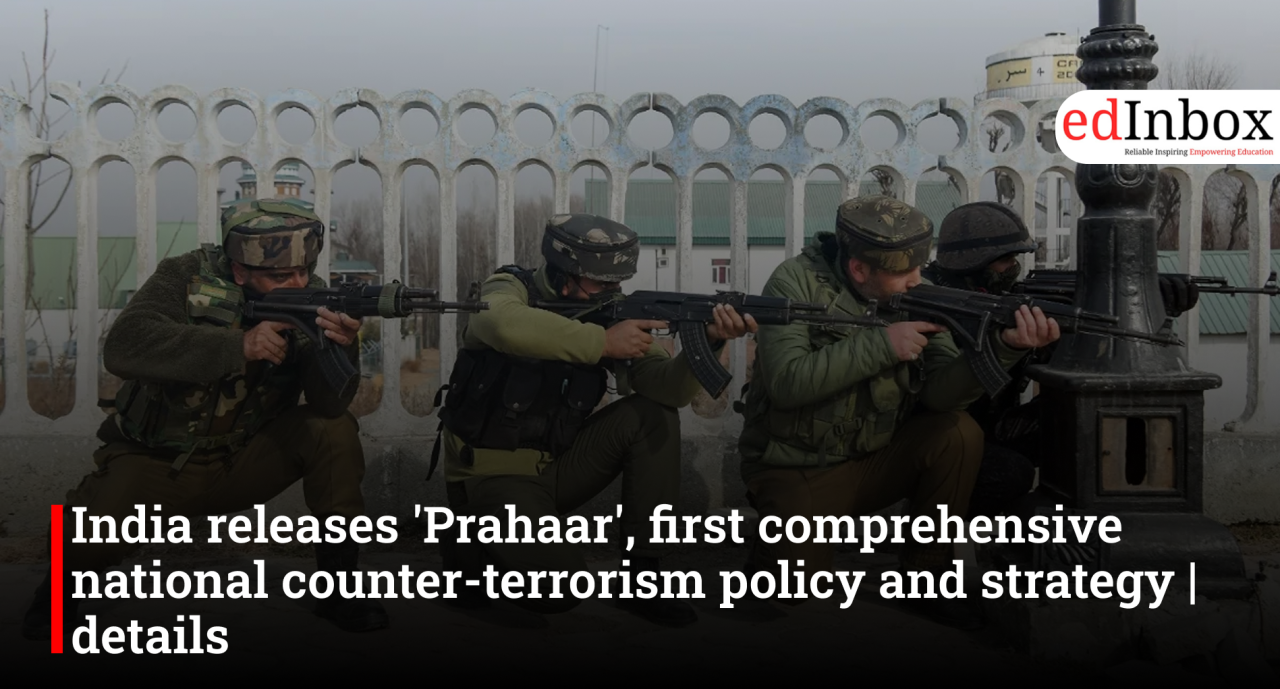
The government on Monday came out with PRAHAAR, the country’s first comprehensive national counter-terrorism policy and strategy. The strategy was released by the Ministry of Home Affairs (MHA) and it unveils a structured and intelligence-driven framework to prevent and deal with terrorism in all its manifestations.

The policy runs into eight pages and stresses the need to prevent terror attacks, put in place swift and proportionate response mechanisms, and improve coordination among different government agencies.

The policy prioritises a “whole-of-government” and “whole-of-society” approach that follows human rights and the rule of law.

A key element of the PRAHAAR policy is to tackle conditions that enable terrorism, including radicalisation.

It also stresses on the need to align and shape global efforts to combat terrorism.

The role of the Multi Agency Centre (MAC) and the Joint Task Force on Intelligence (JTFI), functioning under the Intelligence Bureau (IB), are asserted for real-time intelligence sharing and coordinated action.

The policy also highlights India’s strategy, stating that a proactive approach that prevents and counters terrorist threats remains the guiding principle.

“This approach is primarily ‘Intelligence-Guided’, in which primacy is accorded to intelligence gathering and its dissemination to executive agencies for neutralisation of threat. Operationalisation of Multi Agency Centre (MAC) along with the Joint Task Force on Intelligence (JTFI) in the Intelligence Bureau (IB) remains the nodal platform for efficient and real-time sharing of CT-related inputs across the country and subsequent prevention against disruptions,” it reads.

The policy further says, “close partnerships for counter terrorism operations have been created with Central Agencies and State Police Forces under the mechanism of Multi Agency Centre (MAC), and Joint Task Force on Intelligence (JTFI) in Intelligence Bureau (IB).”

The policy points out the fact that terrorists and extremists use the internet inappropriately for their various purposes such as communication, recruitment, and glorification of jihad. It also mentions that Indian Law Enforcement Agencies are persistently trying to stop such cyber activities, online networks of terrorist groups, and their propaganda and recruitment.

“Law enforcement agencies also regularly disrupt the overground workers (OGW) modules, through which terrorists are extended logistic, material and financial support. In recent times, the nexus between illegal arms syndicates and terrorist groups has emerged, and for combating it, coordinated interventions are being made by the intelligence agencies along with the respective Law Enforcement Agencies, in various Indian states,” the policy notes.

“Special emphasis is given to disrupting terror funding networks through the legal framework under Indian laws.”

The policy further points out that India faces terror threats not just on land but also in water and air.

“Capacities have been developed to protect the critical sectors of the Indian economy, including power, railways, aviation, ports, defence, space and atomic energy from state and non-state actors,” it mentions.

The policy document further highlights how international terrorist groups such as Al-Qaeda and the Islamic State of Iraq and Syria (ISIS) have targeted India in the past and continue to do so.

Terrorists’ handlers sitting across the border frequently employ the latest technologies, including the use of drones, for carrying out terror-related activities and attacks in Punjab and Jammu and Kashmir.

“Disrupting and intercepting terrorist efforts to access and use CBRNED (Chemical, Biological, Radiological, Nuclear, Explosive, Digital) material remains a challenge for Counter Terrorism (CT) agencies. The threat of state and non-state actors misusing drones and robotics for lethal purposes remains another area of concern, even as criminal hackers and nation states continue to target India through cyber-attack,” it points out.

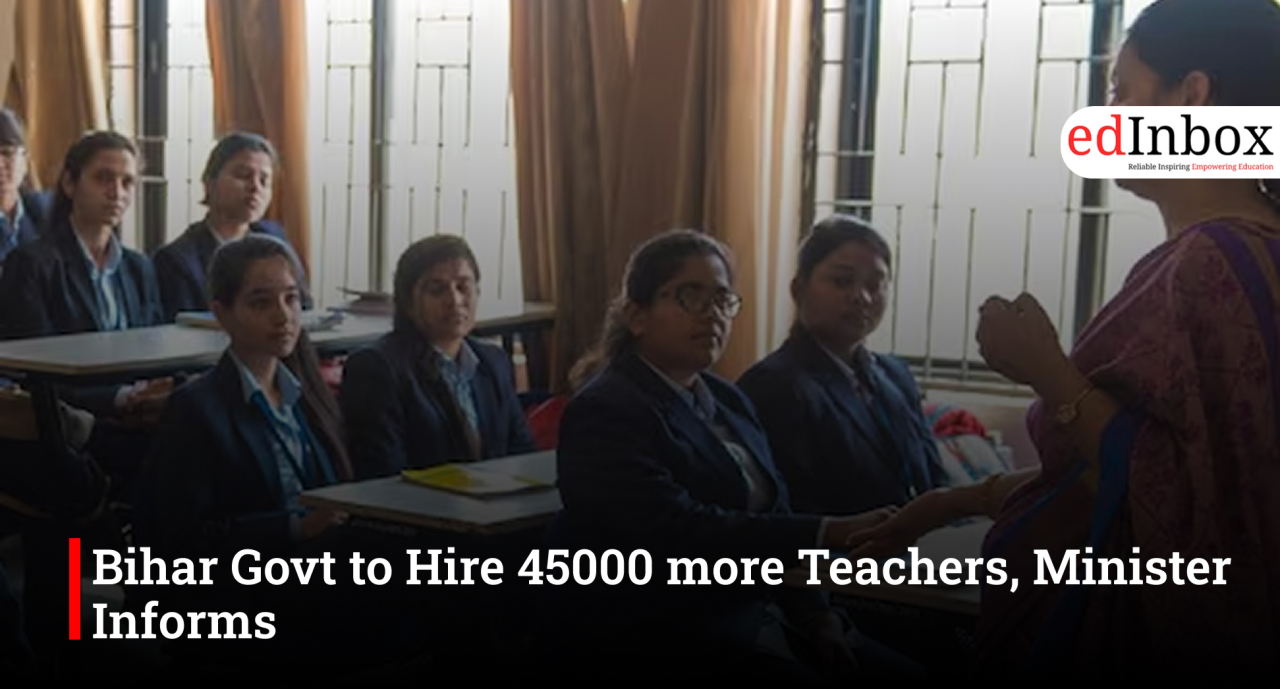
The Bihar government on Thursday said in the assembly that an additional 45, 000 teachers would be recruited in state run schools after the fourth phase of the Teachers Recruitment Exam (TRE, 4) in the next few months.

Besides, the government will recruit 7000 specialised teachers to run state sponsored schools for the physically challenged students.

Education Minister Sunil Kumar made these remarks in the assembly while wrapping up the discussion on the proposed budget of Rs 60, 204.60 crore for the department for the year 2026, 27.

The House by voice vote passed the budget of the department, while all opposition members holding that they were not convinced by the government's reply related to the education department education walked out of the House.

"The government has decided to recruit another 45,000 teachers for its schools through TRE-4 in the coming months. In TRE-1 & 2, more than 1.70-lakh and more than 70,000 teachers were appointed, while in TRE-3 66,603 posts could be filled. Now, the government will soon initiate the process of recruitment of another 45,000 teachers under TRE-4," Kumar said.

Since 2023, 2.58 lakh teachers have been recruited through the Bihar Public Service Commission (BPSC) under the TRE. In addition, another 3.68 lakh non-commissioned teachers, appointed by local bodies, have been regularized, said the minister.

The BPSC conducts the test for primary, middle, secondary and senior secondary teachers in schools.

"We will also recruit 7000 specialised teachers for state-run schools meant for physically challenged students," he added.

The government is taking all possible measures to further strengthen school infrastructure and other facilities related to education centers in the state, he said.

"The government has also decided to open model schools in each block in the state in the coming financial year. The government will allocate Rs 800 crore for the construction of model schools and Rs 200 crore for developing old educational institutes as center of excellenace", said the minister.

While participating in the discussion, RJD MLA and former education minister Chandrashekhar, alleged that the NDA government in the state has failed to improve the quality of education as well as infrastructural facilities in the government-run schools in the state.

"Funds meant for improving infrastructural facilities in the government-run schools are not being properly utilised... .and corruption is rampant in the education department," he said.

More Articles ...