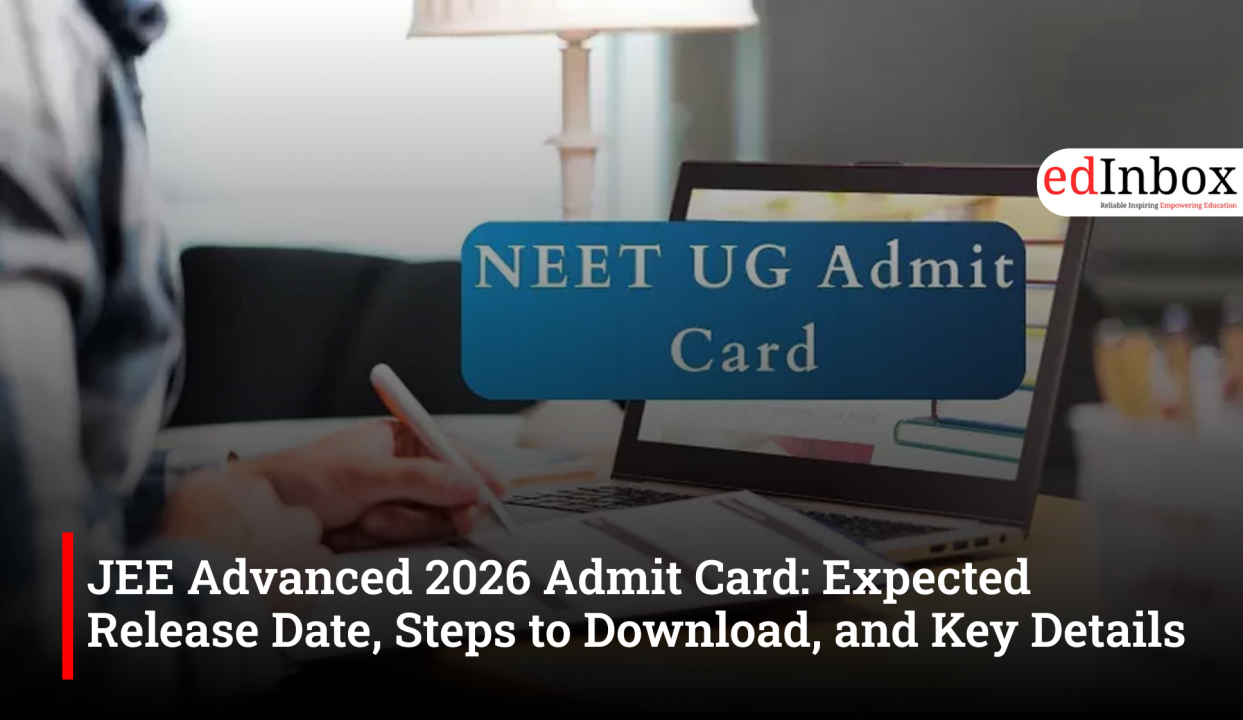
The Indian Institute of Technology Roorkee is expected to release the JEE Advanced 2026 admit card in the second week of May 2026, bringing relief—and urgency—for thousands of aspirants across India. The highly competitive Joint Entrance Examination Advanced is scheduled to be conducted on May 17, 2026, making the hall ticket a critical document in the final stretch of preparation.

Admit Card Release: What to Expect

While the exact date is yet to be officially confirmed, past trends indicate that candidates can expect the admit card download link to go live around 7–10 days before the exam. The document will be available only in online mode on the official website—no physical copies will be issued.

Without the admit card, entry to the examination centre will not be permitted under any circumstances.

How to Download JEE Advanced 2026 Admit Card

Candidates can follow these steps once the link is activated:

  1. Visit the official website: jeeadv.ac.in
  2. Click on the “Admit Card 2026” link on the homepage
  3. Enter your JEE Main application number and date of birth
  4. Verify the details displayed on the screen
  5. Download and take a printout for exam day

It is advisable to keep multiple printed copies and a digital backup.

Key Details Mentioned on the Hall Ticket

The admit card is more than just an entry pass—it is your official exam identity. It will include:

  • Candidate’s name and roll number
  • Exam centre address and reporting time
  • Photograph and signature
  • Category details
  • Exam date and session timing
  • Important instructions for candidates

Any discrepancy in these details should be reported immediately through official channels.

Why This Document Matters

For students who have cleared JEE Main, the admit card marks the final confirmation of eligibility for JEE Advanced. It is the gateway to India’s most prestigious engineering institutions—the IITs.

Final Advice for Candidates

  • Regularly check the official website for updates
  • Verify all details immediately after downloading
  • Read exam-day instructions carefully
  • Plan travel to the exam centre in advance

With the exam just days away, the release of the admit card signals the beginning of the last and most crucial phase of the IIT journey.
India’s education system is splitting into two parallel tracks — formal schools and a fast-growing coaching industry. Once seen as extra help, coaching is now the main route to success in competitive exams for many. For lakhs of students preparing for engineering, medical, and other entrance tests, coaching centers are often trusted more than school classrooms. This shift is changing not just where students study, but also how families spend and how success is defined.

*Schools Losing Ground*  

According to Nirvaan Birla, Managing Director of Birla Open Minds Education, coaching’s rise has altered how schools are viewed. Many students now see school as a formality, while coaching institutes appear to deliver better results. He warns that schools risk losing their core identity as centers of holistic development. Instead of competing with coaching, schools must focus on critical thinking, experiential learning, and active student engagement.

The gap exists because coaching offers what many schools don’t: goal-based prep, regular performance tracking, and personalized exam strategy. When asked where they learn most, students increasingly point to coaching. Yet Birla stresses that schools must still provide deep, meaningful, lifelong knowledge.

*Collaboration or Competition?*  

Not all experts see a rivalry. Modern Public School Principal Alka Kapur says coaching aids specialized exam prep, while schools build foundational knowledge, values, and overall growth. Together, they can create a balanced system where schools spark curiosity and coaching prepares for competition.

*An Economy of Aspirations*  

This hybrid model reflects rising student and family ambitions. With limited seats and intense competition, families now view coaching fees as investment, not expense. EventBeep CEO Saurabh Mangrulkar says parents see coaching as a path to a better future, so they spend willingly. Digital platforms have accelerated this demand.

Dexian India Country Head Kumar Rajagopalan notes that fierce higher-education competition and families’ readiness to invest have expanded the market. But he cautions that over-dependence on private coaching could widen social and economic inequality. Rising fees in big cities and student migration from small towns have created a ‘shadow education’ system, forcing families to pay twice — for school and coaching.

*Why Schools Fell Behind*  

Experts say schools didn’t adapt as fast as coaching did. Students naturally gravitate to what feels directly useful. Rajagopalan adds that while schools still drive social development, literacy, and certification, the center for competitive prep has shifted. Education now has two tracks: concept-based schooling and outcome-driven exam training.

*The Need for Reform*  

Regulation alone won’t fix this. Structural change inside schools is key. Birla calls for curriculum updates, better assessment, and application-based learning. Kapur believes integrating exam-focused practice into classrooms can bridge the gap. Mangrulkar says schools must become more practical and results-oriented to match outside assessments.

Coaching’s rise signals market demand, institutional gaps, and changing consumer behavior. Until parents believe success comes from within schools, investment will flow outward. The institutions that survive will balance results with real learning. For schools, the challenge isn’t just staying relevant — it’s redefining relevance.

Every year, the scientific community celebrates breakthroughs—from advances in Artificial Intelligence to discoveries in Genomics—yet a critical question often goes unasked: are we evolving how we teach science at the same pace as how we practice it?

The answer, increasingly, is no.

The Learning Gap Is Real

Today’s students are not passive recipients of information. They are digital natives who learn through visuals, simulations, and real-time interaction. Platforms, videos, and collaborative tools have reshaped how they absorb knowledge. Yet, much of higher education—particularly in fields like Medical Sciences—continues to rely on dense textbooks, long lectures, and rote memorisation.

This mismatch creates a dangerous illusion. When students disengage, it is often interpreted as a lack of ability. In reality, it may be a failure of pedagogy.

From Information to Interpretation

In an era where information is abundant, the role of educators must shift from delivering content to helping students interpret, apply, and question it. Memorising biochemical pathways or physical laws is no longer enough. Students must understand why they matter and how they translate into real-world impact—whether in clinical settings, research labs, or industry.

Science teaching must therefore:

  • Emphasise conceptual clarity over content overload
  • Integrate case-based and problem-based learning
  • Encourage critical thinking and interdisciplinary connections

The Power of Experiential Learning

Students learn science best when they experience it. Virtual labs, simulations, fieldwork, and research projects bring abstract concepts to life. A student who models disease spread or runs a genetic analysis is far more likely to retain knowledge than one who simply reads about it.

This is particularly crucial in medical and life sciences, where the stakes are high. Future doctors and researchers must not only understand theory but also develop decision-making skills, empathy, and adaptability.

Rethinking the Role of Educators

The teacher is no longer the sole authority in the classroom. Instead, educators must act as facilitators—guiding discussions, encouraging inquiry, and curating reliable knowledge in an age of information overload.

This shift requires:

  • Training faculty in digital and interactive teaching methods
  • Updating curricula to include emerging fields and technologies
  • Creating flexible learning environments that support collaboration

Why This Shift Matters Now

The world students are entering is vastly different from the one for which traditional curricula were designed. Rapid technological change, global health challenges, and interdisciplinary careers demand a new kind of scientific thinker—curious, adaptable, and problem-oriented.

If higher education fails to evolve, it risks producing graduates who are well-informed but underprepared.

The Way Forward

Rethinking science education is not about abandoning fundamentals—it is about reimagining delivery. By aligning teaching methods with how students actually learn today, institutions can unlock deeper engagement, stronger outcomes, and a more future-ready workforce.

Students are changing fast. Science is advancing even faster. The question is no longer whether we should adapt—but how quickly we can catch up.

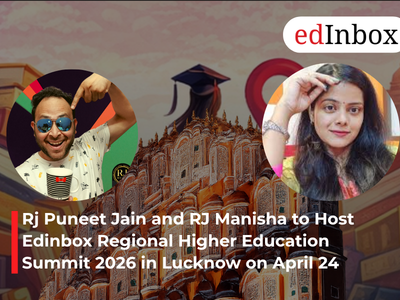
The Edinbox Regional Higher Education Summit 2026, Lucknow Edition, scheduled for April 24, is set to become one of the city’s most talked-about education events that has an added boost of energy and engagement. Popular radio personalities RJ Puneet and RJ Manisha will be hosting the summit, bringing their strong youth connect to the platform.

Familiar Voices, Powerful Connect with Students

RJ Puneet is widely known in Lucknow for his show “BIG Chai” on BIG FM 94.3, where he blends news, humor, and real conversations. Beyond radio, he is also an actor, anchor, and content creator, making him a familiar and trusted voice among young audiences.

Joining him is RJ Manisha, a popular voice from Red FM. Known for her energetic style and strong audience engagement, she has built a reputation as a dynamic radio personality and anchor who connects easily with listeners

Together, they bring entertainment, relatability and influence, especially for students attending the summit.

Edinbox Summit Lucknow: What the Event is About

The summit will be held at Indira Gandhi Pratishthan and aims to bring together students, school leaders, educators, and universities on a single platform.

The focus is simple, help students understand:

  • Career options after Class 12
  • Emerging fields like AI, Design, and Forensic Science
  • Entrance exams and admission pathways

Why the Hosting Matters

Having RJ Puneet and RJ Manisha as hosts adds a new layer to the summit.

Their presence ensures:

  • High audience engagement
  • Smooth and lively sessions
  • Better connection with students

For many attendees, these are voices they already listen to daily, making the event feel more approachable and interactive.

What Students and Schools Can Expect

The summit is designed to be both informative and engaging. Students will get:

  • Free career counselling
  • Guidance on national-level entrance exams
  • Direct interaction with universities
  • Participation in competitions and activities

School principals will also be recognised through the Principal Award of Honour and will get opportunities to network and collaborate with institutions.

Why This Event is Important for Lucknow

With increasing competition and confusion around career choices, events like this play a crucial role. Instead of searching online for scattered information, students get clear guidance in one place.

The addition of well-known hosts like RJ Puneet and RJ Manisha makes the summit more engaging, helping important conversations reach students in a more relatable way.

The Edinbox Regional Higher Education Summit 2026 in Lucknow has strong participation, career-focused sessions, and engaging hosts that is becoming a must-attend platform for students and educators.

As April 24 approaches, the excitement around the summit is only growing. Register now for the summit at Edinbox Regional Higher Education Summits 2026 (it’s free). 

The Edinbox Regional Higher Education Summit 2026 – Lucknow Edition will be held on April 24, 2026, at Indira Gandhi Pratishthan. Scheduled from 9:00 AM to 6:00 PM, the one-day event is expected to bring together a wide range of participants from across the education sector, including students, school leaders, educators, university representatives, and policymakers.

Deputy CM Brajesh Pathak and Yogendra Upadhyaya have been invited to attend the summit as chief guests. Their participation is yet to be officially confirmed. If present, their involvement is likely to underline the growing focus on strengthening higher education and career readiness among students.

The Edinbox Regional Higher Education Summit 2026 aims to create a common platform where key stakeholders can discuss emerging trends, new technologies, and future opportunities in education. With increasing changes in the academic and job landscape, the summit is expected to focus on how institutions can align with evolving industry and student needs.

Several key sessions are planned as part of the event, including the Regional Principals Felicitation, Panel Discussion, and one-on-one interaction with top universities. These elements of our exclusive summit are expected to focus on improving coordination between schools and higher education institutions while encouraging more practical and career-oriented learning approaches.

The summit will also highlight emerging career fields such as Artificial Intelligence, creative and design-based careers, and forensic science. Experts are expected to share insights on how these fields are shaping future job markets and what skills students need to prepare for them.

In addition to discussions, the event will include student-focused activities such as competitions and recognition initiatives aimed at promoting academic excellence. These elements are expected to make the summit more engaging while giving students opportunities to participate and interact directly with institutions.

With a growing number of career options and courses available, students often face confusion while making decisions after school. Events like the Edinbox Summit aim to address this gap by providing reliable information, expert guidance, and direct exposure to higher education opportunities in one place.

The Edinbox Regional Higher Education Summit 2026 in Lucknow is expected to emerge as a significant platform for dialogue and collaboration within the education ecosystem. As the date approaches, participation from schools and students across the region is expected to increase.

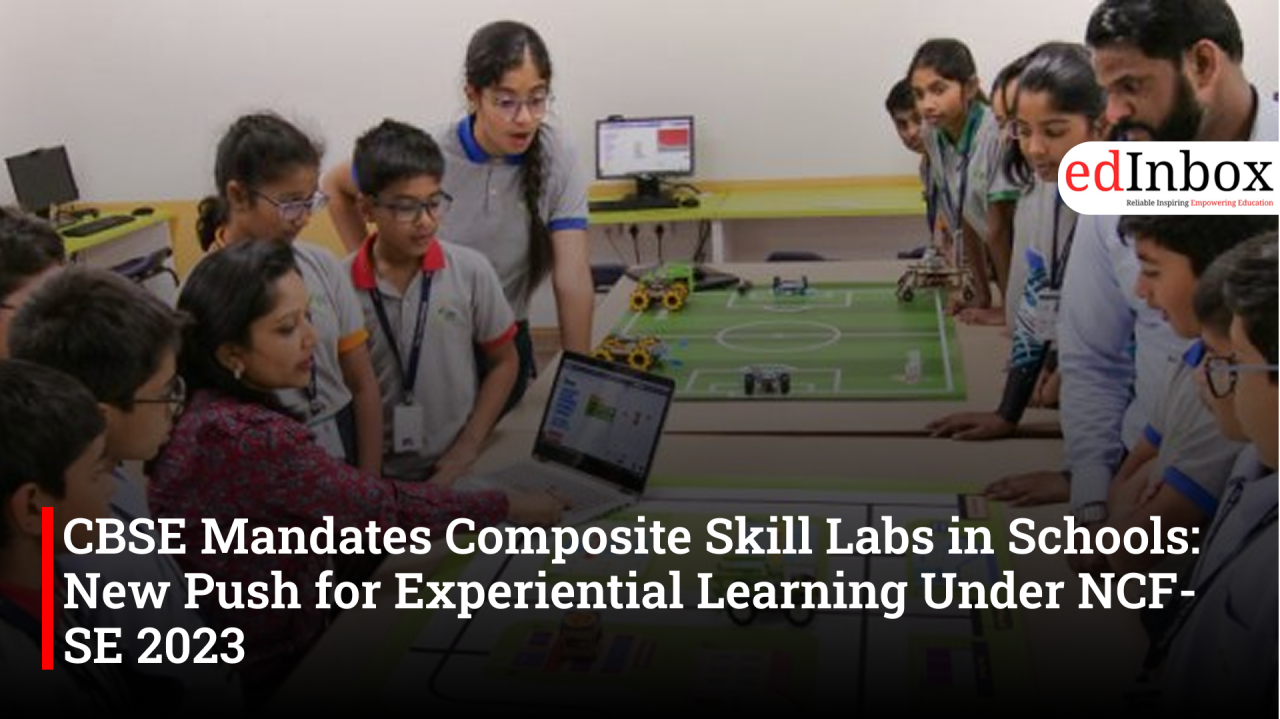
In a significant move to strengthen skill-based and experiential learning, the Central Board of Secondary Education (CBSE) has directed all affiliated schools to establish Composite Skill Labs in line with the National Curriculum Framework for School Education 2023 and the National Education Policy 2020. The initiative aims to integrate vocational education into mainstream schooling, making practical learning a core component of academic development.

Issued under Circular No. Skill-75/2024, the directive outlines detailed requirements for infrastructure, timelines, and implementation strategies, signalling a shift from theory-heavy instruction to competency-based education.

Infrastructure Norms and Lab Design

As per CBSE guidelines, schools must establish either:

  • One Composite Skill Lab of at least 600 sq. ft. catering to Classes VI to XII, or

  • Two separate labs of 400 sq. ft. each, with one dedicated to Classes VI–X and the other for Classes XI–XII

These labs are designed as flexible, multi-disciplinary spaces where students can engage in hands-on, activity-based learning across various skill sectors. Schools are required to ensure proper safety measures, accessibility, and adaptability to support diverse vocational subjects.

Timeline and Affiliation Requirements

The establishment of skill labs has been made mandatory for schools applying for new CBSE affiliation, where a fully equipped lab will be a key eligibility criterion.

Existing affiliated schools have been granted a three-year compliance window, with the deadline set for August 22, 2027. During this period, institutions must install the necessary infrastructure, tools, and machinery as per CBSE norms.

Bridging the Gap Between Theory and Practice

The introduction of Composite Skill Labs is expected to address a long-standing gap in India’s school education system—limited exposure to practical, real-world applications of classroom learning.

By enabling students to engage in hands-on activities, the labs will:

  • Strengthen conceptual understanding through application

  • Promote multidisciplinary learning approaches

  • Build essential life and workplace skills

  • Enhance employability and vocational readiness

This aligns with the broader vision of NEP 2020, which emphasises integrating academic knowledge with practical competencies from an early stage.

Flexible Implementation Framework

CBSE has provided detailed guidelines covering infrastructure, equipment, and safety standards. However, the board has also allowed flexibility—schools can customise lab setups and equipment based on their specific needs, available resources, and local skill demands.

School heads have been instructed to take proactive steps not only in setting up these labs but also in ensuring their effective utilisation as part of regular teaching-learning processes.

A Step Toward Future-Ready Education

The rollout of Composite Skill Labs marks a crucial step in transforming Indian classrooms into dynamic learning environments. As education systems globally move toward experiential and skill-driven models, CBSE’s initiative positions students to be better prepared for both higher education and the evolving job market.

By embedding vocational learning within the school ecosystem, this reform could redefine how students learn—not just for exams, but for life beyond the classroom.

Every year, thousands of young women graduate with outstanding academic records, many from institutions affiliated with boards like the Central Board of Secondary Education. They enter the professional world confident, prepared, and often more accomplished than their peers on paper. Yet, a few years into their careers, many find themselves stuck—not due to a lack of talent, but because success outside the classroom demands a very different skill set.

Here are five essential skills that go beyond academic excellence and often determine long-term career growth.

Clarity of Purpose Matters More Than Perfection
Success begins with knowing what you truly want. Not a vague ambition, but a clear, defined goal. The workplace is rarely linear—setbacks, missed opportunities, and self-doubt are part of the journey. What separates those who grow from those who stall is not the absence of doubt, but the ability to move forward despite it. Having a clear vision acts as an anchor when circumstances become uncertain.

Step Outside Your Comfort Zone
Education systems often reward consistency in strengths, but careers reward adaptability. Many women unintentionally get confined to roles where they already excel, limiting broader growth. Taking on unfamiliar challenges—projects that feel intimidating or roles that stretch existing capabilities—helps build versatility. It’s this willingness to explore beyond comfort zones that often leads to leadership opportunities.

Master the Art of Decision-Making
One of the most under-discussed realities is the unequal distribution of responsibilities outside work. Over time, competing demands on personal and professional fronts become inevitable. The ability to make conscious, strategic choices about where to invest time and energy becomes crucial. This is less about achieving a perfect “balance” and more about managing priorities effectively—treating time as a limited resource.

Make Your Work Visible
A common misconception is that good work will naturally get noticed. In reality, visibility plays a critical role in career advancement. Promotions and opportunities often go to those whose contributions are known, not just those who perform well. Communicating achievements, sharing progress, and actively expressing interest in growth opportunities are essential. This isn’t about self-promotion in a negative sense—it’s about ensuring your efforts are recognised.

Build a Network Before You Need One
Career-defining opportunities rarely come from formal applications alone. They often emerge through connections—people who know your work and are willing to recommend you. Building a network requires time and genuine engagement, not just transactional interactions. Whether through mentors, colleagues, or industry peers, investing in relationships early can open doors later.

Ultimately, a degree may help young women enter the room, but it is these skills that determine how far they go. The professional world is not always perfectly fair, but understanding how it operates—and adapting accordingly—creates space for growth. For young women graduates, the key lies in combining competence with clarity, courage, and connection to truly shape their careers.

More Articles ...