Higher education in India is seen not just as a dream but as a major investment that can shape a family's future for many Indian families. Be it a degree in Bengaluru, MBA in Mumbai, or a specialised programme abroad, the cost involved is very high. Besides the tuition fees and accommodation, one also has to think of travel, study material and living expenses that can keep increasing with time. New applicants may find it easier to take the right decision if they understand education loans as a means of making higher education affordable.

Essentially, an education loan is a loan product issued by banks and other financial institutions to help students who are doing recognised courses in India or abroad. The loans are made keeping the academic calendar in view and also offer various features like deferred repayment and a moratorium period giving flexibility to students. This way, students do not get stuck with full repayment of the loan while they are studying.

Understand your loan application before submission. Education loans generally cover the cost of tuition, examination, and library subscription charges. Many also cover accommodation, books , laptops, and travel expenses for students studying abroad. One can get maximum financing up to 100% of the course cost by some lenders depending on the applicant's profile and family income and this makes the option feasible for even those who do not have immediate liquidity.

Eligibility hinges on being an Indian citizen with a verified admission to a recognized college by merit or entrance exam. A co-applicant - often a parent, guardian, or spouse - is required. Their income, credit standing, and financial reliability matter heavily in getting the loan approved. For larger amounts, lenders may ask for property or fixed deposits as security; smaller loans are typically unsecured.

There's a moratorium period that covers the full course length plus six to twelve months. It gives students time to finish school and land jobs before making EMIs. This delay eases cash flow during the transition phase. Now, it seems hard to ignore how it supports financial stability early on.

Interest rates depend on the program, school, loan size, and whether collateral is involved. Most are tied to RBI benchmarks plus a lender-specific markup. How interest builds up during the moratorium affects final repayment totals. The process is active in practice - lenders track this closely from start to finish.

Formulating a repayment strategy is just as necessary. Nearly all banks have online EMI calculators that aid applicants in figuring out the instalment amount they have to pay each month based on the loan period and interest rate.

Opting for a longer period means there will be less monthly EMIs but more interest to be paid altogether. A few borrowers decide on simple interest during the moratorium time as it will give them relief when the time comes to pay the EMIs.

Institutions like IDFC FIRST Bank provide education loan products that are well structured with a range of flexible repayment options along with transparent processing fees and application support. For beginners in the world of loan applications, clarity is of utmost importance in the education finance sector which is quite complex.

Nowadays students looking for quality higher education in new-age disciplines like artificial intelligence, data science, and global management would require education loans that have become indispensable. A smartly-taken loan plan does not only help the student to achieve his/her educational goals but also get involved in learning, internships and enhancing one's career without worrying about the finances immediately.
The Indian student community today needs to choose between degree programs and skill-based courses because they need to select which option creates better job prospects for them. A lot of graduates finish college and still struggle to find work, while others who joined short skill-based courses get placed fast. The year 2026 will bring rapid changes to the job market as people need both degrees and skills to succeed in their careers.

The Job Market in India Today

Every year, India adds about 12 million new people to the workforce. The job market does not provide equal access to employment for all people. According to recent reports, about 45% of fresh graduates are not job-ready in terms of skills. Many companies state they lack sufficient candidates who can start working immediately.

At the same time, there are a lot of new jobs in areas like:

  • IT and software
  • Digital marketing
  • E‑commerce and startups
  • Data and analytics
  • Customer support and service roles

Students with practical skills find better job prospects than students who possess only academic qualifications.

What Is a Degree? (And Why It Still Matters)

A degree represents a complete academic program which includes B.Com and B.Sc and B.A and B.Tech and BBA. The degree program typically requires students to complete their studies between three and four years at colleges and universities.

Why degrees are still important

  • Basic qualification: Many companies and government jobs still ask for a degree in their “minimum qualification”.
  • Strong Foundation: A degree provides students with essential knowledge across multiple fields which include mathematics and English studies and fundamental science education.
  • Resume value: A degree from a respected institution provides candidates with an advantage during job interviews by making them more distinctive.
  • Long-term growth: Many organizations require candidates to possess a degree when applying for positions that include manager officer or senior role responsibilities.

Basically, a degree serves as the essential requirement which you must fulfill to gain entry into a bank, government office or major corporation. 

What Are Skill-Based Courses?

Skill-based courses are short, focused training programs that teach you how to do a specific job or task. The courses can be done via online platforms or through physical locations.

Some common examples:

  • Programming and coding (like Python, web development)
  • Digital marketing (Google Ads, SEO, social media)
  • Microsoft Office and basic computer skills
  • Customer service and communication skills
  • Data entry and Excel

Because of this, many students now choose to do a degree and also take one or two skill-based courses

Why are skill-based courses growing fast?

  • Job ready in less time: You can start working after 3-6 months not 3-4 years.
  • Practical learning: You practice real tasks used in offices and companies.
  • Affordable: Most online courses range in price from ₹5,000 to ₹50,000.
  • Convenient: You can study online or during evening hours or while you attend college.
  • Growth potential: Students today prefer to combine their degree studies with one or two skill-based courses and grow in their career.

Degree vs Skill-Based Courses: How to Compare

Here is a simple table to understand the main differences.

Factor

Degree

Skill-Based Course

Time needed

3–4 years

3–8 months

Money needed

₹3–15+ lakhs (over 4 years)

₹5,000–₹50,000 (one course)

Job speed

Slower (wait for results, exams)

Faster (ready in months)

Type of learning

Broad and theory-based

Practical and job-focused

Flexibility

Full-time college, strict hours

Online, self-paced, flexible

Best for

Long-term career, big companies

Starting work, freelancing, IT jobs

This shows that each has its own place. A degree helps you build a strong base, and skill-based courses help you start earning and working faster.

A degree gives you a strong base, but skill‑based courses help you start working and earning faster. The present job market requires each particular skill set to perform specific functions. Your first employment opportunity will come through your acquired skills, but your degree will help you advance to elevated positions in your career.

Degree or Skills: Which Is Better?

The situation needs more than one answer because its complexity exceeds simple solutions. The truth is that your first job requires skills while a degree provides the foundation for your professional development. Existing employees can use skill-based courses to advance their careers or explore different fields. Students who have just begun college should complete their degree requirements while taking one or two skill-based courses which include coding and digital marketing and basic data skills. Indian students increasingly prefer the hybrid path which represents a combination of two educational approaches.

How to Plan Your Career in 2026 and Beyond

You should concentrate on your board exams and essential knowledge. Begin your computer education by learning typing skills and Excel and Google Docs functions. Use free online videos to study coding and digital marketing and communication skills to discover your interests.

If you are in college (or thinking about college)

You should continue your degree program after you have registered for college. You need to complete one skill‑based course in college which can be either digital marketing or coding or data skills. Students should obtain internships or small projects which will help them create their resumes through actual work experience.

If you have completed your degree but you do not have a job

You should join a short skill‑based course which teaches skills that are currently in demand for IT and digital marketing and customer support and data entry. Create a basic LinkedIn portfolio which includes your certificates and your completed small projects. Start gaining experience and confidence through entry-level jobs at small businesses or by working as a freelancer.

Key Takeaway 

In 2026, the degree vs skill-based courses debate is not about choosing one over the other. The smart choice is to use both together:

  • Use a degree to build your foundation and long‑term strength.
  • Use skill-based courses to become a job‑ready fast and earn early.

For Indian students, this mix is the safest way to face the future. If you are confused, start with one small skill-based course and see how it feels. You can always add more later.

If you found this helpful, share it with your friends, classmates, or parents. For more career guides and updates, keep following Edinbox.

12th exams are over and the true life begins now! The decision of which career path to follow after completing Class 12 stands as the most important choice for students. No matter if you have just taken 12th boards or taken admission in 9th grade, the career choice stands as the most important one. Yet, most students rely on limited information, assumptions, or peer influence, which results in confusion and lost opportunities.

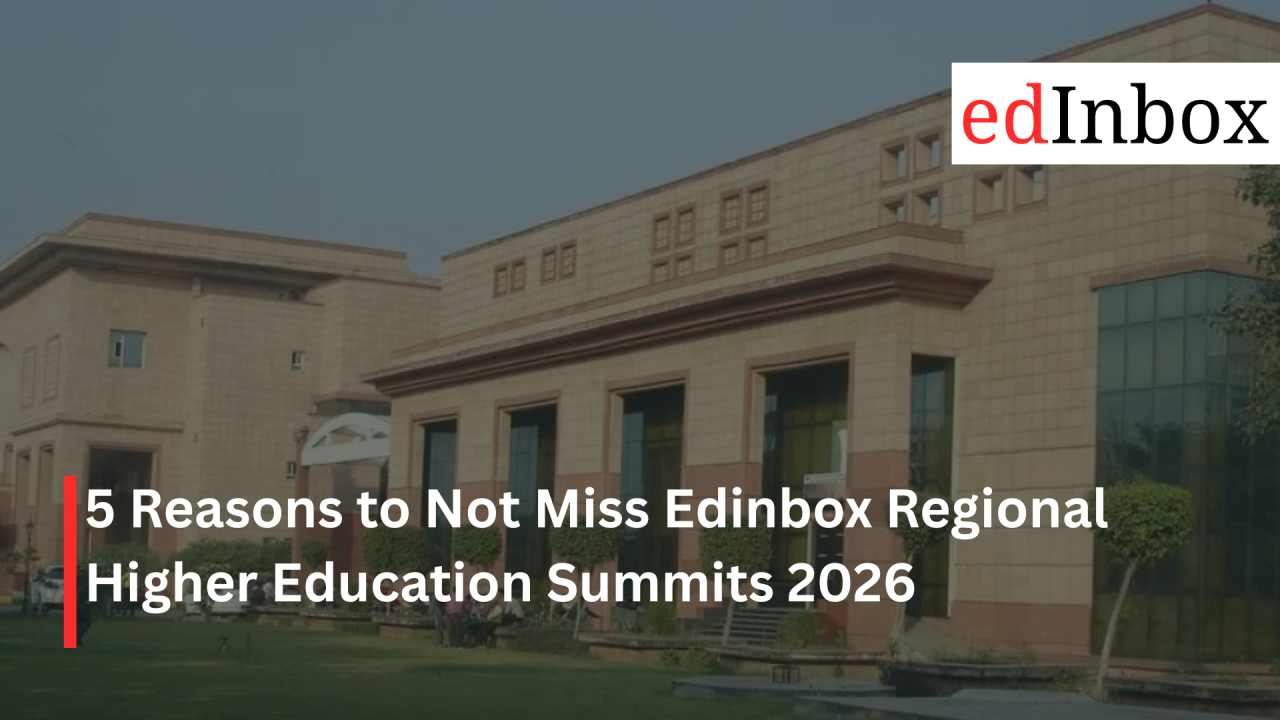
The EdInbox Regional Higher Education Summits 2026 establish their unique value proposition at this particular point. The summits operate as a one-day event which creates a high-impact platform for students and educational institutions to achieve essential objectives.

If you’re still wondering whether it’s worth attending, here are five compelling reasons why you shouldn’t miss it.

  1. Direct Access to Top Universities in India

Students can meet leading universities through this program, which eliminates the need for them to search through numerous websites or depend on information from other sources. Through direct dialogue, students gain a better understanding of courses and admission requirements and campus life and career prospects. Classroom environments usually do not provide students with this type of experiential learning.

  1. Real Career Clarity (Not Generic Advice)

Most students struggle with questions like:

“Which course should I choose?”

“What career is right for me?”

At the EdInbox Summit 2026, expert career counsellors provide personalized guidance, helping students align their interests, strengths, and future goals. The focus rests on making educational choices based on understanding. The focus rests on making educational choices based on understanding.

This is something the students don’t get in India until and unless they are from the top schools or better family backgrounds. Additionally, there are many career counsellors and firms running paid consultation camps which usually stop students from going for the same. Understanding this, Edinbox is offering a FREE career consultation session at the Regional summits in Jaipur. Lucknow, and Bhubaneswar. 

  1. Find Emerging Career Opportunities Suitable for You

The world of careers is changing at a fast pace. New academic programs which combine multiple disciplines with emerging fields of study are now available but students still need to discover these new opportunities.

The summit provides students with access to new career paths and contemporary educational programs and current business practices which enable them to make future career decisions.

  1. Participate, Compete, and Get Recognized

The summit requires active participation. Students can participate in city-level competitions which include debates, quizzes, creative contests, as well as PUBG contests among other activities. Through these competitions, participants can:

  • Showcase their talent 
  • Build confidence 
  • Gain recognition at a broader level 
  • Take home a trophy 
  • Represent your school 
  • And get a chance to earn scholarship (T&C applied)

The experiences students have during university life create valuable enhancement for both their academic achievements and their personal development.

  1. One Day That Can Change Your Direction

The EdInbox Summit offers a complete educational experience through its structured program which lasts for one whole day. With city-level contests and interactive workshops, the day is going to be fun along with being insightful. 

The university tour provides students with an opportunity to experience multiple institutions while acquiring career guidance and professional contacts and discovering hidden job prospects. 

Your future path can change in that single room which leads to a new discovery.

Summit Dates 

  • Jaipur: 20th April 2026
  • Lucknow: 24th April 2026
  • Bhubaneswar:  27th April 2026

Remember, Indian students only require educational opportunities because they already possess the skills to succeed. The EdInbox Regional Higher Education Summits 2026 bridge that gap which leads to a clear understanding of the situation while people take active steps to solve the problem. 

If you are a student who has just given 12th boards, or someone from 9th-12th who is really concerned about the future, this higher education summit is the best place to be.  This event will help you make appropriate educational and professional choices.

Register free of cost (no hidden charges) from the Edinbox summit website and make use of this opportunity. 

The change isn't just economic. It's in how students think. They don't wait until graduation to consider jobs. Instead, they assess outcomes from day one, what skills will survive in four years, which fields are fading, and if their degree allows movement between sectors and regions. Employability isn't the finish line anymore, it's the first question.

Universities are scrambling to respond. Internships aren't extras anymore - they're built into programs. Capstone projects solve real industry issues now. Experiential learning - once seen as side work - is necessary. Still, a gap lingers: academic structures change slowly at the same time industries redefine roles every 12 to 18 months.

Technology, especially AI, is the main engine of the transformation that's happening. The effect of AI is less about creating new messy things, and more about redesigning things. For example, classrooms are no longer just places for learning by memorizing but rather places for doing projects that require skills like judgment, creativity, and synthesis which AI finds it difficult to replicate. And at the same time, companies are looking for people who have hybrid capabilities: technical knowledge combined with communication, context, and decision-making.

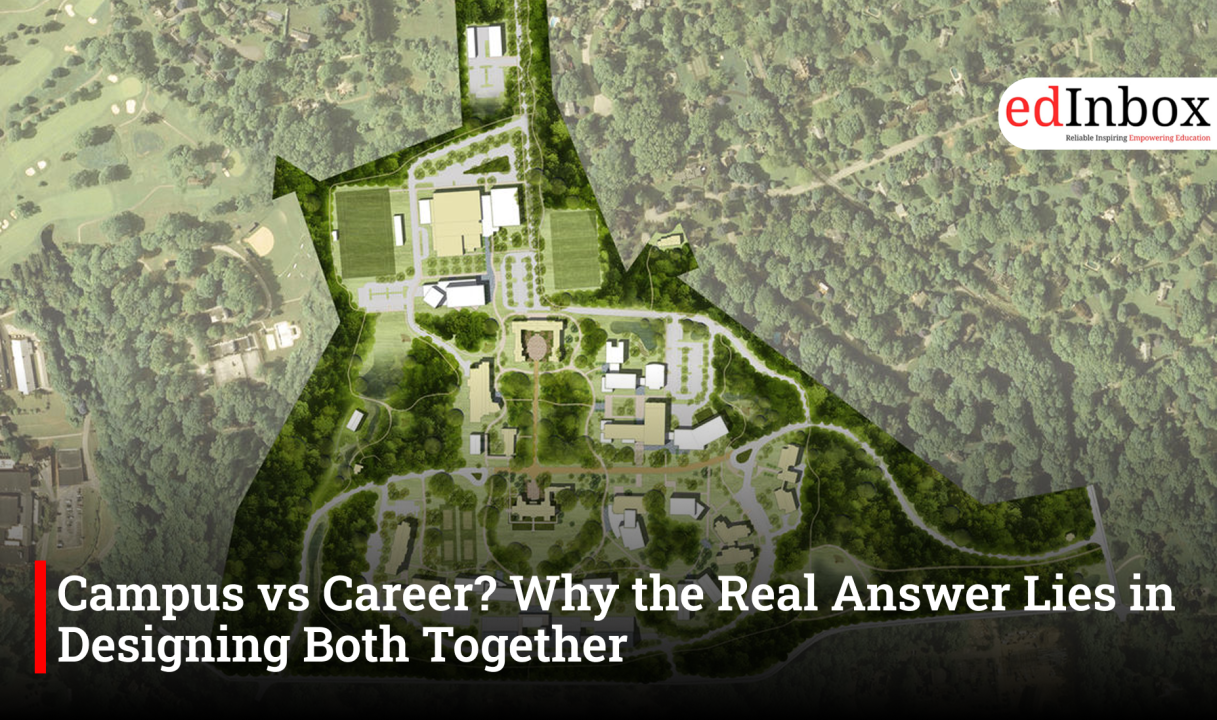
International education is a part of this. Students nowadays are not choosing their study destinations solely on the basis of the highest reputation. They are also taking into account cost, visa stability, post-study work options, and long-term career mobility. The emergence of transnational education comes as a reflection of this change providing global exposure and local industry integration along with multiple options for the learners. Meanwhile, the importance of the campus experience has not diminished it has just gained a new dimension. It is not just about social life or physical facilities anymore. The campus of today is expected to be a working place of innovation.

The campuses that fail to connect experience and outcomes fall behind. When both are built together, student growth accelerates. Curiosity grows from real-world engagement. Confidence builds through hands-on work. Collaboration thrives in shared challenges. Clear career paths turn exploration into action. Students see where their interests lead.

Right now, institutions winning trust don't treat degrees as fixed labels. They embed internships directly into coursework. Classrooms become spaces where learning happens daily. Degrees evolve with student needs instead of staying unchanged over time.

Future success won't rely on old buildings or long-standing traditions. It'll belong to schools that link what students learn to what they do after graduation. Graduates will be ready to change roles, respond to shifts, and build skills in new environments without losing direction.

The push for bilingual education in technical schools is picking up steam in Maharashtra, with nearly 42% of engineering diploma students now in programmes that teach in both Marathi and English. The thing is, the MSBTE launched this model in 2023 - 24, and it's starting to make a real difference. A few students still get confused when switching between languages - so there's a little adjustment needed.

DTE data shows about 45,444 students out of 1,07,910 enrolled in 2025, 26 are taking classes with Marathi and English instruction. The number of schools offering this mix has gone from 175 out of 388 back then to 192 out of 416 now - pretty solid growth. That shift matters because more schools mean more kids can access it.

Students learn concepts in marathi first, then gradually pick up technical English. It helps those from Marathi homes who struggle with English-only lectures. They understand better when they hear things in their own tongue - plus, writing exams in either language gives them a safer path to success. Officials say confidence goes up when students don't have to fight the language barrier every time they study.

The National Education Policy 2020 supports mother-tongue-based learning, Mainly in foundational and technical education. MSBTE has created Marathi textbooks and study materials for all 154 diploma subjects, giving students access to standardized content.

Classroom engagement has improved. Students ask more questions and grasp concepts better. Since diploma courses focus on skills, clear explanations matter more than fluency. Placement outcomes show no disadvantage.

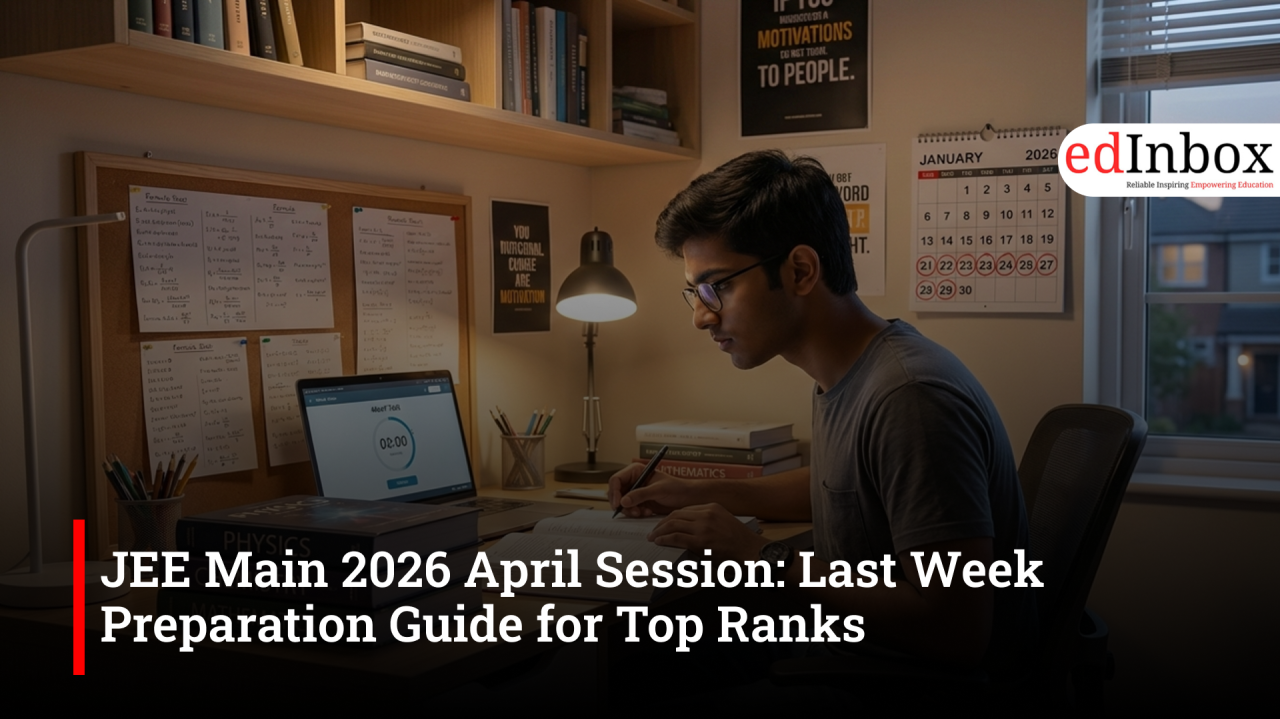
The JEE Main 2026 April Session 2 is happening soon, and students are already making a mistake by not doing some of the critical things. The countdown for the April session begins with the release of jee mains admit card 2026. The last week before exams provides an important opportunity to improve your study techniques and take mock tests to avoid errors that lead to losing ranking position. Indian students who want to achieve 90+ percentile scores in JEE Main should follow this effective last week prep guide for JEE.

Why the Final Week Defines JEE Main Success

The final week marks the critical point which determines JEE main success. Most toppers agree that students should dedicate their last week to reviewing what they studied instead of trying to learn new material. Students need to focus on recalling formulas and analyzing their mock exam errors while developing their exam endurance so they can achieve their NIT/IIT admission goals. 

Your Daily Action Plan for JEE Main Last Week

Students should divide their study time into 8-10 hours of studying Physics and Chemistry and Maths. Students need to take breaks and sleep time during their study sessions:

Day

Key Activities

Pro Tips

Day 1-2

Quick syllabus review + 1 full mock test

Use short notes; note errors right away. Hit high-weightage areas like Mechanics (Physics), Organic Chemistry, Calculus

Day 3-4

3 hours deep dive per subject (PCM)

Solve PYQs; update formula sheet. Track weak spots in a dedicated log

Day 5-6

2 mocks daily + targeted fixes

Time every section. Build speed with 80% accuracy goal; get 7-8 hours sleep

Exam Eve

Light notes review + relax

Flashcards only. No mocks. Walk, meditate, sleep early.

Must-Know JEE Main Revision Hacks for Final Days

  • Revision First: Skip new chapters, stick to summaries and flashcards for quick recall. 
  • Mock Tests: Students should take 1-2 practice tests throughout the day which they should analyze completely afterward.
  • Score-Big Topics: Physics (Kinematics, Thermodynamics); Chemistry (p-block, Coordination); Math (Vectors, Probability). The two subjects together make up 60 percent of all test content. 
  • Stay Healthy: Ensure to eat light food which contains protein to maintain your health, and stay hydrated. Take a walk, and  relax your mind before going to sleep. 
  • Pitfalls to avoid: Heavy study on exam eve, neglecting Chemistry (quick marks), ignoring PYQ trends.

JEE Main April 2026 Session  2

The JEE Mains admit card is live, and the clock is about to ring. Use your last few days strategically; grab easy Physics/Chem questions for 80-100 marks momentum; Flag tough ones, circle back; Stay composed and nail the exam.

JEE Mains Date For Better Preparation 

  • Session 2 Exam Dates: April 2–9, 2026.
  • B.E./B.Tech (Paper 1): April 2, 4, 5, 6, 8.
  • B.Arch/B.Planning (Paper 2): April 7, 2026. 

So, prepare well, keep the aforementioned tips in mind and manage your last few days until the entrance test, strategically.  This JEE Main 2026 strategy last week  has helped students nationwide to secure top ranks or at least their desired percentile after  dedicated months of study. 

Stay disciplined, believe in your prep, and go crack the JEE entrance test. All the best for the JEE Main April session.

Distance learning has been a go-to for working adults looking for degrees without leaving their jobs. But now, a new rule might mean your qualification doesn't count, before you even finish. Renuka, a teacher from Bhopal, started an MA in psychology through IGNOU. She paid just under ten thousand rupees in the first year. Work and kids made her pick it over traditional classes. She showed up to webinars, turned in papers, studied hard. Then she found out the course was officially shut down for distance mode. No more online options.

The UGC issued a directive tied to the 2021 National Commission for allied and healthcare Professions Act. Now, it says no online or distance training is allowed if the course needs hands-on work - like labs, patient contact, or clinical settings. Psychology, nutrition, microbiology, biotechnology, all banned from distance delivery. IGNOU and others got a warning: stop new enrollments starting in 2025. Any degree earned this way could be cancelled later.

Students already enrolled can still complete their studies if they switch to on-campus mode or wait until regulations change. But those who enroll after the cutoff face uncertainty about whether their diploma will hold up legally.

The controversy shows a real problem in india's education system: policy goals clash with what universities actually do. Regulators want quality through face-to-face training, but institutions keep moving in gray areas, pushing the risk onto students instead.

No admissions have been pulled, and enrolled students are still allowed to go on with their programs. It's unclear how long this setup will last, some fear it could shift suddenly. But the larger question remains unresolved—when institutions and regulators are not aligned, who safeguards the student?

Until clearer enforcement mechanisms emerge, aspirants may need to look beyond brochures and disclaimers—because in today’s education landscape, “flexibility” could come at the cost of legitimacy.

More Articles ...