As Class 12 board exams wrap up, a familiar question echoes across households: what next? For decades, the default answers were medicine and engineering. But in today’s rapidly evolving job market, success is no longer limited to an MBBS degree or a BTech seat. Students are now exploring smarter, skill-driven careers that offer both financial growth and professional influence.

The shift is driven by a simple reality—earning well today is not just about working hard, but choosing the right field. Many students who follow conventional paths without interest or awareness often end up with degrees that do not guarantee employability. In contrast, emerging and interdisciplinary careers are opening doors to high-paying opportunities across industries.

Here are five career options that are redefining success for the next generation:

  1. Data Science & Artificial Intelligence
    In a world powered by data, professionals who can analyse and interpret it are in high demand. From tech giants to startups, companies are investing heavily in data-driven decision-making. Students with a knack for mathematics, statistics, and programming can pursue degrees in data science or AI. These fields offer lucrative starting packages and long-term global opportunities.
  2. Corporate Law (Integrated LLB)
    Law today extends far beyond courtrooms. Corporate lawyers play a crucial role in advising companies on legal frameworks, contracts, and compliance. Integrated five-year programmes like BA LLB or BBA LLB allow students to enter this field right after Class 12. With rising corporate activity, legal professionals are among the most well-compensated experts.
  3. Management (Integrated Programme in Management - IPM)
    Students interested in business and leadership can now skip the traditional route of graduation followed by an MBA. Institutes like the Indian Institutes of Management offer IPM programmes that combine undergraduate and postgraduate management education. This pathway equips students early with skills in leadership, strategy, and entrepreneurship.
  4. Defence Services (National Defence Academy)
    For those driven by discipline, leadership, and service to the nation, the National Defence Academy provides a prestigious career path. Students can enter the armed forces directly after Class 12 and rise to officer ranks. Beyond financial stability, this career offers unmatched respect, responsibility, and a sense of purpose.
  5. Digital Marketing & Content Creation
    As businesses shift online, the demand for digital marketers, content strategists, and brand managers has surged. This field blends creativity with analytics, offering opportunities in advertising agencies, startups, media houses, and even independent ventures. With the right skills, professionals can build global careers and influence public narratives.

Career choices today are less about tradition and more about alignment with skills, interests, and market demand. Students don’t need to be academic toppers to succeed—they need awareness, adaptability, and clarity. Whether it’s decoding data, shaping laws, leading businesses, serving the nation, or building digital brands, the possibilities are wider than ever.

In the end, the goal is not just to earn a degree, but to build a career that is both rewarding and future-ready.
The National Testing Agency (NTA) is expected to declare the JEE Main 2026 Session 2 result by April 20, 2026, bringing relief and clarity to lakhs of engineering aspirants across the country. Once released, candidates will be able to check their results on the official website: JEE Main official website.

The result will include key details such as percentile score, All India Rank (AIR), and qualification status for further admission processes, making it one of the most important updates in the engineering admission cycle.

JEE Main 2026 Session 2 Result: What We Know So Far

As per official updates, the result is expected to be announced within the scheduled timeline, with no confirmed delay from the exam authority so far. The evaluation process follows the release of the final answer key, after which NTA prepares the result based on normalisation across multiple shifts.

Candidates are advised to regularly check the official website instead of relying on unofficial sources or rumours circulating on social media.

Where and How to Check JEE Main 2026 Result

Once the result is declared, candidates can access their scorecard through a simple login process on the official portal.

To check the result:

  • Visit JEE Main official website
  • Click on the “JEE Main 2026 Session 2 Result” link
  • Enter your application number and password
  • View and download your scorecard

It is recommended to download and save the result for use during counselling and admission procedures.

What Will the Scorecard Contain?

The JEE Main 2026 result will provide a detailed scorecard that includes:

  • Subject-wise percentile scores
  • Overall percentile
  • All India Rank (AIR)
  • Qualification status for JEE Advanced

These details are essential for determining eligibility for top engineering institutions, including NITs, IIITs, and other centrally funded technical institutes.

How JEE Main 2026 Rank is Calculated

The final rank is not based on a single attempt. Instead, the National Testing Agency calculates the best score from both Session 1 (January) and Session 2 (April) to prepare the final merit list.

This approach ensures fairness for students who may have improved their performance in the second attempt.

What Happens After the Result?

Once the results are declared, the next crucial step for candidates is participation in the counselling process. Admission to NITs and other government engineering colleges is conducted through JoSAA (Joint Seat Allocation Authority).

Students who qualify for JEE Advanced can proceed toward IIT admissions, while others can still secure seats in top NITs based on their JEE Main rank.

This phase requires careful decision-making, as students must select their preferred colleges and branches.

Important Update: New BTech Courses in NITs You Should Know

In recent years, several National Institutes of Technology have introduced new and industry-focused BTech programmes. However, many students are still unaware of these options and tend to focus only on traditional branches.

Here are some of the notable additions:

  • NIT Delhi
    • AI & Data Science
    • Aerospace Engineering
    • VLSI Design
  • NIT Rourkela
    • Artificial Intelligence
  • NIT Kurukshetra
    • AI & Machine Learning
    • AI & Data Science
  • NIT Warangal
    • Data Science & AI
  • NIT Tiruchirappalli
    • Data Science
  • NIT Calicut
    • CSE (AI & Data Science)
  • NIT Silchar
    • CSE (Artificial Intelligence)

Why Students Should Pay Attention to These Courses

The introduction of these programmes reflects the changing demand in the job market. Fields such as Artificial Intelligence, Data Science, Machine Learning, and semiconductor technology are rapidly growing and offer strong career prospects.

Many of these courses:

  • Focus on real-world applications
  • Align with current industry needs
  • Offer specialised knowledge beyond traditional engineering branches

For students, this means more opportunities but also the need to make informed choices.

Common Mistake Students Make During Choice Filling

One of the biggest mistakes during counselling is ignoring newer branches due to lack of awareness. Students often stick to familiar options like Computer Science or Electronics without exploring alternatives that may better match their interests and career goals. With increasing competition, even a small difference in decision-making can impact long-term outcomes.

Smart Tips for JEE Main 2026 Candidates

As the result approaches, students should start preparing for the next phase instead of waiting passively.

  • Research all available courses and colleges
  • Compare curriculum, placements, and faculty
  • Keep multiple options ready during counselling
  • Focus on long-term career growth, not just trends

The JEE Main 2026 Session 2 result, expected by April 20, marks a turning point for lakhs of students. While the result itself is important, what truly matters is how students use it to make informed academic and career decisions.

With new-age courses, evolving career paths, and increasing competition, being well-informed is the key to making the right choice.

FAQS

  1. Is JEE Main 2026 Session 2 result declared?
    No, it is expected to be released by April 20, 2026.
  2. Where can I check JEE Main 2026 result?
    On the official website: jeemain.nta.nic.in
  3. How is JEE Main rank calculated?
    By considering the best score from both sessions.
  4. What after JEE Main result?
    Students must participate in JoSAA counselling for admissions.

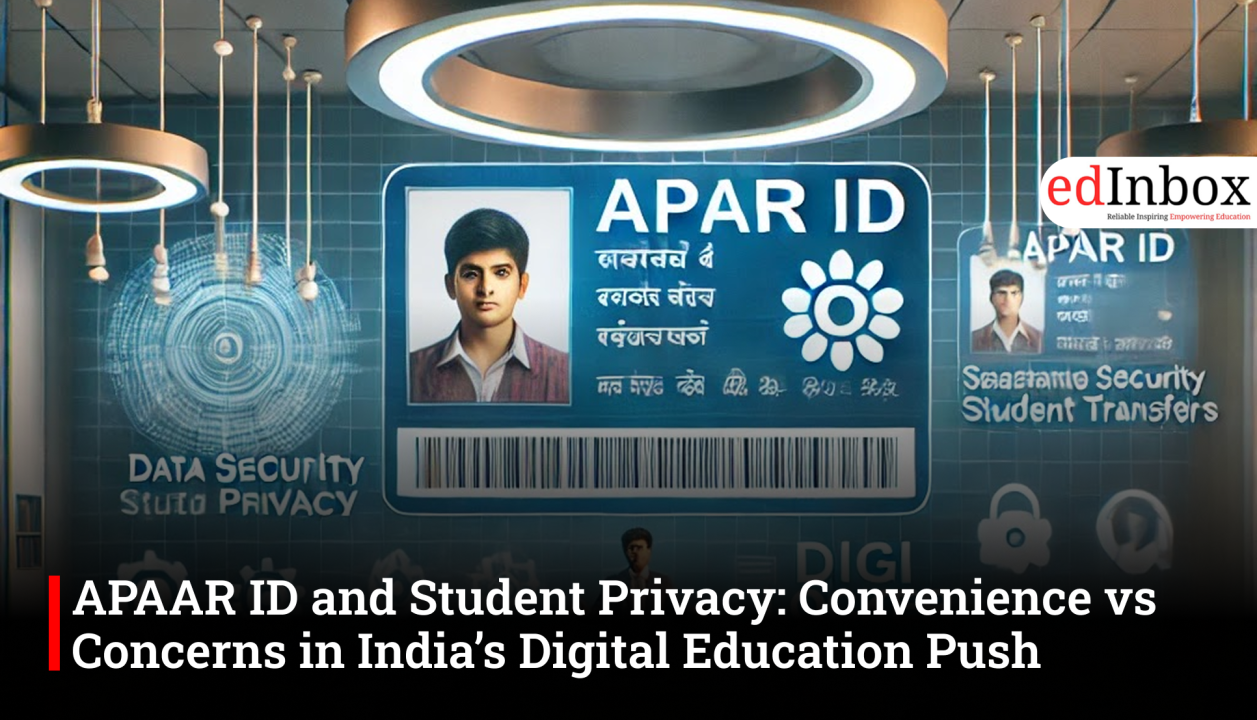
The Automated Permanent Academic Account Registry (APAAR), introduced by the Central Board of Secondary Education, represents a major step toward digitizing India’s education system. Designed as a 12-digit lifelong academic ID, APAAR aims to store a student’s complete academic journey—from marksheets and certificates to co-curricular achievements—in one centralized platform. While the idea promises efficiency and ease, it also raises serious questions about data privacy and long-term security.

At its core, APAAR offers clear advantages. By linking records digitally and storing them through platforms like DigiLocker, the system could eliminate paperwork, prevent document loss, and simplify processes such as school transfers, college admissions, and job verification. For students and institutions alike, it has the potential to reduce administrative burden and improve transparency.

However, the concerns surrounding APAAR are not without precedent. India’s experience with large-scale identity systems like Aadhaar has shown that centralized databases can become vulnerable to data leaks and misuse. APAAR similarly requires sensitive personal information, including Aadhaar-linked identity, parental details, and a long-term academic record. When such data is stored in one place, it creates an attractive target for cyberattacks and raises the stakes of any potential breach.

Beyond security risks, experts warn about the possibility of “function creep,” where data collected for one purpose gradually gets used for others. A system meant to simplify education could, over time, be used for profiling students, influencing admissions, or even shaping hiring decisions. This raises ethical concerns about fairness and the right of young individuals to grow, change, and redefine themselves without being permanently judged by records.

Legal safeguards do exist. Under the Digital Personal Data Protection Act, 2023, collecting and processing children’s data requires clear, informed parental consent. The law also places restrictions on tracking and the targeted use of minors’ data. Yet, the effectiveness of these protections depends heavily on how rigorously they are implemented and enforced.

Ultimately, the safety of APAAR cannot be judged by its intentions alone. Its success will depend on robust cybersecurity measures, strict access controls, transparent data usage policies, and independent oversight. Parents and students need clarity on who can access the data, for how long, and for what purpose, along with reliable mechanisms to address grievances.

APAAR has the potential to transform education in India by making academic records more accessible and reliable. But without strong safeguards, the same system could compromise privacy and limit future opportunities. In a system built around children, trust must be earned not just through promises, but through consistent and accountable action.


India is producing one of the world’s largest pools of women in STEM—yet many never make it to long-term careers. According to a report by Ernst & Young, women make up 42.6% of India’s STEM graduates—well above the global average. But this strong academic presence sharply declines once careers begin, revealing a deep structural problem.

The biggest drop occurs right after graduation. While women complete degrees in large numbers, far fewer enter or remain in STEM jobs. This “leaky pipeline” reflects a transition crisis—where education does not convert into employment.

Several factors drive this exit. Social expectations remain a major barrier. Women continue to shoulder a disproportionate share of unpaid domestic work—7.2 hours daily compared to 2.8 hours for men, according to research by Indian Institute of Management Ahmedabad. This imbalance often forces career compromises, especially during early employment years.

Workplace challenges compound the issue. Many STEM environments are still perceived as rigid, male-dominated, and lacking support systems like flexible hours, childcare, or re-entry pathways. Subtle biases in hiring, promotions, and leadership opportunities further slow career growth.

The problem intensifies at senior levels. Women hold 28.9% of entry-level STEM roles, but this drops to just 18.1% at the director level and nearly 12–14% in top leadership. In contrast, non-STEM sectors show better gender retention, suggesting the issue lies within STEM work cultures rather than workforce participation alone.

There are also systemic gaps—unequal access to quality science education at the school level, the high cost of STEM degrees, and limited mentorship networks. Together, these factors create a narrow and often discouraging career path.

Yet, there are signs of progress. Women’s overall workforce participation in India has risen significantly in recent years, and sectors like IT, healthcare, and pharmaceuticals are hiring more women. Upskilling trends—especially in AI—are also improving participation rates.

Globally, the stakes are high. The World Economic Forum estimates a shortage of 85 million skilled workers by 2030, particularly in technology and engineering. For India, failing to retain women in STEM could translate into a massive economic loss—estimated at $8.5 trillion.

The message is clear: India doesn’t lack talent—it risks losing it. Unless systemic barriers are addressed, the country will continue to educate world-class women in STEM, only to see them exit before reaching their full potential.

The Edinbox Regional Higher Education Summit 2026 Jaipur Edition will take place on April 20, 2026, to unite educators and academic leaders with stakeholders who work within the higher education ecosystem. 

The summit creates a networking platform which enables students, teachers, schools, and universities to discuss important developments that are occurring in higher education according to its regional framework. 

Focus on Higher Education Trends and Evolution

The event will bring together school executives and teachers who represent educational institutions to discuss essential matters which affect student educational pathways. 

The main goal of these summits is to establish communication between educational institutions and universities while they create new pathways for students to advance their studies. 

Knowledge Exchange Platform

The Edinbox Regional Higher Education Summit 2026 Jaipur Edition will provide participants with a space to exchange educational ideas and their viewpoints while they discuss rising educational trends. 

Events of this nature often include interactive sessions, discussions, and opportunities for participants to connect with peers and institutional representatives.

Participation from Education Stakeholders

The summit will bring together multiple education stakeholders, including school principals, educators, and higher education institution representatives. The gathering aims to support dialogue across different segments of the education sector. 

Relevance for Students and Educators

This higher education summit creates a platform for multiple stakeholders to examine present-day higher education developments and future educational requirements. The event allows participants to explore changing academic pathways and career development options.

The Edinbox Regional Higher Education Summit 2026 Jaipur Edition is scheduled as a one-day event for educational sector stakeholders to participate in discussions and engagement activities which will take place on April 20 in Jaipur.

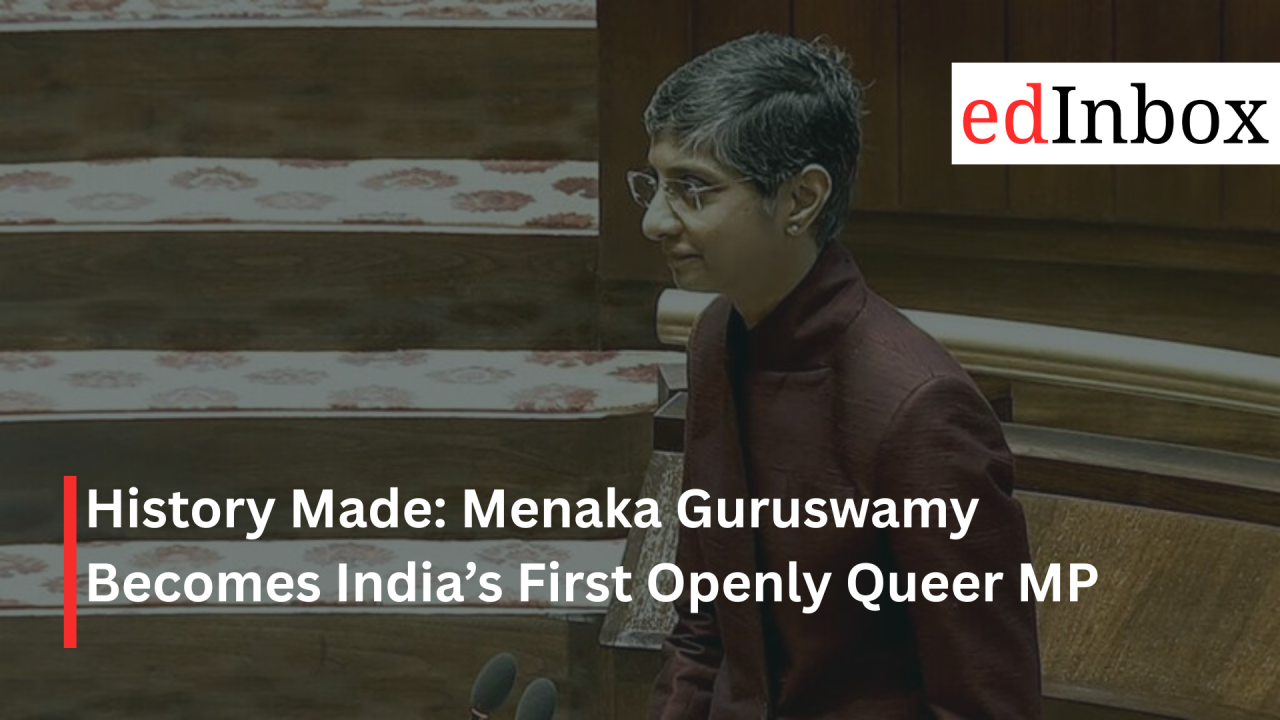
Veteran lawyer Menaka Guruswamy has surpassed all previous records as the first openly queer Member of Parliament in India. Representation and inclusiveness have always been key areas where India has fallen short, hence this move is a giant step towards these aspects. She and other 18 newly elected and re-elected members took the pledge as Rajya Sabha MPs on 6th April.

Menaka Guruswamy is one of the MP members invited by the All India Trinamool Congress. Getting a seat in Parliament is a giant leap for the political and social landscape of India. Oath-taking session was held with the presence of Rajya Sabha Chairman C. P. Radhakrishnan, Deputy Chairman Harivansh Narayan Singh, and Parliamentary Affairs Minister Kiren Rijiju along with wishing new members, they also recognized the importance of their roles.

The lawyer earned national and global recognition on the case of Navtej Singh Johar v. Union of India. This ruling led to the reading down of Section 377 of the IPC and therefore the decriminalization of homosexuality in India in 2018. Apart from the case, she is known for being one of the senior advocates of the Supreme Court and has strongly stood for constitutional law and civil rights throughout.

After she became a lawyer in 1997, she first began working alongside former Attorney General Ashok Desai. Guruswamy was a Rhodes Scholar at Oxford University and Gammon Fellow at Harvard Law School. Besides, she has taught at several leading universities like Yale, Columbia, and NYU. She and her partner and Besides, she has even been a visiting professor at the likes of Yale, Columbia, and NYU. She and her partner and fellow lawyer Arundhati Katju were listed by TIME among the 100 Most Influential People in 2019.

MPs promising their loyalty were drawn from West Bengal Maharashtra Tamil Nadu, and Odisha, thus achieving a geographical diversity of representation across the country.

While a few people see Guruswamy's accession to Parliament only as a political accomplishment, in fact, it signals a much larger change in terms of the inclusion and visibility of the LGBTQ+ community in India's democratic institutions.

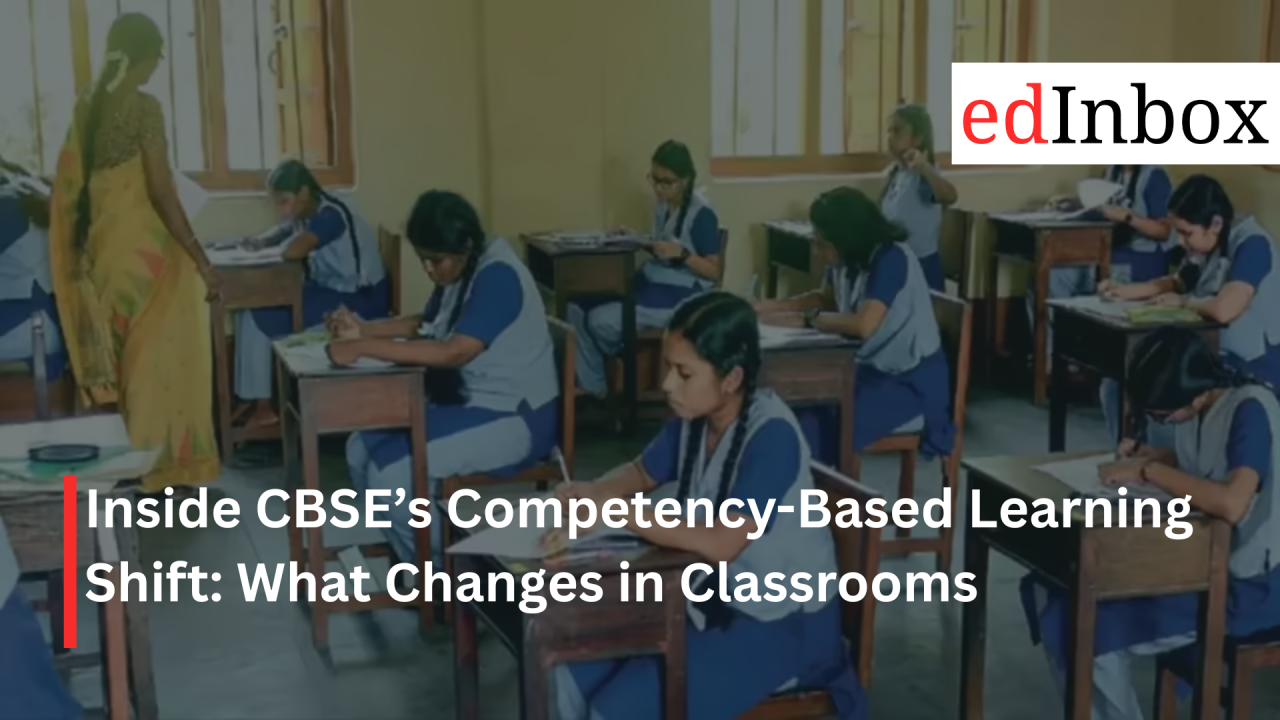
Competency-based learning under the Central Board of Secondary Education’s (CBSE) 2026–27 curriculum marks a fundamental shift from rote memorisation to real-world application. Anchored in the National Education Policy (NEP) 2020, the model prioritises what students can do with knowledge rather than what they can recall.

Learning Defined by Mastery, Not Marks

At its core, competency-based education focuses on measurable skills such as critical thinking, problem-solving, collaboration, and communication. Students are expected to demonstrate mastery through continuous assessments, projects, and applied tasks instead of relying solely on high-stakes exams.

Progression is increasingly linked to proficiency. This means students move forward only after demonstrating understanding through practical application—whether via portfolios, case studies, or problem-solving exercises. Classrooms are also becoming more personalised, with nearly half of instructional time dedicated to experiential learning, including group work and real-life simulations.

How It Plays Out Across Classes

In Classes 6 to 10, competency frameworks are embedded across core subjects like English, Mathematics, and Science. Assessments include case-based questions, MCQs, and lab-based activities that test students’ ability to apply concepts in unfamiliar situations.

For Classes 9 to 12, the shift becomes more visible in board examinations. Around 50% of questions are now competency-based, requiring students to analyse data, interpret scenarios, and design solutions. Alongside this, holistic report cards track not only academic progress but also cognitive and socio-emotional development.

Internal assessments—ranging from projects to peer reviews—carry significant weight (20–40%), often linked to practical themes such as financial literacy, sustainability, and AI ethics.

Rethinking Assessment

The assessment architecture itself is being redesigned. A typical question paper now balances:

  • 40% objective questions (MCQs),
  • 10% short/long subjective responses,
  • 50% competency-based tasks such as source analysis and case studies.

Evaluation is increasingly formative, with regular feedback loops helping students improve continuously rather than preparing only for final exams. The introduction of bi-annual board exams further reduces pressure by offering multiple opportunities to perform.

The Larger Shift

This transformation is not merely academic—it is cultural. It redefines the role of teachers from content deliverers to facilitators, and students from passive learners to active problem-solvers.

If implemented effectively, competency-based learning could bridge India’s long-standing gap between schooling and employability—making classrooms more aligned with the demands of a rapidly evolving world.

More Articles ...