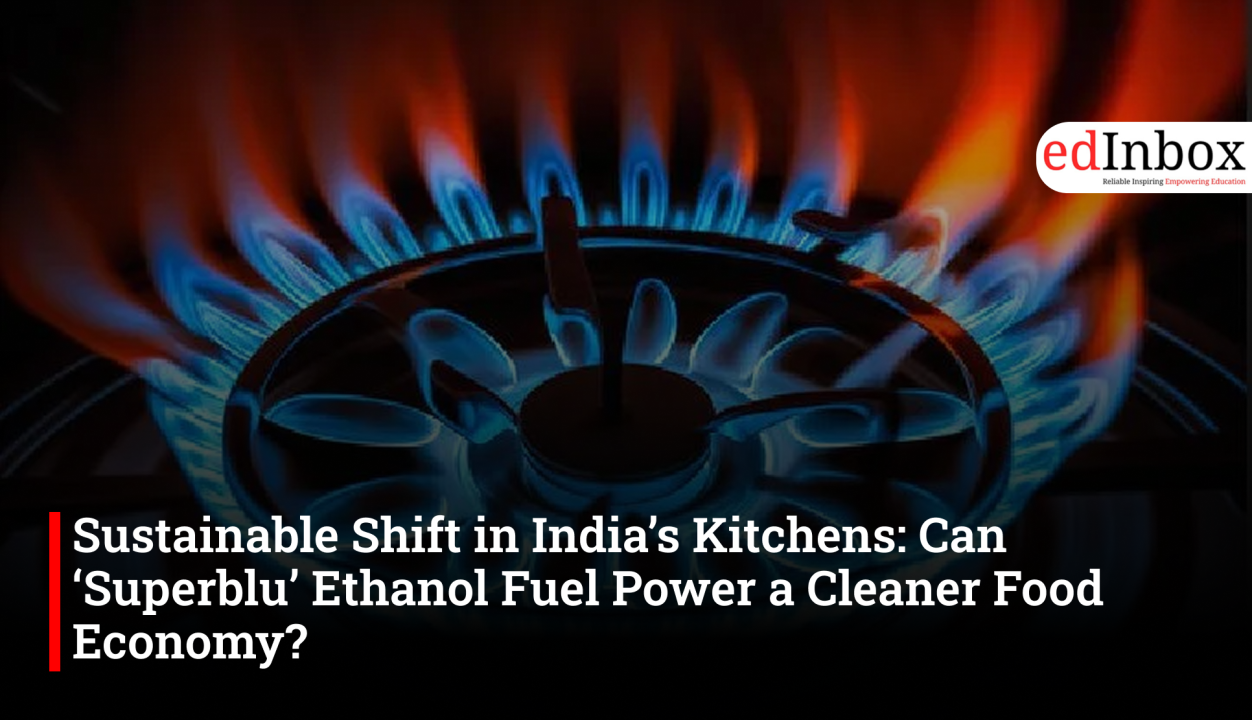
New Delhi: As India looks to future-proof its energy needs amid global fuel uncertainties, a quiet but significant transition is taking shape—rethinking how millions cook every day. Moving beyond fossil fuels, policymakers are now exploring ethanol-based cooking solutions as part of a broader sustainable energy push aligned with Atmanirbhar Bharat.

At the centre of this transition is “Superblu,” an ethanol-based fuel that promises to be not just cost-effective, but environmentally cleaner than traditional alternatives like LPG and kerosene. With India’s ethanol production capacity crossing 2,000 crore litres, the country is uniquely positioned to scale this shift using domestically produced biofuel derived from sugarcane and maize.

Cleaner Fuel, Healthier Workspaces

Unlike kerosene and biomass, which release harmful particulate matter, ethanol burns with a clean, blue flame, significantly reducing indoor air pollution. For India’s millions of street vendors and small eateries—often operating in cramped, poorly ventilated spaces—this could mean a dramatic improvement in working conditions.

The environmental benefits extend beyond air quality. Ethanol, as a biofuel, has a lower carbon footprint compared to fossil fuels, making it a more sustainable option in the long run. By integrating ethanol into everyday cooking, India could take a meaningful step toward reducing emissions in its informal food sector.

Efficiency Meets Sustainability

Modern ethanol burners are also proving to be highly efficient. Early evaluations suggest that one litre of ethanol can provide high-intensity heat for up to 15 hours, allowing vendors to operate for extended periods with minimal fuel. The ability to store ethanol in simple, non-pressurised containers further reduces the logistical burden associated with LPG cylinders.

This combination of efficiency and simplicity is key to sustainability—not just environmental, but economic.

Lower Costs, Stronger Livelihoods

For small food businesses, sustainability is closely tied to affordability. Fuel remains one of the largest recurring expenses. Ethanol, projected to cost significantly less than commercial LPG, offers immediate financial relief.

Lower fuel costs could translate into better profit margins for vendors, enabling them to reinvest in their businesses or improve their quality of life. In this sense, ethanol adoption supports not only green energy goals but also inclusive economic growth.

Building on Existing Ecosystems

India’s ongoing ethanol blending programme provides a ready-made distribution backbone. Leveraging this infrastructure to supply “cooking-grade ethanol” could accelerate adoption without requiring an entirely new supply chain.

Such a move would complement earlier clean cooking initiatives like the Pradhan Mantri Ujjwala Yojana, which expanded access to LPG in households. An ethanol-based model could now extend similar benefits to the commercial and informal sectors.

Safety and Policy Readiness

For ethanol to scale sustainably, robust safety standards will be essential. Regulatory bodies such as the Bureau of Indian Standards and the Petroleum and Explosives Safety Organisation are currently working on guidelines to ensure safe storage, transport, and usage.

Unlike LPG, ethanol does not require pressurised cylinders, but as a flammable liquid, it must be handled carefully to prevent spills and fire hazards. Clear protocols and awareness will be critical for widespread adoption.

Toward a Greener Food Economy

The proposed shift toward ethanol-based cooking reflects a larger vision—one where sustainability, affordability, and energy security intersect. If implemented effectively, an “Ethanol Clean Cooking Mission” could redefine how India’s food economy operates, especially at the grassroots level.

For millions of small vendors, this isn’t just about switching fuels—it’s about accessing a cleaner, safer, and more stable future.
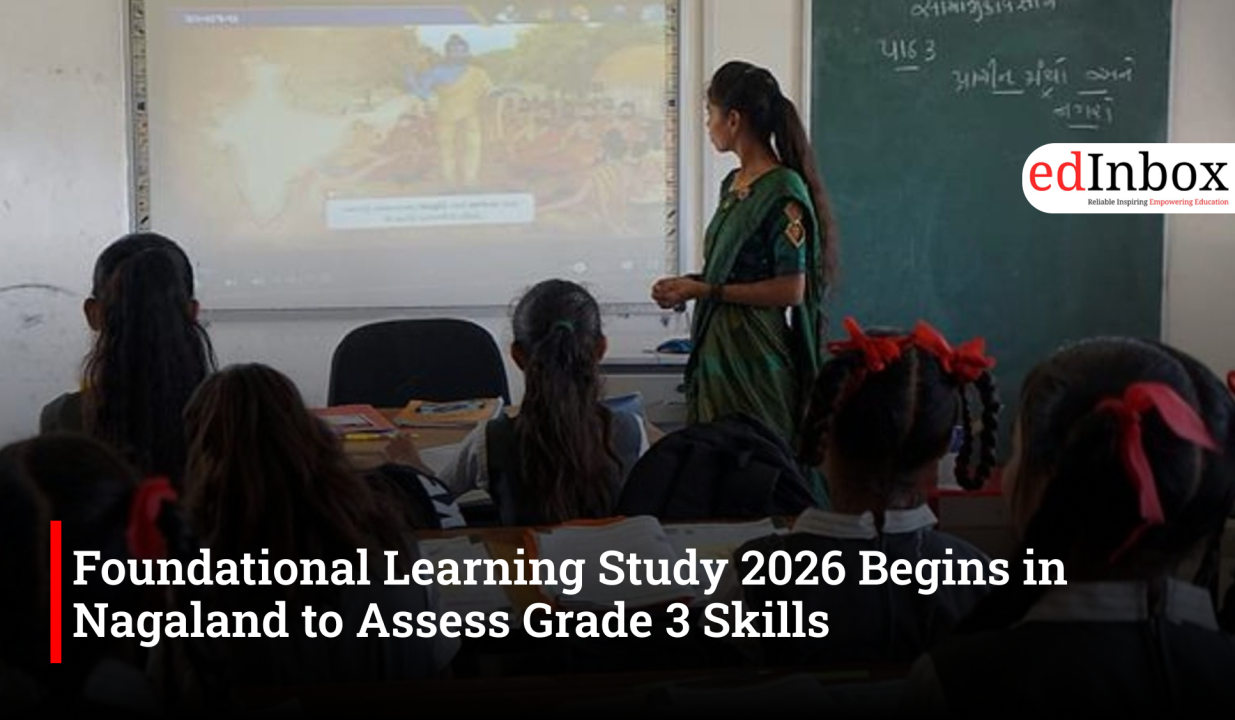
A nationwide effort to measure early learning outcomes has begun in Nagaland, as the PARAKH, under the National Council of Educational Research and Training (NCERT), rolls out the Foundational Learning Study (FLS) 2026.

The assessment, being conducted in the state from April 13 to 14, focuses on evaluating Grade 3 students’ foundational skills, particularly in literacy and numeracy. In Nagaland, the study covers 70 schools across 10 districts, with a total of 798 students participating. The sample includes both government and private institutions, ensuring a balanced representation of students from varied socio-economic and geographical backgrounds.

To ensure smooth execution, authorities have deployed a structured team, including state-level and district-level coordinators, along with field investigators tasked with conducting the assessments. Additional personnel have also been kept on standby to manage any contingencies during the process.

The primary objective of the study is to generate reliable, data-driven insights into the learning levels of young students at a crucial stage of their education. These findings will play a key role in shaping future education policies and improving classroom practices. The initiative aligns closely with the goals of the National Education Policy 2020, which emphasises strengthening foundational literacy and numeracy as a national priority.

Education officials believe that the data gathered through FLS 2026 will help identify learning gaps and guide targeted interventions. By understanding where students stand in their early learning journey, policymakers and educators can design strategies to improve outcomes and ensure that no child is left behind.

As the study unfolds, it is expected to contribute significantly to enhancing the quality of primary education in Nagaland, reinforcing the broader national mission of building strong learning foundations in the early years.


A team at IIT-Guwahati has created energy-efficient bricks that naturally cool buildings, possibly cutting down on AC use. The work by Bitupan Das, Urbashi Bordoloi, Pushpendra Singh, and Pankaj Kalita was published in the journal of energy Storage. It seems like a practical step for places where heat builds up fast.

Modern buildings depend on air conditioning to stay comfortable in summer. That system uses a lot of electricity and adds to emissions. How can we keep interiors cool without relying on that? The researchers focused on changing how heat moves through walls and roofs.

The bricks contain Phase Change Materials, like wax, that soak up heat when they melt and give it back when they harden. By day, the materials take in excess warmth, reducing indoor temperature. At night, they slowly release it when things cool down. Among the tested options, OM35 stands out because it melts at 35C - perfect for areas between 28C and 38C (that's hot and sticky in many regions).

To prevent PCMs from leaking during melting, the team mixed them with biochar - a carbon-rich material that holds everything together. This composite keeps the PCM locked in. Plus, it boosts heat transfer. The resulting bricks stay shaped, hold up under pressure, and work well in hot, wet environments. They're built for climate-sensitive construction, smart, responsive, and practical.

Prof. Kalita pointed out that these PCM-filled bricks outperform standard ones in managing temperature. They soak up daytime heat and slowly release it at night - cutting down on AC use dramatically. How much energy could be saved if every building used this system?

Still, getting these bricks into real-world use is tough. High upfront prices, hard-to-scale production, no industry standards, little builder knowledge, and few working examples stand in the way. The IIT-G team says success needs lower costs, field tests to prove what works, official certifications, partnerships with builders, supportive policies, and awareness campaigns to push adoption. If development continues and the industry gets involved, these energy-efficient bricks might just become standard in hot-humid areas.

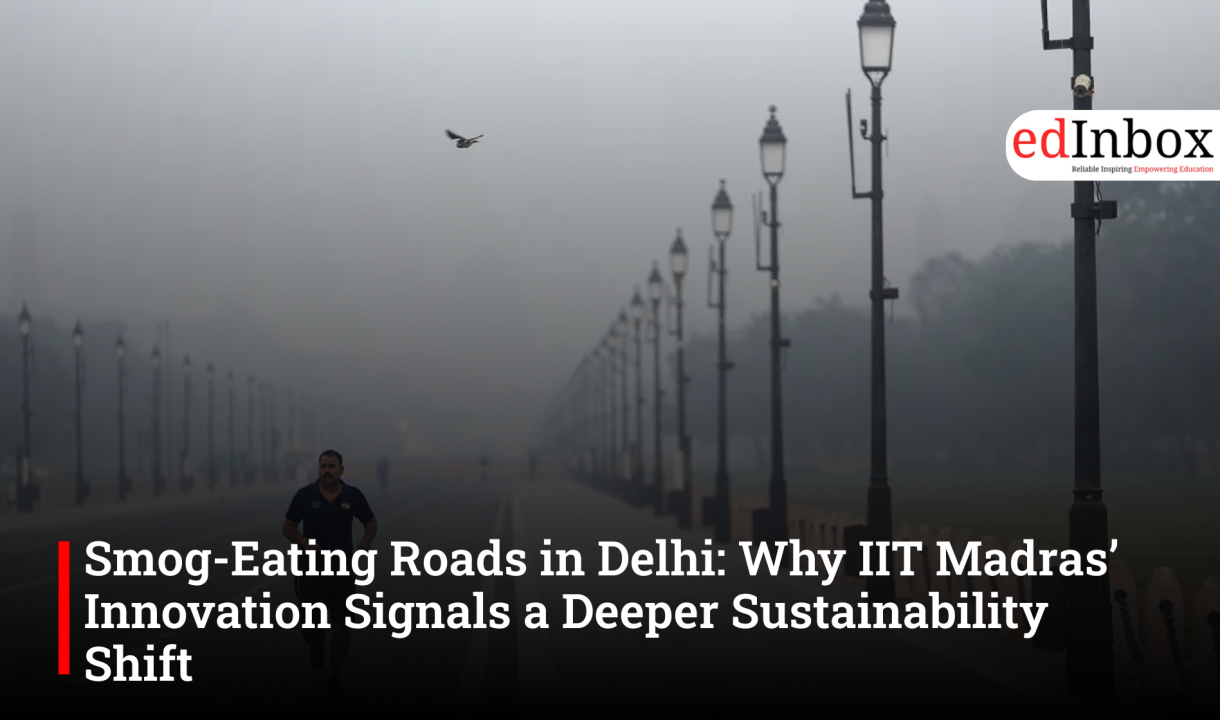
Delhi might soon be testing roads and buildings that can "digest" pollution. However, the real question here is not only about innovations but why cities must rethink sustainability urgently.

Delhi Government e this first of its kind initiative which partnership with Indian Institute of Technology Madras to study photocatalytic surfaces coated with titanium dioxide (TiO). These smart materials upon sunlight exposure, break down harmful pollutants like nitrogen dioxide (NO) and volatile organic compounds (VOCs) into less harmful substances such as water and nitrates. The six-month study will implement these coatings in the areas of the roads, pavements, and building surfaces that may transform daily infrastructure to be the passive air purifiers.

Science backs it up. Continuously neutralising the pollutants without any additional energy input, photocatalysis allows for the surfaces to be low in maintenance and easily upgradeable. As a city which recorded no "good" air quality days in 2025 such tools could be a long-term addition to the policy measures which have been failing to produce results.

On the other hand this new technology does not help us to answer the more profound question: Are we merely trying to fix the pollution after it has been created when really we should be preventing it in the first place?

TiO coatings work - but they're not a fix. They clean up after the fact, like wiping blood off a wound. Delhi's air is poisoned by cars. Building dust, factories, and how energy is used - no real shift means these materials stay just that: temporary solutions.

Sustainability isn't about green slogans anymore. It's about cutting out polluting systems entirely. Public transit over private cars, efficient buildings, strict construction rules - these changes matter more than any new filter or paint. It seems hard to ignore how much we depend on old habits.

Then there's IIT Madras' work, quiet but real. These systems don't ask for change in behavior. And they just absorb pollution quietly. In cities like Delhi where emissions are high, such passive filters could cut down on exposure a lot.

The future doesn't rely only on tech or policy. It needs both - prevention and cleanup together. If Delhi pairs smog-reducing layers with real urban shifts, it might show how cities can respond differently to environmental threats, something arguably worth trying now. A passive system alone won't solve the problem, just a change in how people live and build does. that is what matters most soon.

Because ultimately, the goal is not just to build roads that clean the air—but to build cities that do not choke it in the first place.

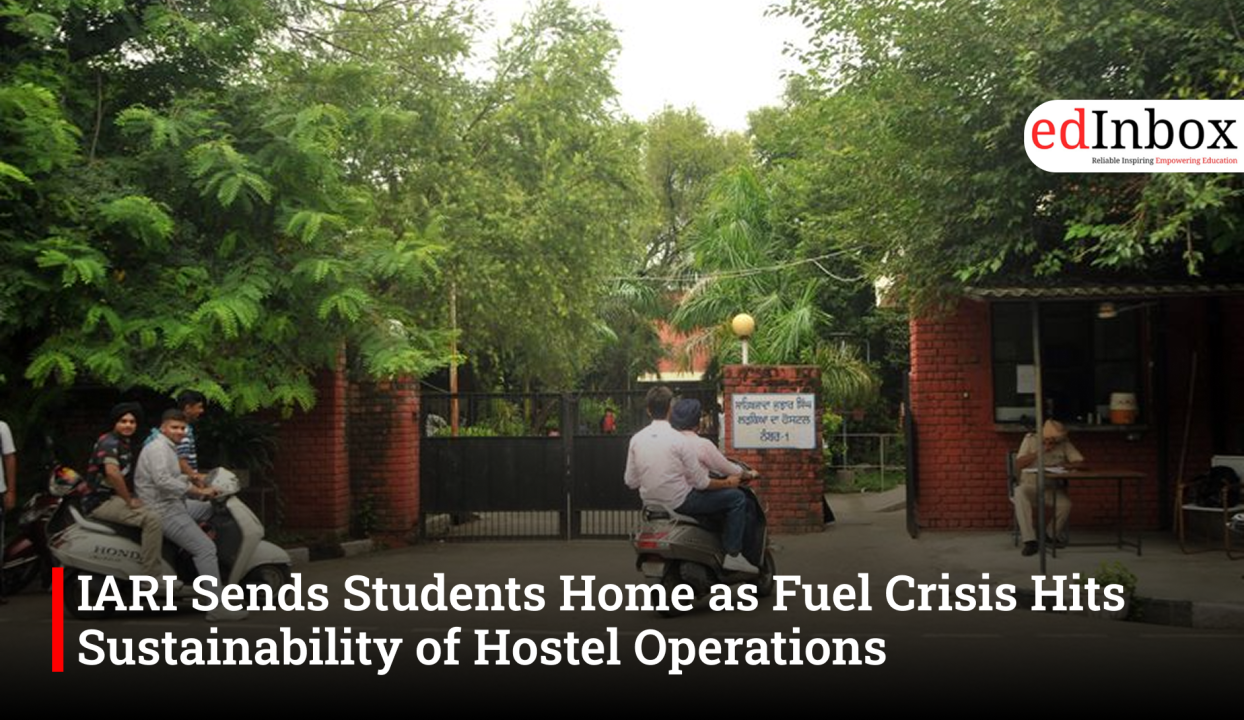
India's academic institutions are the new targets of the fuel shortage. The Indian Agricultural Research Institute, also called Pusa Institute, has requested almost 600 students to vacate the hostels on the campus. They will be moving to online teaching from April 6, 2026. The move has been made as the situation between US and Iran continues to get tense. It's not just about running labs or offices - it's about how fragile campus food services are when fuel stops flowing. Energy access remains a core issue for institutions that rely on centralized messes.

ICAR runs the institute and funds its operations. Undergraduate, first-year Master's, and PhD students are all being asked to return home. About 1,800 students live on campus. Around 600 of them are being moved out now. This shift isn't temporary anymore, it's a direct result of energy instability. Students can't go to meals or dorms without fuel deliveries. Their daily routines depend on uninterrupted supply chains.

Hostel messes operate off one key input: fuel. That creates risk during international conflicts or supply chain breaks. The institute says current energy shortages are disrupting food services. Without backup systems or alternative power sources, campuses stay exposed to outside shocks. Long-term planning must include energy diversification for stability.

And the campus isn't completely silent, second-year and senior grad students keep working on research, still doing labs and offline classes. That shows a push to maintain advanced work. But displaced students' hands-on training will wait until they come backit makes you wonder if this kind of delay could stretch long-term. Resource planning feels shaky right now.

What we're seeing isn't just a short-term issue. It hits deep into how institutions function. Public schools like IARI are tiny versions of bigger systems. When one breaks down, the whole system shakes. The crisis calls for energy-resilient designs - like local cooking setups, solar power integration, and varied supply paths.

This shift forces sustainability into daily operations. With energy markets unstable, campuses can't rely on outside fuel for labs or food prep. How they run now depends on reducing outside inputs - no more blind dependence on distant sources.

For now, students return home and learning continues online. But the larger question remains: can India’s premier institutions transition from crisis response to sustainable preparedness?

Every morning begins with invisible labor.

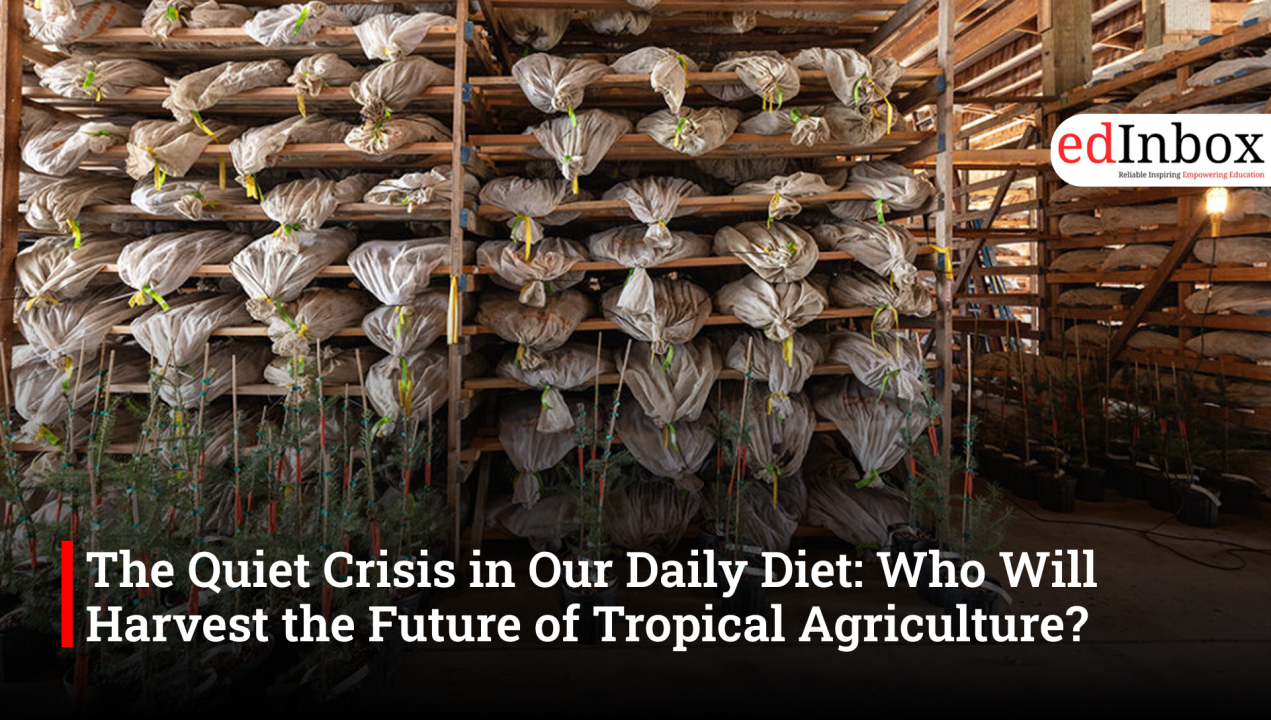
A spoonful of palm oil in processed food, a cup of coffee, a bite of banana, a piece of chocolate made from cocoa—these are not just commodities. They are the outcome of a global system built on land, climate, and above all, labor. And today, that labor is quietly disappearing.

For over a century, tropical plantation economies have operated on a model inherited from colonial rule—export-driven, labor-intensive, and dependent on a workforce that was abundant, inexpensive, and largely invisible. Independence redrew political borders, but not the architecture of production. The fields remained the same. So did the expectations from those who worked for them.

But something has shifted.

Across Southeast Asia, West Africa, and Latin America, plantations are no longer struggling with yield alone—they are struggling with relevance. The question is no longer how to grow more, but who will choose to grow at all.

An Economy Built on Extraction, Now Facing Exhaustion

The numbers tell a stark story. In Malaysia, migrant workers now account for nearly 70–80% of the palm oil workforce, a dependency so deep that when borders closed during the pandemic, production faltered almost immediately. In Indonesia, where foreign labor is less dominant, the system relies heavily on internal migration—yet even here, younger generations are stepping away.

Globally, smallholders contribute around 40% of Indonesia’s palm oil output, yet remain locked out of certification systems meant to define “sustainability,” unable to bear the costs of compliance. What emerges is a paradox: those closest to the land are the furthest from the benefits of reform.

The plantation, once a site of economic certainty, is now a place young people actively avoid—seen as physically punishing, socially undervalued, and economically limiting.

The Human Cost Beneath Green Labels

During the last twenty years or so, sustainability has been the chief discourse of global agriculture. Certification schemes such as the Roundtable on Sustainable Palm Oil (RSPO) have changed the way supply chains are inspected and promoted. We can measure, track and even put a price on changes in forest cover, carbon footprints and product traceability.

However labor which is at the very core of these systems, is still mostly ignored.

In fact, women are the ones standing at the most vulnerable points of this economy. They do informal jobs mostly, get very little pay and are not given social security benefits, at the same time, they also do the unpaid household work which is most of the time not recognized. On the other hand, men still have to do the physically heavy work, often in conditions that have hardly changed for decades.

This does not only lead to inequality but also to exhaustion on a large scale - systemic, across generations, fatigue.

A Crisis of Aspiration

At its core, this is not simply a labor shortage. It is a crisis of aspiration. Rural youth are not rejecting agriculture out of indifference, but out of awareness. They are choosing mobility over stagnation, dignity over endurance. In doing so, they are exposing the limits of a system that has failed to evolve with them.

As the Food and Agriculture Organization has repeatedly emphasized, rural employment is no longer a peripheral concern—it is central to the sustainability of agricultural systems. Without workers, there is no harvest. Without dignity, there are no workers.

Beyond Yield: Rethinking What Sustainability Means

If the first face of sustainability was environmental, then the next one has to be human. It is about bringing plantations back as communities where human beings can live, grow and work rather than as places where only natural resources are extracted. It is also about introducing the use of mechanisms that keep the workers physically healthy as well as timely and fair payment of wages, comprehensive training that empower rather than keep the workers in a helpless cycle situation, etc.

Programs, such as the TALENT, supported by international development agencies, change this by concentrating effort on skills, pathways, and the appeal of farming over time. However, such efforts are scattered and tardy to overcome the magnitude of the challenge.

The Question That Remains

The question that remains is whether it is common to describe the future of tropical agriculture in terms of climate resilience/yield optimization or supply chain transparency. These are very important. Nonetheless, they alone cannot contribute to the development of tropical agriculture.

In fact, every indicator carries a hidden question that is rarely posed, and even less frequently answered: who will remain? Just as a detailed and good map requires a lot of features besides the economic aspects in order to identify social and political aspects of the 'who will stay' question, if we do not understand who will stay, the future of tropical plantations will be a mystery. It is not land production but the shrinking number of people who will want to belong to it that is being questioned.

In a significant step toward sustainable energy transition, scientists at CSIR-National Chemical Laboratory have developed an indigenous technology to produce Dimethyl Ether (DME)—a clean-burning synthetic fuel that could reduce India’s dependence on imported LPG and reshape the country’s household energy landscape.

At a time when India imports over 80% of its fossil fuel needs, innovations like DME are emerging as critical to both energy security and environmental sustainability. The development aligns closely with the country’s broader push for self-reliance under the Atmanirbhar Bharat mission.

A Cleaner Alternative for Everyday Use

Dimethyl Ether is on the rise as a globally recognized low-emission fuel, which when burnt, contribute far less levels of soot, nitrogen oxides (NOx), sulfur oxides (SOx), and particulate matter than traditional fuels. Even though it is much cleaner, it delivers heat efficiency similar to LPG, that makes it an excellent substitute for cooking and heating.

Also, using DME does not mean we have to completely change the existing infrastructure. As per the Bureau of Indian Standards, blending up to 20% of DME with LPG is the permissible limit. Further, A blend of even 8% DME with LPG is thought to be doable without any changes to cylinders, regulators, or burners, thus the transition is very easy for households.

Economic Gains Allow Environmental Benefits As Well

India is caught on the hook for over 21,000 crore every year due to the import of LPG. Scientists predict that replacement of a mere 8% of LPG with DME may yield approximately 100 billion annual savings.

Such savings can really make a difference when it comes to a welfare scheme like PMUY (Pradhan Mantri Ujjwala Yojana) which is providing LPG connections to more than 100 million families. The transition to DME not only will significantly ease subsidy burden but also guarantee access to clean fuel to the poor.

Technology Prepared for Mass ProductionWhat makes it different is a fairly inexpensive catalytic procedure that turns methanol into DME at a fairly low pressure. So, it can be directly packed in LPG cylinders. This system combines the chemistry of catalysts with the engineering of reactors efficiently to produce, and is recognized to be the creation of scientist Thirumalaiswamy Raja. The technology has already been put to the test at a pilot level handling 250 kg per day with the industrial demonstration plant of 2. 5 tonnes per day production capacity is being planned.

The project could scale up to commercial levels of 50100 tonnes per day, which would be a huge step toward the mainstream, if it gets the green light. More to Real World Usability, They Also Built a Flexible Burner which Can Run on LPG, DME or Any Combination: They Took It to National Labs for Efficiency Testing. Green Fuel with Multiple Uses Besides CookingInitially, its main purpose will be to cook food at home; however, the use of DME opens up a whole new array of possibilities. Besides that, it might serve as a fuel for vehicles, a propellant for aerosol as a substitute for CFCs - harmful ones, and a chemical intermediate in industrial manufacturing - therefore a component capable of making a cleaner energy environment.

Indias development of DME is a logical extension of quite a large part its sustainability strategy: from a dependence on importing fossil fuels to domestic production of clean energy alternatives.

As oil PSUs partner with bioenergy companies and implement more such projects, the technology can become an important tool in curbing emissions and enhancing energy independence.

Indeed, if DME is to be considered a success, the primary metric will not be cost savings, but the degree to which it facilitates the countrys transition to a low-carbon, resilient, and self-reliant energy future.

More Articles ...